Two banquets, one charge. The man is summed up in six characters: 剛直使酒,不好面諛 — hard and straight, bold with drink, no flatterer to a man's face. At the first banquet he entertains on another man's behalf. The chancellor promises to come and does not; Guan Fu waits until noon (至日中,丞相不來), drives over to fetch him, and ends by rising to dance and inviting the chancellor to follow, which the chancellor does not do. That banquet ends 極驩而去, with the host drinking till night and going home exceedingly merry — and no charge at all. The second is held under an empress dowager's decree; when the toasts are offered the whole company leaves its mats and prostrates itself for one man, and for the next only half-rises. Guan Fu curses, and the charge follows: 劾灌夫罵坐不敬 — impeached for cursing while seated, lacking respect. Between the breach of manners and the charge there is nothing in between. The two histories word the scene differently, and their words stand side by side here, neither preferred.
The Man in Six Characters
The Shiji starts with the six: 灌夫為人剛直使酒,不好面諛. He has two faces: 貴戚諸有勢在己之右,不欲加禮,必陵之;諸士在己之左,愈貧賤,尤益敬,與鈞 — to the powerful above him he gives no courtesy and must needs trample them; to those below, the poorer they are, the more he respects them. He 不喜文學,好任俠,已然諾 — dislikes letters, likes the knight-errant's code, and keeps his promises; his associates 無非豪桀大猾, none but local strongmen and sharpers; his household 家累數千萬,食客日數十百人 — tens of millions in property, a hundred or so retainers a day; and his kin and retainers 為權利,橫於潁川 — trade on his name and are overbearing in Yingchuan.
The children of Yingchuan turn the family's fate into a song: 潁水清,灌氏寧;潁水濁,灌氏族 — when the Ying runs clear the Guan are at peace, when it runs muddy the Guan are wiped out. A local song, not a verdict. With the Marquis of Weiqi he is 相為引重,其游如父子然, the two propping each other up and moving together like father and son, so close that they 恨相知晚也, regret only that they had not met sooner. Both men are in debt: Guan Fu has Yingchuan; Tian Fen has accounts of his own — the land he asked for, the money from Huainan. It is not a pair of the loyal and the villainous.
First Banquet: The Guest Who Did Not Come
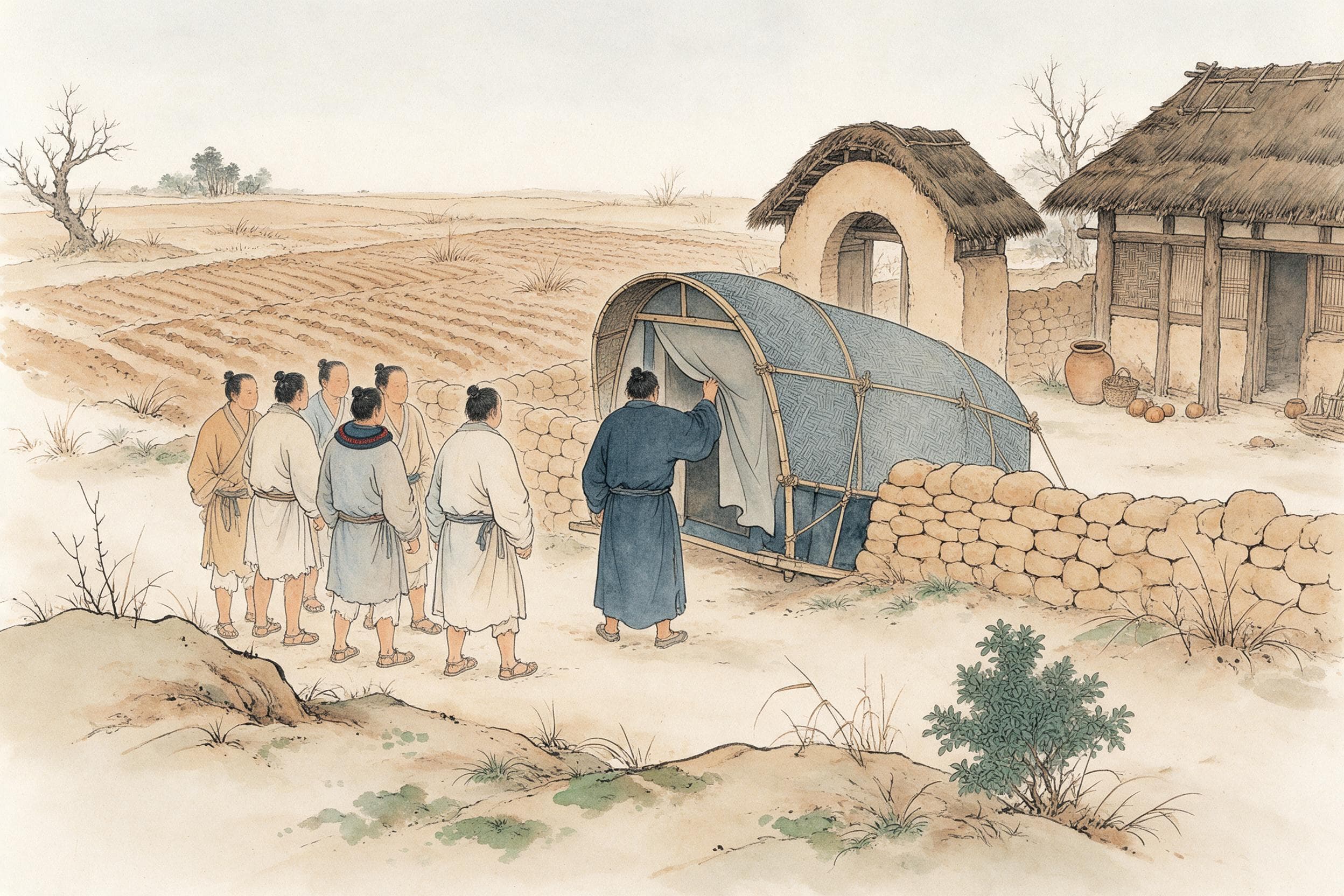
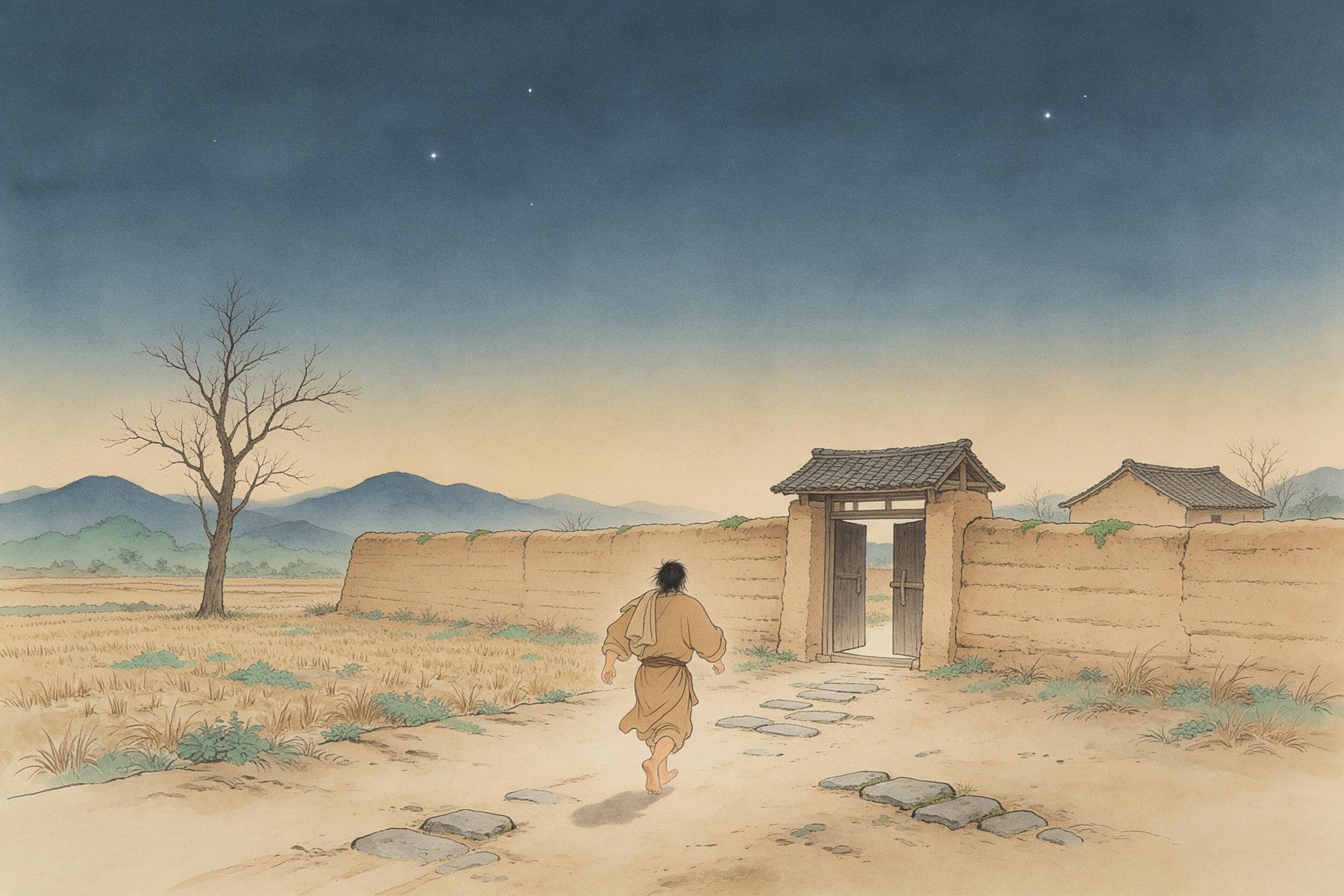
The first banquet begins with a remark nobody meant. Guan Fu, in mourning, visits the chancellor Tian Fen, who 從容曰:吾欲與仲孺過魏其侯 — says at leisure that he would like to go with him to the Marquis of Weiqi; 從容, 'at leisure', is the word that matters. Guan Fu takes it as meant and asks him to 旦日蚤臨, to come early the next morning. At the other house they 益市牛酒,夜灑埽,早帳具至旦 — buy beef and wine, sweep and wash all night, have everything ready by dawn — and 平明,令門下候伺, send the household to watch the road at daybreak.
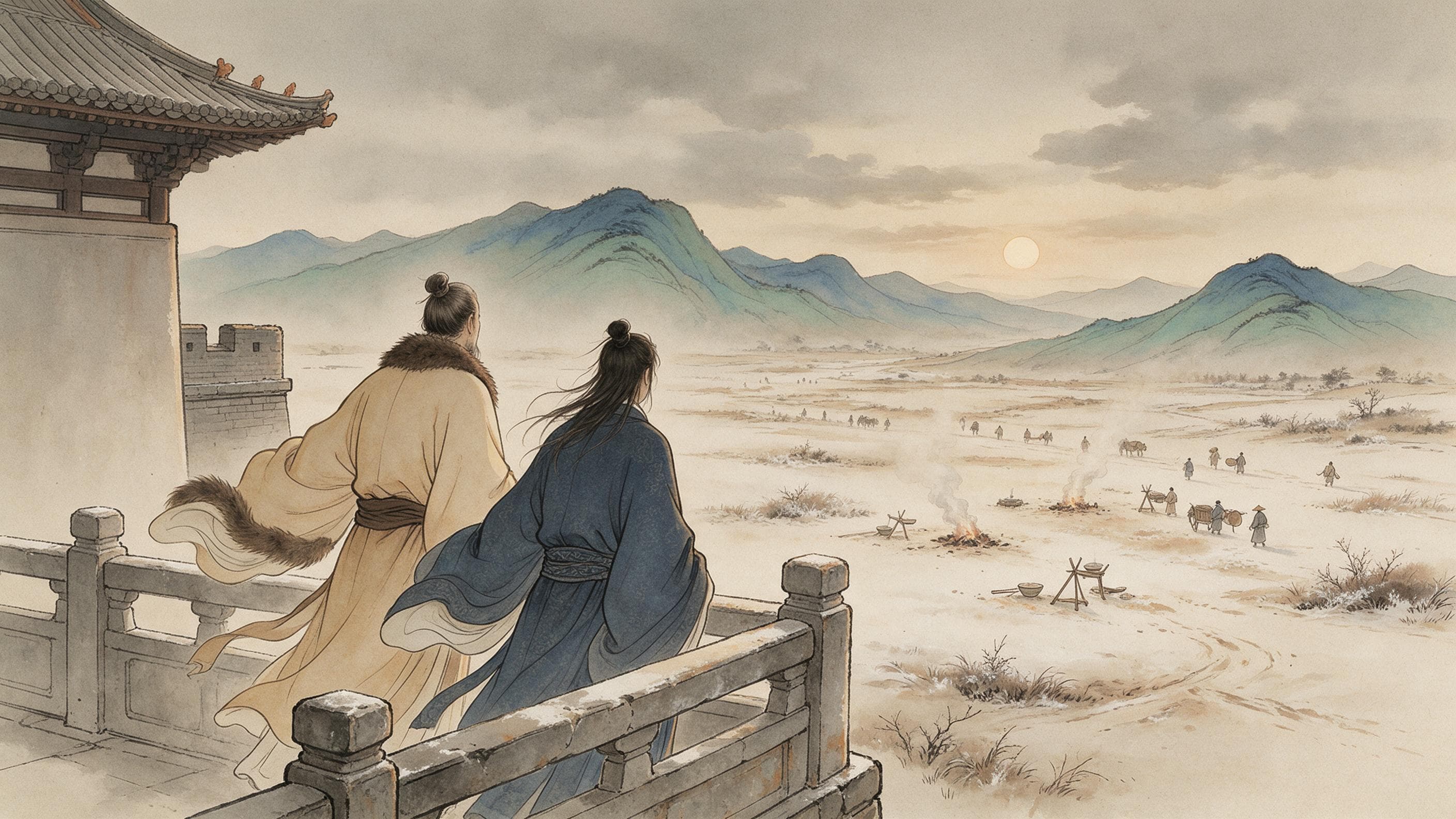
Then five characters: 至日中,丞相不來 — by midday the chancellor had not come. Guan Fu drives over himself. The chancellor 尚臥, still in bed, and only then apologises — 鄂謝 in the Shiji, 悟,謝曰 in the Hanshu — 吾昨日醉,忽忘與仲孺言, I was drunk yesterday and forgot. He comes, and 又徐行, again goes slowly, and Guan Fu 愈益怒, angrier still. When the wine is warm he 起舞屬丞相,丞相不起 — rises to dance and invites the chancellor to follow, and the chancellor does not rise — so he 從坐上語侵之 (the Hanshu: 徙坐), speaks at him from his seat. The host pulls him away and apologises; the chancellor himself 卒飲至夜,極驩而去. No charge.
Second Banquet: The Toasts
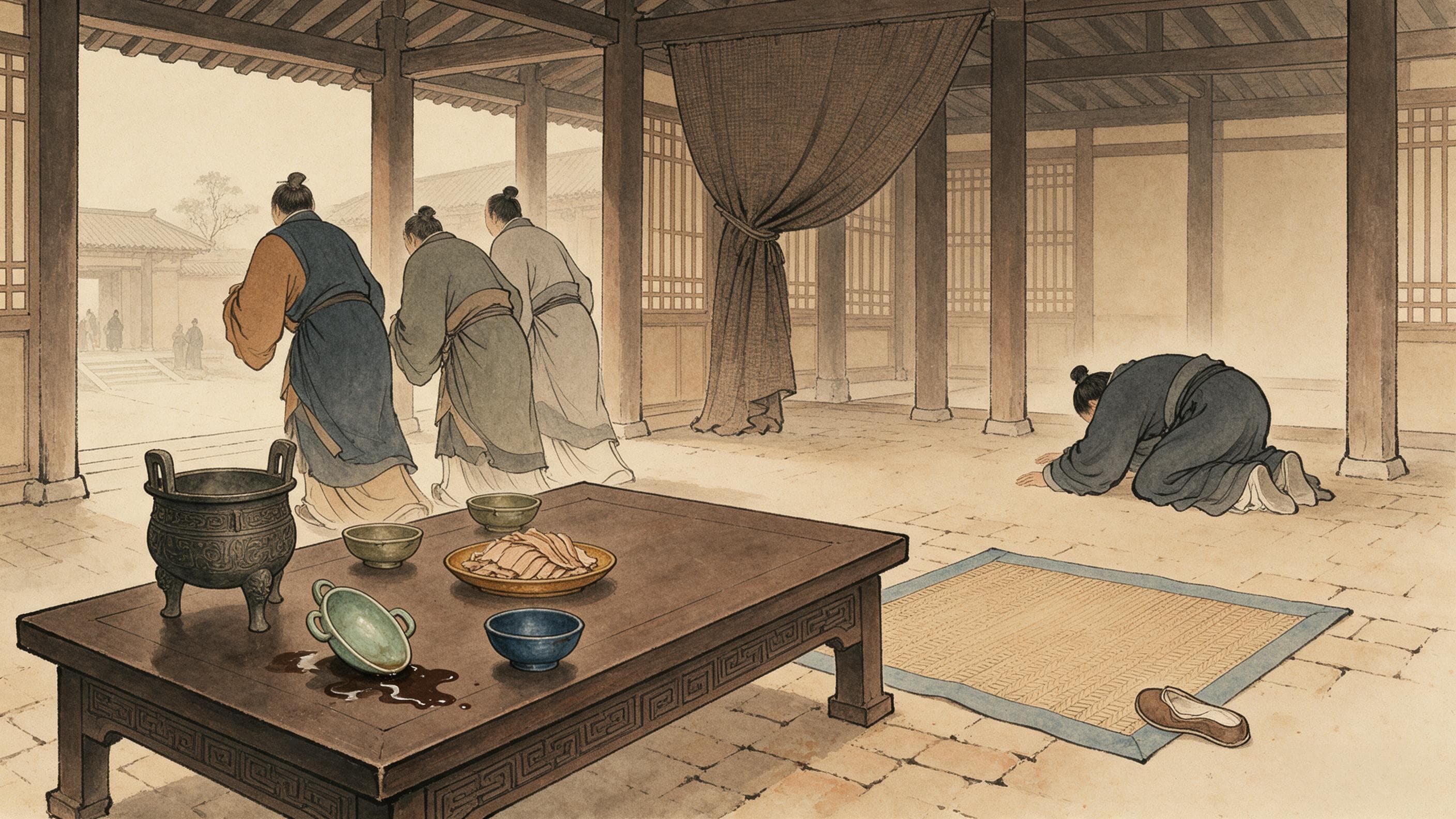
The second banquet is another kind of occasion: 夏,丞相取燕王女為夫人,有太后詔,召列侯宗室皆往賀 — the chancellor marries the daughter of the Prince of Yan, and an empress dowager's decree summons every marquis and clansman to congratulate him; not a private party. Guan Fu does not want to go — 夫數以酒失得過丞相, I have already offended him with drink — and the Marquis of Weiqi says 事已解, it is settled, and 彊與俱, drags him along. Then the toasts: 武安起為壽,坐皆避席伏 — the chancellor rises to offer a toast and the whole company leaves its mats and prostrates itself; 魏其侯為壽,獨故人避席耳,餘半膝席 — for the Marquis of Weiqi only old friends leave their mats, and the rest merely half-rise on theirs. 灌夫不悅, he is displeased.
He rises to pour for the company. At the chancellor: 武安膝席曰:不能滿觴, half-risen on his mat, he says he cannot fill the cup; Guan Fu is angry and 嘻笑, laughs as he answers 將軍貴人也,屬之, you are a noble man, so make it your turn (the Hanshu: 畢之, finish it). At the Marquis of Linru, who 方與程不識耳語,又不避席 — is whispering with Cheng Bushi and does not leave his mat either — he has 無所發怒, nowhere to put his anger, and curses: 乃效女兒呫囁耳語, to behave like a girl whispering (the Hanshu: 女曹兒, like a pack of girls). Asked whether, since Cheng and Li both guard the eastern and western palaces, he should spare a thought for General Li, he answers 今日斬頭陷匈,何知程李乎 — today I could split my skull and sink it in my chest; what do I care for Cheng or Li? (the Hanshu: 穴匈, hole the chest). The company 起更衣,稍稍去, rises to relieve themselves and slips away one by one; the Marquis of Weiqi leaves and 麾灌夫出 (the Hanshu: 戲夫).
The Charge: Cursing While Seated
The charge is built in sequence. The chancellor says 此吾驕灌夫罪 — this is the crime of my having spoiled him, putting the fault on his own indulgence — and has 令騎留灌夫, riders hold Guan Fu, who 欲出不得, cannot get out. Jifu rises to apologise for him and 案灌夫項令謝, presses his neck down to make him apologise; 夫愈怒,不肯謝 (the Hanshu: 不肯順, will not submit). So 武安乃麾騎縛夫置傳舍 (the Hanshu: 戲騎) — riders tie him and put him in the post-house — and the long historian is called. First the occasion is fixed: 今日召宗室,有詔 — today the clansmen were summoned, by decree. Then the charge: 劾灌夫罵坐不敬,系居室, impeached for cursing while seated, lacking respect, held in the 居室. Four characters, and never the stronger formula. Only after that 遂按其前事, the earlier affairs are taken up, and the whole clan 皆得棄市罪, all sentenced to execution in the market.
The Marquis of Weiqi tries to save him. His wife says 與太后家忤,寧可救邪; he answers 侯自我得之,自我捐之,無所恨。且終不令灌仲孺獨死,嬰獨生 — the marquisate I got myself and I will give up myself; I will never let him die alone while I live. He 竊出上書, smuggles out a memorial calling it 醉飽事,不足誅, a matter of drink and a full belly, not worth execution, and the emperor says 東朝廷辯之, let the Eastern Court debate it. There Han Anguo says yes to both: 爭杯酒,不足引他過以誅也,魏其言是也 — a quarrel over a cup of wine, no reason to drag in other faults and execute him; but also 枝大於本,脛大於股,不折必披, when the branch outgrows the trunk and the shin the thigh it must break or split, and 丞相言亦是; 唯明主裁之, let the wise ruler decide. Ji An is plainly for Weiqi; Zheng Dangshi is for him and then 不敢堅對, does not hold to it; 餘皆莫敢對, the rest say nothing. The emperor is angry at 局趣效轅下駒, a man crouching like a colt under the shaft; the empress dowager refuses food: 皆魚肉之矣.
Two Charges of Disrespect, and Two Texts
The end comes fast. 五年十月,悉論灌夫及家屬 — in the fifth year, tenth month, Guan Fu and his household are all sentenced; the Marquis of Weiqi is executed for 矯先帝詔, forging an imperial testament. That spring Tian Fen sickens and 專呼服謝罪, calls out apologies without stopping; the exorcist sees 見魏其、灌夫共守,欲殺之 — the two of them keeping watch and wanting to kill him; 竟死, he dies. The Hanshu is fuller: 一身盡痛,若有擊者, his whole body aches as if someone were striking him, and 笞欲殺之, flogging him. Then the second disrespect, in the Shiji only: 元朔三年,武安侯坐衣襜褕入宮,不敬; the Hanshu reads 元朔中有罪免, deprived of the fief, and has no 不敬. The emperor's last word: 使武安侯在者,族矣.
Ten differences in this scene, side by side and undecided: 屬之/畢之; 臨汝侯/臨汝侯灌賢; 女兒/女曹兒; 陷匈/穴匈; 麾灌夫出/戲夫; 麾騎/戲騎; 不肯謝/不肯順; 鄂謝/悟,謝曰; 從坐上/徙坐; 專呼服謝罪/一身盡痛,若有擊者. The frames differ too: Shiji 107 joins Dou Ying and Tian Fen with Guan Fu attached; Hanshu 52 is a four-man biography with Guan Fu in a section of his own. Limits: no direction words in this scene — no east or south, no upper or lower seat; only the four movements, so what is read is amplitude, not seating order. Neither page gives the food, the hall or an age, and neither is read as Han politics or as a trial of character. This site has written about the four directions at the Hongmen banquet, the rites of a ruler's banquet, and the dividing of meat in a ward; this piece reads one breach of manners becoming one charge.
Related reading:Facing East: Four Seats at the Hongmen Banquet · The Duke Entertains: One Meal Under the Rites · Drilling the Court: From Swords Struck on Pillars to 'Now I Know How Noble an Emperor Is'
Sources & further reading
- 《史記》卷一百七·魏其武安侯列傳第四十七(西漢司馬遷撰;維基文庫本,繁體白文,未與中華書局點校本複核) — A joint biography of Dou Ying and Tian Fen, with Guan Fu attached, and it holds the two banquets and the one charge. The six-character summary is 灌夫為人剛直使酒,不好面諛; to those above him 不欲加禮,必陵之, to those below 愈貧賤,尤益敬; his household had 家累數千萬,食客日數十百人, and 潁川兒 sang 潁水清,灌氏寧;潁水濁,灌氏族. The first banquet is all speed: the chancellor idly says 吾欲與仲孺過魏其侯, the household 益市牛酒,夜灑埽,早帳具至旦, watches from 平明, and 至日中,丞相不來; the chancellor 尚臥, says 吾昨日醉,忽忘與仲孺言, comes 又徐行, and when 夫起舞屬丞相,丞相不起, Guan Fu 從坐上語侵之; the party ends 極驩而去, with no charge. The second is all amplitude: after 太后詔,召列侯宗室皆往賀, 武安起為壽,坐皆避席伏, then 魏其侯為壽,獨故人避席耳,餘半膝席; at 武安 he hears 膝席曰不能滿觴, at 臨汝侯 (who 方與程不識耳語,又不避席) he curses 乃效女兒呫囁耳語; then 此吾驕灌夫罪, 籍福…案灌夫項令謝, 不肯謝, 武安乃麾騎縛夫置傳舍, 召長史曰:今日召宗室,有詔, and the charge itself: 劾灌夫罵坐不敬,系居室. The page contains no direction words (no 東向, 南向, 北向, 西向, 上坐, 下坐). Later: 韓安國's double answer (爭杯酒,不足引他過以誅也; 枝大於本,脛大於股,不折必披), 汲黯 and 鄭當時, the emperor's 局趣效轅下駒, the empress dowager's 皆魚肉之矣, 五年十月,悉論灌夫及家屬, 魏其's 矯先帝詔,罪當棄市, Tian Fen's death (專呼服謝罪…見魏其、灌夫共守,欲殺之), and 元朔三年,武安侯坐衣襜褕入宮,不敬.
- 《漢書》卷五十二·竇田灌韓傳第二十二(東漢班固撰;維基文庫本,繁體白文,頁面標 textquality 25%,未與中華書局點校本複核) — The same two banquets in a four-man collective biography (竇嬰、田蚡、灌夫、韓安國), with Guan Fu in a section of his own. The wording differs from the Shiji in at least ten places, kept side by side in the article and not adjudicated: 屬之/畢之; 臨汝侯/臨汝侯灌賢; 女兒/女曹兒; 陷匈/穴匈; 麾(灌夫出)/戲(夫); 麾騎/戲騎; 不肯謝/不肯順; 鄂謝/悟,謝曰; 從坐上語侵之/徙坐,語侵之; 專呼服謝罪/一身盡痛,若有擊者…謼服謝罪 (and 欲殺之/笞欲殺之). It keeps the same four-character charge, 劾灌夫罵坐不敬,繫居室. One further difference matters for the ending: where the Shiji has 元朔三年,武安侯坐衣襜褕入宮,不敬, this page has 子恬嗣,元朔中有罪免 — the second 不敬 is not in the Hanshu.