It begins with nine characters: 宣王即位,不籍千畝 — King Xuan came to the throne and did not plough the thousand mu. The note explains the word at once: 籍,借也,借民力以為之 — to borrow; the king's field was worked by borrowing the people's labour. 天子田籍千畝,諸侯百畝 — a thousand mu for the Son of Heaven, a hundred for a lord; and 自厲王之流,籍田禮廢 — since the flight of King Li the rite had fallen into disuse, and Xuan did not restore it. Then comes one long remonstrance, and two words at the end. Two pages supply it: the Guoyu's account of Duke Wen of Guo's advice — text, Wei Zhao's note, and a third layer of Qing scholars' collation that this article does not use — and one section of the Liji's chapter on sacrifice, which is a ritual book's design, not a record.
One: nine characters and a note
The remonstrance opens with a principle: 不可。夫民之大事在農 — you cannot; the great affair of the people lies in farming. Six clauses follow: 上帝之粢盛於是乎出,民之蕃庶於是乎生,事之供給於是乎在,和協輯睦於是乎興,財用蕃殖於是乎始,敦庬純固於是乎成 — the grain in the sacrificial vessels, the increase of the people, the supply of services, harmony, wealth, and firm custom all come out of it; therefore 稷為大官. The note glosses two words: 器實曰粢,在器曰盛 — the grain itself is one thing, the grain in the vessel another.
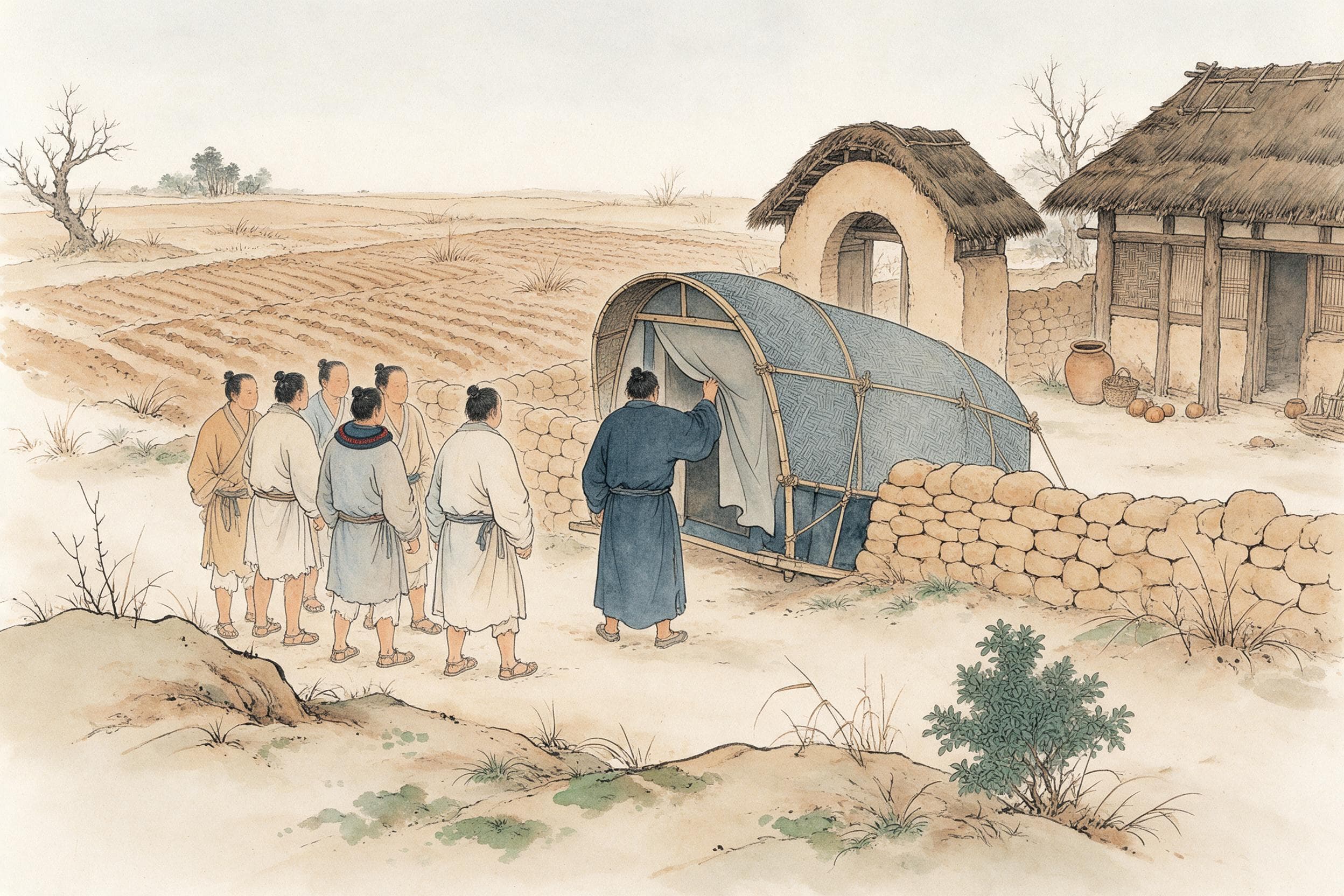
He then takes the year apart. First the sky: the grand historian watches the soil in season, the vapour gathers and the soil stirs, until 農祥晨正, 日月底于天廟, 土乃脉發 — the Farmer's Star stands upright at dawn, sun and moon reach the Heavenly Temple, and the earth opens. The note says 農祥,房星也 and 天廟,營室也. Then the date: 先時九日,太史告稷曰, nine days before, from now to 初吉, 陽氣俱蒸,土膏其動, and if it is not loosed 弗震弗渝,脉其滿眚,穀乃不殖; the note makes 初吉 the first day of the second month. The king's orders follow: 距今九日, 土其俱動, 王其祗祓,監農不易; and he has 司徒咸戒公卿、百吏、庶民, 司空除壇于籍, 命農大夫咸戒農用 — the instruction officer for the men, the works officer for the altar, the farming officer for the tools.
Two: five days before, the wind and the fast
At 先時五日 the report comes from a musician: 瞽告有協風至 — the blind music-master announces that the concordant wind has arrived; the note explains 瞽,樂太師,知風聲者也, and calls the wind 立春日融風也, the thawing wind of the first day of spring. Then the fast: 王即齋宮,百官御事,各即其齋三日. When the fast is over he bathes and drinks wine, and the note glosses the two words: 淳,沃也。濯,溉也 — 淳 is to pour, 濯 to wash. On the day, 鬱人薦鬯 and 犧人薦醴, and 王祼鬯,饗醴乃行, with 百吏、庶民畢從 behind him.
Three: one slice of soil
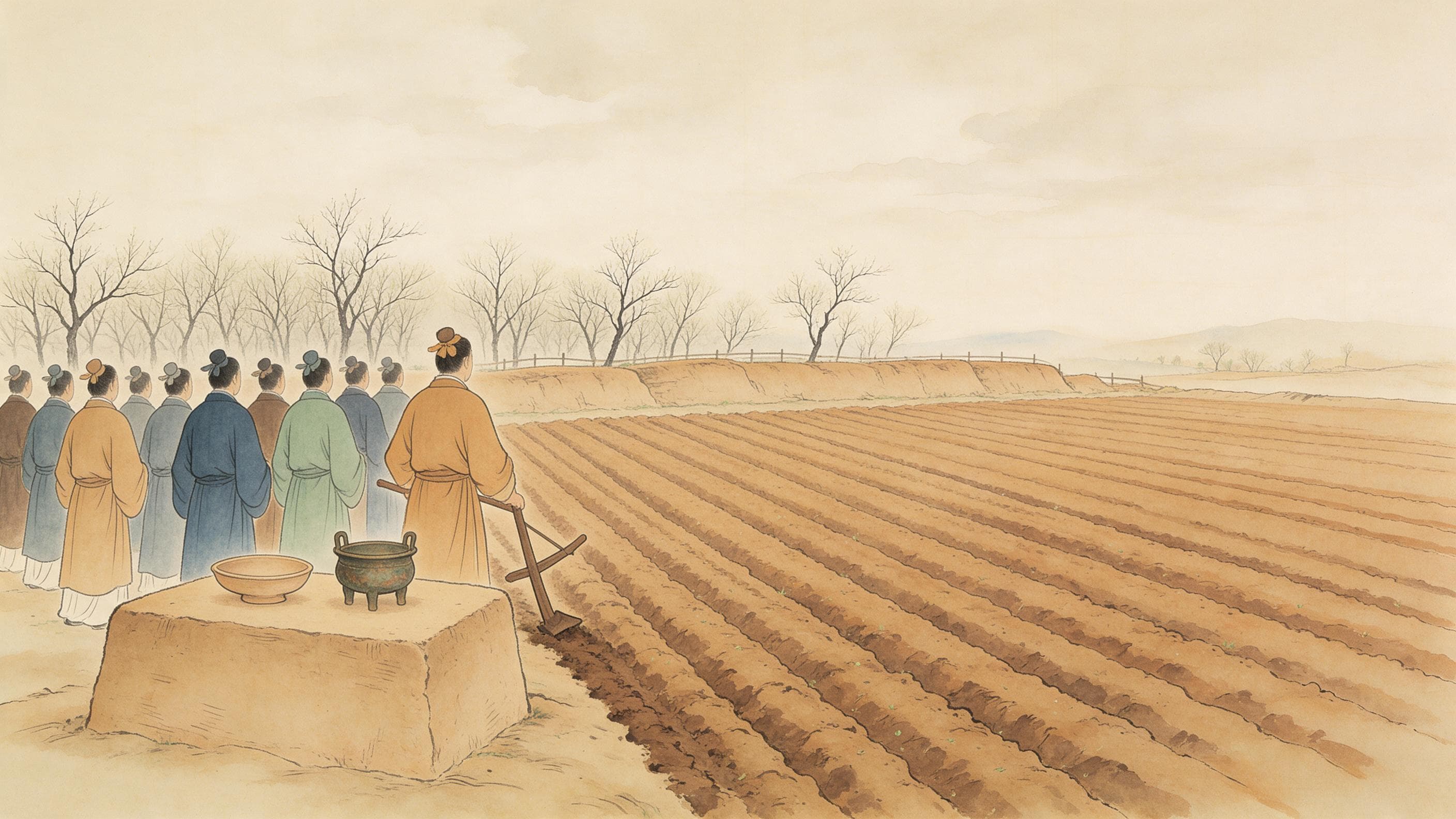
The field is the most exact part. 及籍,后稷監之; 膳夫、農正陳籍禮; 太史贊王; 王敬從之. Then 王耕一墢 — the king turns one slice of soil — 班三之, the ranks triple it, and 庶民終于千畝, the commoners finish the thousand mu. The note measures the tool: 耜廣五寸,二耜為耦,一耦之發,廣尺深尺. In the same note come two sets of numbers: 王一墢、公三、卿九、大夫二十七也 — one, three, nine, twenty-seven, each rank tripling the one below. The other set belongs to a different book, the Han ritual treatise, whose note counts three pushes for the emperor, five for a duke, nine for ministers and lords. Two systems, and this article does not average them, reconcile them or turn one into the other.
After the ploughing comes the meal: 司徒省民,太師監之; 宰夫陳饗,膳宰監之; 膳夫贊王,王歆大牢; 班嘗之; 庶人終食. Three pairs of eyes are set on one business — the millet officer inspects the work, the grand historian watches; the instruction officer inspects the people, the grand master watches; the steward spreads the feast, the kitchen officer watches. And the eating follows the ploughing: the king tastes the great sacrifice first, the ranks taste after him, the commoners eat last.
Four: the granary, the penalty, the order of nine officers
The harvest does not go into an ordinary store. 是日也,瞽帥、音官以風土; 廩于籍東南,鍾而藏之; 而時布之于農 — it is gathered into a granary southeast of the field and later given out to the farmers. The note calls it 廩,御廩也,一名神倉, the imperial granary, also called the spirit granary, and says the southeast is where things grow. One sentence gives the penalty: 土不備墾,辟在司寇 — if the ground is not fully broken, the offence lies with the minister of crime; the note reads 辟,罪也。在司寇,司寇行其罪也.
The ordering is the tidiest thing in the speech. 乃命其旅曰, and then the file goes down: 農師一之, 農正再之, 后稷三之, 司空四之, 司徒五之, 太保六之, 太師七之, 太史八之, 宗伯九之, and last 王則大徇 — the king makes the great circuit. 耨穫亦如之: weeding and harvest follow the same order. The note explains 大徇,帥公、卿、大夫親行農也 — the king leads the dignitaries into the field in person. Then the result: 日服其鎛, 財用不乏,民用和同, and the policy behind it, 三時務農而一時講武, so that 故征則有威,守則有財 — three seasons of farming and one of arms. The speech closes with a question: 今天子欲修先王之緒而棄其大功 — if the Son of Heaven means to continue the former kings' work and throws away its greatest labour — 將何以求福用民, with what will he ask for blessing and use the people?
Five: the ritual book's thousand mu, and the battle
The other page is a ritual book. The Liji's chapter says 天子爲藉千畝,冕而朱纮,躬秉耒 — a thousand mu for the Son of Heaven, capped, with a red cap-string, himself holding the plough-handle; 諸侯爲藉百畝, and for them 冕而青纮, a blue cap-string, and the same 躬秉耒. These are the book's numbers and dress, a design rather than an account. The produce is for 以事天地、山川、社稷、先古, to serve Heaven and Earth, the mountains and rivers, the altars and the ancient dead, 以爲醴酪齊盛, for the sweet wine and the grain of offering: 於是乎取之,敬之至也. And one line states its purpose: 耕藉,所以教諸侯之養也 — ploughing the borrowed field is how the lords are taught to provide.
Then two short sentences. 王不聽 — the king did not listen. 三十九年,戰于千畝,王師敗績于姜氏之戎 — in the thirty-ninth year there was a battle at Qianmu, and the king's army was beaten by the Rong of the Jiang clan. The note adds only 姜氏之戎,西戎之別種,四岳之後也, a branch of the western Rong. Qianmu appears twice: first as the name of the borrowed field, then as the name of a battlefield. The historian set the two side by side; this article sets them side by side too, and does not say the one caused the other, or that the defeat was a punishment.
- The Guoyu page is a remonstrance, not a Western Zhou archive — old attribution to Zuo Qiuming, Spring and Autumn, generally treated as a Warring States compilation of sayings — and the Liji is a ritual book saying how things should be, not a record.
- Three layers are kept apart: text, Wei Zhao note, and a Qing collation layer. Only the first two are quoted, and every quotation from the note is marked as such; the collation layer is not used at all.
- Two sets of numbers stand side by side and are not reconciled: the Guoyu note's 王一墢、公三、卿九、大夫二十七 against the Han ritual treatise's three, five and nine. Neither is converted, averaged or merged.
- One character differs between the two pages: 籍 in the Guoyu, 藉 in the Liji; each is quoted as its own page has it. Caps, red and blue cap-strings, and the plough-handle are copied without glossing their shape.
- The Liji page's two neighbouring passages — feeding the Three Elders and Five Experienced, and the silkworm house with its three dips of the hand — are not used, because the Han ritual-calendar article already took them.
- No general essay on agrarianism or on the people as the root of the state; no conversion of mu or of plough measurements; no explanation of why Xuan stopped the rite, since the page gives only 自厲王之流,籍田禮廢; the thirty-ninth year is copied, not translated into a modern date.
One remonstrance in eight parts: the stars, the dates, the wind, the fast, one slice of soil, the great sacrifice, the spirit granary, the minister of crime — and a list of nine officers going down into the field in order. The king did not listen. In the thirty-ninth year there was a battle at Qianmu. The same name was first written on a ritual schedule, then on a battle report, and neither page says why.
Related reading:From the First Day of Spring to the Great Mourning: A Year of the Han State · At the First Crow: One Day in a Gentleman's Household, According to the Rites · The Monthly Ordinances: The State's To-Do List for Every Month
Sources & further reading
- 《国语》卷一·周语上·虢文公谏宣王不籍千亩(旧题左丘明撰,三国吴韦昭注;维基文库本,正文+注,注中另夹清人校语,页头未标 textquality,未与中华书局点校本复核) — Six characters open it: 宣王即位,不籍千畝. The note (Wei Zhao) defines the word 籍,借也,借民力以為之, gives 天子田籍千畝,諸侯百畝, and adds 自厲王之流,籍田禮廢. The remonstrance: 不可。夫民之大事在農; the six clauses from 上帝之粢盛於是乎出 to 敦庬純固於是乎成, ending 稷為大官; 農祥晨正,日月底于天廟,土乃脉發 (note: 農祥,房星也 / 天廟,營室也); 先時九日,太史告稷曰, 陽氣俱蒸,土膏其動, 弗震弗渝,脉其滿眚,穀乃不殖 (note: 初吉,二月朔日也); 距今九日, 王其祗祓,監農不易, 司徒咸戒公卿、百吏、庶民, 司空除壇于籍, 命農大夫咸戒農用; 先時五日, 瞽告有協風至 (note: 瞽,樂太師,知風聲者也; 立春日融風也); 王即齋宮,百官御事,各即其齋三日; 淳,沃也。濯,溉也; 鬱人薦鬯, 犧人薦醴, 王祼鬯,饗醴乃行; 及籍,后稷監之, 膳夫、農正陳籍禮, 太史贊王, 王敬從之, 王耕一墢, 班三之, 庶民終于千畝, with the note's 耜廣五寸,二耜為耦,一耦之發,廣尺深尺 and 王一墢、公三、卿九、大夫二十七也; the meal, 司徒省民,太師監之, 宰夫陳饗,膳宰監之, 膳夫贊王,王歆大牢, 班嘗之, 庶人終食; the granary, 廩于籍東南,鍾而藏之, 而時布之于農 (note: 廩,御廩也,一名神倉); the penalty, 土不備墾,辟在司寇 (note: 辟,罪也。在司寇,司寇行其罪也); the order of officers, 農師一之 to 宗伯九之,王則大徇, 耨穫亦如之 (note: 大徇,帥公、卿、大夫親行農也); 日服其鎛, 財用不乏,民用和同, 三時務農而一時講武, 故征則有威,守則有財; the closing question, 今天子欲修先王之緒而棄其大功, 將何以求福用民. The ending: 王不聽。三十九年,戰于千畝,王師敗績于姜氏之戎 (note: 姜氏之戎,西戎之別種,四岳之後也). The page interleaves reading glosses and Qing collation inside the text; quotations are taken from spans that do not cross those insertions, and the collation layer is not used.
- 《礼记·祭义》(维基文库本,白文无注,页面标 textquality 75%,未与中华书局点校本复核) — One section only: 天子爲藉千畝,冕而朱纮,躬秉耒; 諸侯爲藉百畝, 冕而青纮 (the page adds 一作「絃」), 躬秉耒; 以事天地、山川、社稷、先古, 以爲醴酪齊盛, 於是乎取之,敬之至也; and 耕藉,所以教諸侯之養也. The page's 爲 is kept as the page has it (the Guoyu page writes 為 in the corresponding passages), and its 藉 is kept against the Guoyu's 籍. Two neighbouring sections of the same page — the feeding of the Three Elders and Five Experienced in the Great Hall, and the silkworm house with the three dips of the hand — are not used, being already treated in the Han ritual-calendar article.