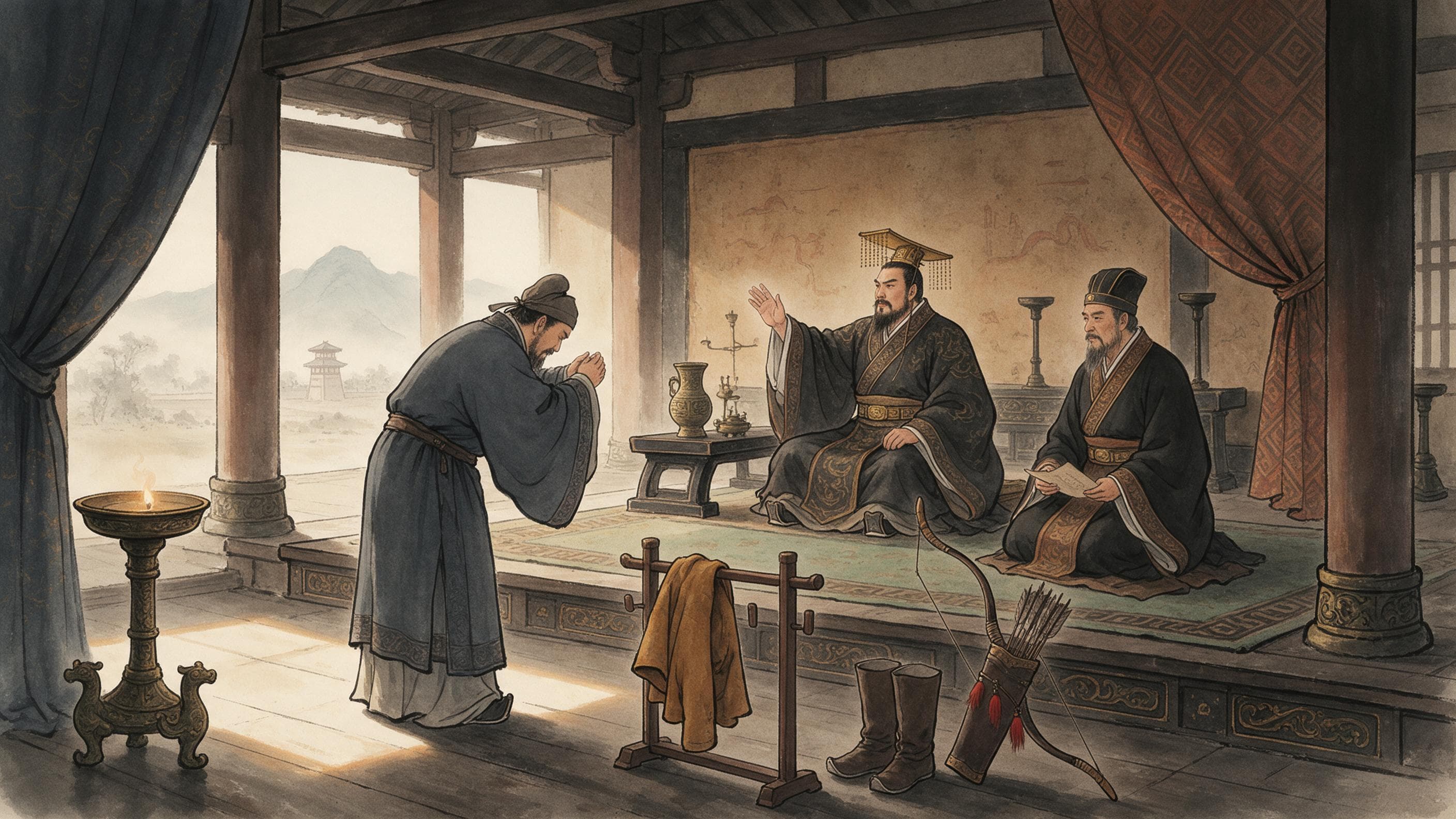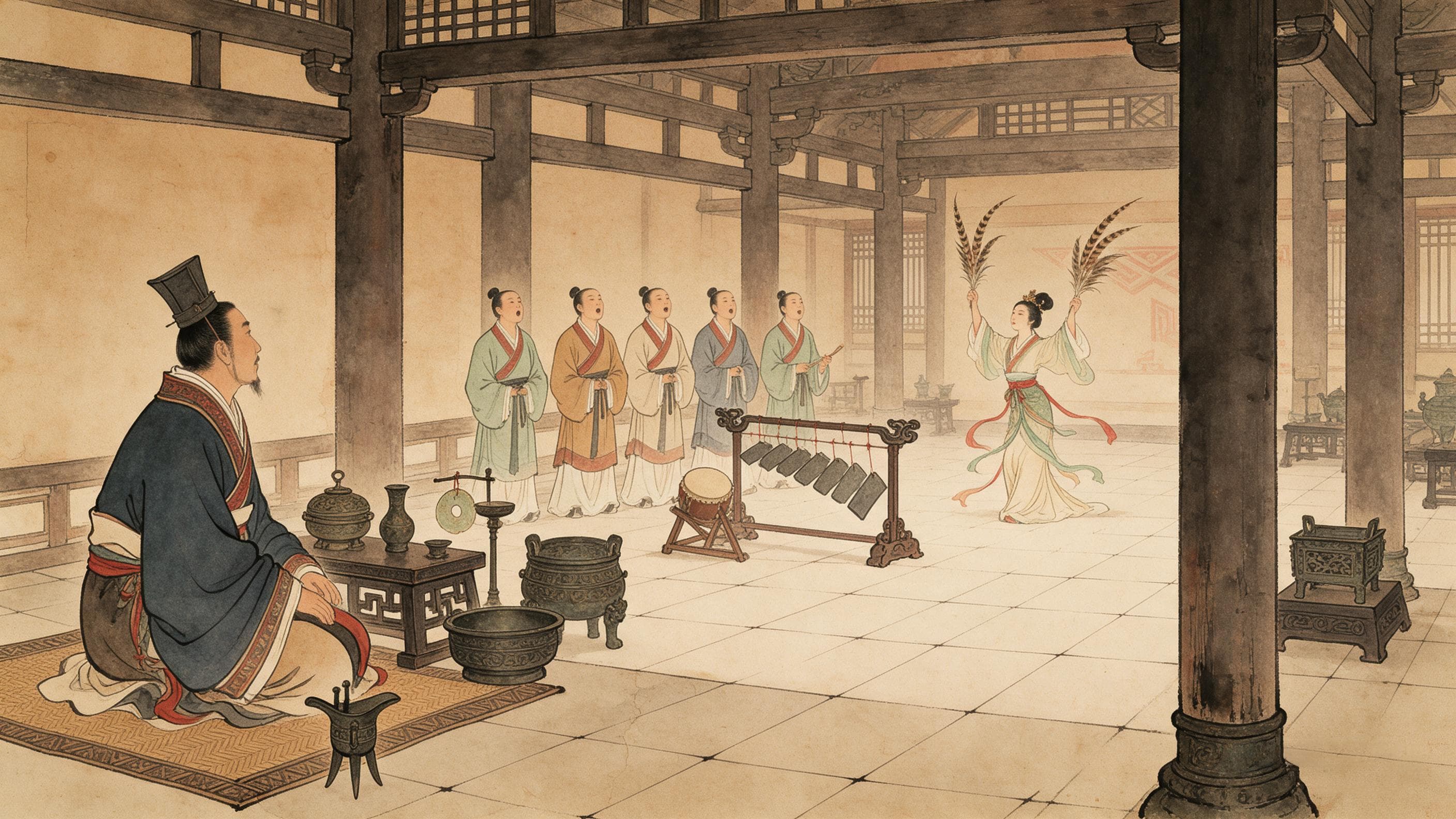
A prince of Wu came to the court of Lu and asked to hear the Zhou music. The performers sang section by section, and after each he gave a verdict: 美哉, 'beautiful', and then a sentence on what the music showed. Two books record that concert, the Zuo Tradition under the twenty-ninth year of Duke Xiang and the Records of the Grand Historian in the hereditary house of Wu, and they record it twice. Nothing on either page describes the hall, the audience or the time of year: the scene is a request and a series of answers, and that is all the setting the two texts give.
One Concert, Two Texts
The Zuo Tradition sets the scene in three phrases: 吳公子札來聘, the prince of Wu, Zha, came on a visit; 請觀於周樂, he asked to look at the Zhou music; 使工為之歌, he had the musicians sing it. The Records has 四年,吳使季札聘於魯,請觀周樂: in the fourth year Wu sent Ji Zha to Lu, and he asked to see the Zhou music. The same man is 公子札 on one page and 季札 on the other; the same request is 觀於周樂 in one and 觀周樂 in the other; and the Zuo Tradition has someone order the performance where the Records says only 爲歌. One event, written twice; neither page mentions the other. Neither page says what 周樂 was as a body of music; they name sections and report what the visitor said about each, and leave the repertoire itself undescribed.
The programme is a list of names. Fourteen sections are sung: 周南 and 召南; 邶、鄘、衞 as one group; 王; 鄭; 齊; 豳; 秦; 魏; 唐; 陳; then the sentence 自鄶以下無譏焉; 小雅; 大雅; 頌. Then five dances: 象箾 and 南籥, 大武, 韶濩, 大夏, 韶箾. Neither page gives a note, a line of text or an instrument: what they give is the order and his sentence after each item. The two pages number the sections the same way and put them in the same order; where a name is written differently the difference is one character, not one item.
Fourteen Songs, a Sentence After Each
After 周南 and 召南: 美哉!始基之矣,猶未也,然勤而不怨矣, 'beautiful. The foundation has been begun, but it is not there yet; toilsome, and yet without resentment.' The Records has the same sentence with one 矣 fewer: 美哉,始基之矣,猶未也。然勤而不怨. The verdict is about the state as much as about the sound: a foundation begun and not finished, work without complaint.
After 邶、鄘、衞: 美哉,淵乎!憂而不困者也。吾聞衞康叔、武公之德如是,是其《衞風》乎, 'deep; sorrowful but not straitened. The virtue of Duke Kang and Duke Wu of Wei must have been like this.' After 王: 美哉,思而不懼,其周之東乎, 'thoughtful, not afraid; the Zhou of the east?' The Records carries both word for word, writing 衞 for 衛. Each of these verdicts moves from a quality of the music to a guess about the place it came from, and the guess is always phrased as a question.
The first real difference comes at 鄭. The Zuo Tradition: 美哉!其細已甚,民弗堪也,是其先亡乎, 'beautiful, but the fineness is too fine; the people cannot bear it; this state will fall first.' The Records drops the 美哉 and writes 民不堪也 for 民弗堪也, so praise goes and the verdict becomes diagnosis. On 齊 it has 其太公乎 for 其大公乎; on 豳 蕩蕩乎 for 蕩乎. At 鄭 the Zuo Tradition's praise disappears in the Records, and what is left is a prediction of ruin: the smallest change in wording carries the largest change in tone.
At 秦 the Zuo Tradition reads 大之至乎其周之舊也 where the Records reads 大之至也,其周之舊乎, the same words in another order. At 魏 three: 渢楓乎 against 渢渢乎, 險而易 against 儉而易, 明主 against 盟主, 'a clear lord' against 'a leader of alliances'. The Zuo Tradition page prints 渢楓乎 where 渢渢乎 is expected, and is quoted as printed. At 唐 it says 遺民乎, the Records 遺風乎; at 陳 both drop 美哉 and give only 國無主,其能久乎. Then 自鄶以下,無譏焉, below Kuai there was nothing to criticize, which both pages put in the narrator's voice, not the visitor's. The character variants pile up in these sections, and none of them changes what the visitor is saying about the states.
On 小雅 the Zuo Tradition closes 猶有先王之遺民焉, the Records 猶有先王之遺民也. On 大雅 both have 廣哉,熙熙乎,曲而有直體,其文王之德乎, 'broad, harmonious; bent and yet with a straight body; the virtue of King Wen?' On 頌 comes the longest verdict, fourteen contrasts: 直而不倨,曲而不屈,邇而不偪,遠而不攜,遷而不淫,復而不厭,哀而不愁,樂而不荒,用而不匱,廣而不宣,施而不費,取而不貪,處而不底,行而不流, straight but not stiff, bent but not broken, near but not pressing, far but not lost, moved but not excessive, repeated but not tiresome, at rest but not stuck, moving but not drifting. It ends 五聲和,八風平,節有度,守有序,盛德之所同也. Inside the chain the two texts swap characters: 屈 and 詘, 邇 and 近, 遷而不淫 and 而遷不淫, 底 and 厎. The chain is a list of virtues rather than a description of a performance: each phrase names a way of being balanced, and the last line turns the balance into politics. The four late pairs, 用而不匱,廣而不宣,施而不費,取而不貪, are about giving and taking.
Five Dances
The singing ends and the dancing begins. On 象箾 and 南籥 the Zuo Tradition has 美哉!猶有憾, 'beautiful, and yet there is regret', the Records 美哉,猶有感, 憾 against 感, regret against feeling. On 大武 both have 美哉,周之盛也,其若此乎. On 韶濩, 韶護 in the Records, the Zuo Tradition says 聖人之弘也,而猶有慚德,聖人之難也, 'the greatness of a sage, and still a sense of shame'; the Records drops the 而. On 大夏: 非禹其誰能脩之 against 非禹其誰能及之, who but Yu could have cultivated it, or matched it. On the last dance, 韶箾 in the Zuo Tradition and 招箾 in the Records, the verdict runs 德至矣哉,大矣,如天之無不幬也,如地之無不載也,雖甚盛德,其蔑以加於此矣, virtue at its height, like heaven and earth, nothing to add. Then 觀止矣。若有他樂,吾不敢請已; the Records ends 吾不敢觀. The dances are judged by the same measure as the songs: whether the thing shown is complete, and whether there is anything to regret in it. The closing verdict is the only one in the concert that praises without a reservation.
What the Two Texts Do Differently
The differences are small and consistent. The Records trims exclamations and final particles, 矣, 焉, 也; it drops 美哉 once, at 鄭; it prefers 太公 to 大公, 儉 to 險, 盟主 to 明主, 遺風 to 遺民, 詘 to 屈, 近 to 邇, 厎 to 底, 感 to 憾, 及 to 脩, 燾 to 幬, 無以加 to 蔑以加, and closes with 不敢觀 for 不敢請已; it also drops the 使工 of the opening. None of this changes the programme or the sense of a verdict: the pattern of two related texts, neither copied from the other. Neither page says which came first, so they can be read side by side and cannot be added together. The direction of the changes is consistent too: the Records shortens, smooths and removes what sounds like a speaker's voice, while the Zuo Tradition keeps the repetitions and the exclamations.
What This Article Leaves Out
It does not write about Zhou music or the rites in general, and it does not match the programme to the Book of Songs as we have it now: the pages give verdicts, not poems. It supplies no music, instruments or number of performers. Ji Zha's refusals of the throne and his missions elsewhere are another subject; here he is only a man listening in Lu. The Shang sacrifice songs, the Han Music Bureau and the Northern Wei court musicians of Luoyang are separate articles. Quotations keep the pages' characters, including 渢楓乎. What is left is the programme and the verdicts, and those are enough to show a concert in progress and a text being rewritten at the same time. That is the whole of the material.
Related reading:Portents in Dress: The White Qia, the Embroidered Cap, and Two Ways of Writing One Thing · Ice: Cut in Winter, Given Out in Summer, and Used to Bathe the Dead · Caps of the Yin: Xu, Zhangfu, and the Names of Three Dynasties
Sources & further reading
- 《春秋左氏傳·襄公二十九年》(維基文庫本,頁面白文;全卷五萬餘字,此段在二十九年) — The concert: 吳公子札來聘…請觀於周樂。使工為之歌周南召南, then fourteen sung sections with a verdict after each, the sentence 自鄶以下,無譏焉, then five dances, and the close 觀止矣。若有他樂,吾不敢請已. The page prints 渢楓乎 in the 魏 verdict, where 渢渢乎 is expected.
- 《史記》卷三十一·吳太伯世家(西漢司馬遷撰;維基文庫本,頁面白文) — The same concert in the hereditary house of Wu: 四年,吳使季札聘於魯,請觀周樂。爲歌《周南》、《召南》…, with the same fourteen sections and five dances and mostly the same verdicts, but without 使工, without 美哉 at 鄭, and with a series of one-character differences (太公 for 大公, 儉 for 險, 盟主 for 明主, 遺風 for 遺民, 詘 for 屈, 感 for 憾, 及 for 脩, 燾 for 幬), ending 吾不敢觀.