One court debate, two versions. The Shiji's Zhao世家 puts it right after 十九年春正月,大朝信宮; the Zhanguoce's Zhao chapter 2 begins on an idle day and carries three layers of annotation in its interstices. This article reads the two versions against each other, then peels the notes away. They are not two independent witnesses; they are one event written twice. The two texts differ in wording, in framing and in what they leave out.
The Shiji Version: From the Great Audience
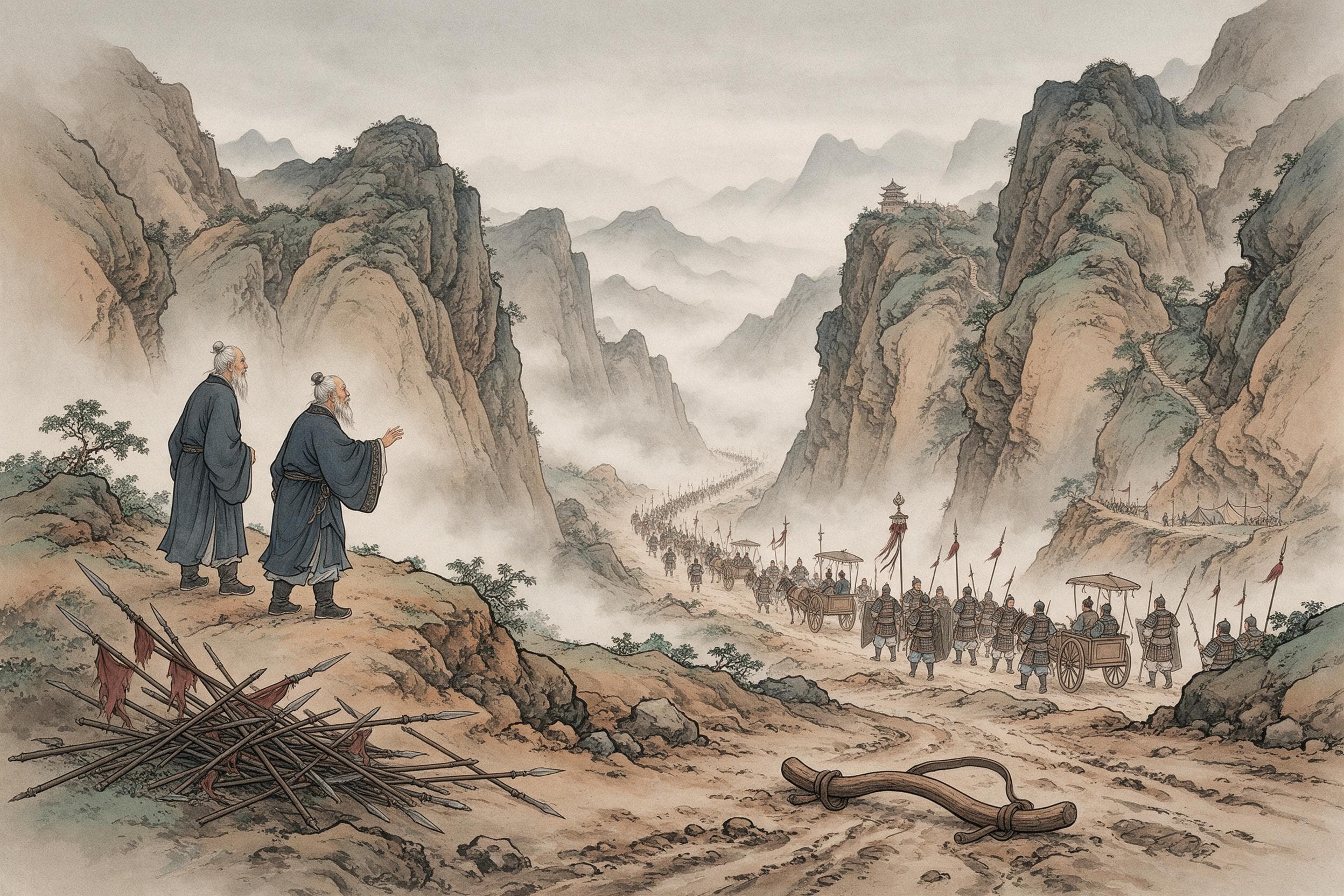
The Shiji gives a date and a scene first: 十九年春正月,大朝信宮。召肥義與議天下,五日而畢. The king then goes north over Zhongshan to 房子, 代 and 無窮, climbs 黃華, and on his return puts the case to 樓緩: 今中山在我腹心,北有燕,東有胡,西有林胡、樓煩、秦、韓之邊,而無彊兵之救,是亡社稷,柰何?…吾欲胡服. 樓緩 says 善, and 群臣皆不欲, the whole court is against it. 樓緩 agrees at once; the court does not. The Shiji makes the opposition a single sentence, 群臣皆不欲, and then lets the king work through it one man at a time. That one sentence is all the court's resistance gets before the king starts working on individuals.
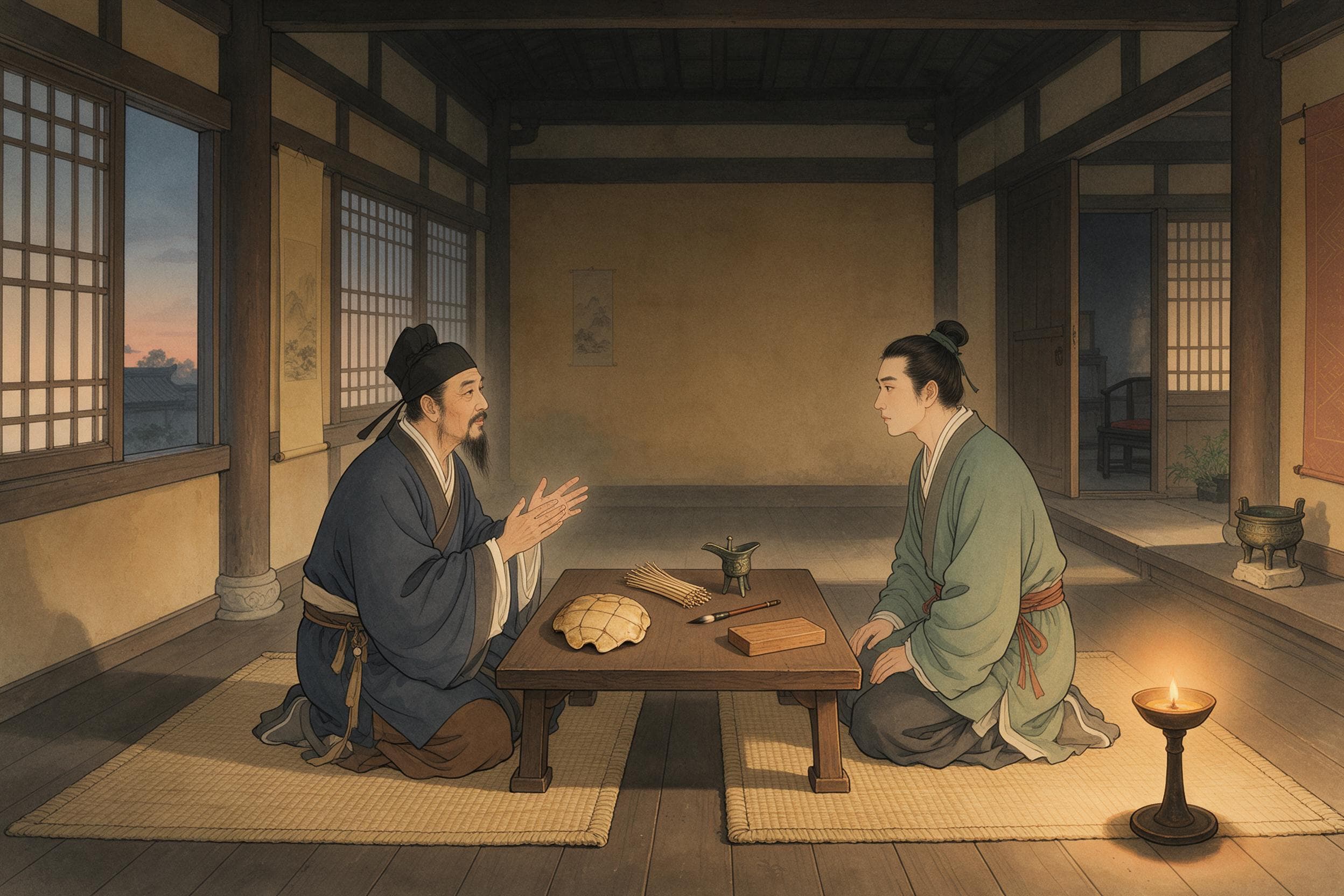
Only then comes the exchange with 肥義. The king says 今吾將胡服騎射以教百姓,而世必議寡人,柰何; 肥義 answers 臣聞疑事無功,疑行無名, and adds 夫論至德者不和於俗,成大功者不謀於衆; the king says 吾不疑胡服也,吾恐天下笑我也; and then 於是遂胡服矣. The decision is not voted through a court: it is settled between a king and one close minister, and then argued out house by house. Note what has and has not happened: a decision has been taken, but no order has been issued, and the rest of the chapter is the issuing.
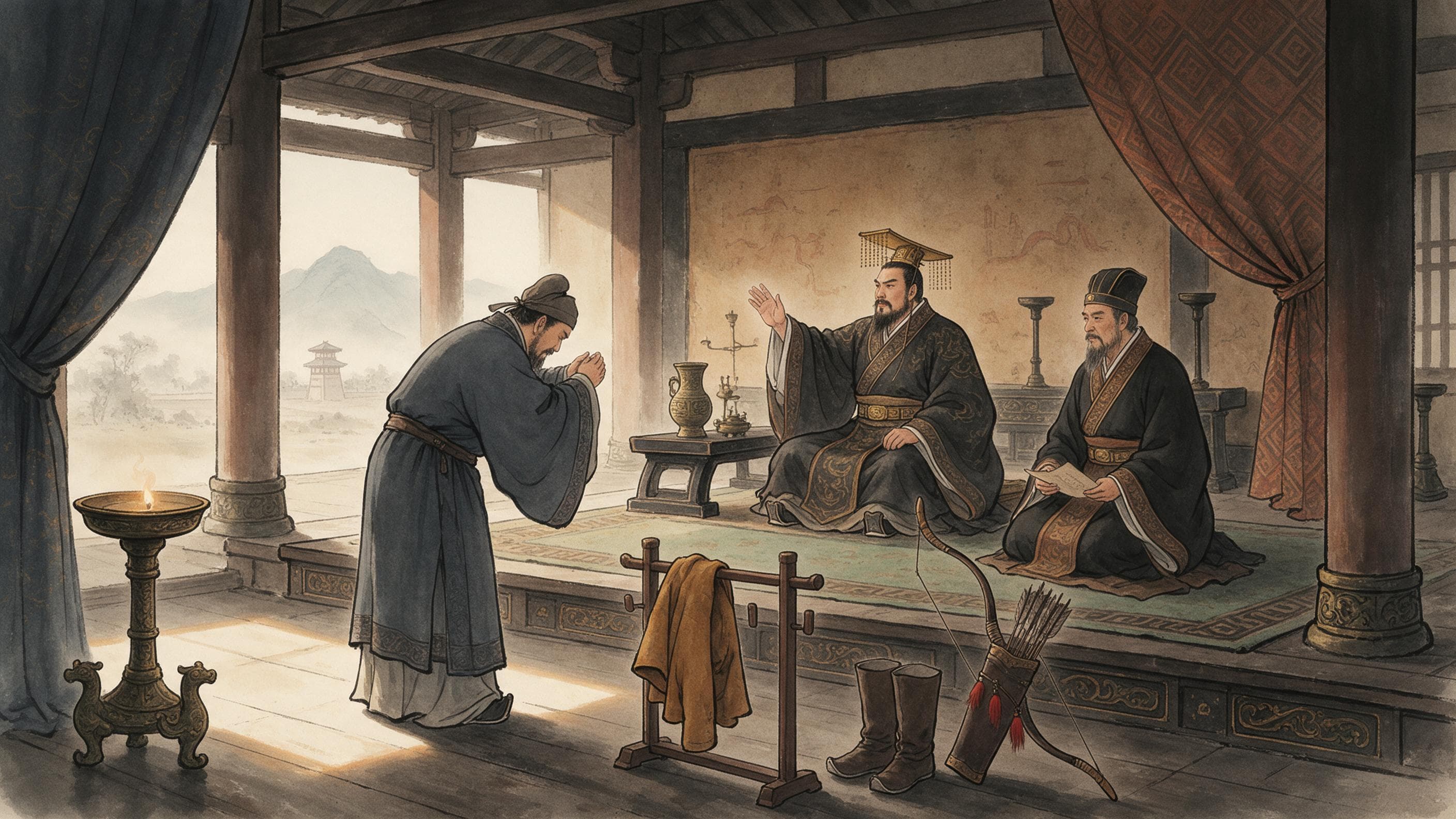
The hardest house is 公子成's. The king sends 王紲 to him, and 公子成 pleads illness and answers with a speech: 臣聞中國者,蓋聰明徇智之所居也,萬物財用之所聚也,賢聖之所教也,仁義之所施也,詩書禮樂之所用也… — to 襲遠方之服 is to change the teaching of the ancients. So the king goes himself, 遂往之公子成家, and says the sentence the whole debate turns on: 夫服者,所以便用也;禮者,所以便事也, clothes exist for use and rites for business. He adds 今叔之所言者俗也,吾所言者所以制俗也, you are speaking of custom, I am speaking of ruling custom, and names the frontier: 變服騎射,以備燕、三胡、秦、韓之邊. 公子成 bows and submits; 乃賜胡服。明日,服而朝。於是始出胡服令也. The exchange sets use against custom: the king does not deny that the dress is foreign, he argues that use outranks custom and that a ruler may rule custom.
One more passage follows: 趙文、趙造、周袑、趙俊皆諫止王毋胡服,如故法便. The king answers 先王不同俗,何古之法?帝王不相襲,何禮之循?, says that 法度制令各順其宜,衣服器械各便其用, and the passage ends 遂胡服招騎射. With that the Shiji has finished the affair; the campaigns that follow — 二十年略中山地, 二十一年攻中山, 二十六年攘地北至燕、代,西至雲中、九原 — are separate entries. The four objectors are named and then compressed into one answer, and 遂胡服招騎射 closes the scene with both parts of the programme, the dress and the archery.
The Zhanguoce Version: A Different Opening
The Zhanguoce begins elsewhere: 武靈王平晝間居,肥義侍坐,曰:王慮世事之變,權甲兵用之,念簡、襄之跡,計胡、狄之利乎? There is no date and no 樓緩, and the first to speak is 肥義. The king's line is one word shorter: where the Shiji has 而世必議寡人,柰何, the Zhanguoce has 而世必議寡人矣; the note below says 姚本曾本改「矣」字作「奈何」二字 — a later editor's change, not the text. The Zhanguoce opening is a conversation, not a court: an idle day, a ruler and his minister, and a question that invites the ruler to speak first.
The 公子成 passage differs in names and words. The Shiji has 使王紲公子成, the Zhanguoce 使王孫緤告公子成; the Shiji has 聰明徇智, the Zhanguoce 聰明叡知; the Shiji has 萬物財用, and so does the Zhanguoce text, but Bao's note emends 用 to 貨, and the 札記 collation note records 史記作「用」. The visit itself: 遂往之公子成家 in the Shiji, 即之公叔成家 in the Zhanguoce. Each of these is small, and together they show two texts copying one scene with different habits rather than one copying the other.
The sharpest difference is a swap inside the king's long speech. The Shiji: 儒者一師而俗異,中國同禮而教離. The Zhanguoce: 儒者一師而禮異,中國同俗而教離 — 俗 and 禮 exchange places, and the sentence changes meaning; both pages print it that way. The Zhanguoce also ends the affair with something the Shiji does not have: 遂賜周紹胡服衣冠,具帶,黃金師比,以傅王子也. The Shiji says only 使周袑胡服傅王子何, and gives none of the items. The Zhanguoce adds three episodes — 趙造's long objection, 趙燕's late compliance and the king's rebuke, and 牛贊's 辟地千里 — where the Shiji compresses everything into 趙文、趙造、周袑、趙俊皆諫止. That swap is worth pausing on: 俗 and 禮 are the two words the whole debate is about, and the two pages put them in each other's places.
Keeping the Notes Out of the Text
The Zhanguoce page is not a plain text: it carries 鮑彪's commentary, 姚宏's variant readings, and the Qing 札記 collation notes. On the opening words, Bao glosses 平晝 as 無事之日,猶平日, an idle day, and 肥義 as 趙相也, the Zhao minister. The sentence most often quoted as a definition of the dress — 胡服,今時服,廢除裘裳也 — appears here as 鮑本補曰:正義云, that is, Bao's supplement quoting the Zhengyi; it is commentary, not Warring States text. The collation notes are a third layer: the text reads 萬物財用, Bao emends to 財貨, and the 札記 observes 史記作「用」; the text reads 胡服之功, and the 札記 notes that Bao's edition has 攻. Such sentences may be quoted as notes, never as the Zhanguoce itself. In practice this means a reader of the page is reading three books at once: the Warring States text, a Song commentator and a Qing collator.
師比 is where the commentators disagree most visibly. The text says only 具帶,黃金師比; 姚宏's note cites 徐廣 and 延篤 for 胡革帶鉤也, a belt hook of the Hu; 鮑彪 says 未詳,蓋衣章, not known, perhaps a badge. One identifies it, one professes ignorance. This article keeps the names — 胡服衣冠,具帶,黃金師比 — and describes no shape: what the trousers, boots or hook looked like is on neither page. The page does not resolve the disagreement, and this article does not resolve it.
What the Argument Says
Read together, the debate is carried by a few sentences. 夫服者,所以便用也;禮者,所以便事也: clothes for use, rites for business. 疑事無功,疑行無名: a doubtful undertaking wins nothing, a doubtful step earns no name. Then the king's three counter-arguments: 先王不同俗,何古之法; 服奇者志淫,則是鄒、魯無奇行也; 以書御者不盡馬之情,以古制今者不達事之變. And the frontier: rivers to the east with no boats, and 燕、東胡、樓煩、秦、韓 on the other sides with no mounted archers. Those are the page's sentences. The general themes of reform or of peoples merging are not on either page, and this article does not write them. What the pages argue about is dress, custom and frontier defence, and the argument is conducted entirely in those terms.
What This Article Leaves Out
Four limits. The two books are two versions of one debate, to be read side by side and never added together as two witnesses. The notes stay outside the text: 鮑彪, 姚宏 and the 札記 are all labelled, and 胡服,今時服,廢除裘裳也 is marked as Bao's supplement quoting the Zhengyi. No shape is supplied: the trousers, boots and belt hook exist here as names only. And no military result is credited to the change of dress: the Shiji does record the campaigns of the twentieth, twenty-first and twenty-sixth years, and the Zhanguoce lets 牛贊 take 辟地千里, but no sentence on either page says the clothes caused any of it, and this article does not say so either. The cap names of Yin, the Ming rank badges and the Song professional dress are separate articles; this one stays with a court debate and its two texts. The characters are kept as printed: 王紲 and 王孫緤, 周袑 and 周紹, 卻冠秫絀 and 鯷冠秫縫, 財用 and 財貨, all side by side and none corrected. The two accounts are laid out here so that a reader can see where they differ, not so that one can be corrected by the other. That is the whole of the evidence on both sides.
Related reading:Mind, Ministers, People, Turtle and Milfoil: How a Big Decision Was Made · The Yin Used the Jia: Names of Ancient Ritual Vessels · Portents in Dress: The White Qia, the Embroidered Cap, and Two Ways of Writing One Thing
Sources & further reading
- 《史記》卷四十三·趙世家(西漢司馬遷撰;維基文庫本,頁面白文) — The narrative version: 十九年春正月,大朝信宮。召肥義與議天下,五日而畢, then 召樓緩謀曰…吾欲胡服, 樓緩曰善,群臣皆不欲; 肥義 with 疑事無功,疑行無名; 使王紲公子成; 公子成's 中國者 speech; 王遂往之公子成家 with 夫服者,所以便用也;禮者,所以便事也; 乃賜胡服。明日,服而朝; 趙文、趙造、周袑、趙俊皆諫止王毋胡服; 遂胡服招騎射. Later years record the campaigns that follow.
- 《戰國策·趙策二》(士禮居叢書本;維基文庫本,頁面為白文附鮑彪注、姚宏本及黃丕烈札記校語) — The other version of the same debate: 武靈王平晝間居,肥義侍坐, the same 便用/便事 argument, 使王孫緤告公子成, and the extra episodes of 趙造, 趙燕 and 牛贊. It ends 遂賜周紹胡服衣冠,具帶,黃金師比,以傅王子也. The page carries 鮑彪注 (including 鮑本補曰:正義云,胡服,今時服,廢除裘裳也), 姚宏 notes (on 師比: 延篤云,胡革帶鉤也) and 札記丕烈案 collation notes — all of them annotation, not Warring States text.