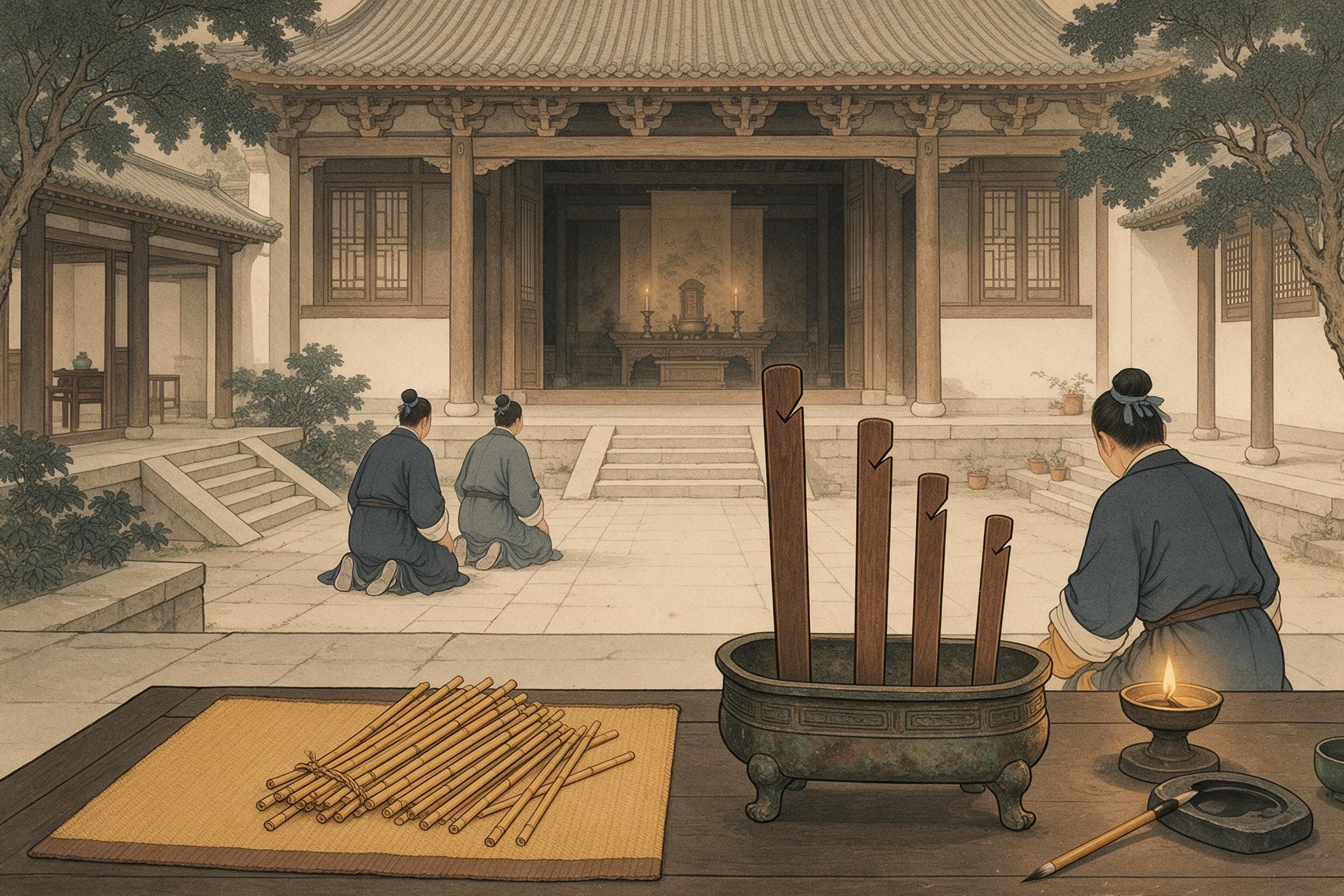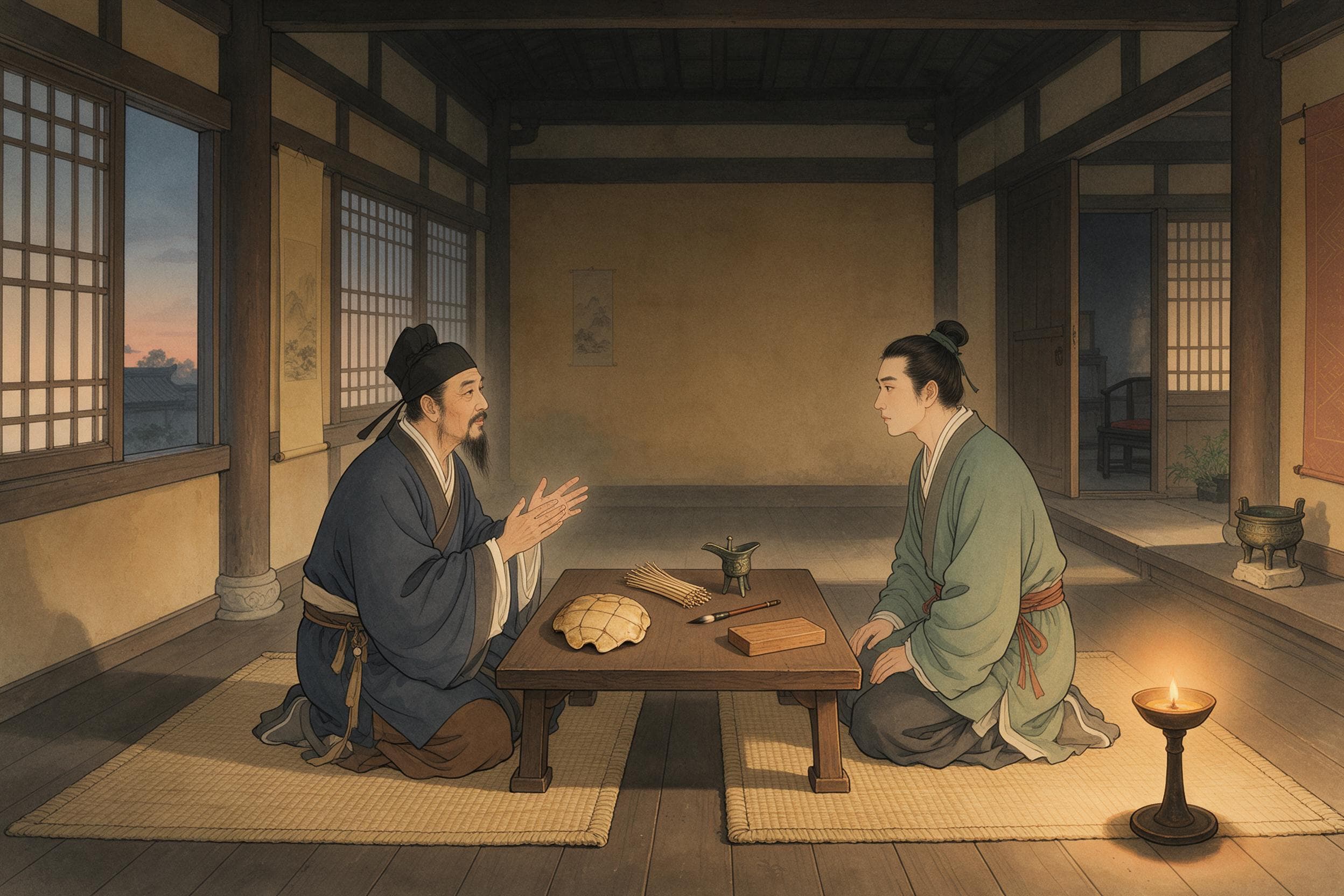
A large doubt is on the table. Whom do you ask first? The seventh section of the Shangshu's Hongfan gives an order: 汝則有大疑,謀及乃心,謀及卿士,謀及庶人,謀及卜筮 — ask your own mind, then the ministers, then the common people, and last the turtle and the milfoil. The sentence is an instruction, not a record; it says how a doubt should be put, not that any particular doubt was put that way. In the same section stand 三人占,則從二人之言 — three diviners, follow two of them — and the names of five omen forms with 貞 and 悔. That procedure is the solid part of the page.
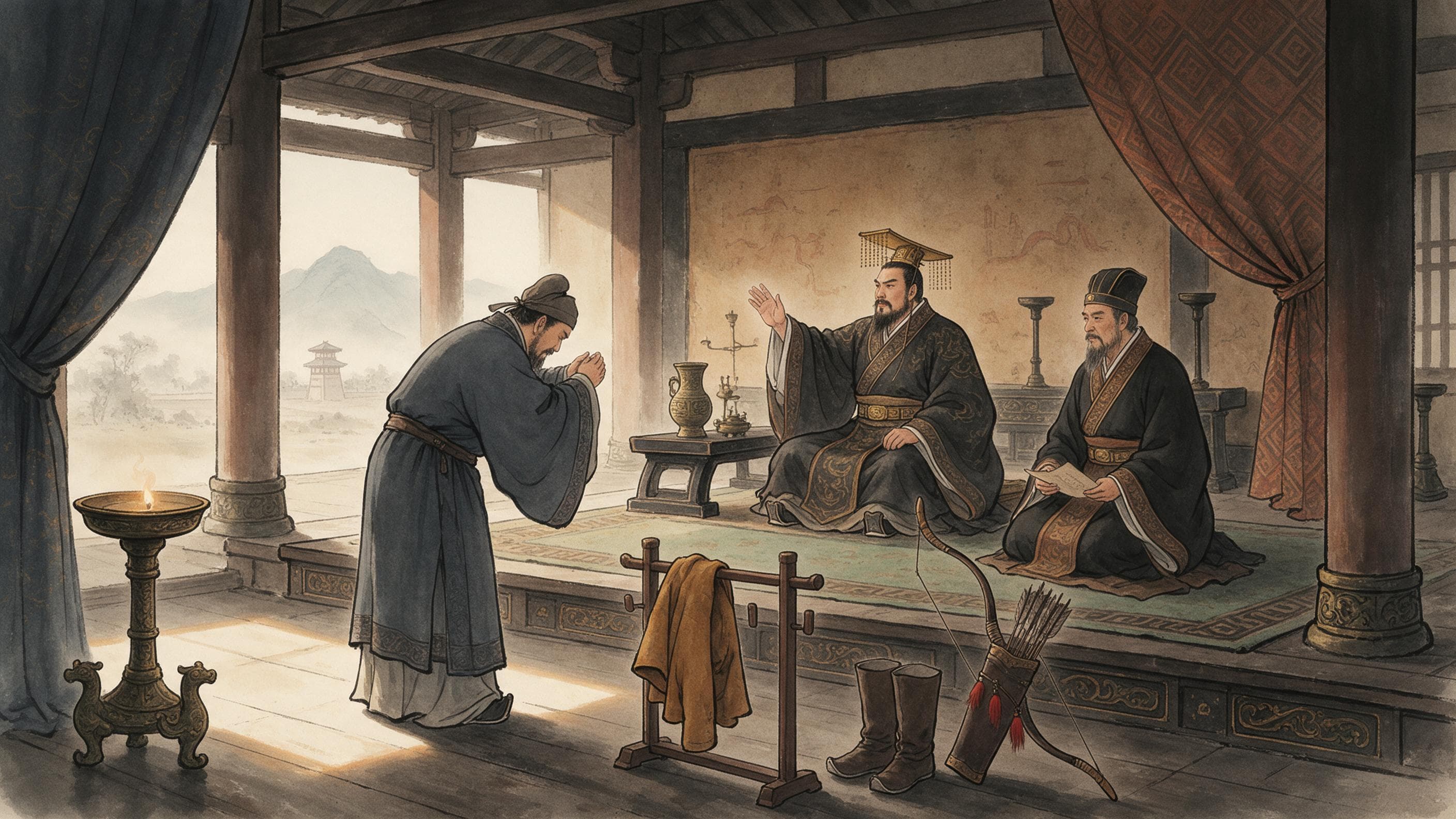
It matters who is speaking to whom. The Shangshu opens 惟十有三祀,王訪于箕子 — in the thirteenth year the king visited Jizi; the Shiji has 武王既克殷,訪問箕子, after King Wu had conquered Yin he questioned Jizi. The king says he does not know the constant order of things, and Jizi sets out nine categories. Where do the nine come from? Both pages say not from Jizi: 天乃錫禹洪范九疇,彝倫攸敘 — Heaven gave them to Yu, and Jizi only recites them. So tradition files the text under 商之彝倫, the constant order of the Yin, while what the page actually is is a Zhou-period record of a question and an answer. It is not a Shang archive and not a snapshot of how the Shang decided anything.
One: one text, two versions
The two pages are two versions of the same piece, and they differ in wording. 洪范 in the Shangshu, marked on the page with the variant 鸿, is 鸿范 throughout the Shiji; 九畴 becomes 九等; 彝伦攸叙 becomes 常伦所序; 汝则有大疑 becomes 女则有大疑 and 谋及乃心 becomes 谋及女心; 立时人作卜筮 becomes 立时人爲卜筮. The Shangshu page itself marks variant readings with the character 另 (霽 against 濟, 圛 against 驛涕洟, 雺 against 蒙霧被) and cites the Song shijia in its notes — the two pages know each other.
The characters differ; the procedure does not. 三人占,則從二人之言 is word for word the same in both; the four consultands, the order of the yes-and-no combinations, and the closing 龜筮共違于人,用靜,吉;用作,凶 are the same. So the two can be read together: the procedure is stable, the text is not. Where this article quotes, both versions are given side by side, neither harmonised nor corrected.
Two: the seventh category
Both pages list the nine: 初一曰五行,次二曰敬用五事,次三曰農用八政,次四曰協用五紀,次五曰建用皇極,次六曰乂用三德,次七曰明用稽疑,次八曰念用庶徵,次九曰嚮用五福,威用六極 (the Shiji: 七曰稽疑,八曰庶徵). 稽疑 is the seventh, between the three virtues and the signs. A note quotes the Zuo zhuan, 卜以決疑,不疑何卜 — divination settles a doubt; without a doubt, why divine? The note is a note, not the text.
The section begins by appointing people: 擇建立卜筮人,乃命卜筮 — choose and establish the turtle-men and milfoil-men, then charge them to divine. Then seven names: 曰雨,曰霽,曰圛,曰雺,曰克,曰貞,曰悔 — five omen forms plus 貞 and 悔, with 凡七卜,五占用,二衍忒. The seven are names only. What rain, clearing, 圛, 雺 and 克 look like, and what 貞 and 悔 refer to, is nowhere explained in the text. The page's notes quote Zheng Xuan glossing 貞 and 悔 as inner and outer trigram — a commentator, not the classic — and this article does not read the five omen forms at all. How a turtle is burned or milfoil counted belongs to the article on divination; here the procedure is the subject.
Three: three diviners, follow two
The cleanest line in the procedure is the majority: 立時人作卜筮,三人占,則從二人之言 — let these men divine; three divine, and follow the words of two. A note quotes the Zuo zhuan, Cheng 2: 《商書》曰:「三人占,從二人」 — the commentator cites the line as the Book of Shang, which is what later readers called it, not what the page calls itself. Whether the three divined at once or each gave a reading is not said; that two agreeing carry the day is said plainly.
Four: four consultands, and the verdicts
After the four consultands comes a run of combinations. The first is all-agree: 汝則從、龜從、筮從、卿士從、庶民從,是之謂大同;身其康彊,子孫其逢:吉 — when all five follow, it is called the Great Concord, and the man is healthy and strong and his descendants meet with good. The Shiji has 而身其康彊,而子孫其逢吉, punctuated differently; the Shangshu page's notes carry a reading that ends the clause at 逢 and takes 逢 as 大. The punctuation is a commentator's quarrel, both readings are on the page, and this article does not settle it.
The rest follow in order on both pages: 汝則從、龜從、筮從、卿士逆、庶民逆:吉。卿士從、龜從、筮從、汝則逆、庶民逆:吉。庶民從、龜從、筮從、汝則逆、卿士逆:吉。汝則從、龜從、筮逆、卿士逆、庶民逆:作內,吉;作外,凶。龜筮共違于人:用靜,吉;用作,凶 — three combinations that are good; one in which the turtle agrees and the milfoil does not, good for internal business and bad for external; and one in which both divine voices oppose the human ones, good to keep still, bad to act. That is six verdicts in all, counting the Great Concord. Why the lines fall where they do, the page does not say, and this article does not turn them into a rule.
Five: what the pages give, and do not
- Not a Shang archive. The piece is a Zhou-period record of King Wu's question and Jizi's answer, and the nine categories are credited to Heaven's gift to Yu; tradition files it as 商之彝倫, but nothing on the page says the Shang actually decided this way. The article reads a text, not a society.
- The two versions stand side by side: 洪范/鸿范, 九畴/九等, 彝伦攸叙/常伦所序, 汝/女, 作/爲, 霁/济, 圛/涕, 雺/雾, 五占用二衍忒/卜五占之用二衍貣. The Shangshu page itself marks variants with 另 and cites the Song shijia, and this article follows that method.
- The omens are names only. 雨, 霁, 圛, 雺, 克, 貞 and 悔 are not explained in the text; this article does not read them and does not add the burning of the shell or the counting of stalks, which belong to the article on divination. Zheng Xuan on 貞 and 悔, and the philologists on the punctuation, are notes, not the classic.
- The procedure is quoted, not generalised: three diviners and the majority, four consultands, six verdicts including the Great Concord, the internal-external line and the keep-still line. It is not written up as ancient democracy, and not used as evidence of a theory of Heaven's command.
- Numbers kept as written: seven divinations, five used, two 衍忒, three diviners, four consultands, the seventh of nine categories — no conversion, no inference.
- Lines kept apart: where the turtle came from, two particular divinations, and the pheasant on the cauldron are other articles; this one stays with the procedure. No general talk about decision-making thought.
What the pages leave is a question and an answer, and a procedure inside the answer: ask your own mind, then the ministers, then the people, then the turtle and the milfoil; three diviners, follow two; five omen forms with names only; six verdicts, each one sentence long. It reads as instruction, not as record — which is why what can be taken from it is how a doubt ought to be put, not how any one doubt was settled.
Related reading:The Yin Used the Jia: Names of Ancient Ritual Vessels · Portents in Dress: The White Qia, the Embroidered Cap, and Two Ways of Writing One Thing · Sorrowful Brows, Tear Makeup, the Falling-Horse Bun: How a Set of Styles Got into a Book of Omens
Sources & further reading
- 《尚书·洪范》(维基文库本,白文,页内以「另」标异读并附校注,未与中华书局点校本复核) — The frame: 惟十有三祀,王訪于箕子; the nine categories: 初一曰五行……次七曰明用稽疑,次八曰念用庶徵,次九曰嚮用五福; and the claim of an older origin, 天乃錫禹洪范九疇,彝倫攸敘. The seventh category: 擇建立卜筮人,乃命卜筮,曰雨,曰霽,曰圛,曰雺,曰克,曰貞,曰悔。凡七卜,五占用,二衍忒。立時人作卜筮,三人占,則從二人之言。汝則有大疑,謀及乃心,謀及卿士,謀及庶人,謀及卜筮。汝則從、龜從、筮從、卿士從、庶民從,是之謂大同;身其康彊,子孫其逢:吉。汝則從、龜從、筮從、卿士逆、庶民逆:吉。卿士從、龜從、筮從、汝則逆、庶民逆:吉。庶民從、龜從、筮從、汝則逆、卿士逆:吉。汝則從、龜從、筮逆、卿士逆、庶民逆:作內,吉;作外,凶。龜筮共違于人:用靜,吉;用作,凶。 The page marks variant readings with 另 (霽/濟, 圛/驛涕洟, 雺/蒙霧被, 庶人/庶民) and its notes quote 鄭注 via 集解, 皮錫瑞 on the punctuation of 凡七卜五占用二衍忒, 王念孫 on 子孫其逢, and 《左傳·成公二年》's citation of the line as 《商書》.
- 《史记》卷三十八〈宋微子世家〉(维基文库本,未与中华书局点校本复核) — The second version of the same text. The frame: 武王既克殷,訪問箕子; 武王曰:「於乎!維天陰定下民,相和其居,我不知其常倫所序。」箕子對曰:「在昔鯀陻鴻水……天乃錫禹鴻範九等,常倫所序。」The categories: 初一曰五行;二曰五事;三曰八政;四曰五紀;五曰皇極;六曰三德;七曰稽疑;八曰庶徵;九曰嚮用五福,畏用六極. The seventh: 稽疑:擇建立卜筮人。乃命卜筮,曰雨,曰濟,曰涕,曰霧,曰克,曰貞,曰悔,凡七。卜五,占之用二,衍貣。立時人爲卜筮,三人占則從二人之言。女則有大疑,謀及女心,謀及卿士,謀及庶人,謀及卜筮。女則從,龜從,筮從,卿士從,庶民從,是之謂大同,而身其康彊,而子孫其逢吉。……龜筮共違于人,用靜吉,用作凶。 The chapter also carries the 箕子 biography (象箸, 諫不聽, 被髪詳狂而爲奴, 鼓琴, 箕子操) and ends the episode 於是武王乃封箕子於朝鮮而不臣也.