A white cap, cut from silk cloth, made to replace an older head covering in a time of famine and empty treasuries. One book describes it twice. In the treatise on carriages and dress it is written 㡊 and approved: 合乎簡易隨時之義……本施軍飾,非為國容也 — fitting the principle of simplicity and the times, a military ornament in origin, not one for state occasions. In the treatise on the five phases the same cap is written 帢 and read as a sign: 干寶以為「縞素,凶喪之象也」 — the image of plain white mourning — and then, in the chapter's own voice, 名之為帢,毀辱之言也,蓋革代之後,劫殺之妖也: the name an insult, the thing an omen of slaughter after a change of dynasty. One emperor, one famine, one kind of silk: two characters, two verdicts.
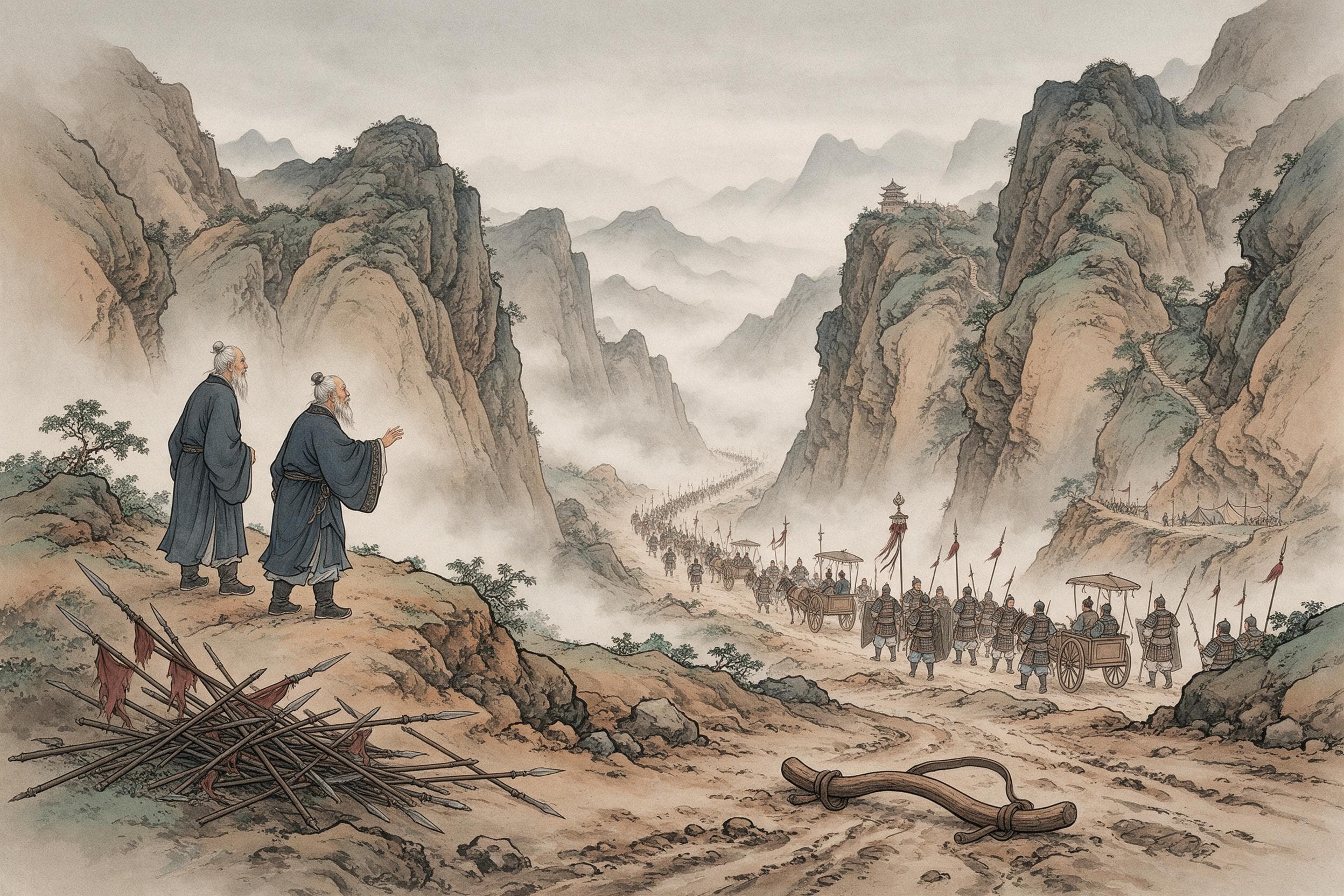
Both accounts start from the same crisis: 以天下凶荒,資財乏匱. Neither is a record of fashion. One is a register of what may be worn on which occasion; the other a catalogue of what a garment may foretell. Setting them side by side is not about deciding whether the cap was a good idea; it is about watching two genres put one object to different work. They do not even agree on the character: 㡊 in the treatise on dress, 帢 in the treatise on the five phases, and 帢 again in the Songshu. Whether the two characters name one thing is nowhere said; each stands where one thing should be, and that is how this article treats them.
One: the cap in the register
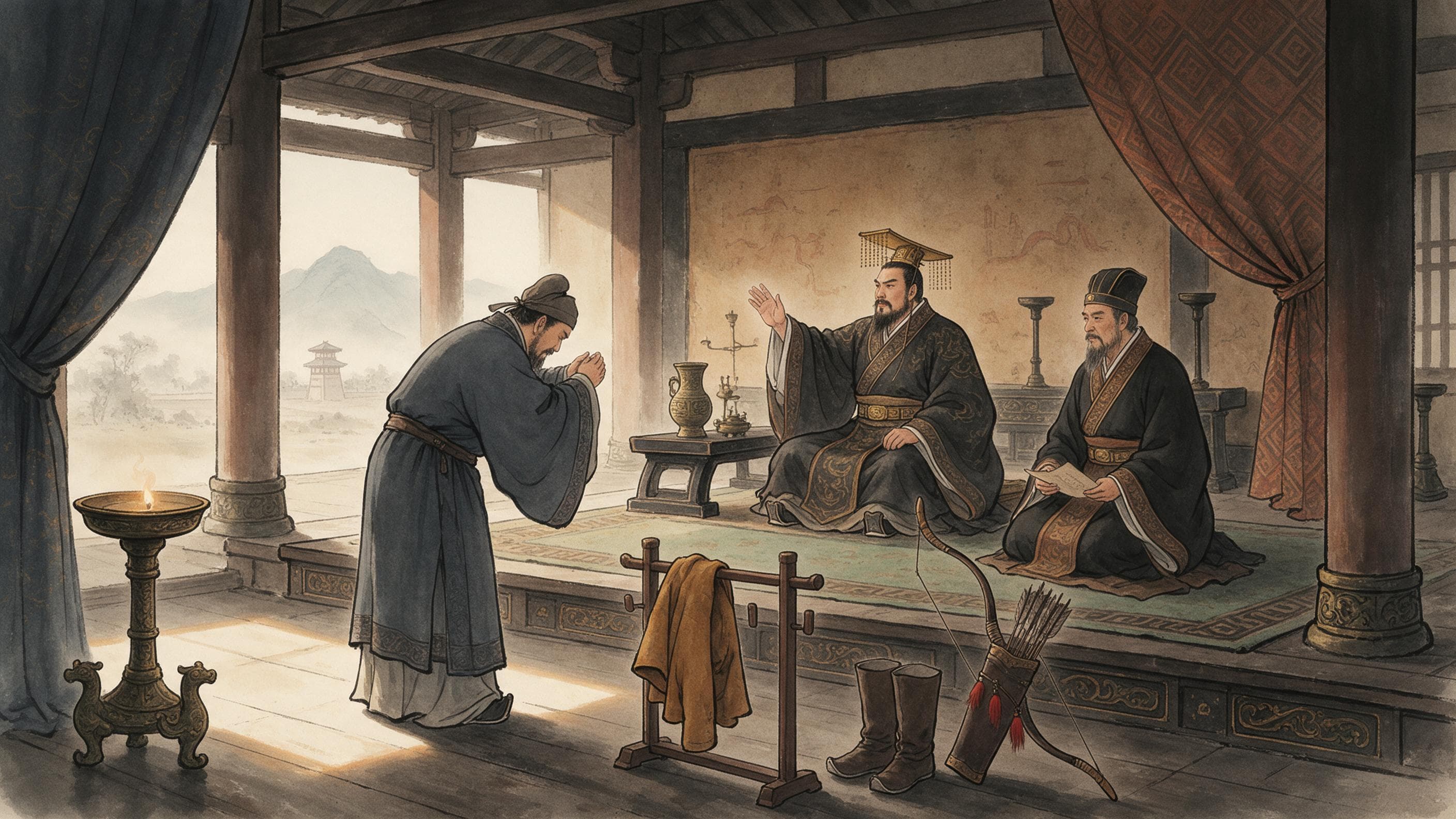
The register's paragraph: 魏武以天下凶荒,資財乏匱,擬古皮弁,裁縑帛以為㡊,合乎簡易隨時之義,以色別其貴賤,本施軍飾,非為國容也。徐爰曰:「俗說㡊本未有岐……」今通以為慶吊服。 Before it stand the autumn hunt's 緗幘, a pale-yellow cap, a change of rite under Emperor Ai to a plain white 㡊, and the late Han fashion for cloth scarves worn even by generals; the article skips them and keeps the verdict. The verdict is one sentence with two faces: 合乎簡易隨時之義 approves the cap, and 本施軍飾,非為國容也 pushes it out of state ceremony. Even its origin story is flagged: Xu Yuan reports a 俗說, a popular saying, that the 㡊 had no fork until Xun Wenruo's cloth caught on a branch. The book calls it a saying; so does this article.
The same page follows the cap onwards. The emperor's plain dress is 白㡊單衣. In the ninth year of Xianhe an order let the eight seats of the Secretariat and the attendants of the three inner departments ride in carriages 白㡊低幃, in and out of the palace gates; the duty officers of the two palaces wore 烏紗㡊; and the page concludes 然則往往士人宴居皆著㡊矣 — so scholars at leisure often wore it — adding 今通以為慶吊服, now it is commonly the dress for congratulations and condolences. The page also gives the words around it: 巾,以葛為之,形如㡊而橫著之; 帽名猶冠也,義取于蒙覆其首. It compares the cloth to the 㡊 and avoids saying whether the 㡊 is cap or cloth; so does this article.
Two: the cap in the catalogue of signs
The treatise on the five phases puts the cap inside a ready-made frame. 服妖, portent dress, is one item under 貌之不恭: 《傳》曰:「貌之不恭,是謂不肅,厥咎狂,厥罰恆雨,厥極惡。時則有服妖,時則有龜孽,時則有雞禍……」Then the explanation: 風俗狂慢,變節易度,則為剽輕奇怪之服,故有服妖. The slot exists first; the white cap is fitted into it afterwards.
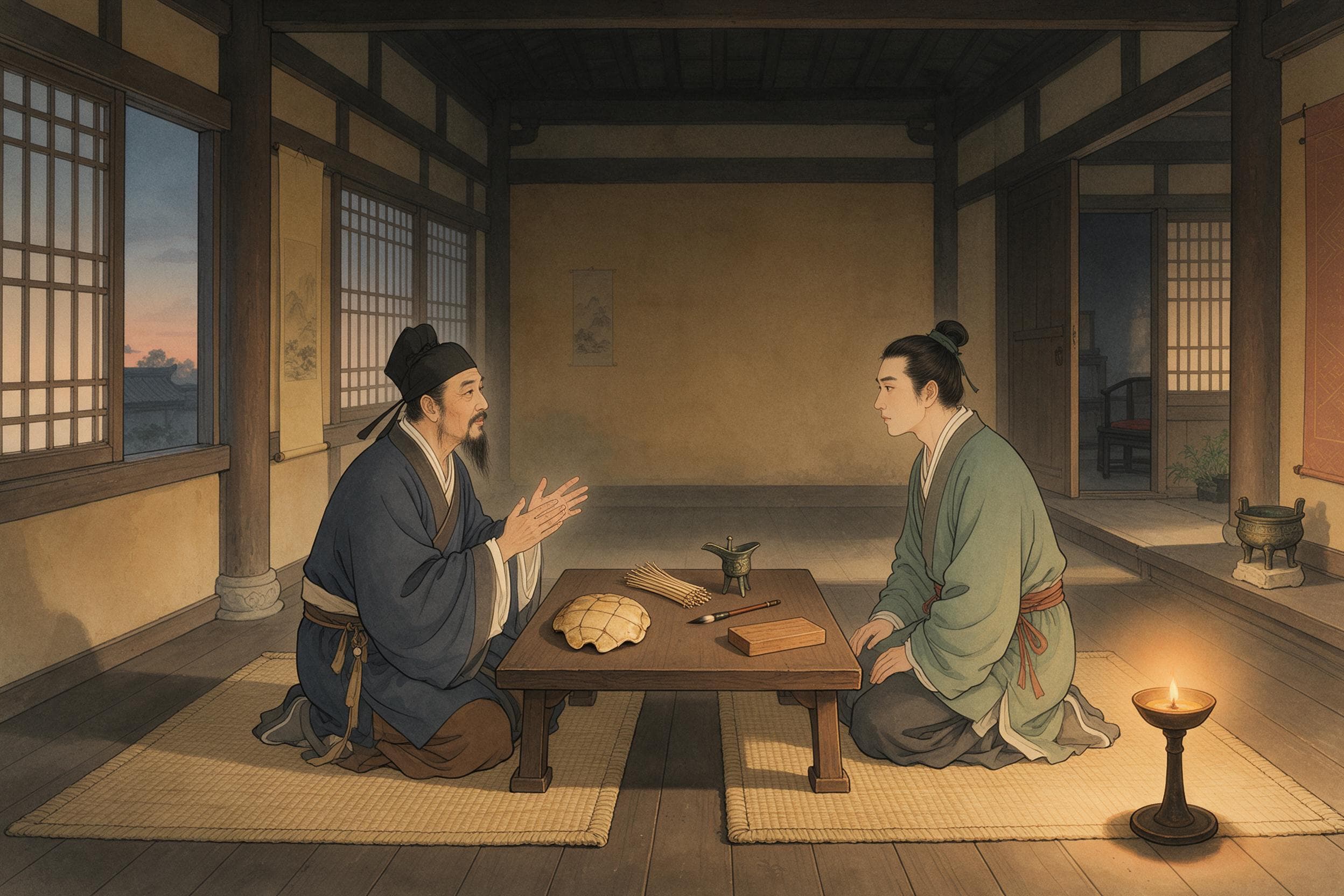
The entry has three voices. 魏武帝以天下凶荒,資財乏匱,始擬古皮弁,裁縑帛為白帢,以易舊服 — record. 傅玄曰:「白乃軍容,非國容也。」干寶以為「縞素,凶喪之象也」 — quotations with names on them. 名之為帢,毀辱之言也,蓋革代之後,劫殺之妖也 — the chapter's own verdict. Three sentences, three kinds of statement, and only the first records what anyone wore. The chapter does not write that the white cap was mourning dress; it writes that Gan Bao took white for the image of mourning, then adds its own omen. Whether white meant mourning to the men of Wei is not said on either page.
Three: the embroidered cap and the half sleeve
Two more Wei cases sit under the same heading. 魏明帝著繡帽,披縹紈半袖,常以見直臣楊阜,諫曰:「此禮何法服邪!」帝默然 — the emperor wore an embroidered cap and a half-sleeve of pale 縹 silk to receive his blunt minister Yang Fu, who asked what rule of propriety this dress followed; the emperor said nothing. The chapter calls it 近服妖也, argues from the colour — 夫縹,非禮之色。褻服尚不以紅紫,況接臣下乎? — and runs it to the end: 帝既不享永年,身沒而祿去王室,後嗣不終,遂亡天下. Second case: 尚書何晏好服婦人之服,傅玄曰:「此妖服也。」 Fu Xuan argues from 夫衣裳之制,所以定上下殊內外也 to 妹嬉冠男子之冠,桀亡天下;何晏服婦人之服,亦亡其家. What the two cases leave is three names for things: an embroidered cap, a half-sleeve of pale 縹 silk, a woman's dress. No measurement, no cut, no shade — 縹 is a colour word, and the chapter does not say which 縹.
Four: the seam, and the loosening hair
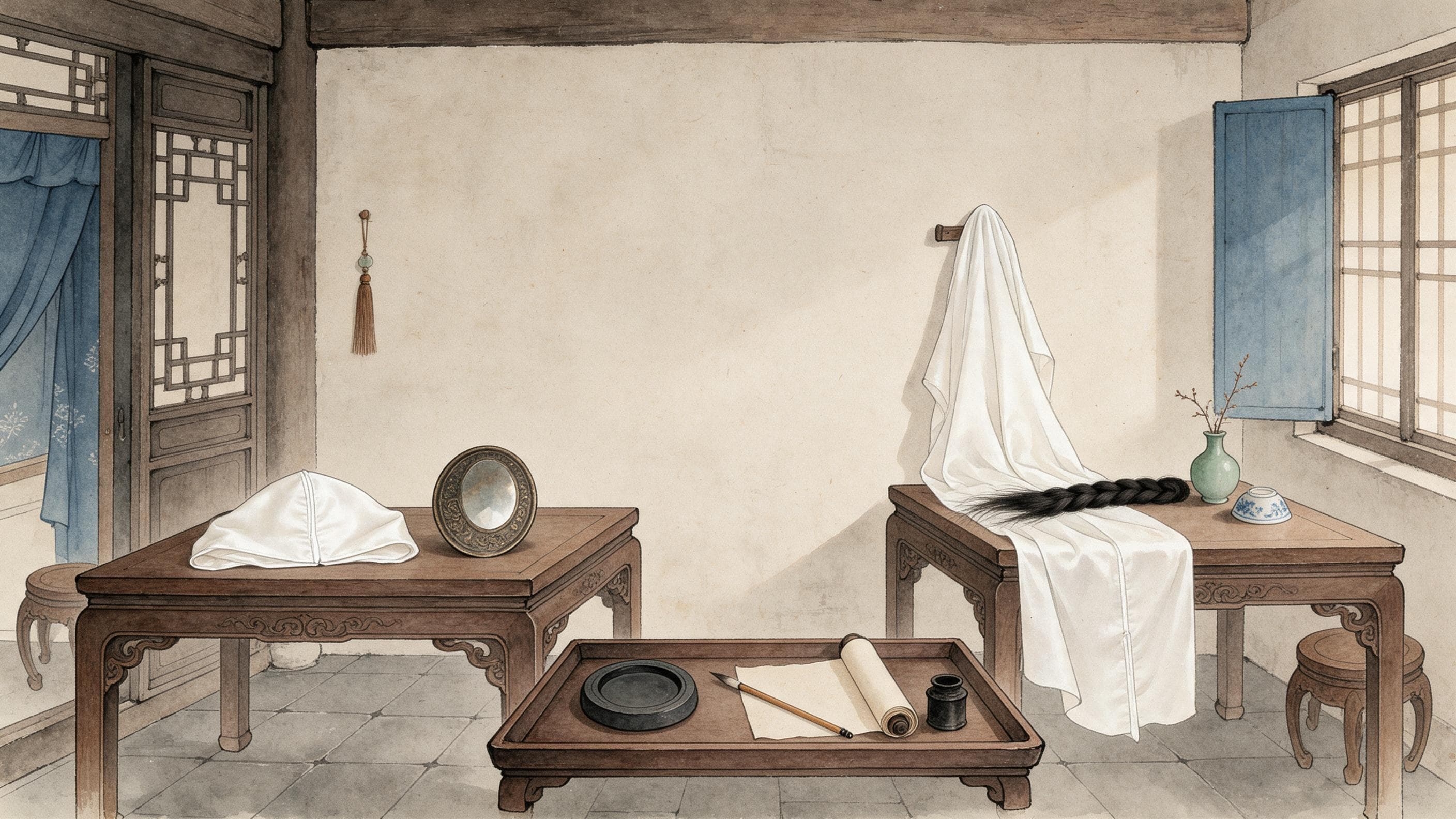
Then the seam. 初,魏造白帢,橫縫其前以別後,名之曰顏帢,傳行之。至永嘉之間,稍去其縫,名無顏帢 — at first the white cap was sewn across the front to tell front from back and called the 顏帢, the face cap; by the Yongjia years the seam was dropped and it was called 無顏帢, the faceless one. The chapter reads the change at once: 而婦人束發,其緩彌甚,紒之堅不能自立,發被於額,目出而已。無顏者,愧之言也……其緩彌甚者,言天下亡禮與義,放縱情性,及其終極,至於大恥也 — hair loosened until the bun could not stand, eyes barely showing; no face is a word for shame, and the loosening means rites and right are gone. Then the event: 永嘉之後,二帝不反,天下愧焉. This is a reading made of a seam, a hairstyle, a character and a dynasty — and it is the chapter's reading, not the seam's. The stitch can be taken; the meaning comes with an author.
The other entries repeat one formula. In the Yongjia years 士大夫競服生箋單衣 — officials competed in robes of raw silk — and those who knew said this was the old 繐衰, the mourning cloth in which lords served the Son of Heaven; the entry adds 其後遂有胡賊之亂,帝遇害焉. Under Emperor Yuan 兵士以絳囊縛紒, soldiers tied their topknots with red bags, and the reading runs through the Changes — 乾為首,坤為囊 — a subject's way rising; the entry adds Wang Dun's rebellion. Earlier still, worn shoes: 敗屩聚於道者,象黔庶罷病,將相聚為亂, and in the Taian years the troops rose. Each entry has one skeleton: a garment, a reading, an event afterwards. That is what a 服妖 entry is for.
Five: what the two pages give, and do not
- The two main passages are not two independent documents. Both treatises belong to the Jinshu: strictly, one book writing twice, and the article says so. The Songshu chapter is used for comparison only and is not counted as separate evidence.
- What the Songshu is good for is showing the text moving. Where the Jinshu has 劫殺之妖 the Songshu has 攻殺之妖; where the Jinshu names the cap 顏帢 the Songshu has 顏 alone; and its collation note records that 象 in 凶喪之象 was corrected against the Jinshu. The differences are reported, not decided.
- No shapes. Whether the white cap was a cap or a cloth, how the front seam ran, what the embroidered cap and the pale half-sleeve looked like: none of it is on these pages. The only structural statements are 橫縫其前以別後 and 形如㡊而橫著之.
- Omens are not facts. 縞素,凶喪之象 is Gan Bao's reading; 劫殺之妖 is the chapter's verdict; this article reports both and adopts neither. Nor does it treat 服妖 as what people of the time believed: the chapter opens by quoting an inherited 傳, and neither page dates it.
- The Jinshu gives Fu Xuan and Gan Bao by name only, with no dates and no offices. This article assigns them no periods; they remain named quotations.
- Lines kept apart: the articles on the great exorcism and on the rain sacrifice also come out of this treatise, but those are rituals and this is a record of dress. No general talk of Wei-Jin style or fashion history appears here.
What is left is a garment with two characters and two careers. In the register it is permitted, cheap, faintly military, and ends up as the dress for congratulations and condolences. In the catalogue of signs it is white, insulting in its name, and followed by a change of dynasty. The seam was real enough to be described; the shame was added by a writer. Both sentences stand on the same shelf of the same book, and this article puts them back there.
Related reading:Ice: Cut in Winter, Given Out in Summer, and Used to Bathe the Dead · Caps of the Yin: Xu, Zhangfu, and the Names of Three Dynasties · Six as the Measure: A Cap of Six Cun, a Carriage of Six Chi, Six Horses
Sources & further reading
- 《晋书》卷二十五〈舆服志〉(维基文库本,未与中华书局点校本复核) — The register's account, in the section on headwear: 漢儀,立秋日獵,服緗幘。及江左,哀帝從博士曹弘之等議,立秋禦讀令,改用素白㡊。案漢末王公名士多委王服,以幅巾為雅,是以袁紹、崔鈞之徒,雖為將帥,皆著縑巾。魏武以天下凶荒,資財乏匱,擬古皮弁,裁縑帛以為㡊,合乎簡易隨時之義,以色別其貴賤,本施軍飾,非為國容也。徐爰曰:「俗說㡊本未有岐,荀文若巾之行,觸樹枝成岐,謂之為善,因而弗改。」今通以為慶吊服。The character is 㡊 here, not the 帢 of the treatise on the five phases. Elsewhere on the page: 其素服,白㡊單衣; 成帝咸和九年,制聽尚書八座丞郎、門下三省侍官乘車,白㡊低幃,出入掖門。又,二宮直官著烏紗㡊。然則往往士人宴居皆著㡊矣; and the neighbouring entries 巾,以葛為之,形如㡊而橫著之; 帽名猶冠也,義取于蒙覆其首.
- 《晋书》卷二十七〈五行志上〉(维基文库本,未与中华书局点校本复核) — The category first, under 貌之不恭: 《傳》曰:「貌之不恭,是謂不肅,厥咎狂,厥罰恆雨,厥極惡。時則有服妖,時則有龜孽,時則有雞禍,時則有下體生上之痾,時則有青眚青祥。惟金沴木。」and the explanation 風俗狂慢,變節易度,則為剽輕奇怪之服,故有服妖. The entries: 魏武帝以天下凶荒,資財乏匱,始擬古皮弁,裁縑帛為白帢,以易舊服。傅玄曰:「白乃軍容,非國容也。」干寶以為「縞素,凶喪之象也」。名之為帢,毀辱之言也,蓋革代之後,劫殺之妖也。 / 魏明帝著繡帽,披縹紈半袖,常以見直臣楊阜,諫曰:「此禮何法服邪!」帝默然。近服妖也。夫縹,非禮之色……帝既不享永年,身沒而祿去王室,後嗣不終,遂亡天下。 / 尚書何晏好服婦人之服,傅玄曰:「此妖服也……」妹嬉冠男子之冠,桀亡天下;何晏服婦人之服,亦亡其家,其咎均也。 / 初,魏造白帢,橫縫其前以別後,名之曰顏帢,傳行之。至永嘉之間,稍去其縫,名無顏帢,而婦人束發,其緩彌甚,紒之堅不能自立,發被於額,目出而已……永嘉之後,二帝不反,天下愧焉。 / 孝懷帝永嘉中,士大夫競服生箋單衣……其後遂有胡賊之亂,帝遇害焉。 / 元帝太興中,兵士以絳囊縛紒…… / 敗屩聚於道者,象黔庶罷病,將相聚為亂.
- 《宋书》卷三十〈五行一〉(维基文库本,未与中华书局点校本复核;仅作参考,不计为独立证据) — Largely the same entries, useful only for showing the text moving: 干寶以為縞素,凶喪之象,〈校記:凶喪之象 「象」各本並作「為」,據晉書五行志改〉帢,毀辱之言也。蓋革代之後,攻殺之妖也 (攻殺 where the Jinshu has 劫殺); 初為白帢,橫縫其前以別後,名之曰「顏」,俗傳行之 (顏 alone, not 顏帢); 魏明帝著繡帽,被縹紈半袖……阜諫曰:「此於禮何法服邪?」 (於禮 where the Jinshu has 此禮). Also 晉孝懷永嘉以來,士大夫竟服生箋單衣; 晉元帝太興以來,兵士以絳囊縛紒.