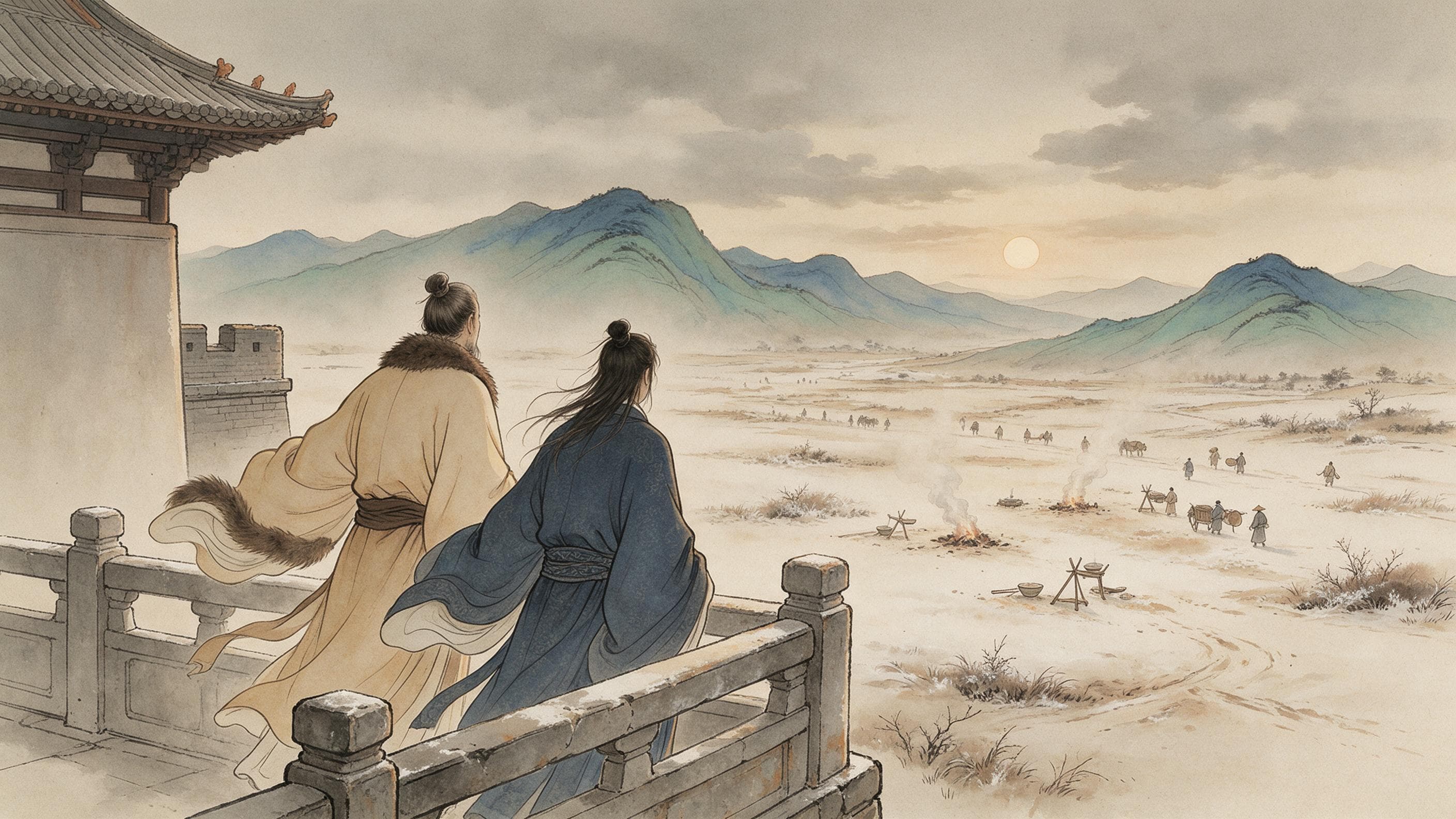
The first line of the rite begins outside the city: 覲禮。至于郊,王使人皮弁用璧勞 — at the outskirts the king sent a man in a leather cap with a jade disc to greet him. There is no year in the text, no state, no personal name: only 侯氏, the lord; 天子, the Son of Heaven; and 某日, a certain day. It is a script for a rite, not the record of an audience that happened. 侯氏 is generally understood to be the visiting lord, and this article gives him no state. Two pages divide the work: this one has only 覲; the other, the Zhou li's Autumn Offices, lists six names — 春朝, 秋覲, 夏宗, 冬遇, 時會, 殷同 — and this article only reports that they are listed, without ranking them.
One: outside the city, the jade given and given back
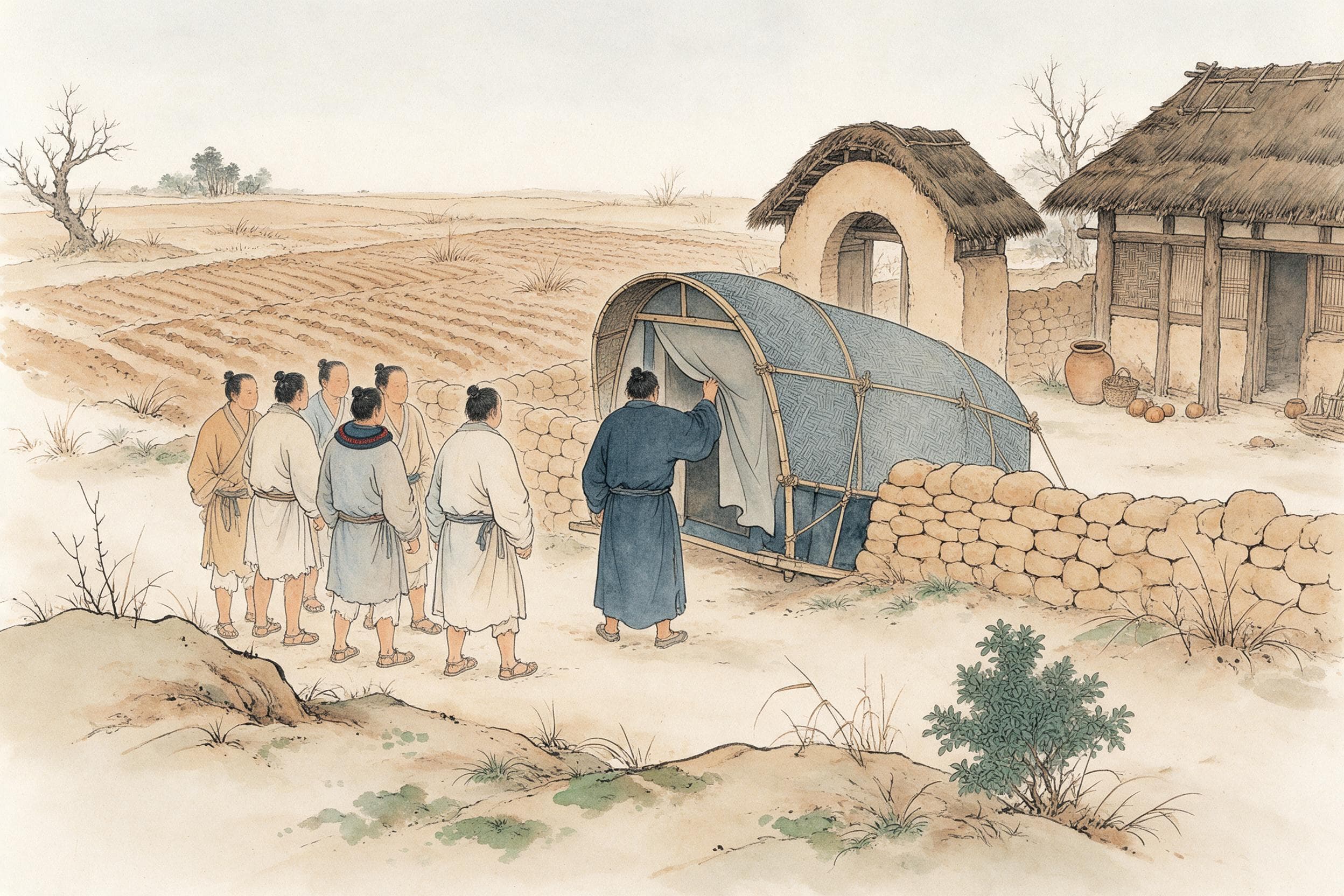
Both the greeting and the welcome are in leather caps. 侯氏亦皮弁迎于帷門之外,再拜 — the lord waited in a leather cap outside the tent-screen and bowed twice; 使者不答拜,遂執玉,三揖 — the envoy did not bow back, took the jade, and three times bowed. At the steps 使者不讓,先升 — the envoy did not defer, but went up first. The lord went up, heard the command, came down, bowed with his head to the ground, went up again and 受玉, took the jade. Then 使者左還而立,侯氏還璧 — the envoy turned to the left and stood, and the lord handed the jade back. Given and returned: the disc is a token, not a gift. Then the lord thanked the envoy with 束帛、乘馬, silk and a team of horses, and the envoy left 以左驂出, leading out the team's left-hand horse.
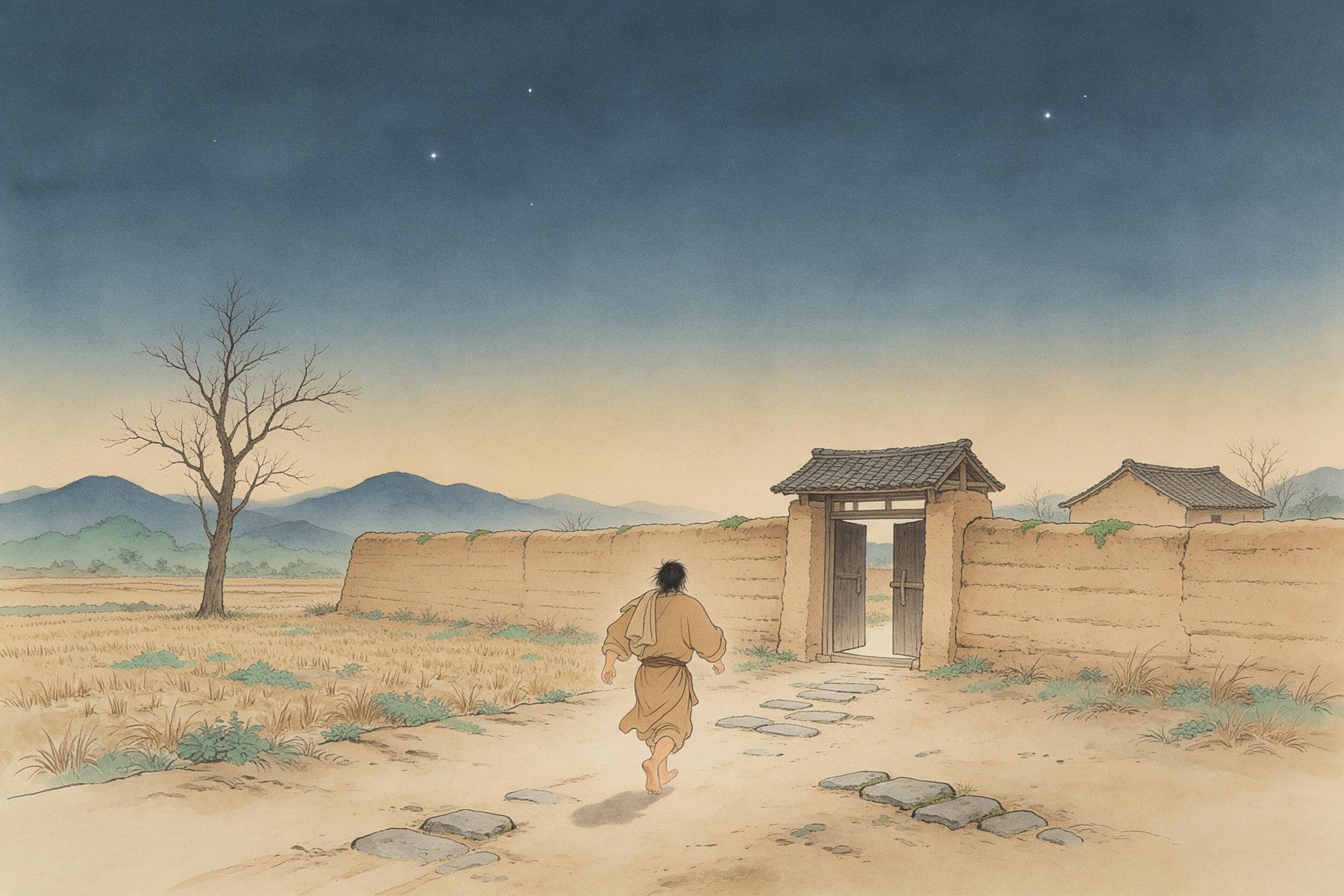
Then two short speeches. The king granted lodgings: 伯父,女顺命于王所,賜伯父舍 — Uncle, obey the command at the king's place; I grant Uncle a lodging. Then an officer fixed the day: 某日,伯父帥乃初事 — on such a day, Uncle, lead your first service. The day comes from the king. Beforehand the lords had places to stand: 同姓西面北上,異姓東面北上 — same surname facing west, other surname facing east, each northwards first. The four forms of address at the end of the rite grow out of that line.
Two: coming in, with carriage, banner and jade
On the day, the lord does two things first: 侯氏裨冕,釋幣于禰 — he puts on the lesser ceremonial dress and makes an offering at his father's shrine; then 乘墨車,載龍旂、弧韣乃朝以瑞玉,有繅 — a black carriage, a dragon banner, a bow-case, and the jade of his rank with its wrapping. The king has one sentence: 天子設斧依於户牖之間,左右几。天子衮冕,負斧依 — a screen between door and window, and the king in full dress with his back to it. He speaks: 非他,伯父實來,予一人嘉之。伯父其入,予一人將受之 — it is nothing else; Uncle has truly come, and I, the one man, am glad of it; let Uncle enter; I shall receive him.
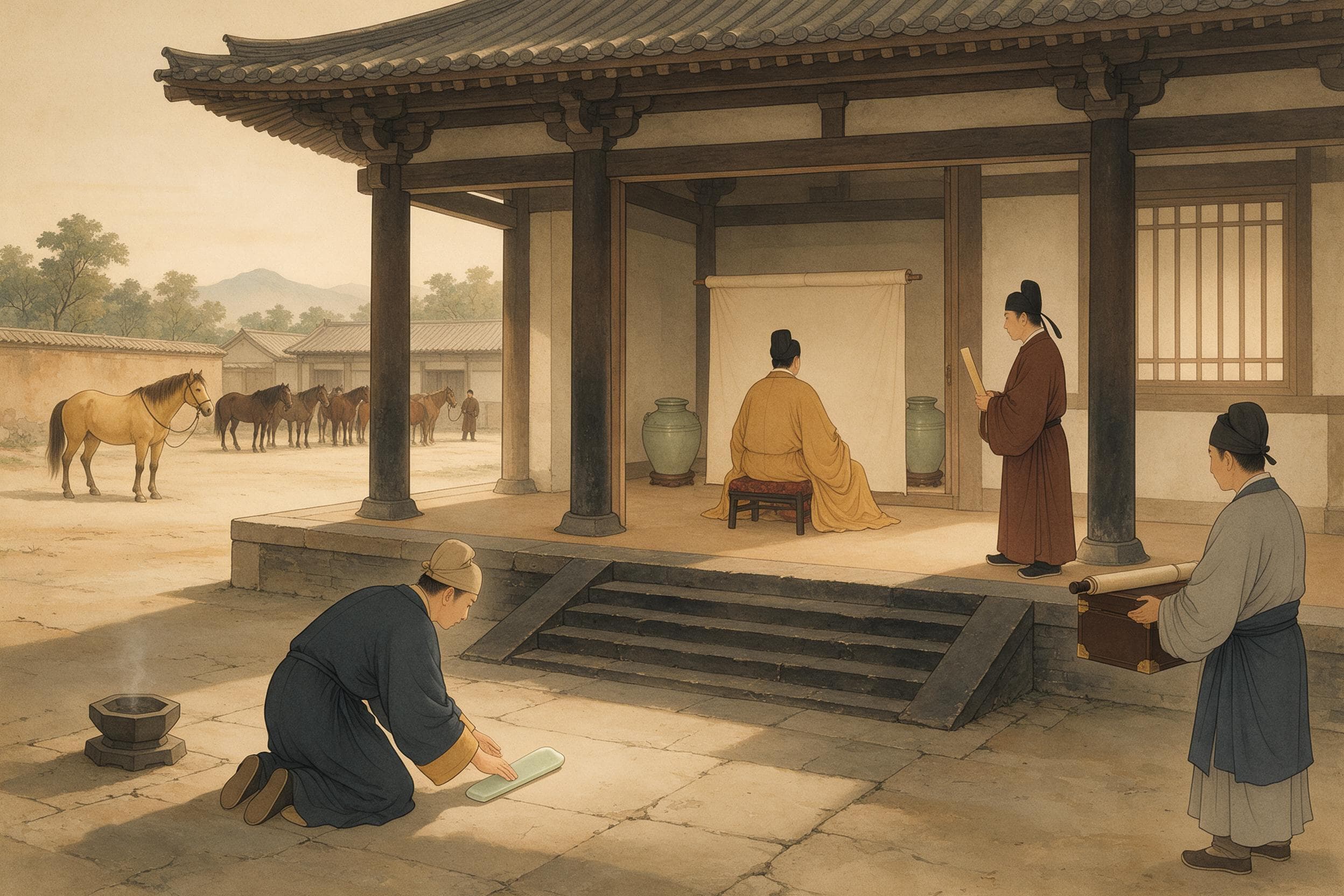
Then the steps, one at a time. 侯氏入門右,坐奠圭,再拜稽首 — the lord enters on the right, kneels, sets the jade tablet on the ground, and bows with his head to the ground. 擯者謁 — the usher announces him. 侯氏坐取圭,升致命 — he kneels, takes the tablet up again, goes up and delivers his message of duty. 王受之玉 — the king receives the jade. He comes down, bows north of the eastern steps; the usher says 升; 升成拜,乃出 — up, bow completed, out. Set down, bow, take up, ascend, deliver, receive, withdraw.
Three: the four presentations, and the bared arm
Then the gifts. 四享皆束帛加璧,庭實唯國所有 — at all four presentations, bolts of silk with a jade disc on top, and what fills the courtyard is whatever the state has. 奉束帛,匹馬卓上,九馬随之 — holding the silk, one horse standing foremost and nine horses following it; 中庭西上,奠幣,再拜稽首 — set out in the middle court, west first, the gifts laid down, bow twice with the head to the ground. The usher says 予一人將受之; the lord goes up, delivers his message, and 王撫玉 — the king strokes the jade. Then 降自西階,東面授宰幣: down the western steps, the silk handed to the steward; 以馬出,授人: the horses led out. Jade to the king, silk to the steward, horses away.
After the business, one more scene. 事畢,乃右肉袒于庿門之東 — when it is done, he bares his right arm east of the temple gate; 乃入門右,北面立,告聽事 — enters on the right, stands facing north, and reports that he awaits instructions. The usher reports it, and the king's answer is nine characters: 伯父無事,歸寧乃邦 — Uncle has no business; return and be at peace in your state. He bows, goes out south of the screen to the west of the door, enters on the left, stands facing north, and 王勞之, the king thanks him for the journey; he bows, is invited up, completes the bow, and goes out. The page gives only the action and 告聽事; it never explains the gesture, and this article does not turn it into an apology.
Four: the grant of carriage and robes, and four ways of being called
Then the grant. 天子賜侯氏以車服。迎于外門外,再拜 — the king gives the lord carriage and robes; the lord waits outside the outer gate and bows twice. The carriages are set out first: 路先設,西上. The essential piece is a box: 諸公奉篋服,加命書于其上,升自西階,東面,大史是右 — the dukes carry up the box of robes with the written charge laid on top, and the grand scribe stands at the right. 侯氏升,西面立。大史述命 — the lord goes up, stands facing west, and the grand scribe reads the charge. He goes down between the steps, bows, goes up, completes the bow; 大史加書于服上,侯氏受 — the document laid on the robes, the lord receives it. The envoys leave and are thanked with 束帛、四馬 — silk and four horses — the grand scribe the same way.
The bone of the chapter is at the end. 同姓大國則曰伯父,其異姓則曰伯舅。同姓小邦則曰叔父,其異姓小邦則曰叔舅 — same surname and a great state, Uncle; another surname and a great state, Uncle-in-law; same surname and a small state, Younger Uncle; another surname and a small state, Younger Uncle-in-law. Two pairs of alternatives, four ways of being called. And then six characters: 飨,礼,乃歸 — there is a feast, the rite is done, and he goes home.
Five: the second half of the page — altar, square, four offerings
The second half starts another set, numbers included: 諸侯覲于天子,爲宫方三百步,四門,壇十有二尋、深四尺,加方明于其上 — a walled precinct three hundred paces square, four gates, an altar twelve xun across and four chi deep, with the square of light set on it. The square is a wooden board: 方明者,木也,方四尺, with six colours — east blue-green, south red, west white, north black, above dark, below yellow — and six jades: above a gui, below a bi, south a zhang, west a hu, north a huang, east a gui. The five ranks stand at their own banners: 公、侯、伯、子、男,皆就其旂而立. The king comes out 乘龍,載大旂, 拜日於東門之外, returns and 祀方明; 禮日於南門外,禮月與四瀆於北門外,禮山川丘陵於西門外. The last four sentences are four verbs: 祭天,燔柴;祭山、丘陵,升;祭川,沉;祭地,瘗 — burn, raise, sink, bury. Three 记 lines follow, one 偏駕不入王門. The word 會同 does not occur on this page, and this article does not supply it.
- A ritual script, not a record: no year, state or personal name — only 侯氏, 天子, 某日.
- Two pages, two jobs: the Yili gives the sequence; the Zhou li's Grand Messenger lists the six names — 春朝, 秋覲, 夏宗, 冬遇, 時會, 殷同 — reported here without ranking.
- Objects are named only: 皮弁, 璧, 帷門, 斧依, 裨冕, 衮冕, 墨車, 龍旂, 弧韣, 瑞玉, 繅, 束帛, 方明 and the six jades, copied without gloss or description.
- Numbers and sequence are copied as written: 四享, 匹馬卓上、九馬随之, 束帛、乘馬, 束帛、四馬, 宫方三百步, 四門, 壇十有二尋、深四尺, 方四尺, six colours and six jades — nothing converted.
- No explanation is added: 肉袒 is only the bare arm and 告聽事; 侯氏 is the visiting lord only as the usual understanding.
- No general essay on tribute or audience systems, no comparison with later dynasties; envoys, first meetings, a ruler's banquet and Shusun Tong's court ritual are other articles.
A single day: leather caps and a jade given and handed back at the outskirts; lodgings and a date from the king; a screen at his back, a tablet set down and taken up; four presentations, one horse before nine, the king's hand stroking the jade; a bared arm and a report, answered 伯父無事,歸寧乃邦; a grant read out by the grand scribe; four ways of being called, six characters, the road home. The rules are exact, and the man in them has no name.
Related reading:The Rite of First Meeting: What a Knight Carried in His Hands · Jade, Silk and Horses: What an Envoy Carried · Drilling the Court: From Swords Struck on Pillars to 'Now I Know How Noble an Emperor Is'
Sources & further reading
- 《仪礼·觐礼》(维基文库本,白文无注,页头未标 textquality,未与中华书局点校本复核;页名作「覲」) — A lord's audience written as a script, with no year, state or name. Outskirts: 覲禮。至于郊,王使人皮弁用璧勞; 侯氏亦皮弁迎于帷門之外,再拜; 使者不答拜,遂執玉,三揖; 使者不讓,先升; 侯氏升聽命,降,再拜稽首,遂升受玉; 使者左還而立,侯氏還璧; 侯氏用束帛、乘馬儐使者; 使者降,以左驂出. Lodging and date: 天子賜舍,曰:「伯父,女顺命于王所,賜伯父舍!」; 天子使大夫戒,曰:「某日,伯父帥乃初事。」; 諸侯前朝……同姓西面北上,異姓東面北上. The audience: 侯氏裨冕,釋幣于禰; 乘墨車,載龍旂、弧韣乃朝以瑞玉,有繅; 天子設斧依於户牖之間,左右几。天子衮冕,負斧依; 非他,伯父實來,予一人嘉之; 侯氏入門右,坐奠圭,再拜稽首; 侯氏坐取圭,升致命。王受之玉; 擯者延之,曰:「升!」升成拜,乃出. Presentations: 四享皆束帛加璧……匹馬卓上,九馬随之; 王撫玉; 侯氏降自西階,東面授宰幣……以馬出,授人,九馬随之. Bared arm: 事畢,乃右肉袒于庿門之東。乃入門右,北面立,告聽事; 天子辭于侯氏,曰:「伯父無事,歸寧乃邦!」; 王勞之. Grant: 天子賜侯氏以車服; 諸公奉篋服,加命書于其上……大史述命; 大史加書于服上,侯氏受; 儐使者,諸公賜服者,束帛、四馬. Address: 同姓大國則曰伯父,其異姓則曰伯舅。同姓小邦則曰叔父,其異姓小邦則曰叔舅. End: 饗,禮,乃歸. Second half: 諸侯覲于天子,爲宫方三百步,四門,壇十有二尋、深四尺,加方明于其上; 方明者,木也,方四尺,設六色……設六玉……; 公、侯、伯、子、男,皆就其旂而立; 拜日於東門之外,反祀方明; 禮日於南門外,禮月與四瀆於北門外,禮山川丘陵於西門外; 祭天,燔柴。祭山、丘陵,升。祭川,沉。祭地,瘞; 記: 几,俟于東箱。偏駕不入王門。奠圭于繅上. The page has no 會同 and no 朝、宗、遇 names.
- 《周礼·秋官司寇》(维基文库本,白文无注,页头未标 textquality,未与中华书局点校本复核;大行人条在整页之内,无独立分页) — The second page is used only for the list of names and the office that holds the rite: 大行人,中大夫二人; 大行人:掌大賓之禮及大客之儀,以親諸侯。春朝諸侯而圖天下之事,秋覲以比邦國之功,夏宗以陳天下之謨,冬遇以協諸侯之慮。時會以發四方之禁,殷同以施天下之政;時聘以結諸侯之好,殷覜以除邦國之慝;間問以諭諸侯之志,歸脤以交諸侯之福,賀慶以贊諸侯之喜,致禬以補諸侯之災。以九儀辨諸侯之命,等諸臣之爵,以同邦國之禮而待其賓客. The same passage then grades the gifts by rank (執桓圭九寸, 繅藉九寸, 冕服九章, 建常九斿, 貳車九乘, 介九人, 禮九牢, 其朝位賓主之間九十步; 執信圭七寸, 繅藉七寸, 冕服七章, 建常七斿, 貳車七乘, 介七人, 禮七牢, 朝位賓主之間七十步; 諸伯執躬圭; 諸子執穀璧五寸, 繅藉五寸, 冕服五章, 建常五斿, 貳車五乘, 介五人, 禮五牢, 朝位賓主之間五十步; 諸男執蒲璧), and the outer zones each come to court at their own interval (侯服歲壹見, 甸服二歲, 男服三歲, 采服四歲, 衛服五歲, 要服六歲, 蕃國世壹見). This article quotes only the six-name sentence and the office, and does not rank the six names.