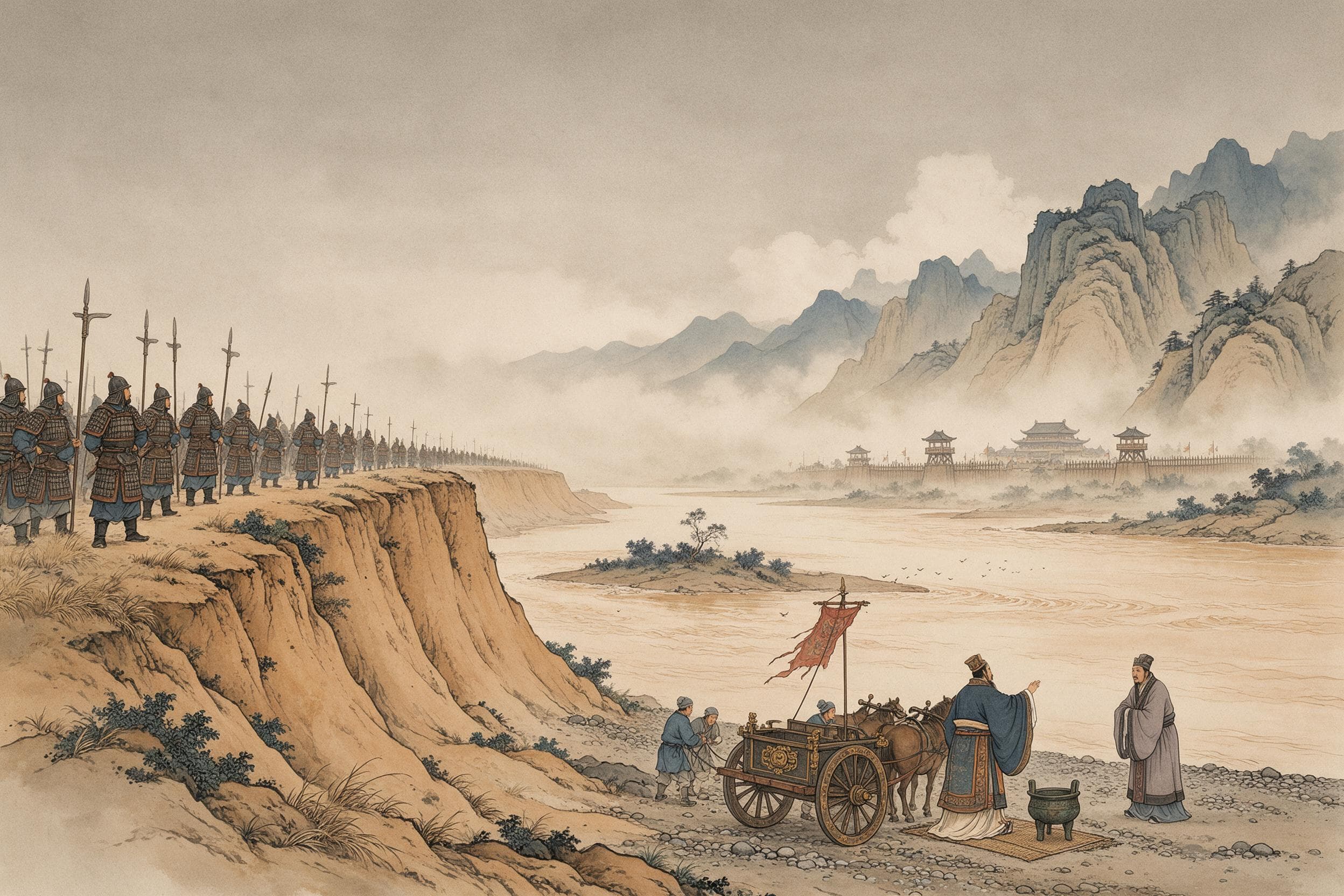
鲁宣公三年,楚子伐陆浑之戎,「遂至于雒,观兵于周疆」;周定王派王孙满去慰劳;楚子开口就问:「问鼎之大小轻重焉。」——问的是一件铜器有多大、有多重。两页都记了这场对话,两页也都没有回答那个问题:鼎的尺寸与重量,一个字都没有。回答是四个字:「在德不在鼎。」
一、场面:观兵于周疆
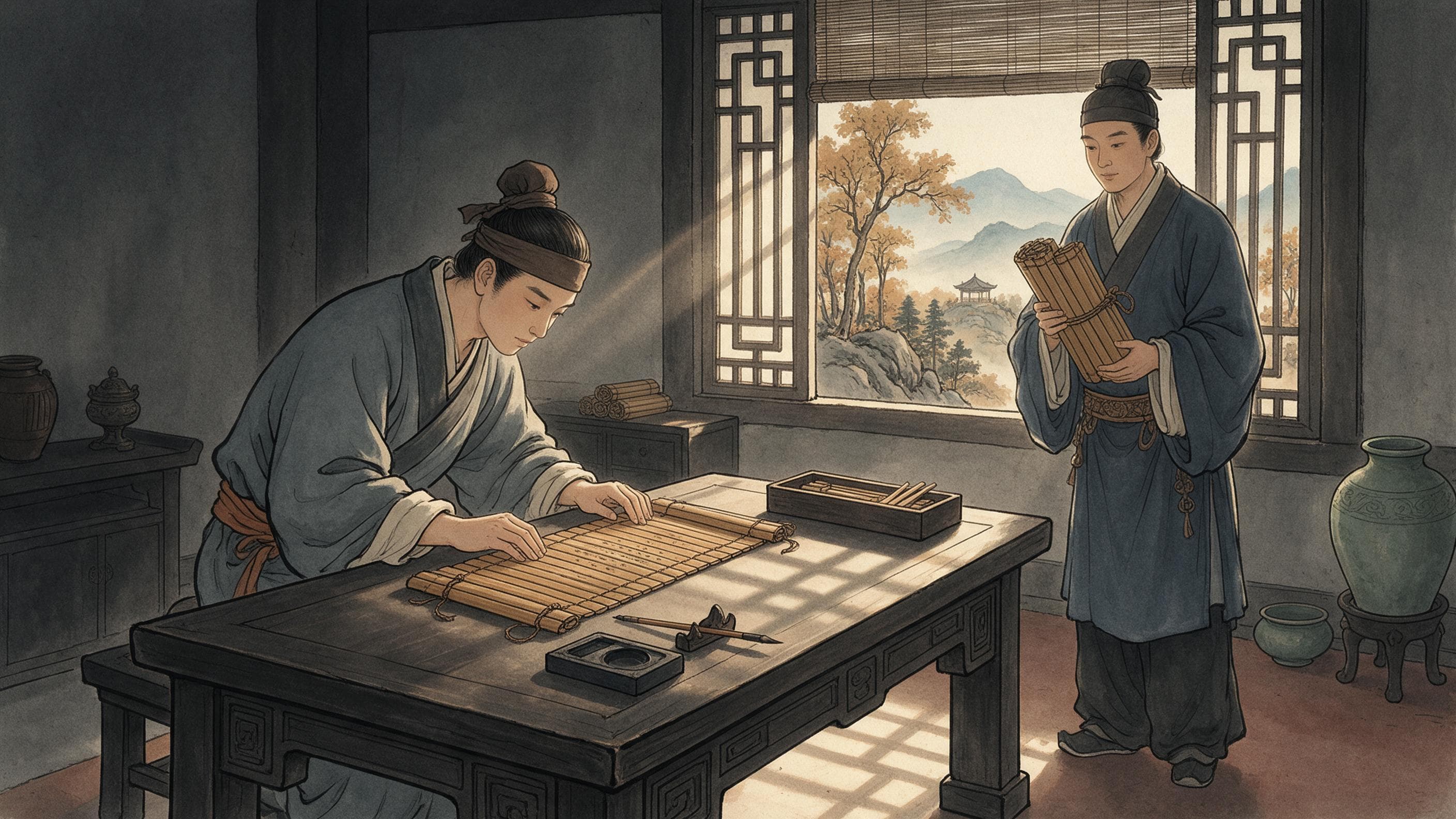
《左传》的起法:「楚子伐陆浑之戎,遂至于雒,观兵于周疆。定王使王孙满劳楚子。」《史记》的起法:「八年,伐陆浑戎,遂至洛,观兵于周郊。周定王使王孙满劳楚王。」——史记多一个「八年」,多一个「周」字;「劳」的对象一作「楚子」,一作「楚王」。称呼不同,照录。「观兵」二字,一般认为就是陈兵给人看、示威的意思,本页未注,这里标作通说。
问的话两书也略异。《左传》:「楚子问鼎之大小轻重焉。」《史记》:「楚王问鼎小大轻重。」语序不同,问的是同一件事:大小、轻重。这是全篇的起点——他问的是物理问题;下文回答的却不是物理。
二、四个字,和一段鼎的历史
「对曰:『在德不在鼎。』」——四个字。两书在这里的结构不同:《左传》把这四字放在一段连续答辞的开头,以下一气讲完;《史记》先只给这四字,接着插入楚王的硬话(见第四节),再让王孙满以「呜呼!君王其忘之乎?」重新起头,把长篇讲下去。同一个回答,一个是一段,一个被劈成两段。
铸鼎的来历,照《左传》抄:「昔夏之方有德也,远方图物,贡金九牧,铸鼎象物,百物而为之备,使民知神奸。」——远方的图物呈上来,九州的牧贡金,铸鼎而象物,各种物类都备在上面,让百姓知道神与奸。用处也写了:「故民入川泽山林,不逢不若,螭魅罔两,莫能逢之,用能协于上下,以承天休。」《史记》这一句作「昔虞夏之盛,远方皆至,贡金九牧,铸鼎象物,百物而为之备,使民知神奸」——「夏之方有德」作「虞夏之盛」,「远方图物」作「远方皆至」。鼎在这段里的用处是教人认神奸,不是称重量。
鼎的迁移是一段小史,两处照录并排:「桀有昏德,鼎迁于商,载祀六百」——《史记》作「桀有乱德,鼎迁于殷,载祀六百」;接着「商纣暴虐,鼎迁于周」——《史记》作「殷纣暴虐」。昏德/乱德,商/殷,都是异文;「载祀六百」照录,不换算成具体年份,也不排年表。
三、轻重:把物理问题换成另一个问题
最硬的一句是对仗:「德之休明,虽小,重也。其奸回昏乱,虽大,轻也。」《史记》作「德之休明,虽小必重;其奸回昏乱,虽大必轻」——「重也/轻也」与「必重/必轻」,两存。这一句把「鼎有多重」换成了「德如何」:小可以重,大可以轻。也正因为如此,全篇问的那个尺寸与重量,两书始终不给——王孙满的回答本身,就是「不靠大小轻重」。
《左传》接着还有一句「天祚明德,有所底止」,然后才是「成王定鼎于郏鄏,卜世三十,卜年七百,天所命也」。《史记》没有「天祚明德,有所底止」这一句,直接从「虽大必轻」接到「昔成王定鼎于郏鄏」。郏鄏,一般认为就是后来王城一带,本页无注,这里不指实今地名;「卜世三十、卜年七百」两个数照录,不折算年份。结论两书相同:「周德虽衰,天命未改。鼎之轻重,未可问也。」
四、《史记》多出来的两句
《左传》没有、只见于《史记》的,是楚王的一句硬话:「子无阻九鼎!楚国折钩之喙,足以为九鼎。」——不要拦我的九鼎,楚国折断戈钩的锋尖,就够铸成九鼎。这句话在两书的结构里位置不同:在《史记》,它插在王孙满说出「在德不在鼎」之后、长篇答辞之前,场面从「问」变成「叫板」;《左传》没有这句,王孙满的话一气到底。「折钩之喙」,一般认为指折戈钩之锋,本页无注,标作通说。另一句也只有《史记》有:「楚王乃归。」——四个字收场,《左传》停在「未可问也」,不写他走没走。
五、两页都不给的
两页都不给鼎的尺寸、重量、形制、数量——问的就是这个,文本偏不回答。九鼎后来的下落,两页也不载,本文不补「沉于泗水」「入秦」这类后话。周王室当时的实力、楚庄王的后续动作、这场对话的结果,两页都不作分析;《史记》只给「楚王乃归」。《史记》同一页还有「三年不蜚,蜚将冲天;三年不鸣,鸣将惊人」那一段,是另一件事,本文不并进来。「卜世三十、卜年七百」不从卜辞推算年表。
最后说清一层:「问鼎」二字在后世被用来指觊觎王位,那是后来的用法,两页都没有这个意思——两页只记了一场对话。本文只写这场对话:一个人问器物的轻重,一个人用德与天命来答;问到的东西,两书一个字都不给。
参考来源与延伸阅读
- 《春秋左氏传·宣公三年》(维基文库本,页面白文无注,未与中华书局点校本复核) — The Zuozhuan's account: the lord of Chu campaigns against the Rong of Luhun, reaches the Luo and displays his troops on the Zhou border; King Ding sends Wangsun Man to comfort him; the Chu lord asks the size and weight of the cauldrons. Wangsun Man answers in one continuous speech: it lies in virtue, not in the vessel; when Xia had virtue the distant regions sent pictures and the nine herdsmen brought metal, and cauldrons were cast with images of things so that the people would know the divine and the monstrous; Jie's benighted virtue moved the cauldrons to Shang for six hundred years of sacrifice; the cruelty of Zhou of Shang moved them to Zhou; where virtue is bright, small means heavy, and where it is crooked, great means light; King Cheng set them at Jiaru with the divination of thirty generations and seven hundred years; Zhou's virtue may have declined but Heaven's mandate has not changed, so the weight of the cauldrons may not be asked.
- 《史记》卷四十·楚世家(西汉司马迁撰;维基文库本,页面白文无注,未与中华书局点校本复核) — The same affair in King Zhuang's eighth year, with a different shape: the king asks, the four characters 'it lies in virtue, not in the vessel' are given as the whole of the first answer, the king retorts 'do not block my nine cauldrons — the broken barbs of Chu's halberds would suffice to cast them', and only then does Wangsun Man deliver the long speech, opening 'Alas! Has your majesty forgotten it?' and speaking of 'Yu and Xia in their prime', Jie's 'chaotic virtue', the cauldrons moving to Yin, and 'must be heavy' for 'is heavy'. It also lacks the Zuozhuan's line about Heaven blessing bright virtue and having its limits, and ends with one sentence the Zuozhuan does not have: 'the king of Chu then went home.'