三十四年,始皇置酒咸阳宫,博士七十人前为寿。仆射周青臣进颂,博士齐人淳于越进谏,丞相李斯上议——这道奏议就是焚书令的底本。先把来源层说清:《史记》是汉人所写,这一篇是汉人对秦事的记述,不作秦代实录;本文只做一件事,把「烧哪些、留哪些」逐条照录,不用「焚书」两个字把它们并掉。
一、从一场酒宴到一道奏议
前情很短。宴上,周青臣颂「以诸侯为郡县,人人自安乐,无战争之患,传之万世」;淳于越反对:「臣闻殷周之王千余岁,封子弟功臣,自为枝辅……事不师古而能长久者,非所闻也。今青臣又面谀以重陛下之过,非忠臣。」始皇把这件事「下其议」,交给群臣讨论。
李斯的议论先说理由,再提条文:「五帝不相复,三代不相袭,各以治,非其相反,时变异也……今诸生不师今而学古,以非当世,惑乱黔首。」又说「私学而相与非法教,人闻令下,则各以其学议之,入则心非,出则巷议……如此弗禁,则主势降乎上,党与成乎下。禁之便。」——「禁之便」三个字之后,才是具体条目。
二、烧哪些
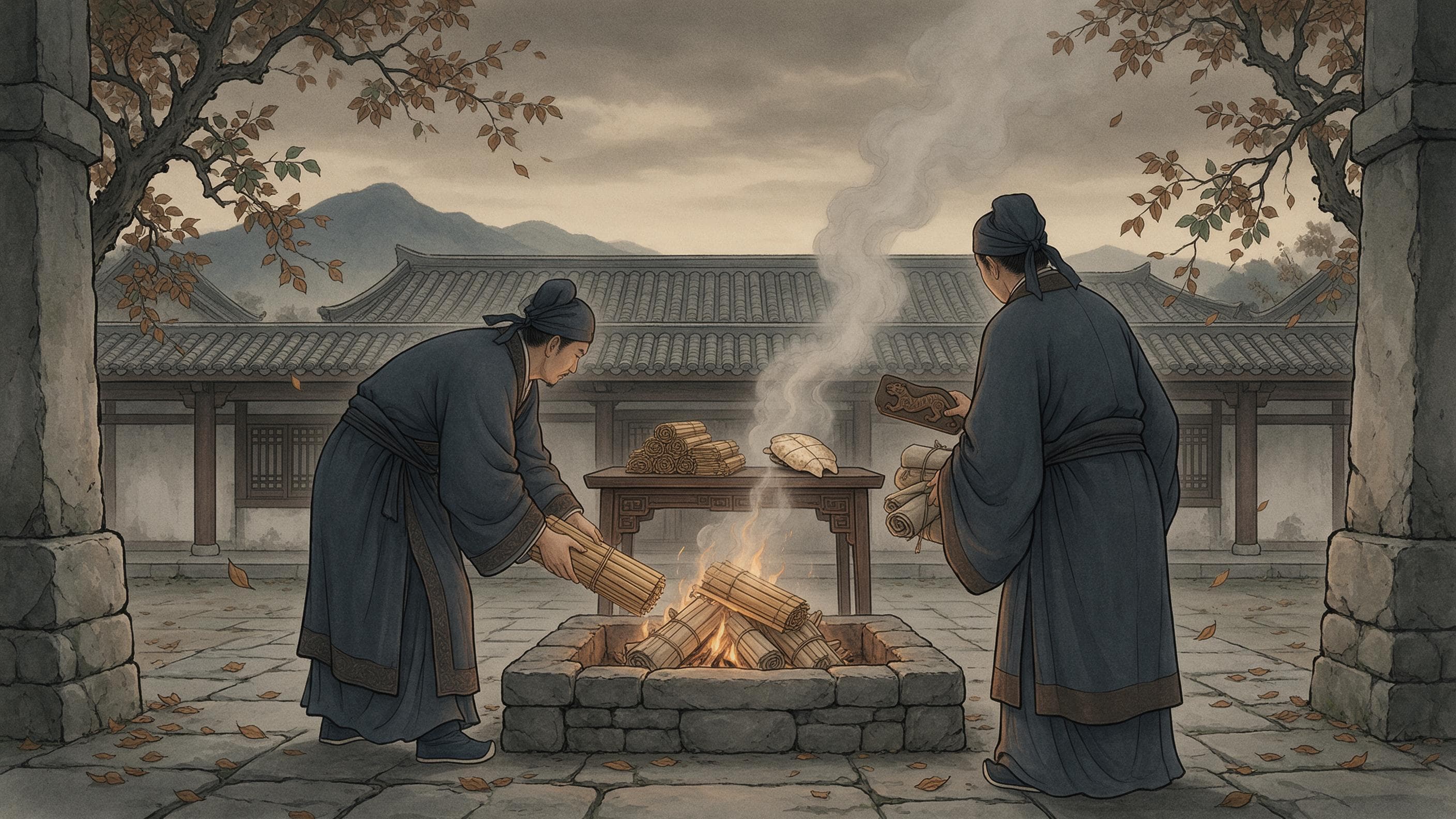
第一条:「臣请史官非秦记皆烧之。」——史官所藏,不是秦国史记的,都烧。第二条:「非博士官所职,天下敢有藏诗、书、百家语者,悉诣守、尉杂烧之。」——除了博士官所职掌的,天下敢私藏《诗》《书》与百家语的,一律送到郡守、郡尉那里烧掉。注意这两条的对象不同:一条是史官的官藏,一条是民间的私藏;句式也说明了范围——「非博士官所职」这一限定,把博士官掌管的书划在外面。
接着是四条例罚,照录:「有敢偶语诗书者弃市。以古非今者族。吏见知不举者与同罪。令下三十日不烧,黥为城旦。」——偶语《诗》《书》者弃市;以古非今者族;官吏知情不举者同罪;命令下达三十天还不烧的,黥为城旦。刑名不解释、不折算,就按页面写。
三、留哪些
一句总说:「所不去者,医药卜筮种树之书。」——不烧的:医药、卜筮、种树三类。再一句是学法令的出路:「若有欲学法令者,以吏为师。」——想学法令的,以官吏为师。这一句里的「法令」,两处记载不同,见第四节。
「留」还有另一半,藏在第二条的限定里:既然烧的是「非博士官所职」,那么博士官所职掌的书,就不在烧的范围。但博士官到底掌哪些书、有多少——两页都不说,本文也不补;「不烧」的意思是相对于那条烧令而言,不等于那些书一定完好。
四、同书两处,一部汉志
同一部《史记》里,这件事记了两遍。《李斯列传》的版本短得多:「臣请诸有文学诗书百家语者,蠲除去之。令到满三十日弗去,黥为城旦。所不去者,医药卜筮种树之书。若有欲学者,以吏为师。」始皇「可其议」,然后「收去诗书百家之语以愚百姓,使天下无以古非今」。与《秦始皇本纪》对读,少了「史官非秦记皆烧之」,少了「偶语诗书者弃市」「以古非今者族」「吏见知不举者与同罪」;「悉诣守、尉杂烧之」作「蠲除去之」;「令下三十日不烧」作「令到满三十日弗去」;最要紧的一处是「欲学法令者」与「欲学者」——一有一无。两处并列,不合成一条「法令原文」。
《汉书·艺文志》又是另一种写法,只有总述,没有条目:「至秦患之,乃燔灭文章,以愚黔首。」又说《易》:「及秦燔书,而易为筮卜之事,传者不绝。」——易因作卜筮之用而未绝,这一句与「卜筮之书不去」正好对上。这两句都是汉人的话,标作汉志,不当秦代原文;汉志也没有列「烧了哪些书」的清单。
五、两页不给的
不给烧了多少书、不给被烧书目、不给博士官所掌书目、不给执行记录(谁去烧、烧了几天、有无例外);也不给年份以外的系年,三十四年照录,不折公元。坑儒是另一件事,本文只在分线时说一句:不在这一篇的材料里,不合并叙述。
能确定的,只有这道奏议的条目:烧史官所藏的非秦记;烧民间私藏的诗、书、百家语;四条例罚(弃市、族、同罪、黥为城旦);三类书不去(医药、卜筮、种树);学法令的以吏为师;制曰可。同一部《史记》两处所记略有出入,汉志只有一句总述。烧掉多少、留下了什么,这三页都不回答,本文也不写「文化浩劫」之类的评价。
延伸阅读:微子之问:一个王子问「走还是留」 · 方田与粟米:汉代算书里的日常题 · 赐姓命氏:春秋人的姓与氏
参考来源与延伸阅读
- 《史记》卷六·秦始皇本纪(西汉司马迁撰;维基文库本,页面白文无注,未与中华书局点校本复核) — The thirty-fourth year: a banquet at Xianyang, seventy court scholars, Zhou Qingchen's praise and Chunyu Yue's objection that without following antiquity no rule lasts; the emperor refers the matter down, and Li Si's memorial follows item by item — histories other than Qin's records to be burned; outside what the court scholars hold, anyone privately keeping the Songs, the Documents or the hundred schools to have them taken to the commandant and burned; those who discuss the Songs and Documents together to be executed in the market; those who use antiquity to condemn the present to be exterminated with their kin; officials who know and do not report to share the penalty; thirty days after the order, failure to burn to mean branding and hard labour. What is not to be removed: books on medicine, divination and tree-planting; those wishing to study the laws to take officials as teachers. The reply: approved.
- 《史记》卷八十七·李斯列传(西汉司马迁撰;维基文库本,页面白文无注,未与中华书局点校本复核) — The same affair in the biography, shorter and differently worded: Li Si asks that 'all who have literary writings, the Songs, the Documents and the hundred schools be done away with'; the deadline is 'when the order arrives, thirty days and not removed', the penalty the same branding and hard labour; the books not removed are again medicine, divination and tree-planting; and 'those who wish to learn' take officials as teachers — without the words 'the laws' found in the annals. The burnings themselves are summarised as the emperor 'taking away the words of the Songs, Documents and hundred schools to make the people stupid, so that the world should have no means to condemn the present by antiquity'.
- 《汉书》卷三十·艺文志(东汉班固撰;维基文库本,页面白文无注,未与中华书局点校本复核) — The Han summary in the bibliographic treatise: 'when it came to Qin, this troubled them, and they burned and destroyed the writings to make the people stupid'; and, in the note on the Changes, 'when Qin burned the books, the Changes were a matter of divination, and those who transmitted it did not break off.' The treatise lists books and their transmission, not the Qin order's items; neither this page nor the Shiji gives a list of what was destroyed.