函谷关第一次出现,是在一张清单的第四项。《战国策·秦策一》苏秦说秦惠王:「大王之国,西有巴蜀汉中之利,北有胡貉代马之用,南有巫山黔中之限,东有肴函之固。」东边这一项只有四个字:肴、函、之、固。关本身是什么样,这句话不说。
一份资产清单
接着是整张单子:「田肥美,民殷富,战车万乘,奋击百万,沃野千里,蓄积饶多,地势形便,此所谓天府,天下之雄国也。以大王之贤,士民之众,车骑之用,兵法之教,可以并诸侯,吞天下,称帝而治。」——四面的「利、用、限、固」是先给秦画一个盒子,盒子造好了,才说盒子里的人可以打出去。秦王没接:「寡人闻之,毛羽不丰满者不可以高飞……今先生俨然不远千里而庭教之,愿以异日。」
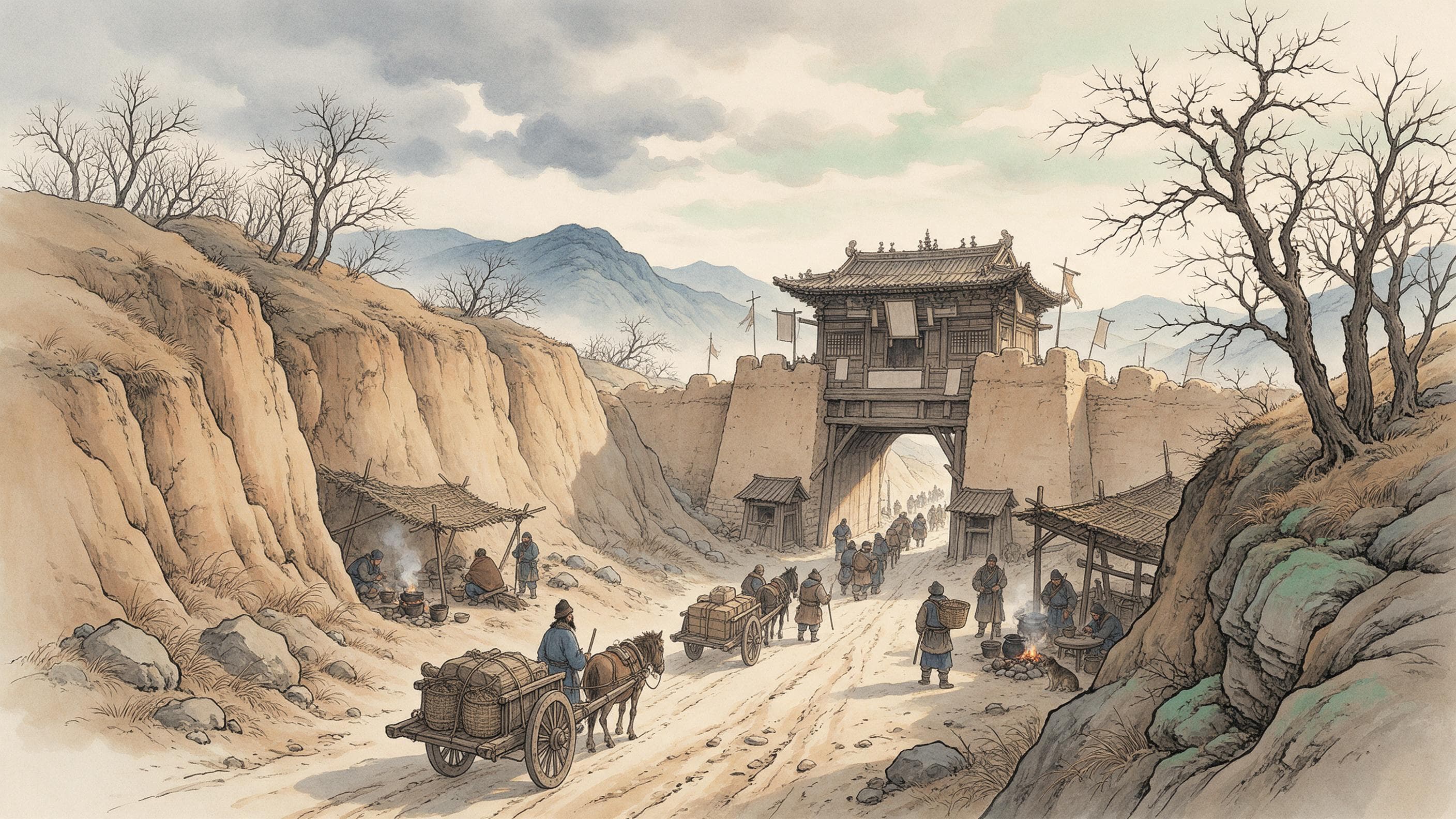
这一页上唯一一句讲关本身的,是注。「肴在渑池西,函关旧在弘农城北门外,今在新安东,固牢坚难攻易守也。」——肴(崤)在渑池西边,函关过去在弘农城北门外,此时在新安东边;「固」的意思是「牢坚难攻易守」。正文只给一个形容词,注才把它拆成位置与「难攻易守」。但注也只到这一步:没有关墙多高、道路多宽、驻多少兵。这一卷的注在四库本里是汉高诱注与宋姚宏续注混排,本文只称「注」,不硬分给哪一位。
同一场劝说的两个本子
《史记·苏秦列传》里也有这一场劝说,说法不一样:「秦四塞之国,被山带渭,东有关河,西有汉中,南有巴蜀,北有代马,此天府也。」——《史记》给秦的东界是「关河」,不是「肴函」;「四塞之国」四个字,《战国策》那一版没有。秦王的回答也换了词:「毛羽未成,不可以高蜚;文理未明,不可以并兼。」下面交代得更具体:「方诛商鞅,疾辩士,弗用。」
两页并排,差异很清楚:一个说「东有肴函之固」,一个说「东有关河」;一个说「毛羽不丰满」,一个说「毛羽未成」。同一场劝说留下两个本子,哪个在先,这两页不回答,本文也不替它们裁决。能用的只有一点:关在策士的嘴里,是东界的一个代称,不是一个被测量过的工程。
第三个本子:贾谊的政论
到了《史记》卷六篇末,太史公引贾谊的话:「秦孝公据殽函之固,拥雍州之地,君臣固守而窥周室,有席卷天下,包举宇内,囊括四海之意,并吞八荒之心。」后面还有一句:「且夫天下非小弱也,雍州之地,殽函之固自若也。」——关还是那个关,秦却亡了。
这段话的性质要写清楚:它是贾谊《过秦论》,是一篇政论,被司马迁引在《秦始皇本纪》篇末,不是当时的记事。它拿「殽函之固」当论点用:地形没变,人心变了,所以「仁义不施而攻守之势异也」。这是文章的做法,不是地理测量。同一篇还说,秦「缮津关,据险塞,修甲兵而守之」,可陈涉一起,「秦人阻险不守,关梁不阖」——关修好了,守关的人没了;这也是文章的论证,不是关的档案。
关在三种话里的三种角色
三种角色,各归各页。在《战国策》的说辞里,关是资产清单的第四项:说它有「固」,是为了让秦王相信自己有本钱打出去。在《史记·苏秦列传》的合纵盟约里,关是威胁的方向:「六国从亲以宾秦,则秦甲必不敢出于函谷以害山东矣」;盟约成后,「秦兵不敢窥函谷关十五年」。在贾谊的政论里,关是「攻守之势」的物证:关自若,秦已亡。同一座关,一处是资产,一处是出口,一处是证据。
名字也有三种写法:《战国策》作「肴函」,《史记·苏秦列传》作「函谷」,《过秦论》作「殽函」。肴、殽、崤是同一座山的异写,函是关名。三页没有统一,本文也不替它们统一。
三页没有的
没有关的尺寸,没有关墙高度,没有道路宽度,没有驻军数目,没有通关手续,没有关税——这篇只写地理与军事,税在《战国之税》那篇,两页在这里一句税也没提。也没有「第一关」这类排名,没有历代关址搬迁的沿革,没有军队通过量的估算。「秦兵十五年不敢窥关」是苏秦传里的说法,不是关的档案。所以能写的只有一句:在这三页上,函谷关是一个词,被三种人拿去用在三处地方;至于这座关怎么守、谁在守,三页都没有写。
延伸阅读:两座墓的账:邵家棚 M102、M110 · 安阳的另一座商代城:洹北商城 · 临淄:两重城墙、十一道门和四个排水口
参考来源与延伸阅读
- 《史记》卷六十九·苏秦列传(西汉;维基文库本,未与点校本复核) — Su Qin's two speeches and their results. To King Hui of Qin: 'Qin is a state of four barriers, backed by mountains and girdled by the Wei; east it has the passes and the Yellow River, west Hanzhong, south Ba and Shu, north the horses of Dai — this is a heavenly storehouse' (秦四塞之國,被山帶渭,東有關河……此天府也); the king answers 'feathers not yet full cannot fly high' (毛羽未成,不可以高蜚) and, because Shang Yang had just been executed, 'he disliked persuaders and did not use him'. In the covenant Su Qin later sells to Zhao: 'if the six states join in kinship and treat Qin as a guest, Qin's armour will not dare come out of the Hangu pass to harm the east' (秦甲必不敢出於函谷以害山東矣); and after the alliance, 'for fifteen years Qin's armies did not dare peep at the Hangu pass' (秦兵不敢闚函谷關十五年). Note: this juan's version of the first speech says 'the passes and the Yellow River' (關河), not 'Yao-Han'; it contains no 崤/殽.
- 《战国策》卷三·秦策一(汉高诱注、宋姚宏续注;四库全书本,维基文库本,未与点校本复核) — The persuader's inventory: 'Your majesty's state has, in the west, the profits of Ba, Shu and Hanzhong; in the north, the use of the Hu and Dai horses; in the south, the barrier of Wu and Qian mountains; in the east, the firmness of Yao and Han' (東有肴函之固). The king declines with 'feathers not full cannot fly high' and 'I beg another day'. The commentary in this edition (the volume carries Gao You's and Yao Hong's notes in one run, so it is cited here simply as 'the note') places the barrier: 'Yao is west of Mianchi; the Han pass was formerly outside the north gate of Hongnong city, now east of Xin'an; 'firm' means hard to attack and easy to hold' (肴在澠池西,函關舊在弘農城北門外,今在新安東,固牢堅難攻易守也). After Su Qin's success in Zhao, 'Su Qin being chancellor in Zhao, the pass was not open' (故蘇秦相於趙而關不通). No width, garrison, road or toll procedure appears.
- 《史记》卷六·秦始皇本纪(篇末太史公曰引贾谊《过秦论》;维基文库本,未与点校本复核) — Used for one quotation only, and it is political argument, not record: in Sima Qian's closing judgement he quotes Master Jia — 'Duke Xiao of Qin, resting on the firmness of Yao and Han and holding the land of Yongzhou, his ruler and ministers held fast and watched the house of Zhou, with the will to roll up the world' (秦孝公據殽函之固,擁雍州之地,君臣固守而窺周室); and later, 'the land of Yongzhou and the firmness of Yao and Han were as before' (雍州之地,殽函之固自若也). This is Jia Yi's 'Faults of Qin', a political essay, quoted inside the Shiji; it argues about attack and defence, and is not evidence for the pass's construction or garrison.