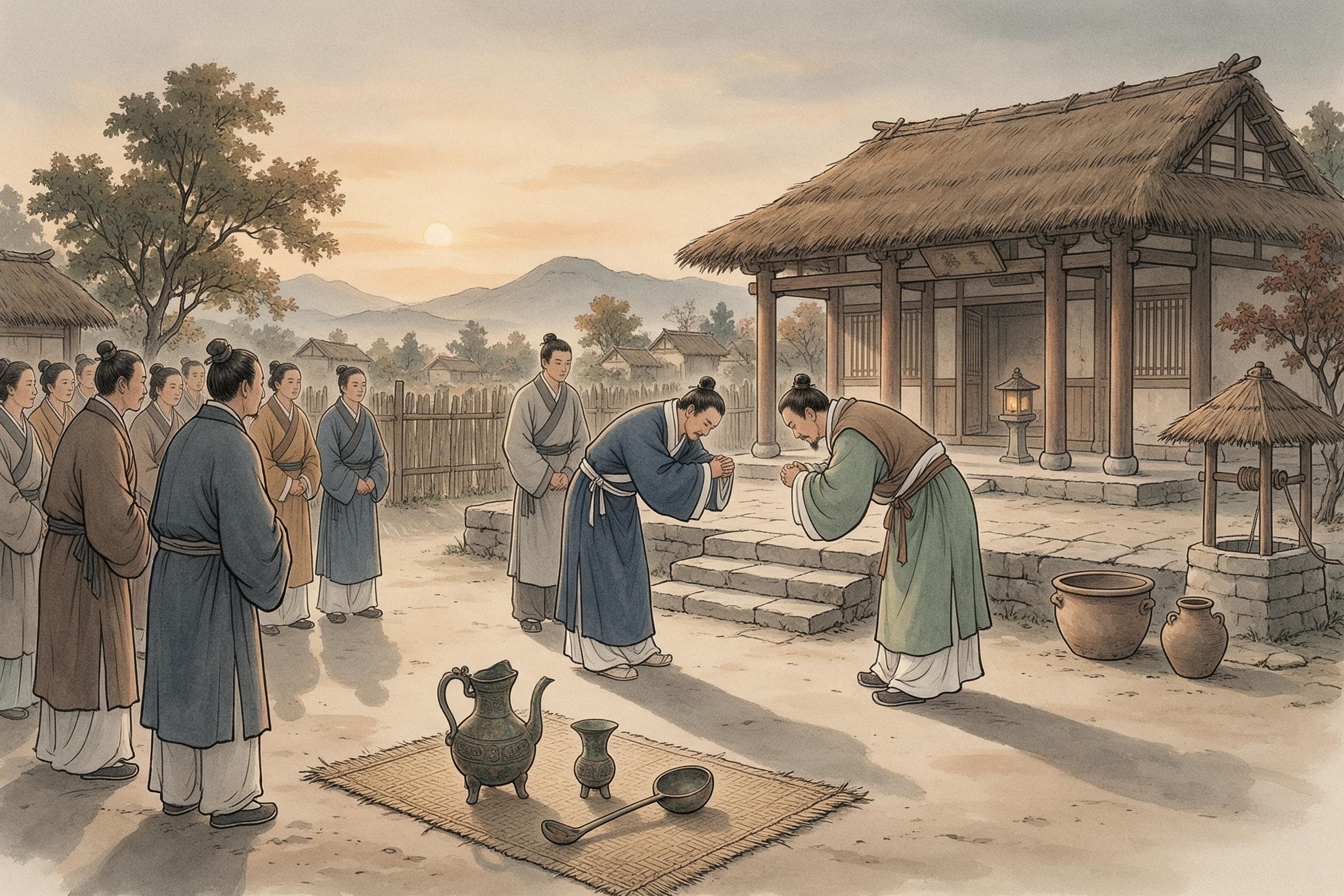
禮書裡有個場面,今天讀來仍會一愣:加冠之後,冠者拿著脯,從西階下來,到東壁,面朝北見母親——「母拜受,子拜送,母又拜」。母親向兒子下拜,兒子還拜,母親再拜。這一天之前,這套動作不會發生;這一天之後,它就是常態。
先問日子,再問客人
冠禮的準備比儀式還長。先「筮日」——用占卜擇日子;「前期三日,筮賓」——儀式前三天再用同樣的辦法擇一位賓來主持加冠。然後是「宿賓」,把賓請定;到前一天傍晚,在廟門外「為期」,宰報告時辰:「質明行事」,天一亮就辦。主人去請賓時說:「某有子某。將加布於其首,願吾子之教之也。」——我有個兒子某某,將要在他頭上加布,希望您教導他。禮書講這件大事,用的詞是「加布於其首」——最直白。
《禮記·冠義》解釋了為什麼要這麼鄭重:「古者冠禮:筮日、筮賓,所以敬冠事。敬冠事所以重禮,重禮所以為國本也。」——擇日子、擇賓,是為了敬重這件事;敬重它,是為了重禮;重禮,是「為國本」。又說行禮要在廟裡:「重冠故行之於廟……所以自卑而尊先祖也。」把一件家事放進祖廟,等於說:這不是我們自己的事。
三加
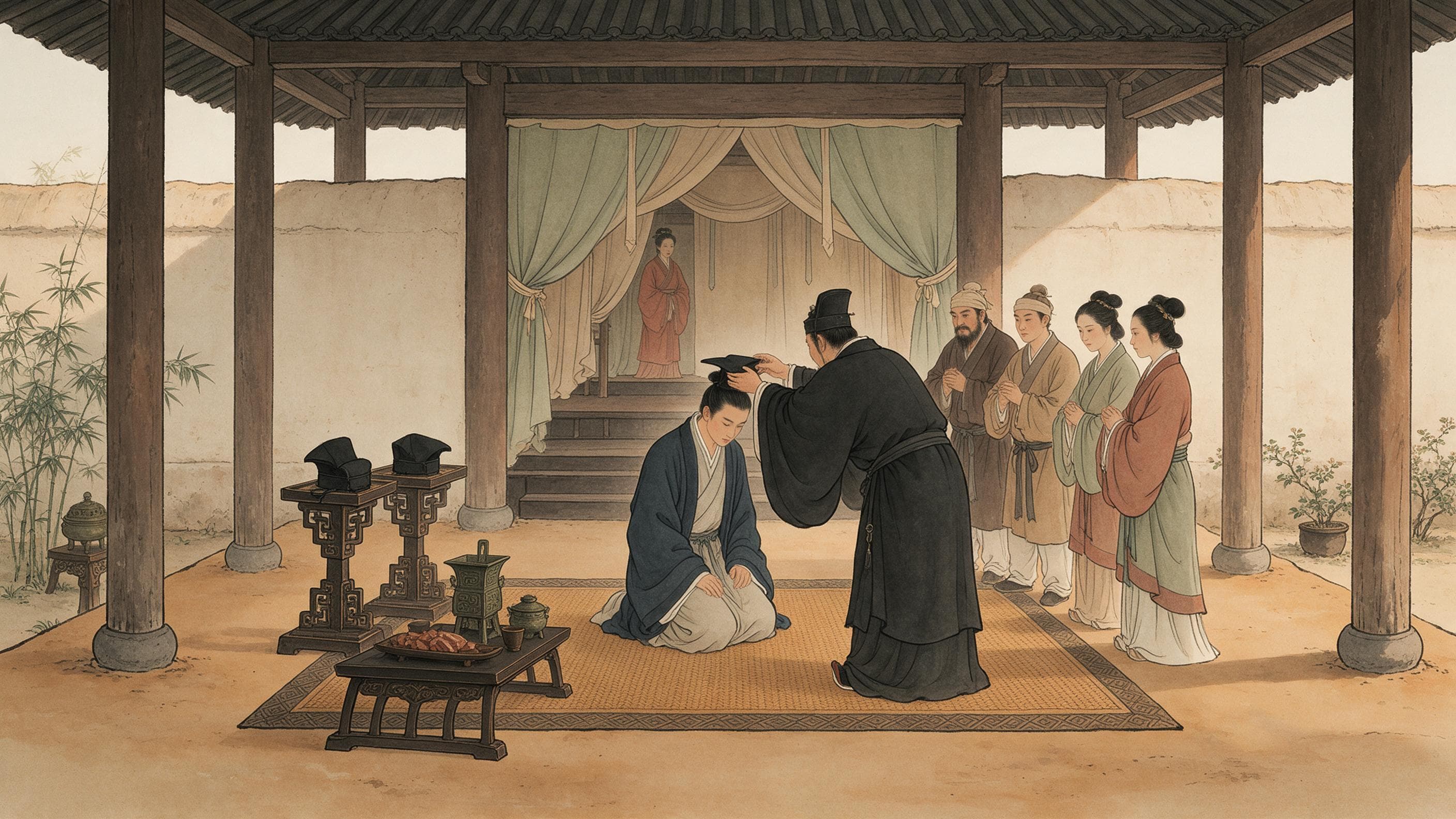
儀式當天,衣服先擺開。房中西牆下,東領朝北:爵弁服(纁裳、純衣、緇帶、韎韐)、皮弁服(素積、緇帶、素韠)、玄端(玄裳、黃裳、雜裳都可以)、緇布冠(缺項、青組纓);還有緇纚、皮弁笄與爵弁笄、櫛、兩張蒲席、一壺醴、勺觶角柶、脯醢。三頂冠各放一竹器,由人捧著等在階下。
加冠三次,每次一頂冠、一套服、一段祝辭。始加緇布冠,祝曰:「令月吉日,始加元服。棄爾幼志,順爾成德。壽考惟祺,介爾景福。」——好月好日,初加元服;丟開孩子的心思,順著你已成的德;長壽吉祥,大福加給你。再加皮弁,祝曰:「吉月令辰,乃申爾服。敬爾威儀,淑慎爾德。眉壽萬年,永受胡福。」三加爵弁,祝曰:「以歲之正,以月之令,咸加爾服。兄弟具在,以成厥德。黃耇無疆,受天之慶。」三頂冠一次比一次尊,這就是篇末「記」說的「三加彌尊」。
加完是一觶醴:「甘醴惟厚,嘉薦令芳。拜受祭之,以定爾祥。承天之休,壽考不忘。」若不用醴,改「醮」用酒,另有醮辭——一部禮書裡並存兩套程序。然後賓為冠者取字,字辭說:「禮儀既備,令月吉日,昭告爾字……曰伯某甫。」排行不同,字也不同(仲、叔、季)。接著是按次序見人:見母、見兄弟、見贊者、見姑與姊;再換玄冠玄端,執摯去見國君,又去見鄉大夫、鄉先生。
「成人之道」
《冠義》把這一串動作解釋成一句話:「已冠而字之,成人之道也。」為什麼母親要拜?因為「成人而與為禮也」——從此母子之間也按成人的禮來往。冠義再往前推一步,說出全篇最重的一句:「成人之者,將責成人禮焉也。責成人禮焉者,將責為人子、為人弟、為人臣、為人少者之禮行焉。」——讓他成人,是要拿成人的禮來要求他;所謂成人的禮,就是做兒子、做弟弟、做臣、做晚輩的禮。結論是「孝弟忠順之行立,而後可以為人」。
冠禮不是慶祝長大,是把責任加在人身上;帽子只是記號。這一點在《儀禮》與《禮記》的分別裡看得最清楚:同樣一句「三加彌尊」,《儀禮·士冠禮》篇末的記說「論其志也」(一層層加冠,是論定他的志向),《禮記·冠義》說「加有成也」(一層層加冠,是加給他已成之德)。一句儀節,兩處解釋;儀節手冊與義理文章不能混讀。
誰行這個禮
《士冠禮》是給「士」寫的。篇末記說得更清楚:「無大夫冠禮,而有其昏禮。古者五十而後爵,何大夫冠禮之有?」——大夫沒有冠禮,因為古時五十歲才受爵,早過了加冠的年紀;「公侯之有冠禮也,夏之末造也」——諸侯的冠禮是晚出的;「天子之元子,猶士也,天下無生而貴者也」——天子的長子也用士禮,天下沒有生下來就貴的人。幾句就把立場說盡了:士階層的禮制文本,不是全民習俗。
年齡也說一句:兩頁都不寫年歲。「二十而冠」是別的禮書篇目的規定,不在本文所據兩頁之內;實際行冠的年齡各代未必一律,這篇不替它定死。兩頁只把冠稱作「禮之始」,把加冠之後稱作「成人之道」——它們關心的不是幾歲,而是加冠這一步在人的一生中排在什麼位置。
材料沒有的
沒有一次實際舉行的紀錄,沒有年份、地點、人名,也沒說多少人真的照做。冠名與服制在篇內還自有出入:記裡說「委貌,周道也;章甫,殷道也;毌追,夏后氏之道也」,又說「周弁、殷冔、夏收」,三代各有冠名;「三王共皮弁素積」;醴與醮又是兩套程序。異文異制,照錄不合併。所以本文寫的是「禮書說的冠禮」——一場被一步步寫下來的儀式,不是「周代人都這樣成年」。
延伸閱讀:五十名博士弟子:漢太學的初置 · 一架弩,五十步城牆:戰國城守的日常 · 葵、菽與羔羊:春秋人吃什麼
參考來源與延伸閱讀
- 《仪礼·士冠礼》(战国至汉初成书;维基文库本,未与点校本复核) — The ritual manual itself, step by step. The day and the guest are chosen by divination (筮日;前期三日,筮賓,如求日之儀), the guest is invited and lodged, and the hour is set by the steward: 'act at full daylight' (質明行事). The invitation says 'I have a son, so-and-so; I am about to add cloth to his head; I wish you, sir, to instruct him' (某有子某,將加布於其首,願吾子之教之也). The clothes to be worn are laid out in the room: the jue-bian robes, the pi-bian robes, the dark xuan-duan, and the black cloth cap with its black silk band. The candidate is capped three times — black cloth cap, then leather cap (皮弁), then the jue cap (爵弁) — each with a blessing, of which the first begins 'A lucky month and a lucky day: first we add the primary garment; cast off your childish will, follow your accomplished virtue.' A cup of sweet wine (or, if not wine, the jiao variant) follows, then the guest gives him his courtesy name (字), then he is presented to his mother, brothers, the assistants, his aunts and elder sisters, changes into dark cap and dark robe, and is presented to his lord, the great officers of the district and the village elders. The closing 'notes' (記) add: 'the three caps grow more honoured each time — this is to discuss his intentions'; 'there is no capping rite for great officers'; 'the eldest son of the Son of Heaven is still a shi — under heaven no one is noble at birth'.
- 《礼记·冠义》(战国至汉初成书;维基文库本,未与点校本复核) — A short essay on the meaning of the rite, with no procedure of its own. It argues that 'the capping is the beginning of ritual' (冠者,禮之始也) because only after capping is dress complete, and only then are bearing, expression and speech correct; that the ancients divined the day and the guest 'to respect the capping, and respecting it to honour ritual, and honouring ritual as the root of the state'; that capping on the eastern steps marks succession, the cup at the guest's place and the three caps mark accomplishment, and the giving of the courtesy name is 'the way of the adult'; that when he is presented to his mother she bows to him, 'for he is an adult and is treated with ritual'. Then the essay's key move: 'to make him an adult is to hold him to adult ritual' — the duties of son, younger brother, subject and junior — and 'only when the conduct of filial piety, fraternal duty, loyalty and compliance is established can a man be a man'.