In the thirty-first year of Duke Xiang of Lu, Zichan accompanied the lord of Zheng to Jin. The lord of Jin, because Lu was in mourning, would not receive them; so Zichan had the walls of the guest house pulled down and the carriages and horses driven in. The Jin officer Shi Wenbo came to protest, and Zichan answered at length. The four characters 賓至如歸 — a guest arriving as if coming home — stand inside that answer. Two pages are used here. The first is the Zuo Tradition for that year, a chronicle of Lu; the second is the Rites of Zhou, a code of offices that states what each official keeps and hands out. One is an incident, the other a set of regulations, and they are not the same kind of text. The incident is remembered not for the wall but for the answer.
The Wall
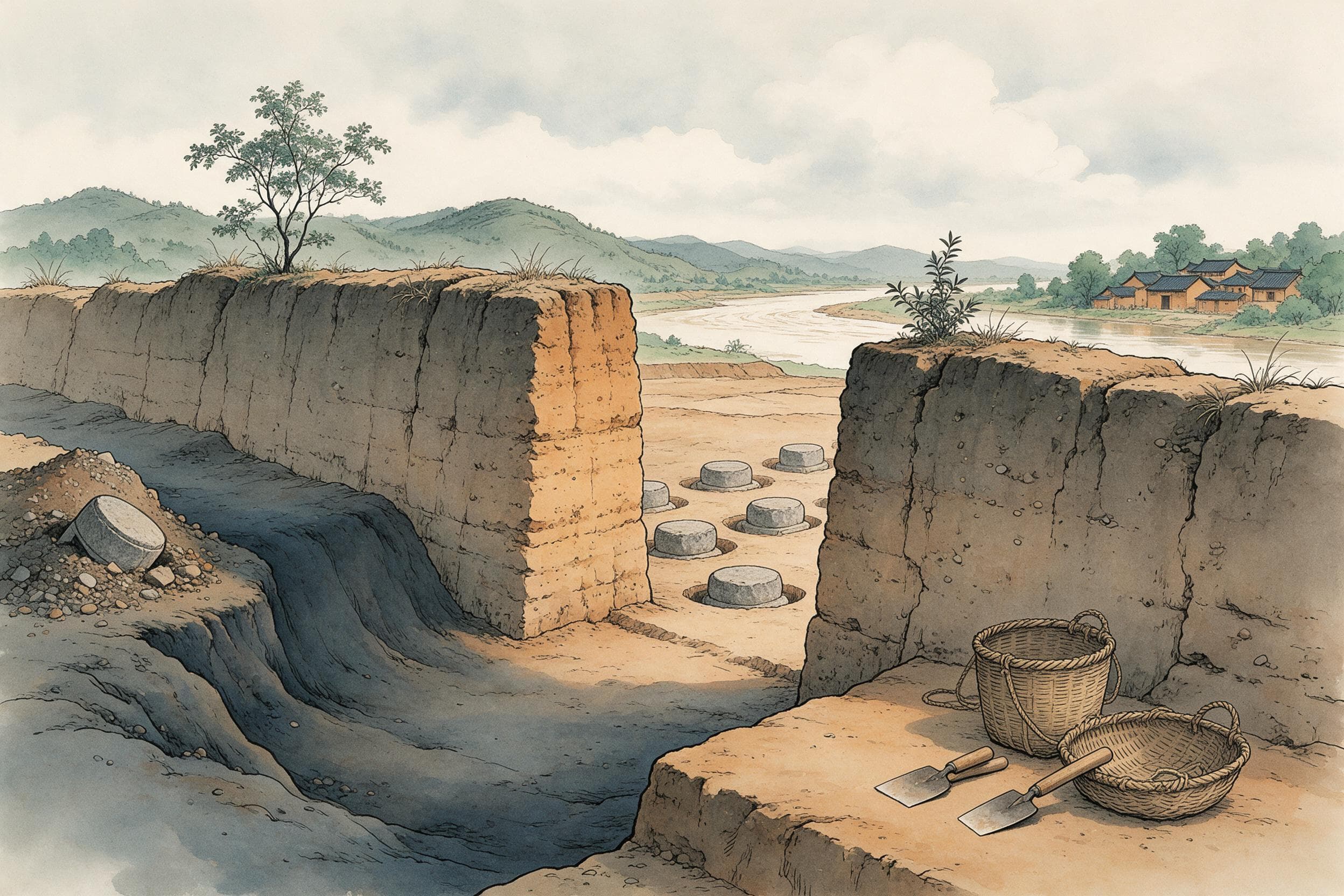
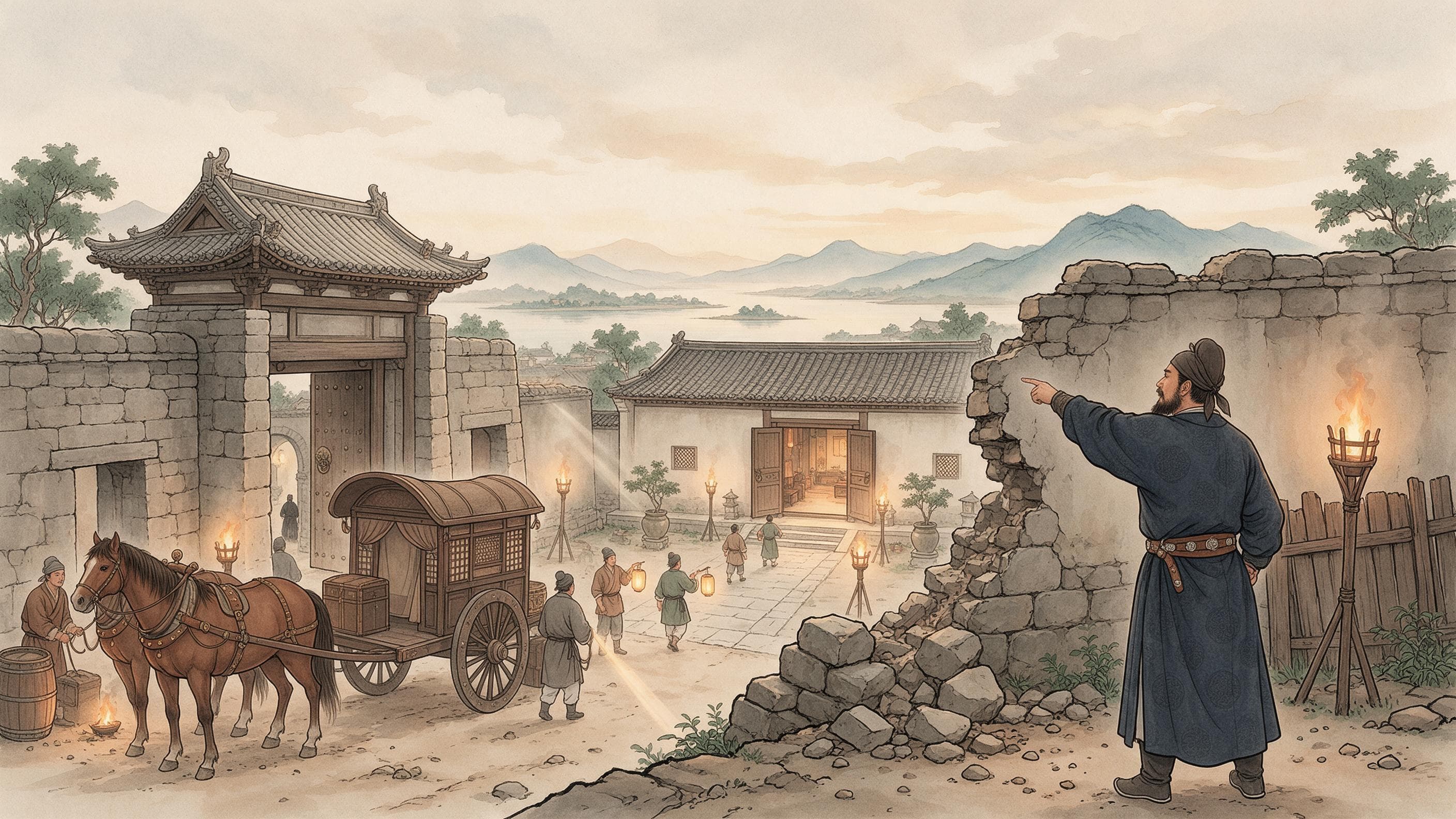
The incident is short: 鄭伯如晉,晉侯以我喪故,未之見也 — the lord of Zheng went to Jin, and the lord of Jin, because of Lu's mourning, would not see him — so 子產使盡壞其館之垣,而納車馬焉: Zichan had the wall of their guest house taken down, and brought the carriages and horses inside it. Shi Wenbo's protest is polite. 敝邑以政刑之不脩,寇盜充斥, he says, our state is full of robbers because government and law are not cultivated, and so 令吏人完客所館,高其閈閎,厚其牆垣,以無憂客使 — clerks were set to keep the guest house in repair, with high gates and thick walls, so that no guest envoy need be anxious. Now you have broken the wall, and though your own followers may keep watch, 其若異客何, what of the other guests? And the wall was built under the covenant leadership 繕完葺牆,以待賓客 — if every guest pulled it down, how could we answer for anything? He ends 寡君使匄請命.
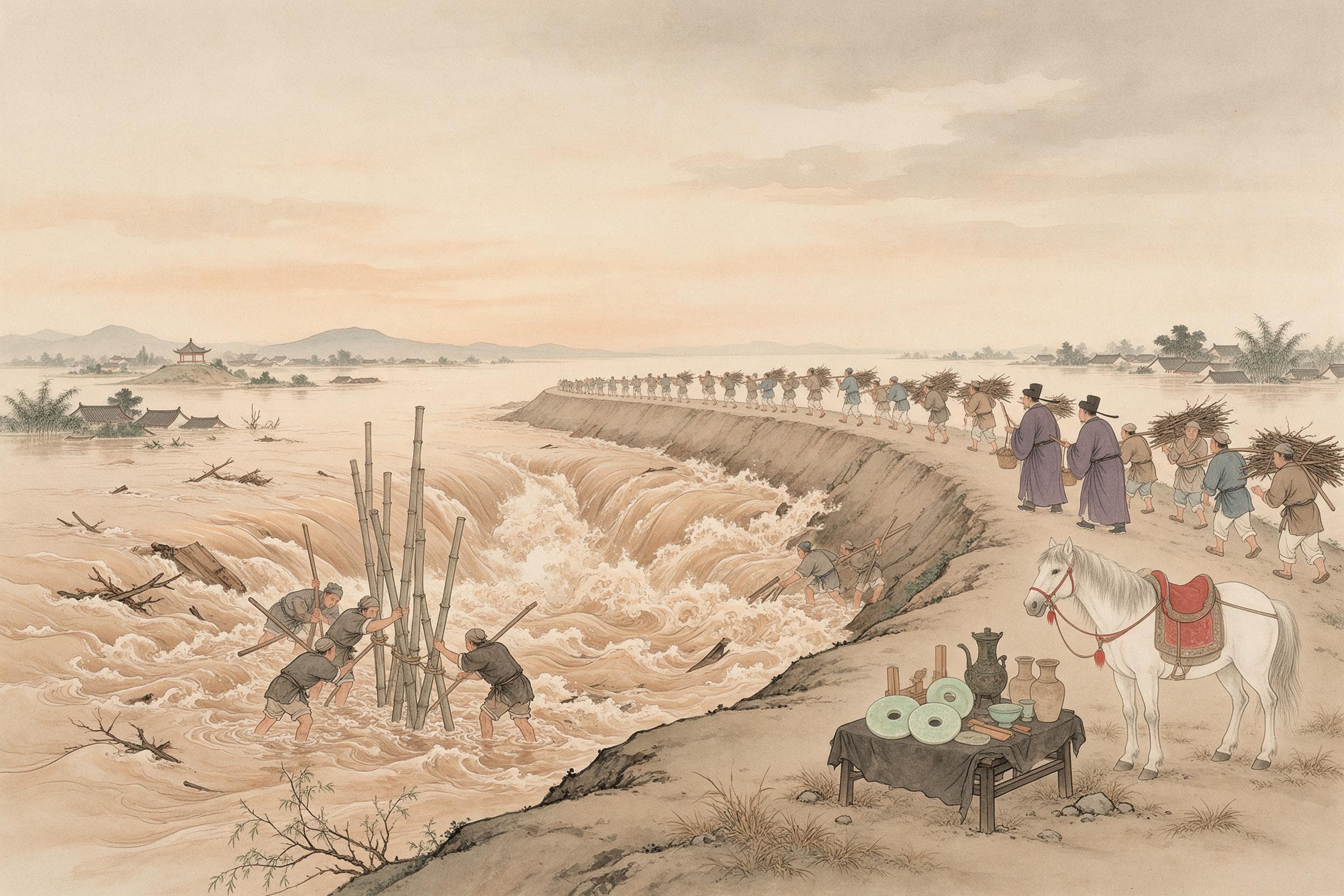
Zichan does not deny the damage; he explains what forced it. He answers first about the silks. He dares not present them and dares not leave them in the open. Presented, they are the ruler's treasury goods, and without the ceremony of 薦陳, of spreading them out and naming them, he may not present them; left outside, he fears 燥濕之不時,而朽蠹以重敝邑之罪 — that damp or dry weather out of season will rot them and make his state's guilt heavier. Then he turns to Duke Wen. 僑聞文公之為盟主也 — I have heard that when Duke Wen led the covenants, 宮室卑庳,無觀臺榭,以崇大諸侯之館: his own palace was low and small, without towers or terraces, so that the guest house of the lords might be great — 館如公寢, a guest house like the ruler's own bedchamber.
Duke Wen's Guest House
A list of service follows, and it is the evidence inside the answer: this is what a guest house was expected to be. Then the buildings: 庫廄繕脩,司空以時平易道路,圬人以時塓館宮室 — storehouses and stables kept in repair, the minister of works levelling the roads in season, the plasterers whitewashing the guest house in season. When a party arrived, 甸設庭燎,僕人巡宮 — the hunt officers set torches round the courtyard, and attendants patrolled the hall; 車馬有所,賓從有代,巾車脂轄,隸人牧圉,各瞻其事;百官之屬,各展其物 — the horses had their place, the guests' followers were relieved in turn, the carriage officer greased the axle pins, servants and herdsmen each attended to their task, and every office displayed the goods in its charge.
Then the manner of it: 公不留賓,而亦無廢事;憂樂同之,事則巡之;教其不知,而恤其不足 — the duke did not hold guests back, and did not neglect business either; he shared their grief and joy, went round on business, taught them what they did not know and made good what they lacked. Only after all this comes the sentence: 賓至如歸,無寧菑患;不畏寇盜,而亦不患燥濕 — a guest arrived as if coming home, with no cause for trouble; he did not fear robbers and did not worry about damp.
That sentence must be marked for what it is: Zichan speaking inside his answer, describing how things had been when Duke Wen led the covenants. It is not the narrator's report, and not yet a free-standing saying. The four characters became a proverb later, by being lifted out of this passage; neither page uses it as one, and the modern phrase 'home from home' is a later convenience, not a translation of the text's own use.
Jin as It Was
Then the present: 今銅鞮之宮數里,而諸侯舍於隸人,門不容車,而不可踰越;盜賊公行,而夭厲不戒 — the Tongdi palace runs several li, while the lords are lodged with the servants; the gate will not take a carriage and cannot be climbed; robbers walk openly and no one guards against plague. 賓見無時,命不可知 — there is no hour for seeing the lord, and no knowing when his order will come. The contrast is drawn in buildings: a palace of several li against a gate a carriage cannot pass. So 若又勿壞,是無所藏幣以重罪也: without pulling the wall down there is nowhere to store the silks, and the guilt would only be heavier.
The End
Shi Wenbo reported back, and Zhao Wenzi said 信。我實不德,而以隸人之垣以贏諸侯,是吾罪也 — true; it is we who lack virtue, and to give the lords a servant's wall to receive them is our fault. An apology was sent; the lord of Jin received the lord of Zheng 有加禮,厚其宴好而歸之 — with added courtesy, with a generous feast, and sent him home — and 乃築諸侯之館, a guest house for the lords was built. Shuxiang's comment: 辭之不可以已也如是夫!子產有辭,諸侯賴之,若之何其釋辭也 — so words cannot be dispensed with; Zichan had words and the lords relied on him; how could one let words go? He quotes the ode: 辭之輯矣,民之協矣;辭之繹矣,民之莫矣.
The House on the Road
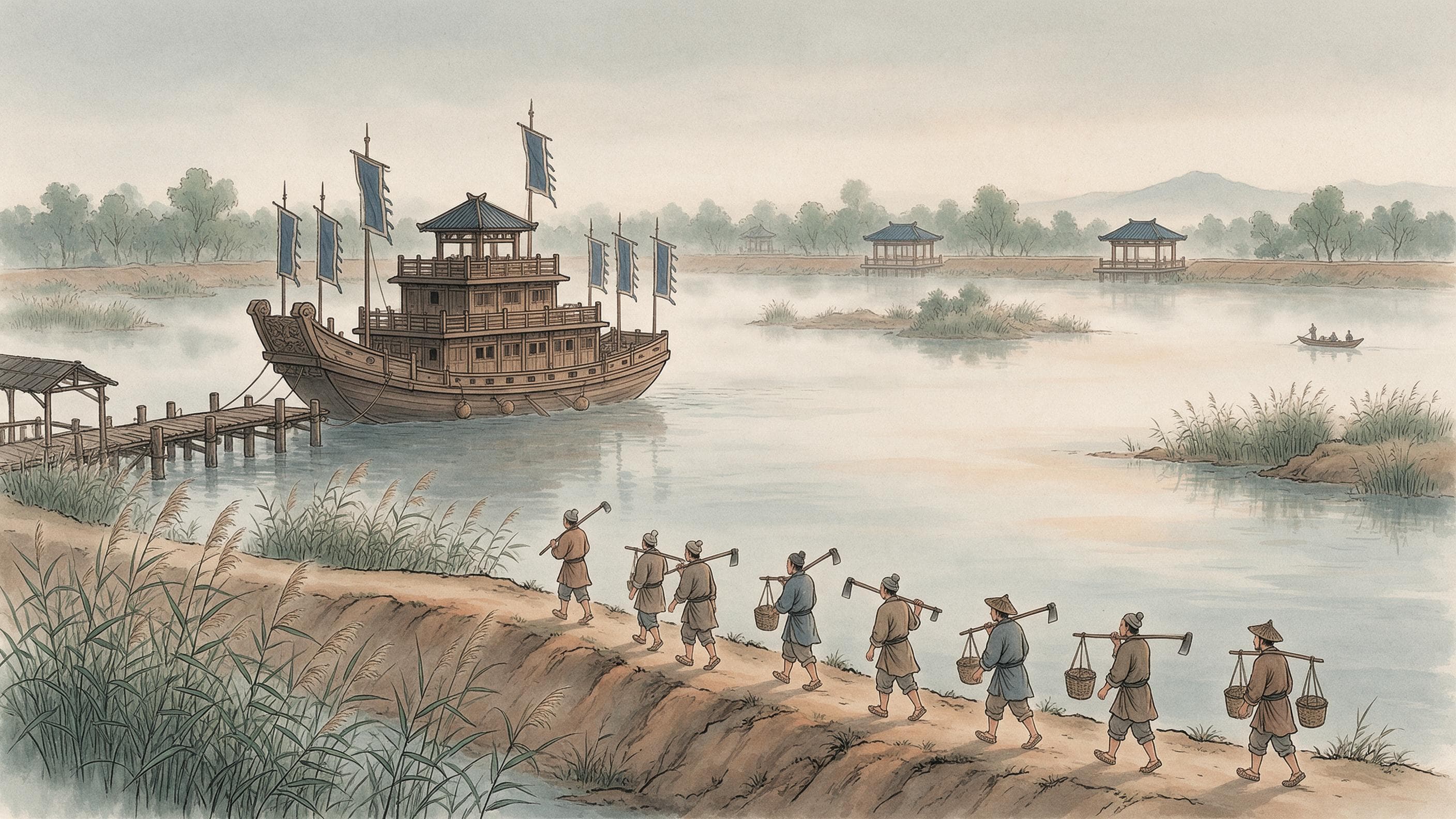
The Rites of Zhou gives a different institution. The 遺人 掌邦之委積,以待施惠 — holds the state's reserves of grain and goods, for distribution: 鄉里之委積,以恤民之艱厄;門關之委積,以養老孤;郊里之委積,以待賓客;野鄙之委積,以待羈旅;縣都之委積,以待兇荒 — reserves for the distressed, for the old and orphaned, for guests, for travellers, for years of famine. For guests, assemblies and campaigns the office 掌其道路之委積, and on the roads: 十里有廬,廬有飲食;三十里有宿,宿有路室,路室有委;五十里有市,市有候館,候館有積 — every ten li a hut with food; every thirty li a lodging, with a guest room and a store; every fifty li a market, with a 候館 and its reserves. These are the only two passages used here: no other text is brought in to fill the gaps.
The two must be kept apart. The Zuo Tradition describes the guest house in the capital where a visiting lord was received: it has service and manners, but no measurements. The Rites of Zhou gives distances, ranks of buildings and reserves of grain and goods, but no reception, no ceremony, no staff. Neither page gives a building's size or a compound's plan, and nothing is supplied here.
What neither page gives: the size and number of rooms of the capital guest house, the size of its staff, its cost, who paid for the reserves, what a 候館 looked like. What they give is one long speech inside one incident, and one table of posts and stores along the roads. No general history of inns is offered here, and the speech is not turned into a lecture on diplomatic courtesy: the two texts are the subject, not the industry.
Related reading:Huzi: A River Breaks Its Banks, and Nobody Closes It for Twenty Years · Zhuti: Gates and Clay Seals at a Han Commandery Town in the Southwest · A White Wall and an Awl's Inch: The City of Tongwan
Sources & further reading
- 《春秋左氏传》襄公三十一年(维基文库本,页面白文无注,未与中华书局点校本复核) — The incident: Zichan accompanies the lord of Zheng to Jin; the lord of Jin, because Lu is in mourning, will not receive them; Zichan has the walls of the guest house pulled down and the carriages driven in. Shi Wenbo protests that the wall was built so that guests need not worry; Zichan answers that he dares neither present the silks nor leave them in the open, and recalls Duke Wen as leader of the covenants — his own palace low and small so that the lords' guest house could be great, 'like the ruler's own bedchamber', with storehouses and stables repaired, roads levelled, walls plastered, torches set in the courtyard, horses and followers provided for, axles greased, every office displaying its goods, and the guests 'arriving as if coming home, with no cause for trouble, fearing neither robbers nor damp'. Then the contrast with the present: the Tongdi palace of several li, the lords lodged with servants, a gate too narrow for a carriage, robbers abroad. Zhao Wenzi concedes the fault, the lord of Jin receives the lord of Zheng with added courtesy, and a guest house for the lords is built; Shuxiang comments on the power of words.
- 《周礼·地官司徒》遗人(维基文库本,页面白文无注,未与中华书局点校本复核) — The office of the 遺人: it holds the state's reserves for distribution — for the distressed, the old and orphaned, guests, travellers, and years of famine — and for guests, assemblies and campaigns it manages the reserves along the roads. Then the distances: on the roads of the state and the fields, a hut every ten li with food, a lodging every thirty li with a guest room and stores, a market every fifty li with a 候館 and its reserves; the reserves are inspected and issued in season. Distances and stores only: no building plan, no reception, no staff.