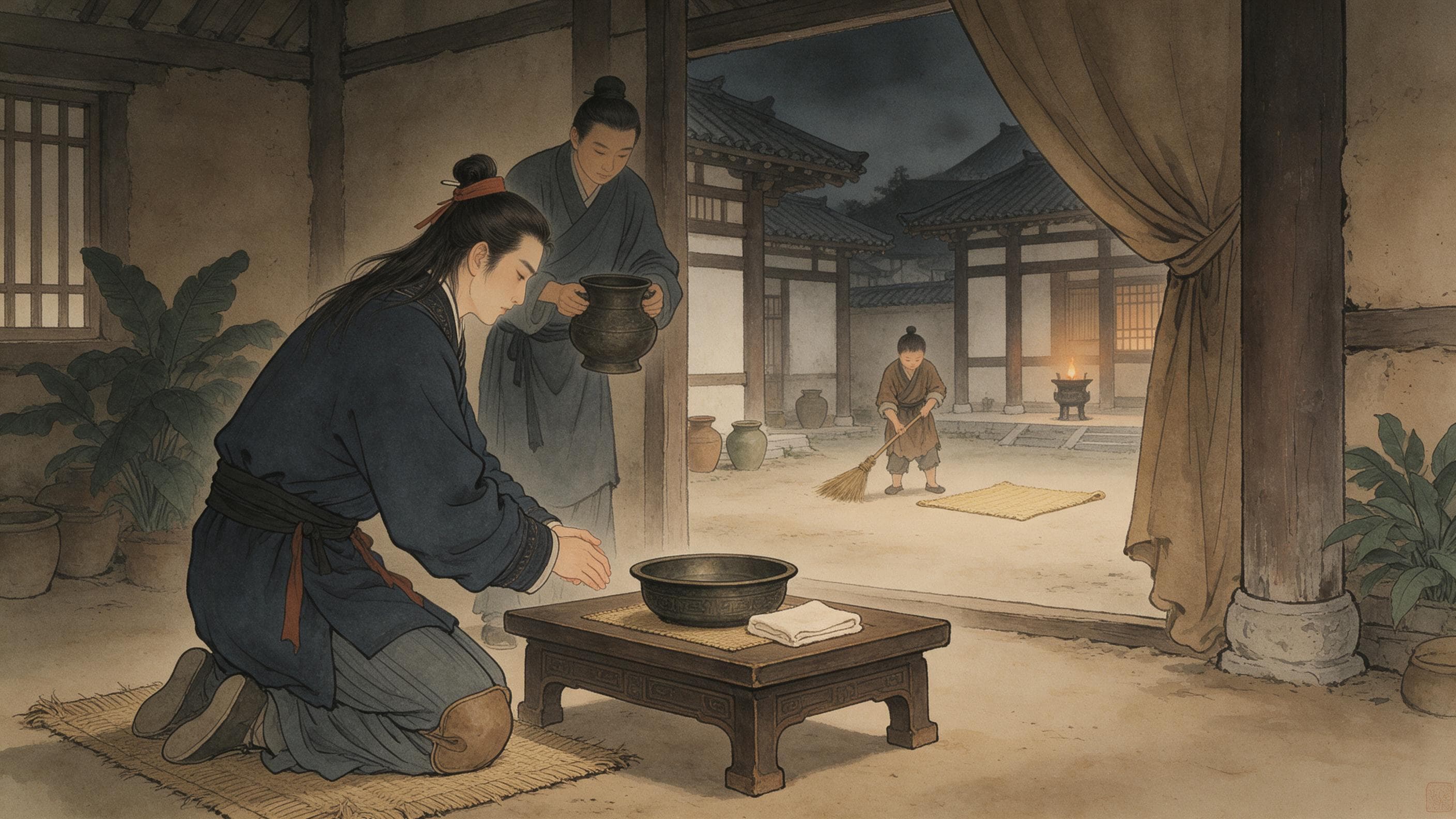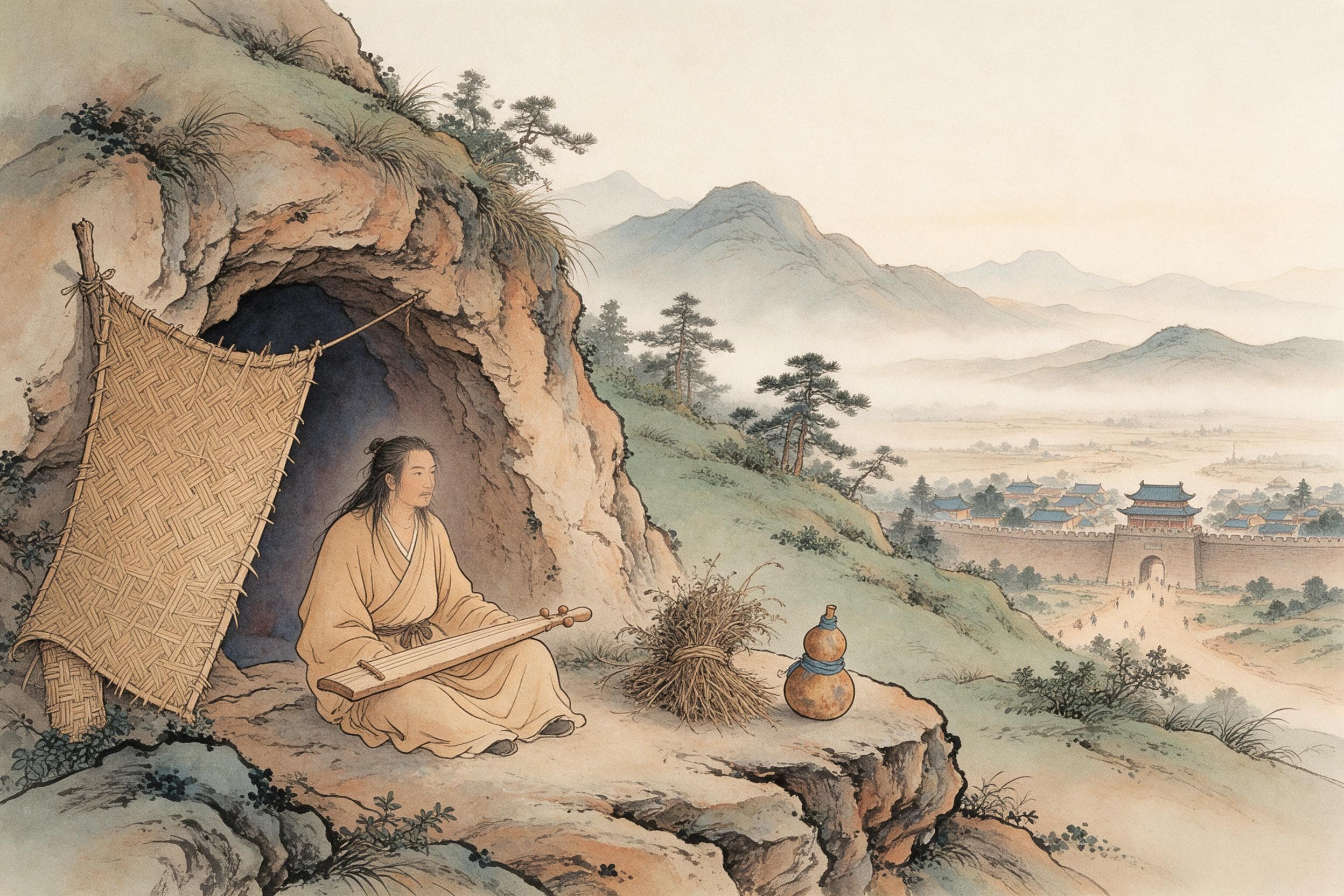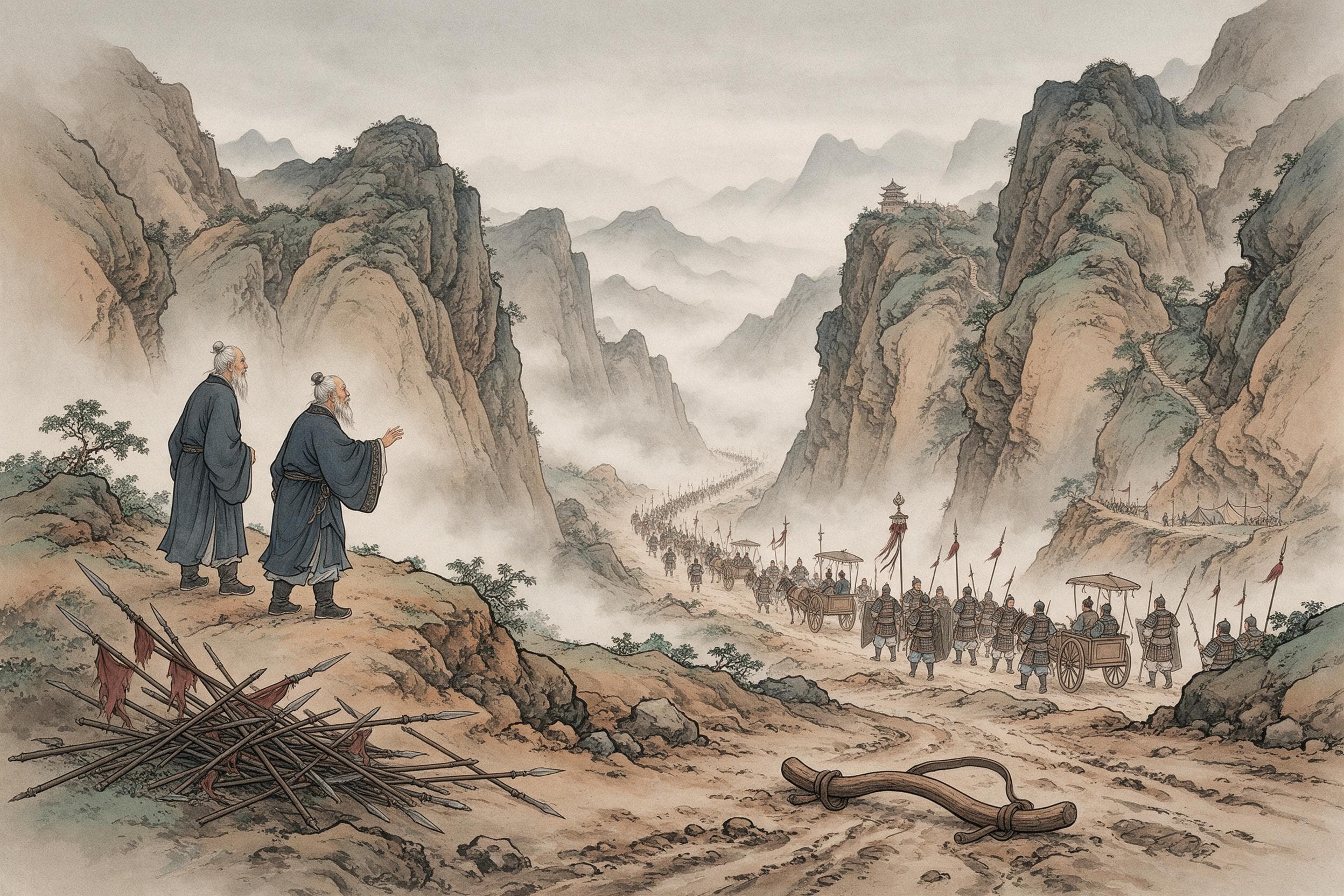
On the day the army marched, two old men wept. Duke Mu of Qin heard it and was angry: 孤發兵而子沮哭吾軍,何也? — I raise an army and you weep to curse it; why? The two answered: 臣非敢沮君軍。軍行,臣子與往;臣老,遲還恐不相見,故哭耳 — we would not dare hold the army back; the army goes, and our sons go with it; we are old and fear we shall not see them return, so we weep. Then, out of the duke's hearing, they said to their sons: 汝軍即敗,必於殽阨矣 — if your army is defeated, it will be at the pass of Xiao.
The campaign began the year before. Men of Zheng offered to sell their city: 我主其城門,鄭可襲也. Duke Mu asked Jian Shu and Baili Xi, and both said no: 徑數國千里而襲人,希有得利者。且人賣鄭,庸知我國人不有以我情告鄭者乎?不可. The duke's answer was six words: 子不知也,吾已決矣 — you do not understand; I have decided. Three generals took the army: Mengmingshi, the son of Baili Xi, Xiqishu, the son of Jian Shu, and Baiyibing. The two old men who wept had sons in that column.
One: before the battle, two old men and three generals
There was a second warning on the road. The army marched east through Jin territory and 過周北門, past the north gate of Zhou; the Zhou officer Wangsun Man watched and said: 秦師無禮,不敗何待 — this army has no rites; what should it expect but defeat? Two warnings, one from an old man inside the state, one from a passing officer of the Zhou court. The annals record both and neither has any consequence: nobody changes the decision.
At Hua the army met Xian Gao: 鄭販賣賈人弦高,持十二牛將賣之周,見秦兵,恐死虜,因獻其牛,曰:「聞大國將誅鄭,鄭君謹修守御備,使臣以牛十二勞軍士。」 A merchant of Zheng, driving twelve oxen to market in Zhou, saw the army, feared death or capture, and gave up the oxen with a message that his ruler had already repaired the defences. The three generals conferred: 將襲鄭,鄭今已覺之,往無及已 — Zheng is warned; going on is useless. The next sentence is another matter: 滅滑。滑,晉之邊邑也 — they destroyed Hua, and Hua was a border town of Jin. The oxen are one thing, the razing of Hua is a second, the defeat at Xiao is a third; the annals take them one at a time, and so does this article.
Two: Xiao
The reason Jin gave for marching is in the crown prince's own words: 秦侮我孤,因喪破我滑 — Qin insults our orphan and breaks our Hua while we are in mourning. The old duke's funeral had not yet taken place; so 遂墨衰絰,發兵遮秦兵於殽,擊之,大破秦軍,無一人得脫者。虜秦三將以歸 — they blackened the mourning clothes, sent troops to intercept the Qin army at Xiao, shattered it, let not one man escape, and took the three generals prisoner. The turn comes off the battlefield: Duke Wen's wife was a Qin woman, and she asked for the prisoners — 繆公之怨此三人入於骨髓,願令此三人歸,令我君得自快烹之 — and the duke of Jin let them go.
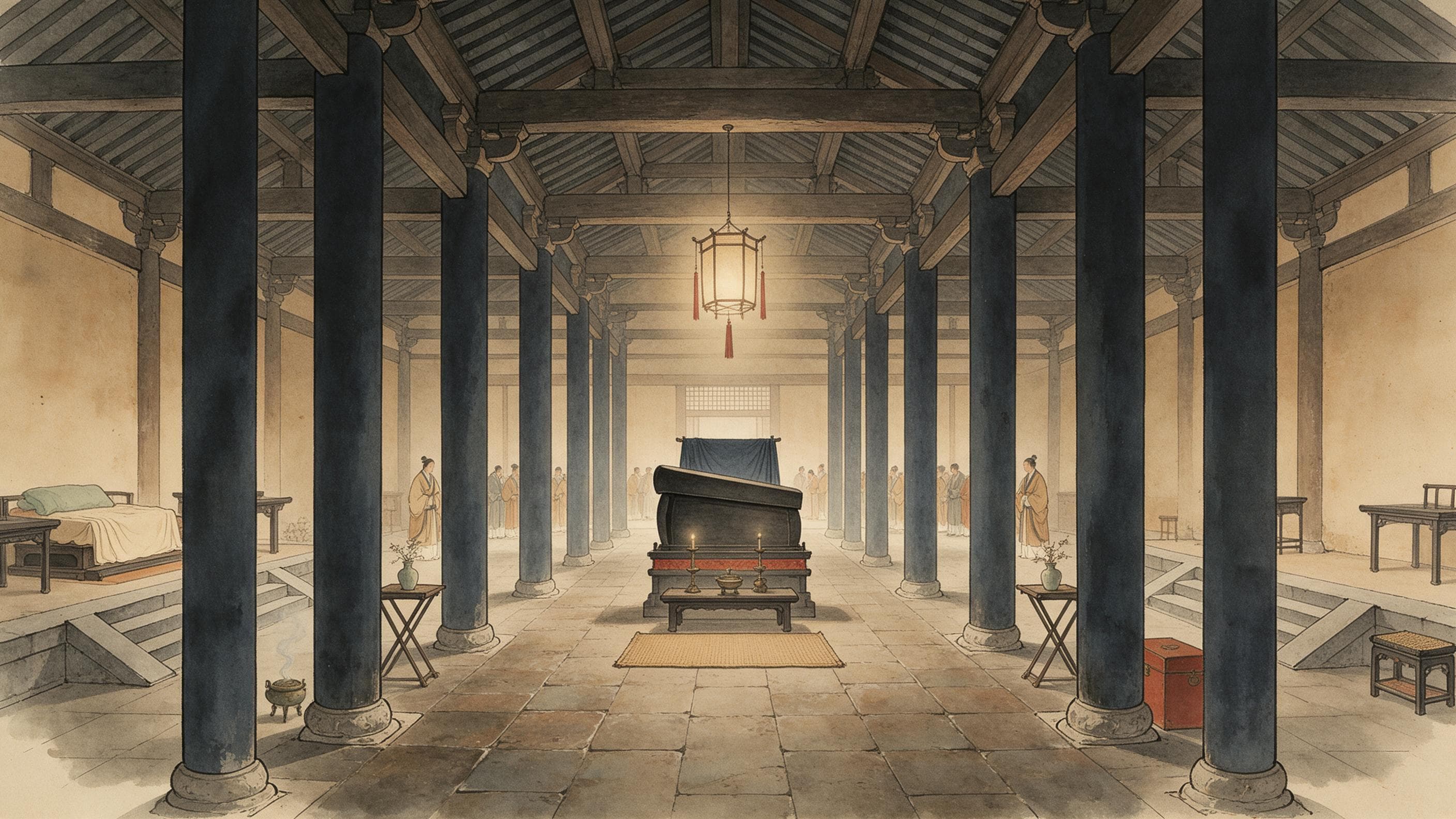
How Duke Mu received them is in the next line: 三將至,繆公素服郊迎,向三人哭曰:「孤以不用百里傒、蹇叔言以辱三子,三子何罪乎?子其悉心雪恥,毋怠。」 He met them outside the walls in plain clothes, wept over them, and put the fault on himself for not listening to the two old men; then 復三人官秩如故,愈益厚之. Every sentence here is the annals' own, and none of it says anything yet about avenging the dead; the avenging comes two years later.
Three: two years after, the burials and the oath
In the thirty-sixth year Duke Mu sent Mengmingshi against Jin again: 渡河焚船,大敗晉人,取王官及鄗,以報殽之役。晉人皆城守不敢出 — they crossed the river and burned the boats, beat the Jin army, took Wangguan and Hao, and paid back Xiao. Then the scene proper: 於是繆公乃自茅津渡河,封殽中尸,為發喪,哭之三日。乃誓於軍曰:「嗟士卒!聽無譁,余誓告汝。古之人謀黃髮番番,則無所過。」 He crossed at Maojin, raised the dead at Xiao into a single grave, held the mourning, and wept three days; and then he swore before the army. The annals say why: 以申思不用蹇叔、百里傒之謀,故作此誓,令後世以記余過 — to repeat his regret that he had not used their counsel, and to make this oath, so that later ages would record his fault. A historian's judgement follows: 君子聞之,皆為垂涕,曰:「嗟乎!秦繆公之與人周也,卒得孟明之慶。」
Four: the oath in its two forms
The annals quote only the opening; the full text is the Shangshu's Qin shi, a short piece that begins: 公曰:「嗟!我士。聽無嘩。予誓告汝群言之首。古人有言曰:『民訖自若是多盤。責人斯無難,惟受責俾如流,是惟艱哉!』我心之憂,日月逾邁,若弗云來。」 To blame others is not hard; to take blame and let it flow past you like water, that is the hard thing; my heart's sorrow — the days and months go on, as if they would never come back. The speech then turns to what kind of men a ruler should keep: the planners of old and of today, the white-haired, the strong, the fluent talker, and at last the single minister 斷斷猗無他技,其心休休焉,其如有容 — without other skills, but with a heart large enough to hold others: 人之有技,若己有之;人之彥聖,其心好之……以保我子孫黎民. The man who cannot do this ends the state: 邦之杌隉,曰由一人;邦之榮懷,亦尚一人之慶.
Set the annals' quotation beside the Shangshu text and they do not match. The annals has 古之人謀黃髮番番,則無所過; the Qin shi has no such sentence, only the near one 番番良士,旅力既愆,我尚有之. The other differences are smaller: 聽無譁,余誓告汝 in the annals against 聽無嘩。予誓告汝 in the Shangshu, 余 and 予. Both are given here; neither is corrected. The page also marks its 今古文 variants in brackets after the characters (忌/惎, 番/皤, 旅/膂, 彥/獻, 冒/媢, 疾/嫉, 惡/䛩), which this article reports and does not adjudicate. And the speech opens with 公曰 without naming the duke: the annals place it in Duke Mu's thirty-sixth year, which is the annals' arrangement, not the speech's own claim.
Five: what the two pages give, and do not
- One record, one oath — not two pieces of evidence. The annals narrate (the weeping, the twelve oxen, the defeat, the burials) and quote only the oath's first line; the Qin shi is the oath itself. The two genres stand side by side; neither completes the other and neither proves the other.
- The oxen and the defeat are kept apart. After the oxen the annals give the generals' judgement, then the razing of Hua, then Jin's stated reason (因喪破我滑); each step has its own words, and this article does not chain them into one cause, nor say that twelve oxen saved Zheng.
- Dynasty and placing: this is the Qin of the Spring and Autumn period, a feudal state, and the Qin shi is filed in the Shangshu under 周書, the last piece of the Zhou documents — not the book of a state called Qin. The article says so.
- The oath is quoted as written (責人斯無難,惟受責俾如流,是惟艱哉 and 我心之憂,日月逾邁,若弗云來 among others); the bracketed 今古文 variants are not adjudicated; the Qin shi page is about 260 characters of text and marked Textquality 50%.
- Numbers kept as written: twelve oxen, three generals (Mengmingshi, Xiqishu, Baiyibing), three days of weeping — no conversion, no estimate of troop numbers, no making the three days into an institution.
- Lines kept apart: the battle line at Chengpu, the array at Muye, and Tang's case against Jie are each other articles; this one stays with one battle and one oath, and carries no general talk of Qin's rise or of lord and minister.
What the two pages leave is not a single story but two things: the annals leave a set of scenes — two old men weeping, three generals coming home, a river crossed and dead men buried and three days of mourning; the Qin shi leaves a speech — the difficulty of taking blame, the hurry of the days, the difference between a man who can hold others and one who cannot. The names and years come from the annals; the speaker of the speech is only 公. Each stands on its own, and the two together are the event.
Related reading:Ice: Cut in Winter, Given Out in Summer, and Used to Bathe the Dead · Six as the Measure: A Cap of Six Cun, a Carriage of Six Chi, Six Horses · Twenty Mouths, Twenty Servants, Ten Qing of Land: A Family Manual's Household Budget
Sources & further reading
- 《史记》卷五〈秦本纪〉(维基文库本,未与中华书局点校本复核) — The whole episode is in 秦繆公's reign. The decision: 鄭人有賣鄭於秦曰:「我主其城門,鄭可襲也。」繆公問蹇叔、百里傒,對曰:「徑數國千里而襲人,希有得利者……不可。」繆公曰:「子不知也,吾已決矣。」遂發兵,使百里傒子孟明視,蹇叔子西乞術及白乙丙將兵。 The farewell: 行日,百里傒、蹇叔二人哭之。繆公聞,怒曰:「孤發兵而子沮哭吾軍,何也?」二老曰:「臣非敢沮君軍。軍行,臣子與往;臣老,遲還恐不相見,故哭耳。」二老退,謂其子曰:「汝軍即敗,必於殽阨矣。」 The road: 過周北門。周王孫滿曰:「秦師無禮,不敗何待!」兵至滑,鄭販賣賈人弦高,持十二牛將賣之周,見秦兵,恐死虜,因獻其牛,曰:「聞大國將誅鄭,鄭君謹修守御備,使臣以牛十二勞軍士。」秦三將軍相謂曰:「將襲鄭,鄭今已覺之,往無及已。」滅滑。滑,晉之邊邑也。 The defeat: 太子襄公怒曰:「秦侮我孤,因喪破我滑。」遂墨衰绖,發兵遮秦兵於殽,擊之,大破秦軍,無一人得脫者。虜秦三將以歸. The return: 三將至,繆公素服郊迎,向三人哭曰:「孤以不用百里傒、蹇叔言以辱三子,三子何罪乎……」 The oath: 三十六年……大敗晉人,取王官及鄗,以報殽之役……於是繆公乃自茅津渡河,封殽中尸,為發喪,哭之三日。乃誓於軍曰:「嗟士卒!聽無譁,余誓告汝。古之人謀黃髪番番,則無所過。」以申思不用蹇叔、百里傒之謀,故作此誓,令後世以記余過。君子聞之,皆為垂涕,曰:「嗟乎!秦繆公之與人周也,卒得孟明之慶。」The chapter later records 三十九年……從死者百七十七人, which this article does not use.
- 《尚书·秦誓》(维基文库本,白文,页内以括号标今古文异说,页头标 Textquality 50%,未与中华书局点校本复核) — The page header files it as 周書‧秦誓, between 費誓 and the end of the book — the last piece of the Zhou documents. The text is short: 公曰:「嗟!我士。聽無嘩。予誓告汝群言之首。古人有言曰:『民訖自若是多盤。責人斯無難,惟受責俾如流,是惟艱哉!』我心之憂,日月逾邁,若弗云來。惟古之謀人,則曰未就予忌(惎);惟今之謀人,姑將以為親。雖則云然,尚猷詢兹黃髪,則罔所愆。番(皤)番(皤)良士,旅(膂)力既愆,我尚有之。仡仡勇夫,射御不違,我尚不欲。惟截截善諞言,俾君子易辭,我皇多有之。昧昧我思之:如有一介臣,斷斷猗無他技,其心休休焉,其如有容。人之有技,若己有之;人之彥(獻)聖,其心好之,不啻如自其口出,是能容之。以保我子孫黎民,亦職有利哉!人之有技,冒(媢)疾(嫉)以惡(䛩)之;人之彥(獻)聖,而違之,俾不達,是不能容。以不能保我子孫黎民,亦曰殆哉!邦之杌隉,曰由一人;邦之榮懷,亦尚一人之慶。」 The bracketed characters are the page's 今古文 variant readings (忌/惎, 番/皤, 旅/膂, 彥/獻, 冒/媢, 疾/嫉, 惡/䛩); they are noted here and not adjudicated. The speech begins with 公曰 and never names the duke.