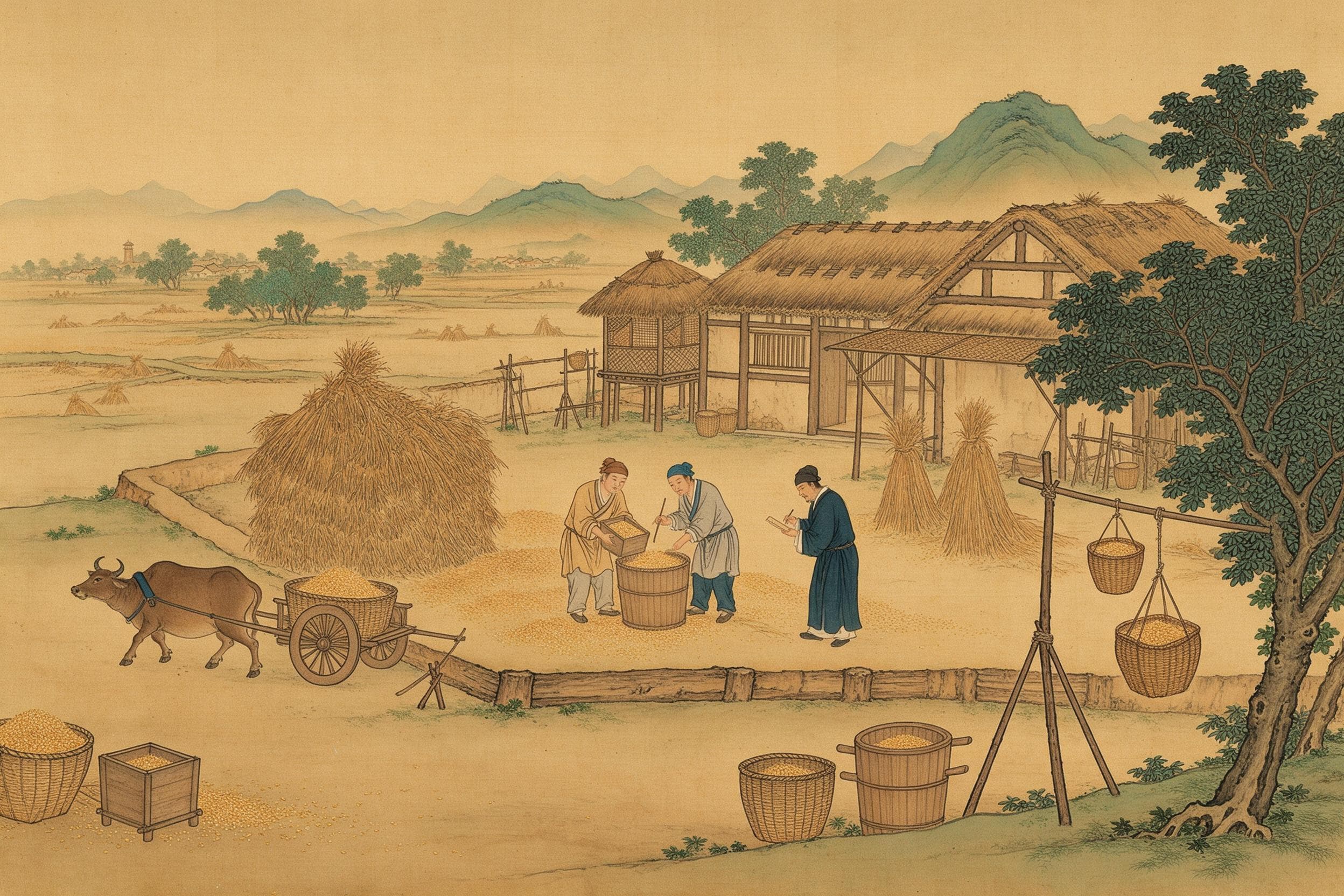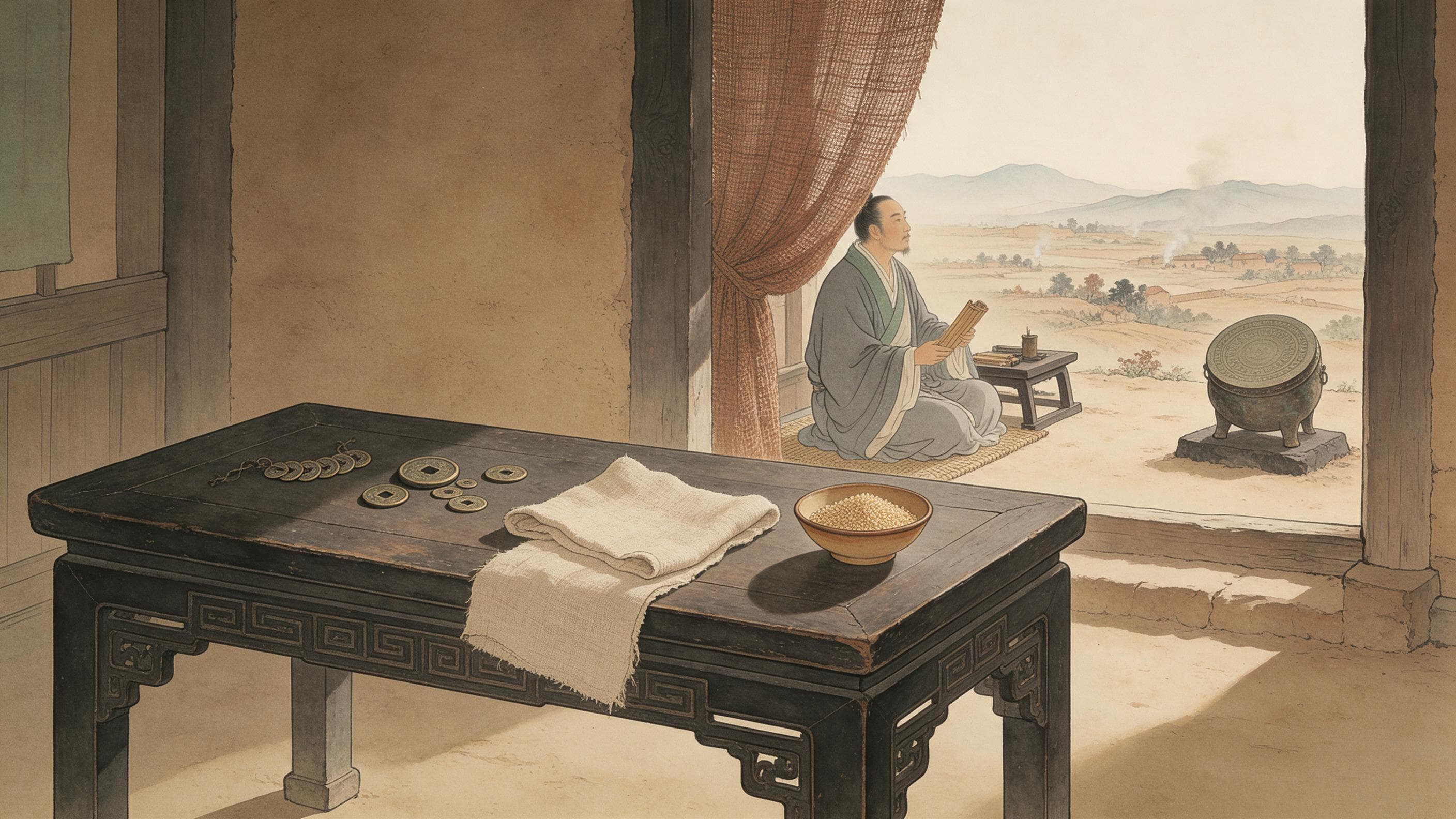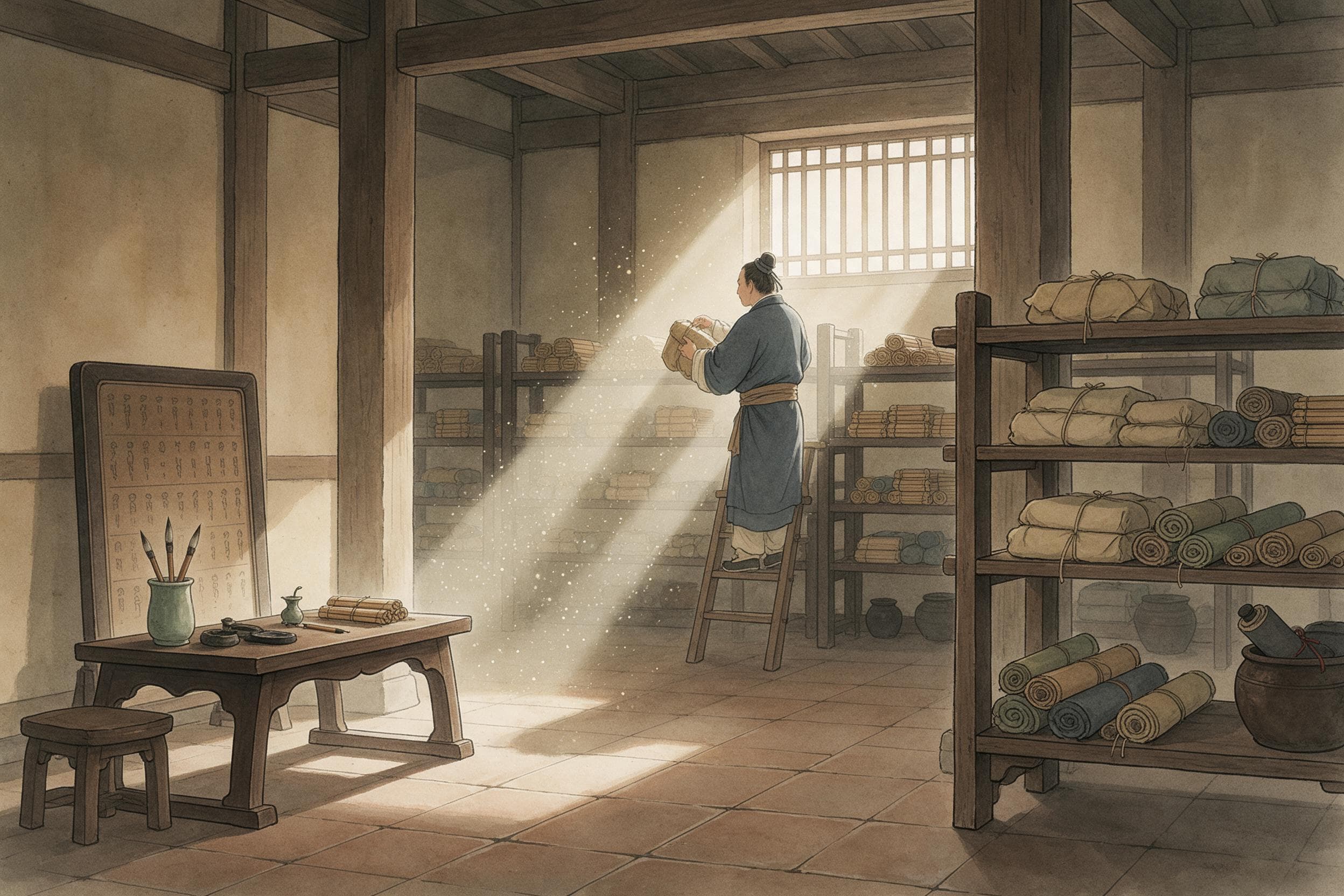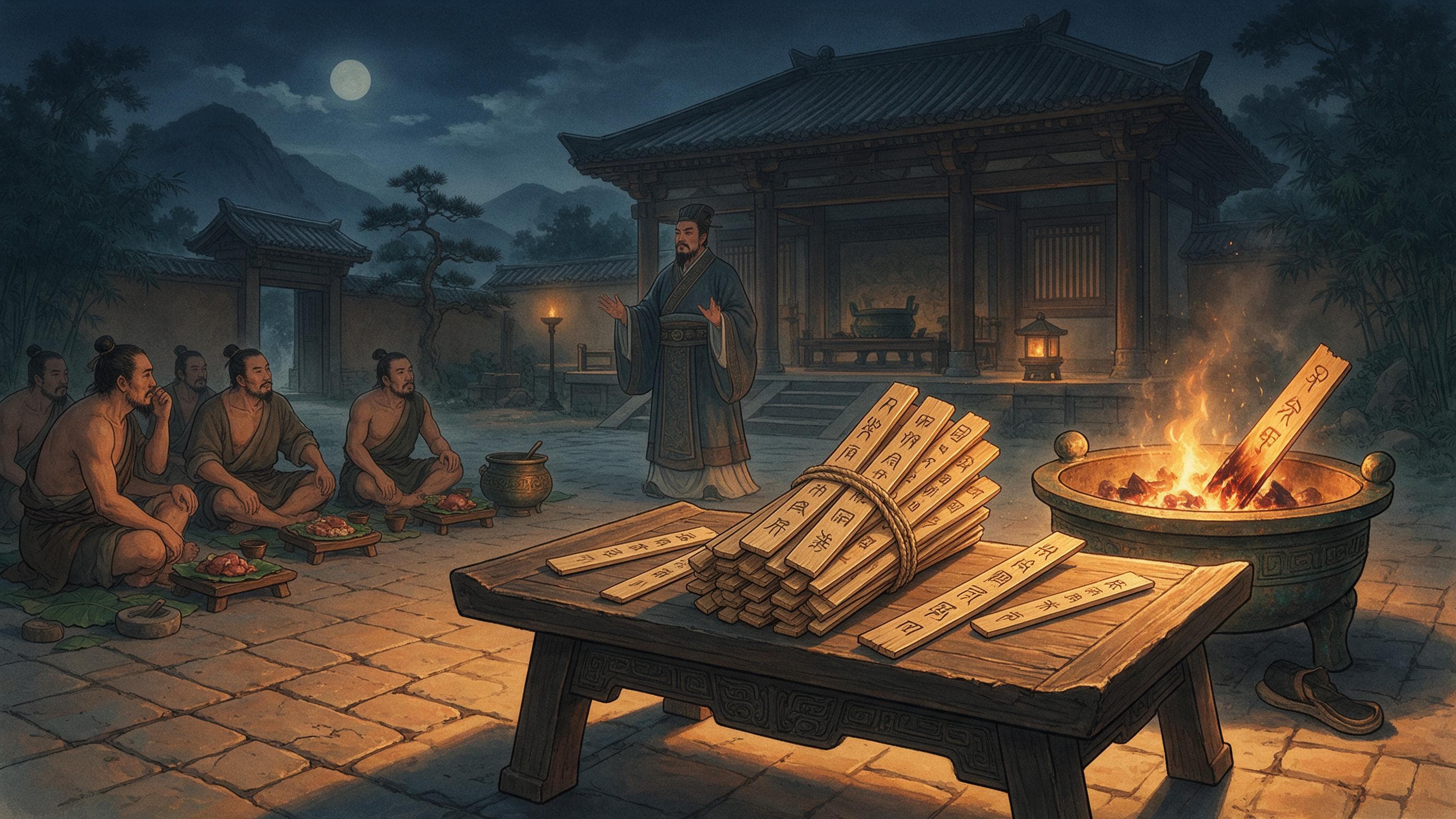
Start with a bundle. When Feng Xuan sets out for Xue to collect the debts, the Zhanguoce says he 'hitched the carriage, packed, loaded the tallies and deeds, and set off' (約車治裝,載券契而行). A debt is not kept in the memory; it is written on a tally, and collecting means carrying the tallies. So the whole errand grows out of that bundle: the tallies go out as debts and come back as one phrase. One bundle up on the cart, one saying on the way back.
Lending: where the money came from
The Shiji gives the reason first. Mencius's lord was chancellor of Qi with a fief of ten thousand households at Xue and three thousand retainers, and 'the fief's income was not enough to keep the retainers, so he had money lent out in Xue' (邑入不足以奉客,使人出錢於薛). A year later 'those who had borrowed could mostly not pay the interest, and the retainers' upkeep was about to fail' (貸錢者多不能與其息). The loan begins, then, not from the borrowers' need but from the cost of keeping retainers. It is quoted here without judging the keeping of retainers.
The Zhanguoce starts from the other end: the lord 'sends out a note and asks the retainers, who is practised in reckoning accounts and can collect the debts owed to Wen in Xue?' (誰習計會,能為文收責於薛者乎) — and Feng Xuan writes 'I can'. One page asks who will go and collect; the other explains how the money got out there. The starting points differ, and both are given.
Only the Shiji gives a figure: 'he summoned all who had taken the lord's money, and got a hundred thousand in interest' (召取孟嘗君錢者皆會,得息錢十萬). The same page has already said 'he had interest-bearing money lent out in Xue' (出息錢於薛) and that borrowers 'could mostly not pay the interest'. The interest is interest on loans, and the hundred thousand is the total collected — copied as it stands. Neither page gives a term or a rate, so no rate is computed, no annualising, no modern equivalent, and no share of the principal. The Shiji also gives the lord's own words when he asks Feng Huan to go: 'my guests, not knowing my unworthiness, have come to me to the number of three thousand; the fief's income is not enough to keep them, so I lent out interest-bearing money in Xue. The year's income has not come in, and the people have largely not paid the interest. Now the retainers' food may fail — I beg you, sir, to press them for it' (賓客不知文不肖……願先生責之).
The tally, and matching it
Both pages have the matching. The Zhanguoce: 'he had the clerks summon all the people who ought to repay, to come and match their tallies; when all the tallies were matched' (悉來合券。券遍合). The Shiji: 'they all brought the tally-deeds for the money taken and matched them' (皆持取錢之券書合之) — and again after the drinking, 'he took the tallies and matched them as before' (持券如前合之). To match is to fit the pieces together and verify. It is generally thought that lender and borrower each held a half, and that a whole tally was made by joining them, though neither page says so. What was written on a tally, with what, and how large it was, the pages do not give. The Shiji also stages the meeting: 'he brewed a great deal of wine, bought a fat ox, and summoned all who had taken the money, those who could pay interest and those who could not'; 'they made a general gathering, killed an ox and set out wine every day'; and only 'when the wine was merry' did he take the tallies and match them as before. The matching came after the drinking.
Burning: the two pages differ
The Zhanguoce burns everything: 'he rose, falsely declared the lord's command, gave the debt to the people as a gift, and burned the tallies, and the people shouted ten thousand years' (起矯命以責賜諸民,因燒其券,民稱萬歲). All the tallies, on the ground that the debt had been given away.
The Shiji burns only part: 'those who could pay the interest were given a date; those too poor to pay had their tallies taken and burned' (能與息者,與為期;貧不能與息者,取其券而燒之). Those who could pay went on owing; only those who could not were released. This is a difference of substance, not of wording — everything against the poor men's tally alone. The two are set side by side, not harmonised, and no attempt is made to decide which describes what happened.
Rightness, or an empty account
Each page gives the act its own name. In the Zhanguoce it is Feng Xuan speaking: 'what your house is short of is simply rightness; I have bought rightness for you' (君家所寡有者以義耳!竊以為君市義), and again, 'I falsely made your command, gave the debt to the people, and burned the tallies, and the people shouted ten thousand years — that is how I bought rightness for you' (乃臣所以為君巿義也). 'Buying rightness' is his phrase, not the narrator's verdict, and is quoted as his. The Shiji has another vocabulary: Feng Huan says he has 'burned tallies of useless empty debt and cancelled accounts that could not be collected' (焚無用虛債之券,捐不可得之虛計), so that 'the people of Xue may cleave to you and your good name be spread' (令薛民親君而彰君之善聲也). One calls it rightness, the other an empty account; both are given, not run together. The Zhanguoce also records the lord's first reaction — 'Mencius's lord was not pleased, and said: very well, sir, go and rest' (孟嘗君不說,曰:諾,先生休矣) — and then, a year later, when he had lost office and gone to his fief, 'before he was a hundred li from Xue the old people led the young by the hand to welcome him on the road', and he said to Feng Xuan: 'the rightness you bought for me, sir — I see it today' (先生所為文市義者,乃今日見之).
What each page makes of it, and the gaps
The two pages are detailed differently. The Zhanguoce is narrative — writing 'I can', loading the tallies, matching them, the false command, the ten thousand years, the buying of rightness, one thing after another. The Shiji keeps accounts — insufficient income, money lent out, a year of arrears, a hundred thousand in interest, dates given, tallies burned, empty accounts cancelled, every item placed. It also has an argument the Zhanguoce does not: the lord, angry, summons Feng Huan to answer for the burning, and is talked round. The gaps are common to both: the form and content of a tally, the rate and term, the principal lent out, the number of households in Xue, and how the books were cleared after the burning. Nor is there any judgement of Mencius's lord as a keeper of retainers, or any general thesis on debt and politics.
Back to the bundle: it went out as a load of debts and came back as a phrase — the buying of rightness. On the same errand the two pages do not even agree on whose tallies burned: one burns them all, one burns only the poor men's. Between those versions stand two historians with two stories to tell; this article only sets them side by side.
Related reading:Two chi Two cun: The Standard Bolt and the Cloth That Could Not Be Sold · Thirty Cash a Jin: The Jin State's Salt Price and Its Ten-Cash Cost · Horses in the Lanes: Price, Prohibition and a Bronze Model
Sources & further reading
- 《战国策·齐策四》冯谖客孟尝君章(士礼居丛书本,维基文库录文,未与点校本复核) — The narrative version. Mencius's lord sends out a note asking which of his retainers can 'reckon accounts and collect the debts owed to Wen in Xue'; Feng Xuan writes 'I can'. He 'hitches the carriage and packs, loads the tallies and deeds and sets off', asking on leaving what to buy on the way back — 'look at what my house is short of'. At Xue, 'he has the clerks summon all the people who ought to repay, to come and match their tallies; when all the tallies are matched', he 'falsely declares the lord's command, gives the debt to the people as a gift, and burns the tallies, and the people shout ten thousand years' (因燒其券,民稱萬歲). Back home he explains: 'what your house is short of is simply rightness (義); I have bought rightness for you' (君家所寡有者以義耳). The page carries Bao Biao's and Wu Shidao's notes in smaller type; only the main text is quoted here.
- 《史记》卷七十五〈孟尝君列传〉(维基文库本,未与点校本复核) — The accounting version. Mencius's lord, with three thousand retainers, finds the income of his fief insufficient, 'so he had money lent out in Xue' (使人出錢於薛); after a year 'those who borrowed could mostly not pay the interest, and the retainers' upkeep was about to fail'. Feng Huan goes to collect, 'summons all who had taken the lord's money, and gets a hundred thousand in interest' (得息錢十萬), brews wine and buys a fat ox, and at the drinking 'those who could pay interest were given a date; those too poor to pay had their tallies taken and burned' (貧不能與息者,取其券而燒之). The lord is angry; Feng Huan answers that he has 'burned tallies of useless empty debt and cancelled accounts that could not be collected' (焚無用虚債之券,捐不可得之虚計), to make the people of Xue cleave to him and spread his good name — and the lord thanks him.