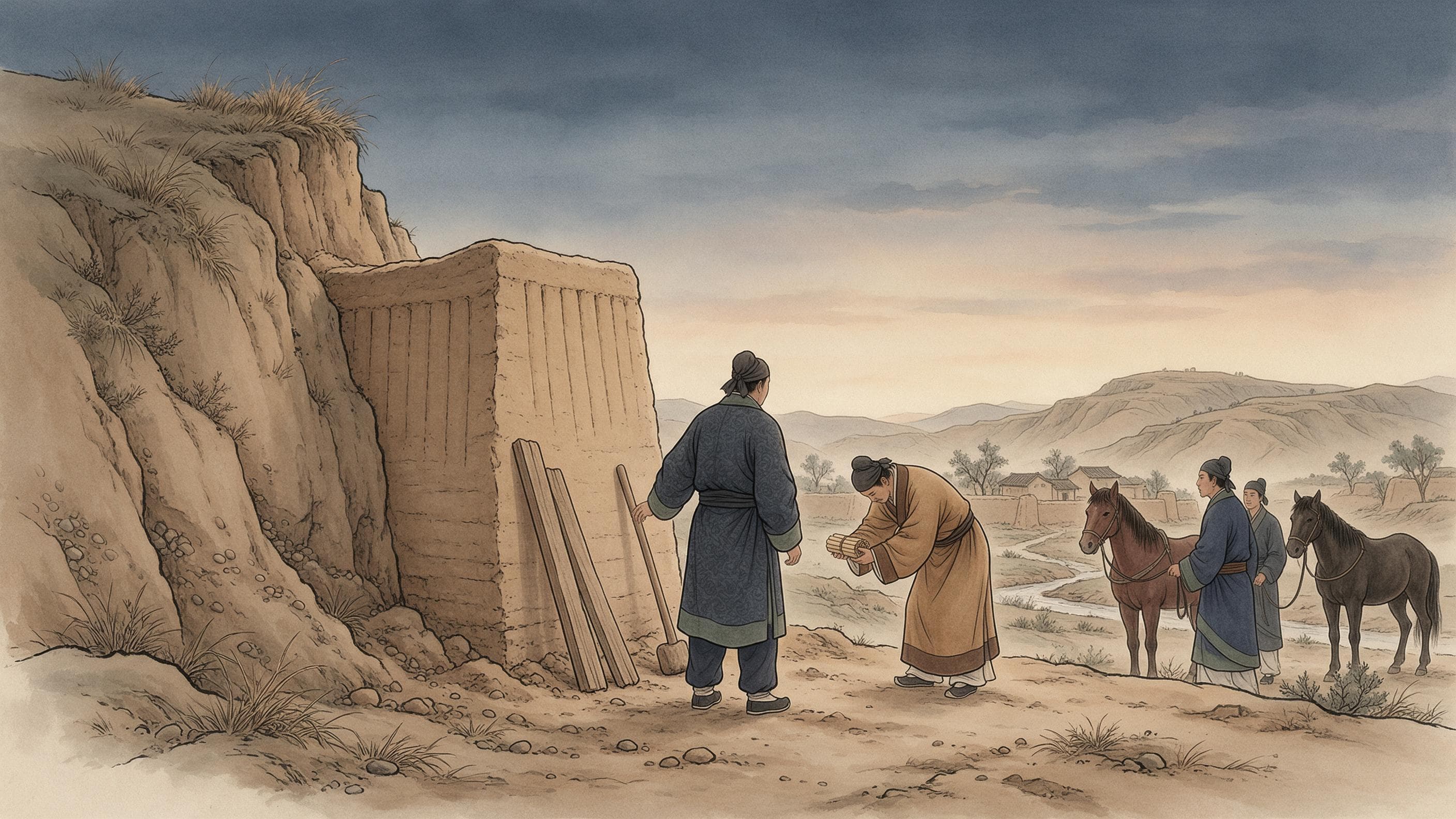
The most important sentence on these two pages is a negative one: 毋文書,以言語爲約束 — they had no documents; they bound themselves by words. Everything here, then, is what Han writers said about a people who left no written account of themselves. The absence is not a hole in the record; it is the subject. The material is two Han books, one built on the other: Sima Qian's Shiji, chapter 110, the Xiongnu liezhuan, and Ban Gu's Hanshu, chapter 94 part one. Both open with almost the same paragraph on how the Xiongnu lived. Neither is a traveller's report: there is no scene in either, no named informant, and no date attached to the description. That paragraph, its variants, and the argument it later provoked between two Han men are the whole of the evidence.
Two Han Books, Not Two Witnesses
The Hanshu's opening follows the Shiji's almost word for word: 隨畜牧而轉移 against 隨草畜牧而轉移; 毋城郭常處 against 無城郭常居. These are not two independent witnesses to Xiongnu life; they are one tradition carried on, and counting them twice would make the evidence look firmer than it is. What the Hanshu adds is different in kind: verses on the Xianyun raids that the page says the poets made (詩人始作,疾而歌之), a longer account of the northern wars, and one long argument between a Han envoy and a Han eunuch who had gone over to the Xiongnu, Zhongxing Yue. That argument is where the word for a tent first appears; the Hanshu is not giving a second look at Xiongnu life, it is giving a second voice in a Han argument. The Shiji, at its end, has its historian doubting the whole business: 世俗之言匈奴者…不參彼己 — those who talk about the Xiongnu serve a one-sided view without weighing the other side.
Moving: Grass, Water, Ground of One's Own
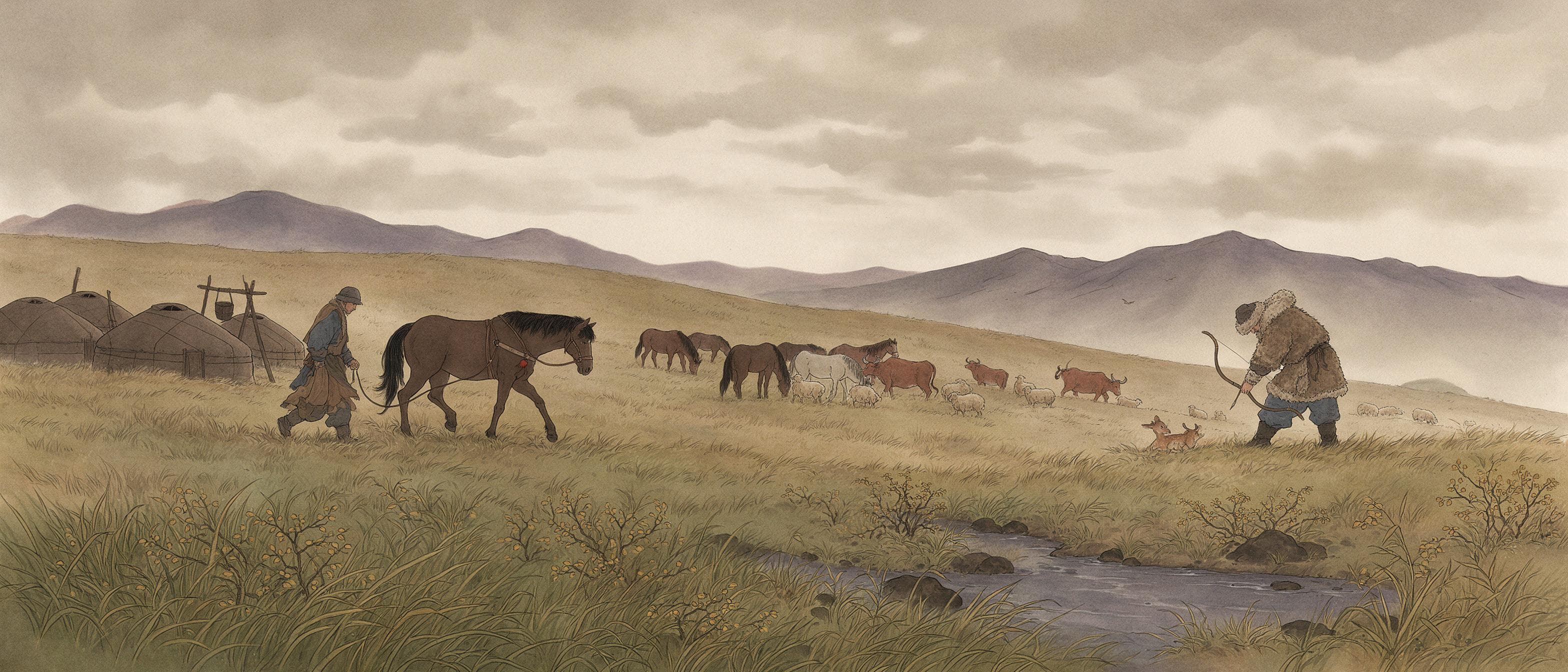
Movement gets two lines: 隨畜牧而轉移, they move with their herds; 逐水草遷徙, they shift to water and grass. Then four characters that are easy to read past: 然亦各有分地 — yet each also has his own allotted ground. Not wandering at random, and not without claim to land: the page says both in one breath, and in the same breath says they have no walled towns, no fixed dwelling and no farming (毋城郭常處耕田之業). How ground was measured, or who fixed a boundary, the page does not say.
The animals are listed, not counted: 其畜之所多則馬、牛、羊,其奇畜則橐駞、驢、驘、駃騠、騊駼、騨騱 — horses, cattle and sheep common; camel, donkey, mule and three more good horses strange. The Hanshu lists the same six in different characters, and one of its characters is corrupt where the Shiji has 驘 for the mule; the variants are noted here, not merged. Nowhere is a flock or a herd counted. Then the most concrete sentence on either page: 兒能騎羊,引弓射鳥鼠;少長則射狐兔:用爲食 — a child who can ride a sheep draws the bow at birds and rats; older, he shoots foxes and hares, and they are eaten (the Hanshu: 少長則射狐菟,肉食). Next the army: 士力能彎弓,盡為甲騎 in the Hanshu; the Shiji page has the corrupt 毋弓 where that line comes; 彎弓 is the reading followed here, the variant noted rather than silently repaired.
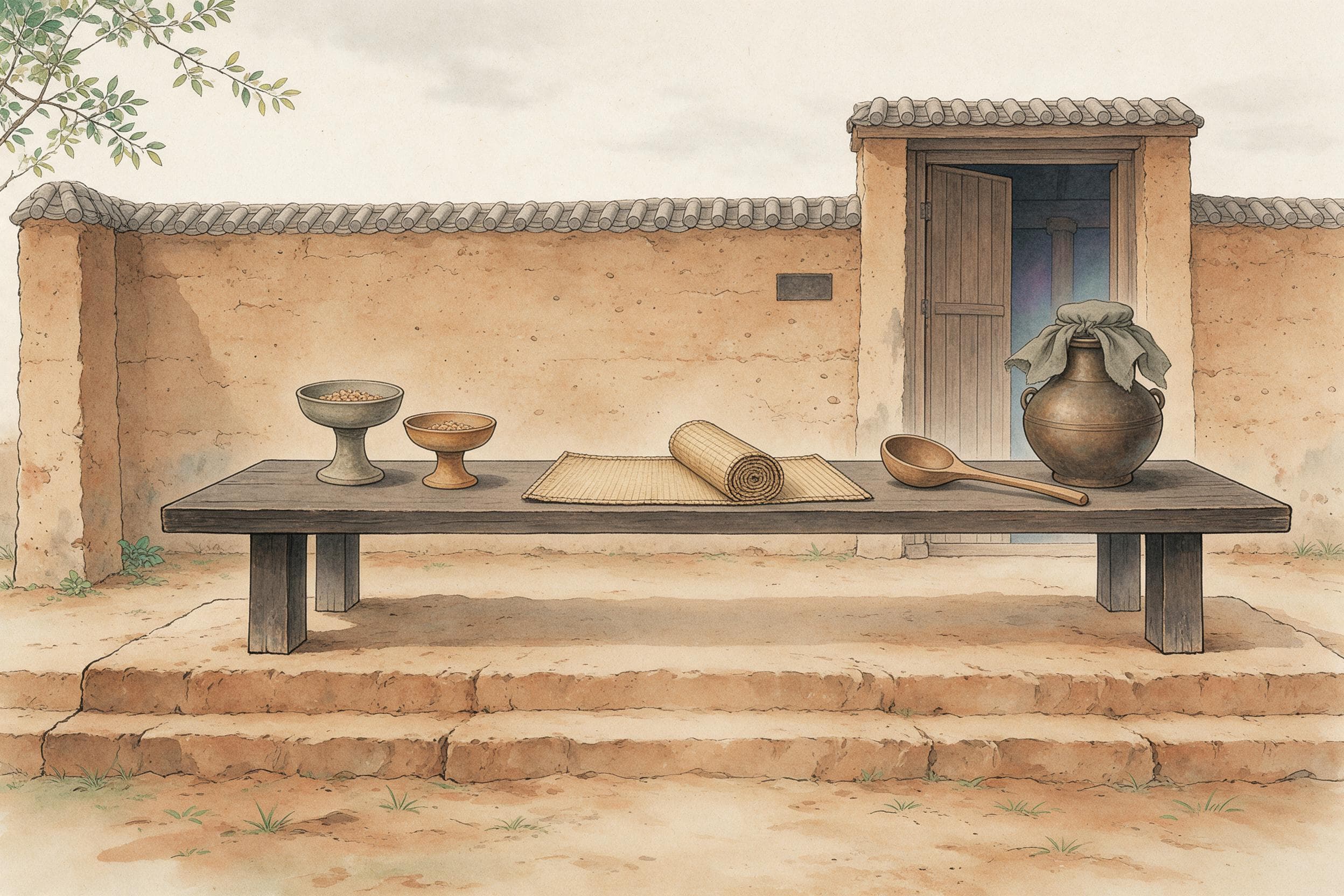
Then the tent, and a fact of transmission. The opening paragraph has no tent in it. 穹廬 appears once on these pages, in a Han envoy's list of charges: 匈奴父子同穹廬臥, father and son sleep in the same tent. That is not description; it is accusation. Zhongxing Yue answers with a description of his own: 匈奴之俗,食畜肉,飲其汁,衣其皮;畜食草飲水,隨時轉移 — their custom is to eat the flesh of their herds, drink the liquid, wear the hide; the herds eat grass and drink water, and they move with the season. Then he turns on the envoy: 嗟土室之人…冠固何當 — o men of earthen houses, what good is a cap? No page gives a tent's size, frame or door. Note what that does to the page's authority: the first tent in this Han writing is an accusation, not an observation.
Nineteen Characters of Food and Clothing
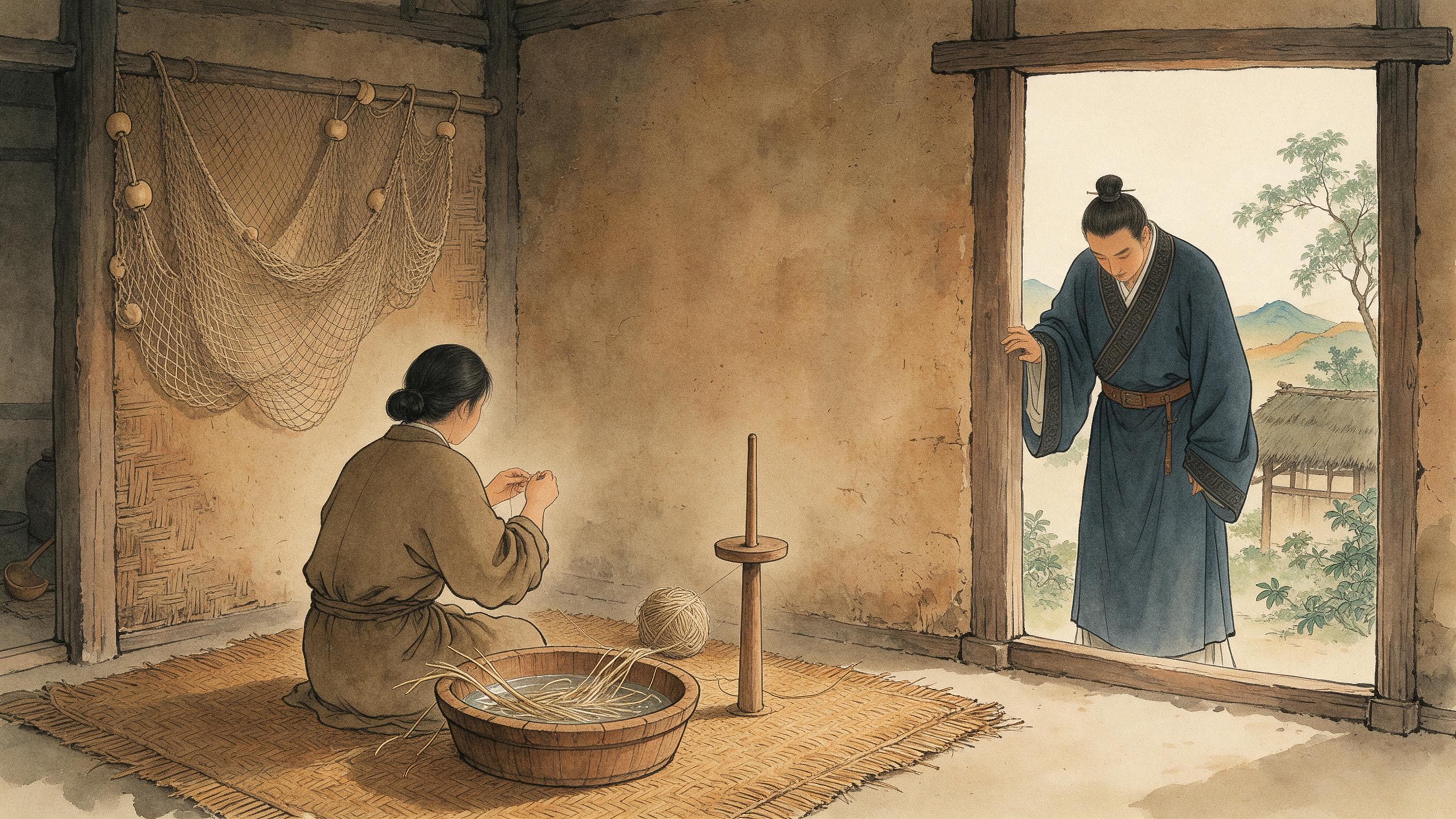
Clothing and food take nineteen characters: 自君王以下,咸食畜肉,衣其皮革,被旃裘 — from the ruler down, all eat the flesh of their herds, wear its hide and leather, and are covered in felt and fur. The Hanshu carries the same sentence; Zhongxing Yue's version adds two words and one detail, 飲其汁, they drink the liquid. Nothing tells how the felt was made, how the leather was dressed, how the meat was cooked, or what was eaten in which season: names, not techniques, and no menu anywhere on the pages.
Who got the good meat is stated, and then judged: 壯者食肥美,老者食其餘 — the strong eat the fat and fine, the old what is left; and in the next breath, 貴壯健,賤老弱 — they honour the strong and despise the weak. The first is description, the second a verdict, printed as one sentence: read the pair together and a Han judgment passes for a Han observation. The Hanshu adds a word (老者飲食其餘) and stages an argument. A Han envoy says 匈奴俗賤老. Zhongxing Yue answers: 匈奴明以攻戰為事,老弱不能鬥,故以其肥美飲食壯健以自衛 — they make war their business, the old and weak cannot fight, so the fine food goes to the strong to defend them all — 何以言匈奴輕老也. Then he turns it: when a Han house sends a son to garrison the frontier, 其親豈不自奪溫厚肥美齎送飲食行者乎 — do the parents not take the warm and fine things and give them to the one who goes? The envoy answers 然, yes. A Han envoy and a Han deserter, arguing about a Han household's dinner.
Food and clothing then become politics, again in Zhongxing Yue's mouth: 匈奴人眾不能當漢之一郡,然所以強之者,以衣食異,無卬於漢 — they cannot match one Han commandery in people, and are strong because their food and clothing differ and they need nothing from Han. Let the chanyu take Han goods, and 漢物不過什二,則匈奴盡歸於漢矣 — with Han goods at two parts in ten, all the Xiongnu would go over. He offers two tests: Han silk and floss dragged through grass and thorn tears (以視不如旃裘堅善也), Han food is thrown away (以視不如重酪之便美也). A Han man, in a Han book, arguing against Han goods; the question is dependence, not taste — two parts in ten is not a price but a threshold.
Marriage: One Sentence, Two Positions
The marriage sentence is in both books and is used as evidence in both. Shiji: 父死,妻其後母;兄弟死,皆取其妻妻之. Hanshu: 兄弟死,盡妻其妻. In the Hanshu the same sentence appears a second time, inside the envoy's charges, beside 父子同穹廬臥 and 無冠帶之節,闕庭之禮 — where it is a crime. Zhongxing Yue gives a reason: 父兄死,則妻其妻,惡種姓之失也。故匈奴雖亂,必立宗種 — when father or elder brother dies one takes his wife for fear the lineage be lost, and so however troubled the Xiongnu are, an heir is always set up. Then the counter-charge: 今中國雖陽不取其父兄之妻,親屬益疏則相殺,至到易姓. Two voices on one page, with no editorial sentence between them to say which is right: the page keeps the charge and the answer both; so does this article, which uses no modern term for the practice.
The Verdicts, and the Doubt
The verdicts all come from the historians' side. 急則人習戰攻以侵伐,其天性也 — in hard times men train for war, and this is their nature: a habit called a nature. 茍利所在,不知禮義 — where profit is, they do not know right and ritual: a judgment with no evidence attached. Weapons are named, not described: 其長兵則弓矢,短兵則刀鋋. Tactics take seven characters: 利則進,不利則退,不羞遁走. And one line on names: 其俗有名不諱,而無姓字; the Hanshu says merely 無字. The verbs are the historians' own: they honour, they despise, they do not know.
It ends where it began, with the man writing. Sima Qian's appraisal: 世俗之言匈奴者,患其徼一時之權,而務莖讇納其說,以便偏指,不參彼己 — those who talk about the Xiongnu want a moment's advantage and are eager to insinuate flattering words, serving a one-sided view without weighing the other side. He means other men; but he has just spent a chapter writing the Xiongnu from the outside too, and he does not exempt himself, and he closes twice on 唯在擇任將相哉. So: a people without documents, two Han books, and inside them a Han envoy, a Han deserter and a Han historian disagreeing over what a tent, a meal and a marriage meant. This site has written about the heqin alliance, about frontier garrisons, about the Han-Xiongnu wars; this piece is only the daily life, and only as the Han told it.
Related reading:Heqin: A Letter, a Princess, and an Annual Tribute of Silk and Grain · Horses in the Lanes: Price, Prohibition and a Bronze Model · Following the Ground: How the Qin Wall Was Built
Sources & further reading
- 《史記》卷一百一十·匈奴列傳(西漢司馬遷撰;維基文庫本,繁體白文,未與中華書局點校本複核) — The ethnographic opening and the chapter's closing appraisal, written by a Han historian about a people who, on his own page, 毋文書,以言語爲約束. What the opening gives: descent traced to the Xia; the earlier names 山戎、獫狁、葷粥; 隨畜牧而轉移 and 逐水草遷徙; 毋城郭常處耕田之業,然亦各有分地; the animals, three common and six strange; 兒能騎羊,引弓射鳥鼠;少長則射狐兔:用爲食; 士力能毋弓 (the Hanshu has 彎弓 here); 寬則隨畜,因射獵禽獸爲生業,急則人習戰攻以侵伐,其天性也; 長兵弓矢,短兵刀鋋; 利則進,不利則退,不羞遁走; 茍利所在,不知禮義; 咸食畜肉,衣其皮革,被旃裘; 壯者食肥美,老者食其餘; 貴壯健,賤老弱; 父死,妻其後母;兄弟死,皆取其妻妻之; 有名不諱,而無姓字. The appraisal: 世俗之言匈奴者,患其徼一時之權,而務莖讇納其說,以便偏指,不參彼己, ending twice on 唯在擇任將相哉.
- 《漢書》卷九十四上·匈奴傳上(東漢班固撰;維基文庫本,繁體白文,頁頭標 textquality 25%,未與中華書局點校本複核) — The same opening with small variants (隨草畜牧/無城郭常居/少長則射狐菟,肉食/士力能彎弓/老者飲食其餘/盡妻其妻/無字), plus poems from the Book of Songs on the Xianyun raids and, uniquely, the debate between a Han envoy and Zhongxing Yue. Envoy: 匈奴俗賤老; 父子同穹廬臥; 無冠帶之節,闕庭之禮. Zhongxing Yue: 匈奴明以攻戰為事,老弱不能鬥,故以其肥美飲食壯健以自衛; 而漢俗屯戍從軍當發者,其親豈不自奪溫厚肥美齎送飲食行者乎 (envoy: 然); 匈奴之俗,食畜肉,飲其汁,衣其皮; 父兄死,則妻其妻,惡種姓之失也; 今中國雖陽不取其父兄之妻,親屬益疏則相殺,至到易姓; 嗟土室之人…冠固何當; 匈奴人眾不能當漢之一郡,然所以強之者,以衣食異,無卬於漢; 漢物不過什二,則匈奴盡歸於漢矣; 以視不如旃裘堅善也; 以視不如重酪之便美也; 夫力耕桑以求衣食,築城郭以自備,故其民急則不習戰攻,緩則罷於作業.