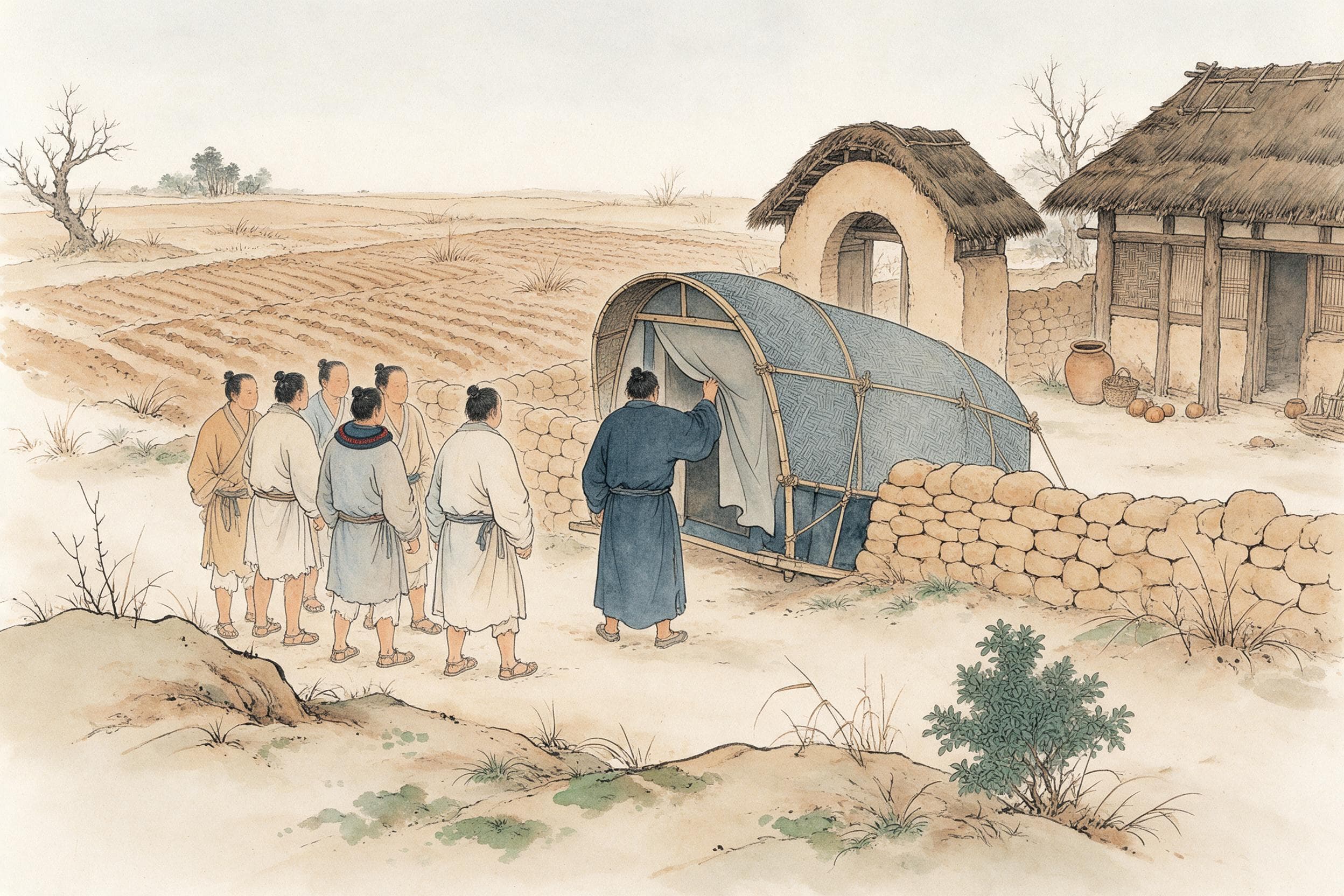
Twenty-six dishes for the Son of Heaven, twelve for a lord, eight for an upper minister, six for a lower one. Twelve tassels on his cap, nine for a lord, seven for an upper minister, five for a lower, three for an officer. His hall nine chi high, a lord's seven, a minister's five, an officer's three. These numbers are the only concrete thing in either book: the Liji's chapter on vessels is about proportion, the Shiji's treatise on ritual is about reasons, and neither stages a single ceremony. So this article stays with the numbers: how many of one vessel, how many layers of mat, how many tassels, how many chi.
One: eight ways of being precious
The Liji sets five ranks first: 禮,時爲大,順次之,體次之,宜次之,稱次之 — timing is greatest, then compliance, then embodiment, then fitness, then proportion; proportion is listed last. What proportion is, it defines: 羔豚而祭,百官皆足,大牢而祭,不必有餘,此之謂稱也 — a lamb or a sucking pig offered, and every officer has enough; the great sacrifice offered, and there need not be a surplus: this is proportion. It also draws the limit: 家不寶龜,不藏圭,不臺門,言有稱也 — a ministerial house may not treasure a tortoise, keep a jade tablet, or build a gate-tower.
The first way is abundance, and here the numbers come quickly. Temples: 天子七廟,諸侯五,大夫三,士一 — seven for the Son of Heaven, five for a lord, three for a minister, one for an officer. Dishes: 天子之豆二十有六,諸公十有六,諸侯十有二,上大夫八,下大夫六 — twenty-six, sixteen, twelve, eight, six. Escorts and victims: 諸侯七介七牢,大夫五介五牢 — seven of each for a lord, five for a minister. Mats: 天子之席五重,諸侯之席三重,大夫再重 — five layers, three, two. Burials: 天子崩,七月而葬,五重八翣;諸侯五月而葬,三重六翣;大夫三月而葬,再重四翣 — seven months, five layers, eight coffin-fans; five months, three and six; three months, two and four.
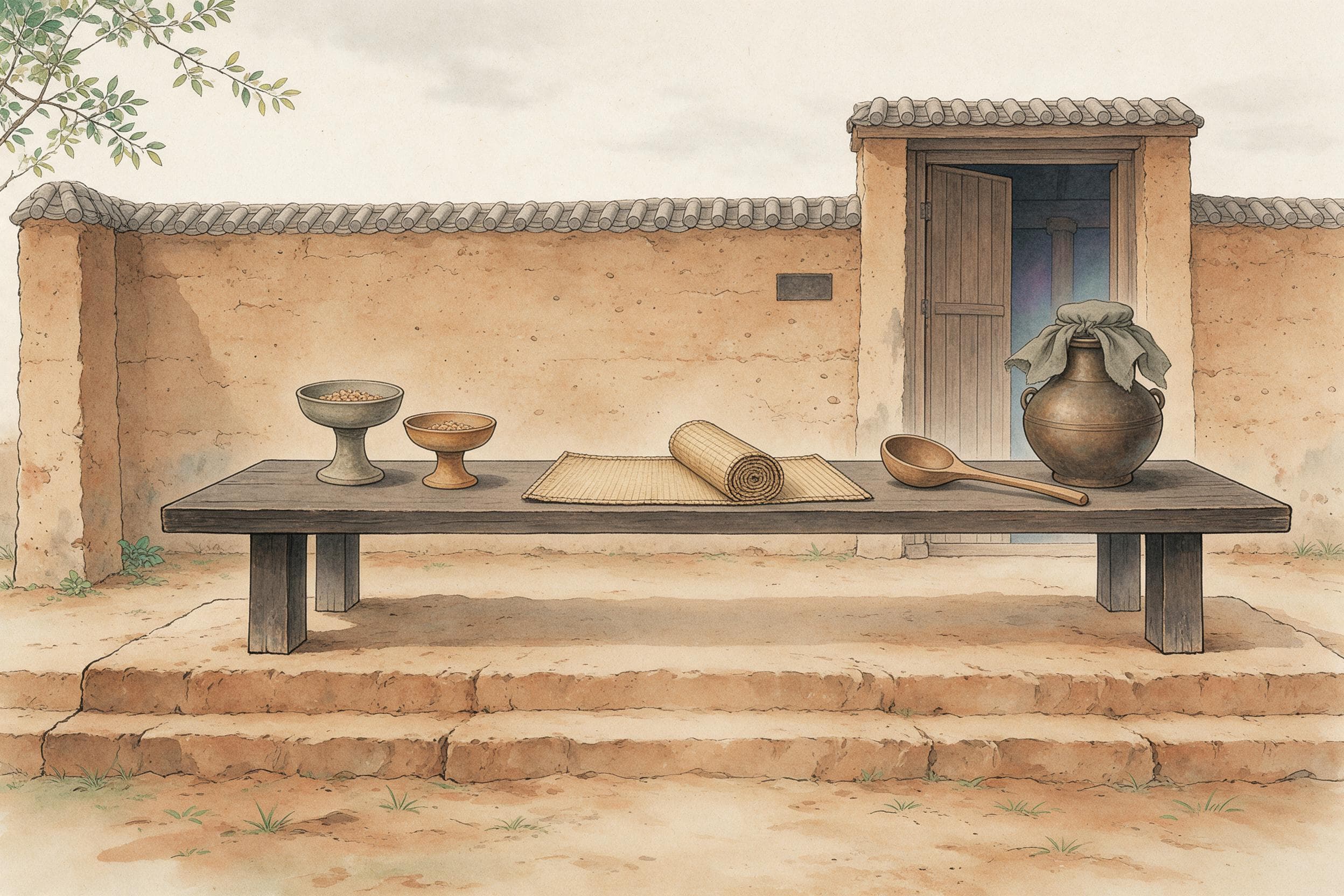
The second is fewness, and it is the counter-intuitive one: 天子無介,祭天特牲 — at the greatest sacrifice the Son of Heaven has no escorts at all and uses a single victim. 鬼神之祭單席 — for spirits, a single mat. Numbers of meals: the Son of Heaven eats once, a lord twice, ministers and officers three times, 食力無數, the labouring many without count. 圭璋,特;琥璜,爵. And carriages: 大路繁纓一就,次路繁纓七就 — the more honoured the carriage, the fewer the tassels.
One more series, that of greatness, gives no numbers at all: 宮室之量,器皿之度,棺椁之厚,丘封之大 — names only. The rest are numbers too. Smallness: 貴者獻以爵,賤者獻以散,尊者舉觶,卑者舉角 — the noble offer from the small cup, the base from the large; 五獻之尊,門外缶,門内壺,君尊瓦甒 — the higher the rank, the smaller the vessel. Lowness: 至敬不壇,埽地而祭 — the greatest reverence builds no altar but sweeps the ground; the ruler's stand is 廢禁, the officer's 棜禁. Height: 天子之堂九尺,諸侯七尺,大夫五尺,士三尺, and the gate-tower for king and lord. Ornament: 天子龍衮,諸侯黼,大夫黻,士玄衣纁裳; the cap 朱緑藻,十有二旒, nine for a lord, seven, five, three. Plainness: 至敬無文,父黨無容,大圭不琢,大羹不和,大路素而越席,犧尊疏布鼏,樿杓 — the jade unpolished, the broth unseasoned, the mat coarse, the vessel covered with cloth, the ladle of plain wood.
Two: why many, why few
The Liji explains each side. 禮之以多爲貴者,以其外心者也。德發揚,詡萬物,大理物博 — abundance, because the virtue turns outward, spreads over the ten thousand things, and the pattern of things is wide. 禮之以少爲貴者,以其内心者也。德産之致也精微,觀天下之物無可以稱其德者 — fewness, because this virtue is inward and fine, and nothing in the visible world is fit to match it. Then the chapter's closing line: 先王之制禮也,不可多也,不可寡也,唯其稱也. Confucius says it again: 禮不可不省也。禮不同,不豐,不殺 — do not add, do not cut.
Three: two examples, one too much and one too little
Both failures are named. 管仲鏤簋、朱紘,山節、藻棁,君子以爲濫矣 — Guan Zhong with his carved grain-vessel, red cap-string, mountain-shaped brackets and painted beams: the gentleman calls it 濫, excess. And 晏平仲祀其先人,豚肩不揜豆,澣衣濯冠以朝,君子以爲隘矣 — Yan Pingzhong sacrificing to his ancestors with a pig's shoulder too small to cover one dish, washing his old robe and rinsing his old cap to go to court: the gentleman calls it 隘, too narrow. One over, one under, and the same sentence follows: 是故君子之行禮也,不可不慎也,衆之紀也。紀散而衆亂.
Four: the same word in the treatise
The Shiji's treatise starts from people: 禮由人起。人生有欲,欲而不得則不能無忿,忿而無度量則爭,爭則亂 — ritual arises from man; desire without measure becomes contention, and contention disorder. So the former kings 制禮義以養人之欲,給人之求,使欲不窮於物,物不屈於欲. Hence 禮者養也: rice and millet and the five flavours nourish the mouth, pepper and orchid the nose, bells and drums and strings the ear, carving and pattern the eye, chambers and mats and stools the body. And having got the nourishment, 君子既得其養,又好其辨也。所謂辨者,貴賤有等,長少有差,貧富輕重皆有稱也 — the same word, 稱. The king's seven nourishments each have their object: 大路越席,所以養體也; 側載臭茝,所以養鼻也; 前有錯衡,所以養目也; 和鸞之聲,步中武象,驟中韶濩,所以養耳也; 龍旂九斿,所以養信也; 寢兕持虎,鮫韅彌龍,所以養威也; and the horses of the great carriage, 所以養安也. What all of it is for: 大路越席,皮弁布裳,朱弦洞越,大羹玄酒,所以防其淫侈,救其彫敝 — these prevent excess and rescue from decay; 事有宜適,物有節文.
Two more things in the treatise sit beside the Liji chapter. The three roots: 天地者,生之本也;先祖者,類之本也;君師者,治之本也. And the number of temples, which does not line up with the other book: 有天下者事七世,有一國者事五世,有五乘之地者事三世,有三乘之地者事二世,有特牲而食者不得立宗廟 — seven generations, five, three, two, and for one who eats from a single victim no ancestral temple at all. The Liji counts seven, five, three and one temple; the Shiji counts generations and holdings. The two vocabularies are copied side by side and not reconciled. One line in the treatise puts root and use together: 貴本而親用也.
Five: three tools, and one sentence
The treatise's closing 太史公曰 sets ritual beside three measuring tools: 繩誠陳,則不可欺以曲直;衡誠縣,則不可欺以輕重;規矩誠錯,則不可欺以方員;君子審禮,則不可欺以詐偽 — stretch the ink-line and no one can cheat about straight; hang the balance and no one can cheat about weight; set the compass and square and no one can cheat about round or square; let a gentleman examine ritual and no one can cheat him with falsehood. Then four ultimates: 繩者,直之至也;衡者,平之至也;規矩者,方員之至也;禮者,人道之極也. The relation of vessel to rank is given in sixteen characters: 以財物為用,以貴賤為文,以多少為異,以隆殺為要. And the Liji's own last word belongs to Confucius: 誦詩三百,不足以一獻;一獻之禮,不足以大饗;大饗之禮,不足以大旅;大旅具矣,不足以饗帝。毋輕議禮.
- Every group carries a number or a name: dishes 26/16/12/8/6, mats 5/3/2, tassels 12/9/7/5/3, hall 9/7/5/3 chi, temples 7/5/3/1, burials seven months with five layers and eight fans. Copied as written, with no conversion.
- The eight groups stand side by side, not as a ladder from cheap to costly: many and few, ornament and plainness, height and lowness are separate sets, and the only measure is 稱, proportion.
- The joint between the two books is one word: 不可多也,不可寡也,唯其稱也 in the Liji; 貴賤有等,長少有差,貧富輕重皆有稱也 in the Shiji.
- The temple numbers do not match: the Liji counts seven, five, three, one temple; the Shiji counts seven, five, three, two generations and no temple for the last. Different vocabularies, side by side, not reconciled.
- The Shiji's sections on ritual as nourishment and ritual as law are generally thought to come from the Xunzi's chapter on ritual, though the page does not say so; that is marked as the usual view, and the Xunzi itself is not quoted. The treatise has a 太史公曰 at the head and another at the end, kept apart.
- No ceremony is staged — the passage about Zilu as steward of the Ji clan is not taken — and no vessel is described or classified; that belongs to the article on the names of ritual vessels. The Liji is a design for ritual, the Shiji a treatise with borrowed text, and neither is a report of Zhou practice.
Neither book stages a ceremony. What stands between twenty-six dishes and a single tassel is not rank by itself but proportion: many needs its measure, few needs its measure, ornament and plainness each need theirs. The vessels only put that on the table.
Related reading:The Yin Used the Jia: Names of Ancient Ritual Vessels · The Announcement to Kang: Governing a Place Just Conquered · The Taichu Calendar: Twenty-odd Men and a One-Line Rule
Sources & further reading
- 《礼记·礼器》(维基文库本,白文无注,页面标 textquality 75%,未与中华书局点校本复核;页内有一处页面自带旁注) — A chapter about vessels that is really about numbers. Five ranks first: 禮,時爲大,順次之,體次之,宜次之,稱次之. The definition of 稱: 羔豚而祭,百官皆足,大牢而祭,不必有餘,此之謂稱也; and its limit: 家不寶龜,不藏圭,不臺門,言有稱也. Eight ways of being precious, each with numbers: abundance (天子七廟,諸侯五,大夫三,士一; 天子之豆二十有六,諸公十有六,諸侯十有二,上大夫八,下大夫六; 諸侯七介七牢,大夫五介五牢; 天子之席五重,諸侯之席三重,大夫再重; 天子崩,七月而葬,五重八翣;諸侯五月而葬,三重六翣;大夫三月而葬,再重四翣), fewness (天子無介,祭天特牲; 鬼神之祭單席; 天子一食,諸侯再,大夫、士三,食力無數; 大路繁纓一就,次路繁纓七就), smallness (貴者獻以爵,賤者獻以散,尊者舉觶,卑者舉角; 五獻之尊,門外缶,門内壺,君尊瓦甒), lowness (至敬不壇,埽地而祭; 天子、諸侯之尊廢禁,大夫、士棜禁), height (天子之堂九尺,諸侯七尺,大夫五尺,士三尺), ornament (天子龍衮,諸侯黼,大夫黻,士玄衣纁裳; 天子之冕,朱緑藻,十有二旒,諸侯九,上大夫七,下大夫五,士三), plainness (至敬無文,父黨無容,大圭不琢,大羹不和,大路素而越席,犧尊疏布鼏,樿杓). The reasons: 禮之以多爲貴者,以其外心者也; 禮之以少爲貴者,以其内心者也. The close: 先王之制禮也,不可多也,不可寡也,唯其稱也; Confucius 禮不可不省也。禮不同,不豐,不殺. The two examples: 管仲鏤簋、朱紘,山節、藻棁,君子以爲濫矣; 晏平仲祀其先人,豚肩不揜豆,澣衣濯冠以朝,君子以爲隘矣; 衆之紀也。紀散而衆亂. Confucius at the end: 誦詩三百,不足以一獻……不足以饗帝。毋輕議禮. The page writes 緑, 門内 and 藻棁; quotations follow it, and the passage on Zilu as steward of the Ji clan is not used.
- 《史记》卷二十三·礼书第一(西汉司马迁撰;维基文库本,白文无注,页头未标 textquality,未与中华书局点校本复核;卷末另有索隐述赞,后人所加,不用) — A treatise rather than a record; its middle sections are generally thought to take over the Xunzi's chapter on ritual, though the page does not say so, and the Xunzi is not quoted here. It begins from desire: 禮由人起。人生有欲,欲而不得則不能無忿,忿而無度量則爭,爭則亂; so 制禮義以養人之欲,給人之求,使欲不窮於物,物不屈於欲. Hence 禮者養也 and the five nourishments (稻粱五味……疏房床笫几席). Then 君子既得其養,又好其辨也。所謂辨者,貴賤有等,長少有差,貧富輕重皆有稱也. The king's seven: 大路越席,所以養體也; 側載臭茝,所以養鼻也; 前有錯衡,所以養目也; 和鸞之聲……所以養耳也; 龍旂九斿,所以養信也; 寢兕持虎,鮫韅彌龍,所以養威也; and the horses 所以養安也. Against excess: 大路越席,皮弁布裳,朱弦洞越,大羹玄酒,所以防其淫侈,救其彫敝; 事有宜適,物有節文. Three roots: 天地者,生之本也;先祖者,類之本也;君師者,治之本也. Temple numbers, different from the Liji: 有天下者事七世,有一國者事五世,有五乘之地者事三世,有三乘之地者事二世,有特牲而食者不得立宗廟; 貴本而親用也. The closing 太史公曰: 繩誠陳,則不可欺以曲直……君子審禮,則不可欺以詐偽; 繩者,直之至也……禮者,人道之極也; 以財物為用,以貴賤為文,以多少為異,以隆殺為要. The page has 太史公曰 both at the head and at the end; the 索隱述贊 after it is not Shiji text.