Three sentences, three dynasties, one verdict each. The Xia honoured 命, 事鬼敬神而遠之 — they served ghosts and honoured spirits but kept them at a distance — and were close to people. The Yin 尊神: 率民以事神,先鬼而後禮 — they honoured the spirits, led the people to serve them, and put ghosts before rites; they were held in respect but not in affection. The Zhou honoured rites and favoured giving, and also kept the spirits at a distance. The formula is 子曰, and the sentences describe the manners of three ages. What kind of statement this is has to be settled first: not the Shang's own account of themselves, but a later hand giving each dynasty a character in one line.
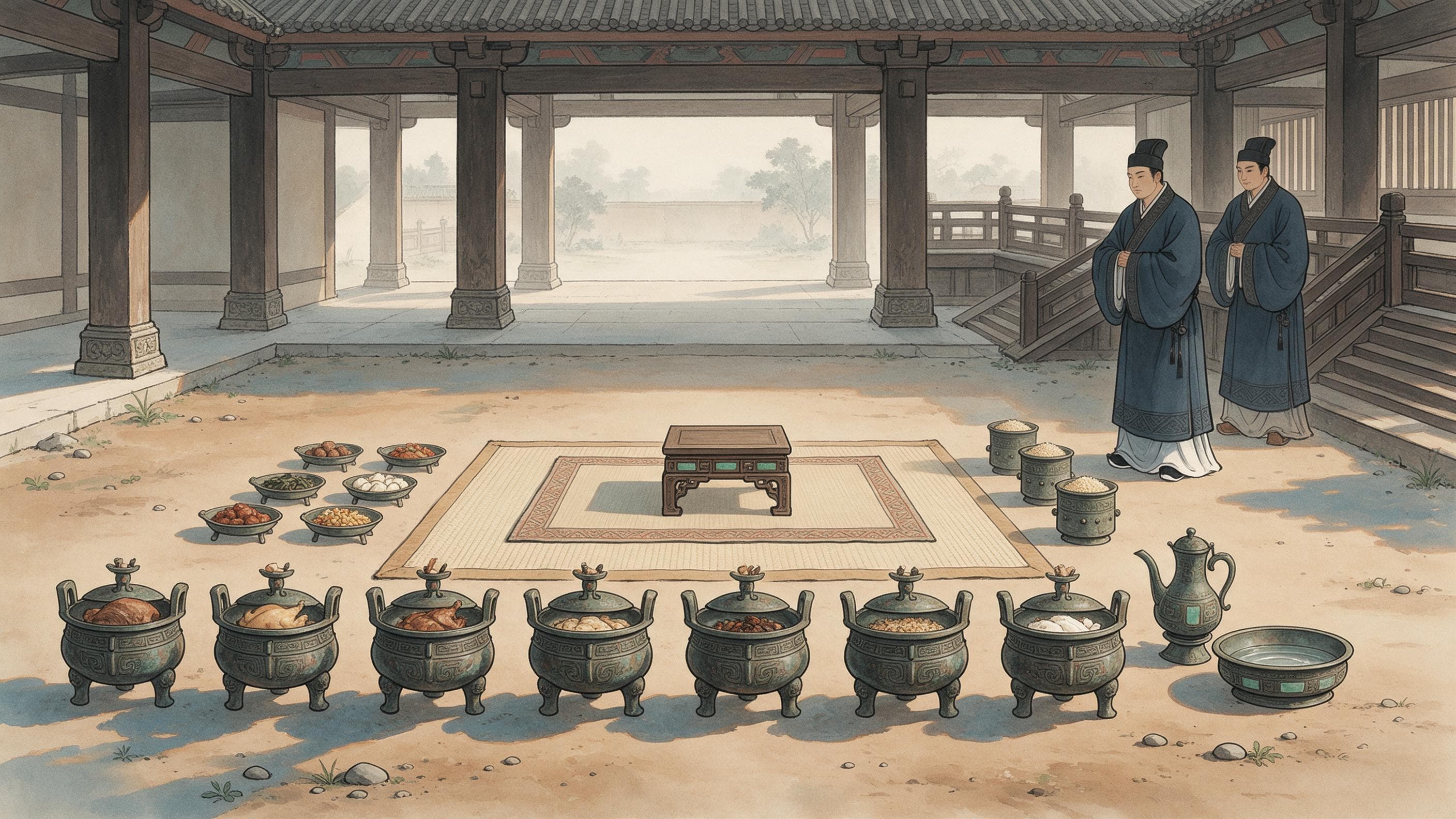
The longest of the three is the Yin's: 殷人尊神,率民以事神,先鬼而後禮,先罰而後賞,尊而不親;其民之敝,蕩而不静,勝而無恥 — they honoured the spirits, led the people to serve them, put ghosts before rites and punishment before reward, and were respected rather than loved; the fault of their people was to be restless and unruly and to win without shame. The Xia and the Zhou both 事鬼敬神而遠之; only the Yin 率民以事神. The difference is not whether the spirits were honoured but whether they were kept near or far. Each line also carries a 「民之敝」: the Xia's people were 惷而愚,喬而野,朴而不文; the Zhou's were 利而巧,文而不慙,賊而蔽.
One: the grid behind the verdicts
To read the three verdicts, look at the series in front of them. The text begins 母親而不尊,父尊而不親 — a mother is loved but not respected, a father respected but not loved — and runs on: 水之於民也,親而不尊,火尊而不親。土之於民也,親而不尊,天尊而不親。命之於民也,親而不尊,鬼尊而不親. Water and earth, like a mother, are loved and not respected; fire, heaven, a father and ghosts are respected and not loved. When the text reaches ghosts it gives exactly 尊而不親. So the Yin line's 尊而不親 is not casual: it puts the Yin in the ghosts' slot, while the Xia and the Zhou stand with fate, earth and water as 親而不尊. This is the Biaoji's own grid, not a finding.
Further on the same chapter sorts the three dynasties again: 虞夏之道,寡怨於民。殷周之道,不勝其敝; and 虞夏之質,殷周之文,至矣!虞夏之文,不勝其質;殷周之質,不勝其文. These sentences do not quite agree with one another — one pairs Yin with Zhou, another pairs Yin with Xia. They are all verdicts, and verdicts can sit askew; both are quoted here and neither is harmonised.
Two: two things you could see
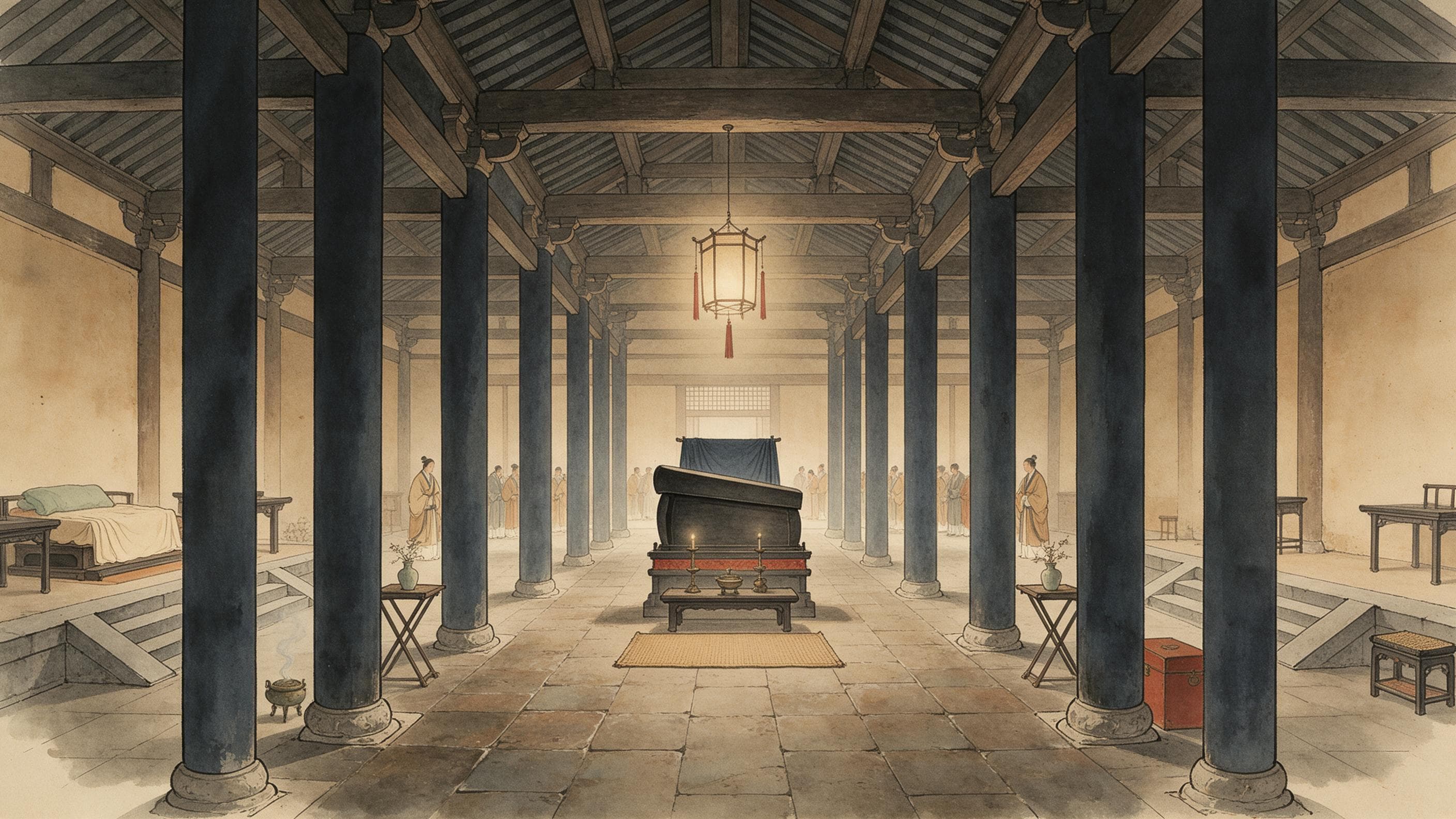
The Biaoji gives verdicts; the Tangong gives practice. The first is the coffin: 有虞氏瓦棺,夏后氏堲周,殷人棺椁,周人牆置翣 — the house of Yu used a tile coffin, the Xia a 堲周, the Yin an inner and outer coffin, the Zhou a wall around it with a fan. Four ages are listed here, not three; each object has a name and the page explains no shape, so this article adds none. A sentence on the burial of the young follows: 周人以殷人之棺椁葬長殤,以夏后氏之堲周葬中殤、下殤,以有虞氏之瓦棺葬無服之殤 — the Zhou used the four ages' coffins according to the grade of the dead child.
The second is where the coffin stood before burial: 夏后氏殯於東階之上,則猶在阼也。殷人殯於兩楹之間,則與賓主夾之也。周人殯於西階之上,則猶賓之也 — the Xia on the eastern steps, as if still on the master's stair; the Yin between the two pillars, so that host and guest flank him; the Zhou on the western steps, as if he were a guest. Each sentence carries its own explanation: 猶在阼, 與賓主夾之, 猶賓之. The positions are quoted as written; this article adds no hall plan and draws no diagram.
Three: Confucius and his own place
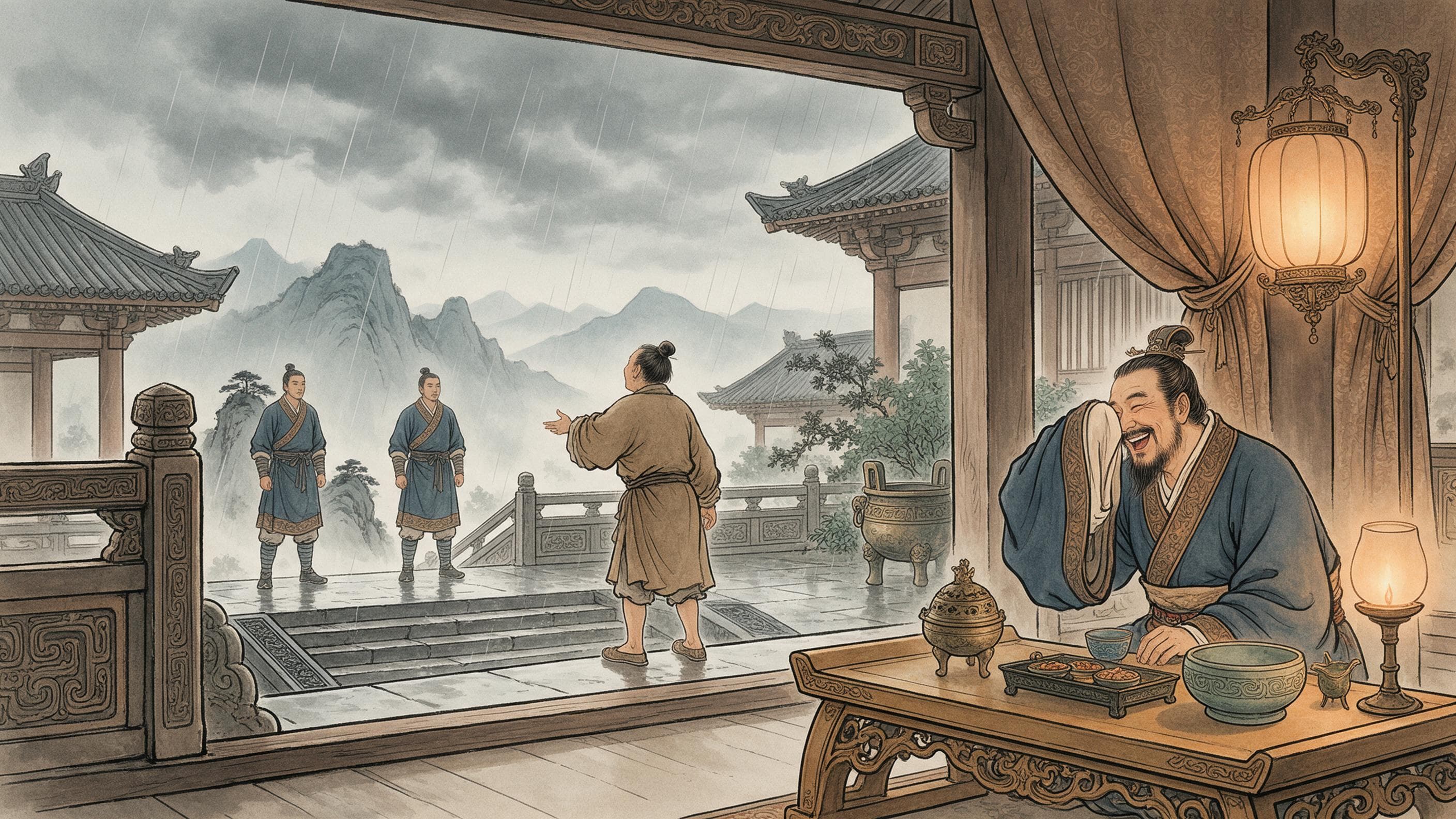
The Tangong records the last days of Confucius. He rose early, hands behind his back, trailing his staff, and walked at the gate singing: 泰山其穨乎!梁木其壞乎!哲人其萎乎! Then he went in and sat facing the door. Zigong heard and hurried in. Confucius said: 賜!爾來何遲也? — Si, why are you so late? Then he repeated the three rules — Xia on the eastern steps, Yin between the two pillars, Zhou on the western steps — and said: 而丘也,殷人也。予疇昔之夜,夢坐奠於兩楹之間。夫明王不興,而天下其孰能宗予?予殆將死也! — and I, Qiu, am a man of Yin; the other night I dreamed I sat with the offerings between the two pillars; no enlightened king has arisen, and who in the world will take me as master? I am near death. Then 蓋寢疾七日而没: he fell ill and died within seven days.
The relation between the passages is plain. The three rules were the ritual book's explanation; here Confucius counts them again and then files himself in the Yin slot — the slot whose coffin stands between the two pillars. That is where he dreamed he sat with the offerings. The Tangong records this much and no more: it does not read the dream, and it does not say it came true; 寢疾七日而没 is record, not comment. This article keeps to that measure: no psychology, no prophecy, and no decision whether 殷人 here is a political claim or a claim of descent.
Four: what the verdicts can and cannot show
Three layers, each in its own place. The Biaoji gives the summary: one character for each dynasty plus a 「民之敝」; it is an early-Han Confucian retrospect, cast as 子曰, not a Shang document. The Tangong gives two practices — coffin and coffin-place — set out across four ages, each with its explanatory clause. The third layer is Confucius's own passage, where a man files himself under Yin and quotes the same rule. The layers cannot prove each other: the Yin's 尊神 cannot be used to explain the Yin's coffin, because the page states no such cause; and 殷人尊神 is not a survey of what everyone in the Shang believed — it is one sentence of characterisation handed to a dynasty.
Five: what the two pages give, and do not
- The Biaoji is a later verdict: an early-Han Confucian summary of three dynasties, cast as 子曰, not the Shang's own account. 殷人尊神 characterises a dynasty; it is not a survey, and it does not mean everyone in the Shang believed in ghosts.
- Both sources belong to the same book, the Liji (Biaoji and Tangong shang); they are not two independent documents, the article says so, and they are not stacked as double evidence.
- Only two passages of the Tangong are used: the coffins and the place of the coffin. The colour passage in the same stretch belongs to the article on colour and mourning and is not quoted here at all.
- Objects and positions are copied as written: 瓦棺, 堲周, 棺椁, 牆置翣; 東階之上, 兩楹之間, 西階之上, with their explanatory clauses (猶在阼, 與賓主夾之, 猶賓之). No architectural setting is supplied and no floor plan drawn.
- The Confucius passage is treated as record: the claim to be a man of Yin, the dream of sitting with offerings between the pillars, 予殆將死也, and the death within seven days of illness are all the Tangong's. No psychology, no prophecy, and no saying that the dream came true.
- Lines kept apart: colour and mourning, the high god's blessings and curses, and what the penalties can establish are other articles. No general talk of the three dynasties' religion or of a view of spirits, and no ranking of the three.
What the pages leave is three verdicts, two practices and one man's claim about himself. The verdicts are a later hand's, the practices are the ritual book's, the claim is the Tangong's. Set side by side, they show how later writers allotted the three dynasties to three characters — not how anyone in the Shang thought about the spirits. On that last question these two pages say nothing at all.
Related reading:Xiao: A Battle Where Nobody Listened to the Old Men, and an Oath Written After · Trousers and Cavalry: The Court Debate Over Changing Clothes · Mind, Ministers, People, Turtle and Milfoil: How a Big Decision Was Made
Sources & further reading
- 《礼记·表记》(维基文库本,白文无注,未与中华书局点校本复核) — The three verdicts, all under 子曰: 夏道尊命,事鬼敬神而遠之,近人而忠焉,先祿而後威,先賞而後罰,親而不尊;其民之敝,惷而愚,喬而野,朴而不文。殷人尊神,率民以事神,先鬼而後禮,先罰而後賞,尊而不親;其民之敝,蕩而不静,勝而無恥。周人尊禮尚施,事鬼敬神而遠之,近人而忠焉,其賞罰用爵列,親而不尊;其民之敝,利而巧,文而不慙,賊而蔽。Before them stands a series of pairs: 母親而不尊,父尊而不親。水之於民也,親而不尊,火尊而不親。土之於民也,親而不尊,天尊而不親。命之於民也,親而不尊,鬼尊而不親。After them: 夏道未瀆辭……殷人未瀆禮,而求備於民。周人彊民,未瀆神,而賞爵刑罰窮矣; 虞夏之道,寡怨於民。殷周之道,不勝其敝; 虞夏之質,殷周之文,至矣.
- 《礼记·檀弓上》(维基文库本,白文无注,未与中华书局点校本复核) — Two passages used, and only two. The coffins: 有虞氏瓦棺,夏后氏堲周,殷人棺椁,周人牆置翣。周人以殷人之棺椁葬長殤,以夏后氏之堲周葬中殤、下殤,以有虞氏之瓦棺葬無服之殤。The place of the coffin while awaiting burial: 夏后氏殯於東階之上,則猶在阼也。殷人殯於兩楹之間,則與賓主夾之也。周人殯於西階之上,則猶賓之也。Confucius: 孔子蚤作,負手曳杖,消摇於門,歌曰:「泰山其穨乎!梁木其壞乎!哲人其萎乎!」……夫子曰:「賜!爾來何遲也?夏后氏殯於東階之上,則猶在阼也。殷人殯於兩楹之間,則與賓主夾之也。周人殯於西階之上,則猶賓之也。而丘也,殷人也。予疇昔之夜,夢坐奠於兩楹之間。夫明王不興,而天下其孰能宗予?予殆將死也!」蓋寢疾七日而没。The same chapter contains a colour passage on black, white and red, which belongs to the article on colour and mourning and is not quoted here at all.