A dialogue in the Guoyu divides the people into four kinds and gives each a place: 士, 工, 商, 農. It then divides the capital into twenty-one districts — and the farmers are not among them. The passage is one of the most quoted descriptions of how a city was meant to be ordered, and it is a plan, with a commentator's arithmetic attached. A second page, the Shiji's chapter on Qi, says only that the state prospered from crafts and salt; it gives no districts at all.
The Guoyu: Four Kinds of People, Not Mixed
The exchange opens with a question from Duke Huan: 成民之事若何, how does one complete the people's affairs? Guan Zhong answers 四民者,勿使雜處 — the four kinds of people must not be mixed — 雜處則其言哤,其事易, mixed, their talk becomes confused and their work shifts. The note names the four as 士、農、工、商 and glosses 哤 as 亂貌. The sentence is the whole argument: keep them apart and each kind settles. The argument is not economic or moral: it is about talk and work. Mixed together, people's speech becomes unclear and their tasks shift; separated, each calling can be learned at home.
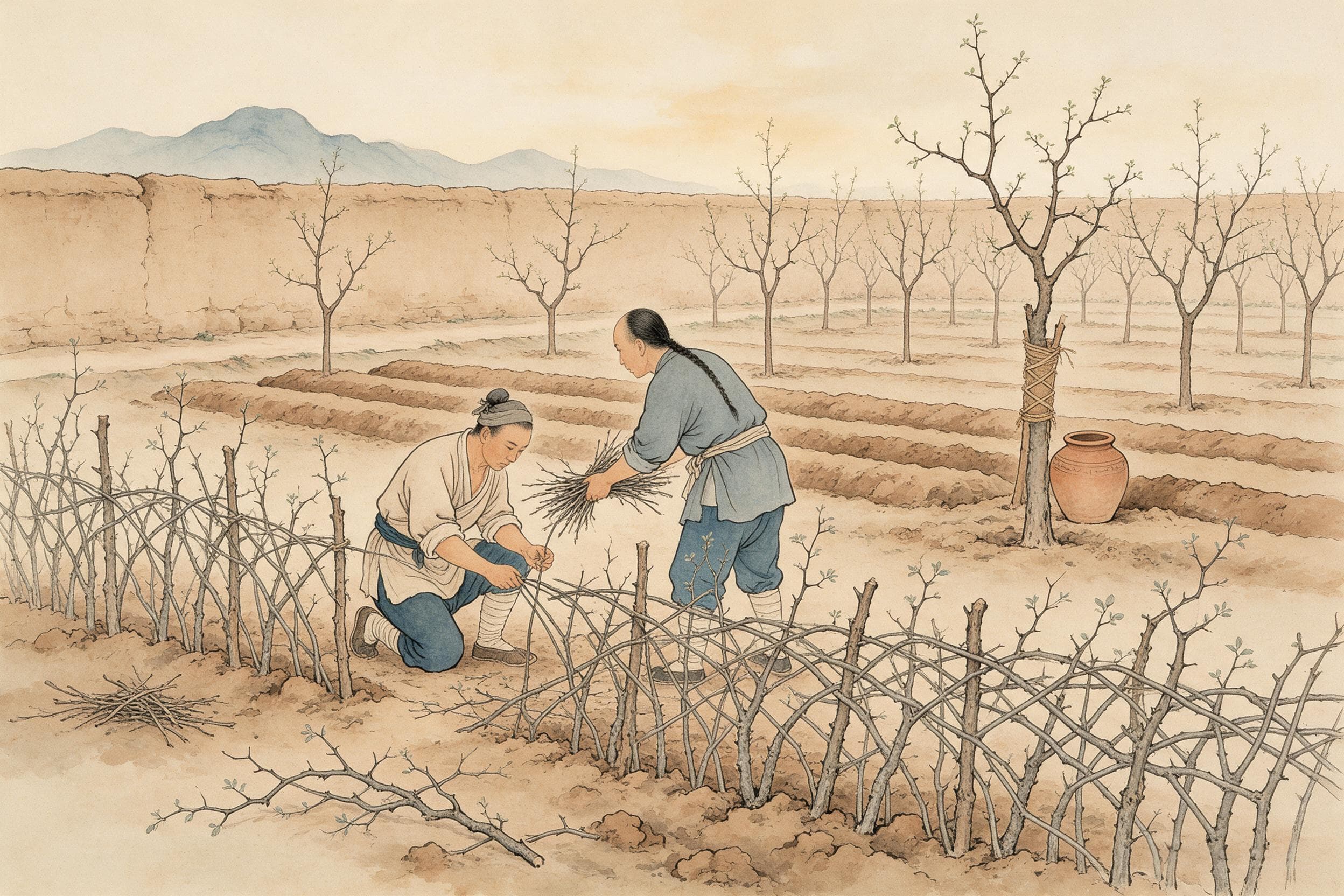
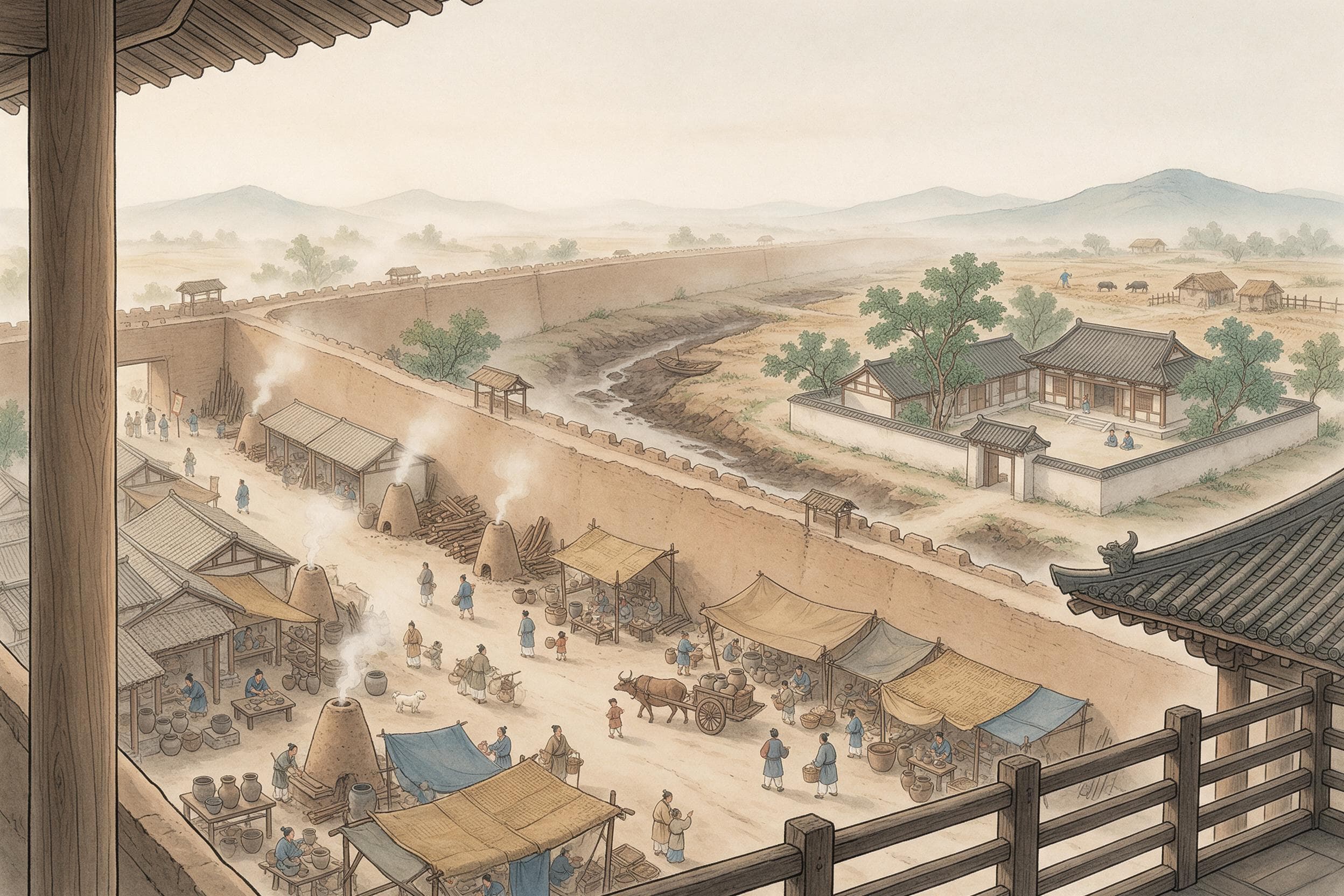
Then come the four places, and here the page's own words matter: 昔聖王之處士也,使就閒燕;處工,就官府;處商,就市井;處農,就田野. This is the body of the text, Guan Zhong speaking, not the note; the note only explains that 士 are 講學道藝者 and that 閒燕 is 清淨, quiet. Each of the four then gets a paragraph beginning 群萃而州處, gathering and settling together, and ending with a son who stays in his father's calling: 士之子恆為士, 工之子恆為工, 商之子恆為商, 農之子恆為農,野處而不暱, living in the fields and not close in. The last word is glossed 暱,近也. The pattern is the same in all four paragraphs, and the point is inheritance: the father's trade is learned by the son without being formally taught, and the household stays where it is.
The Twenty-One Districts: Who Is Inside the City
The second half begins 定民之居若何, how to fix where people live, and is answered 制國以為二十一鄉, make the capital into twenty-one districts. A note interrupts at once: 昭謂:國,國都城郭之域也,唯士、工、商而已,農不在也 — Wei Zhao's comment that 國 means the walled capital, that it holds only 士, 工 and 商, and that the farmers are not in it. A rival note is recorded too: 唐尚書云:士與農共十五鄉, Tang's reading that the fifteen districts held soldiers and farmers together. Wei Zhao rejects it. This note is the hinge of the passage: twenty-one districts describe neither the whole population nor the whole territory. Without the note a reader would take the twenty-one districts for the whole people; with it, the scheme is a division of the walled city only, and the countryside is a separate arrangement.
The figures follow: 工商之鄉六 — six districts of artisans and merchants, glossed 工、商各三也,二者不從戎役也, three each, and neither group serves in the army; 士鄉十五 — fifteen districts of 士, glossed 此士,軍士也。十五鄉合三萬人,是為三軍, these 士 are soldiers, fifteen districts make thirty thousand men and three armies. The command is split 公帥五鄉,國子帥五鄉,高子帥五鄉, the duke and the two senior ministers each leading five, glossed as the central army and the two wings. The size is in the note: 二千家為一鄉。二十一鄉,凡肆萬二千家 — two thousand households to a district, forty-two thousand in all, printed with 肆 for 四. It ends 此管子制,非周法也: this is Guan Zhong's arrangement, not Zhou law. The arithmetic is left as the note gives it: fifteen and six make the twenty-one, and two thousand households to each give forty-two thousand. The page does not turn the households into persons.
A second organisation follows in the same section, and it is not a map either: 五家為軌,軌為之長;十軌為里,里有司;四里為連,連為之長;十連為鄉,鄉有良人. It is introduced as 作內政而寄軍令, civil administration carrying the army's orders, and its units are military: 五家為軌,故五人為伍; 十軌為里,故五十人為小戎; 四里為連,故二百人為卒; 十連為鄉,故二千人為旅; 五鄉一帥,故萬人為一軍. The note adds that this is Qi's army, not Zhou's: 萬人為軍,齊制也,周則萬二千五百人為軍. So one section carries two overlapping schemes: districts of residence, and files of five, ten and four that turn households into companies and companies into armies.
The Shiji's Two Sentences
The Shiji's chapter on Qi gives none of this. Its first sentence is about the founder: 太公至國,修政,因其俗,簡其禮,通商工之業,便魚鹽之利,而人民多歸齊,齊為大國 — the Duke of Tai came to the state, reformed government, followed its customs, simplified its rites, opened the trades of craftsmen and merchants, made use of fish and salt, and people came to Qi, which became a great state. It is an economic summary; there is not a single district in it. The customs are said to be followed, not reformed, and the prosperity is put down to trades, fish and salt — an economic explanation with no administrative detail at all.
The second sentence is about Duke Huan: 桓公既得管仲,與鮑叔、隰朋、高傒修齊國政,連五家之兵,設輕重魚鹽之利,以贍貧窮,祿賢能,齊人皆說. The phrase 連五家之兵 appears here, linking the troops of five households, and the rest is the same kind of summary: light and heavy, fish and salt, relieving the poor, paying the worthy. Neither sentence gives a number of districts, and this article does not take one from the Guoyu to fill them in. The phrase is given without a gloss, and the sentence moves on to light and heavy, fish and salt, the poor and the worthy.
A Plan, Not a City
The Guoyu passage is a dialogue, and the note attached to the twenty-one districts says what kind of thing it is: 此管子制,非周法也. It is Guan Zhong's institution, not the law of Zhou: a design attributed to a minister and recorded in a speech. Neither page gives a city plan, a plot, an excavation or a register; no street is named and no wall measured. To say that Qi's capital was actually laid out in these blocks goes past both pages. The pages talk about a minister's design and a state's prosperity; they never show the ground.
Two things follow, and they are the ones most easily got wrong. First, the twenty-one districts are not four quarters: the note says the city holds only 士, 工 and 商, and that the farmers are 野處而不暱 outside it, so the four kinds are separated by keeping three inside the city and one outside. Second, the figures are a scheme: fifteen districts of soldiers plus six of artisans and merchants make the twenty-one, and the two thousand households to a district is the note's arithmetic, giving forty-two thousand in all — not a census of Qi and not a count of any city's residents. The note's own numbers are the only arithmetic in the passage, and they are the commentator's, not the speaker's.
What This Article Leaves Out
It does not write a theory of city planning or of the division of labour, and it does not turn the scheme into a picture of a city. It gives no population figures, converts no households into persons, and makes no estimate of how much of Qi followed the plan. The article on how large a city should be, the one on the Chang'an market grid and the one on the guest houses each take another object; this one stays with the four kinds of people and the twenty-one districts meant to hold three of them. The characters are kept as printed, including 哤, 暱 and 肆萬二千家. What the page gives is a speech about separation and a set of figures for the walled city, and this article keeps to that.
Related reading:Giving Up the House: When Luoyang's Princes Turned Their Mansions into Temples · The Kunming Pool and the Tower Ships: Digging a Lake for River War · The Guest House: Where 'a Guest Arriving as If Coming Home' Came From
Sources & further reading
- 《國語》卷六·齊語(舊題左丘明撰,三國吳韋昭注;維基文庫本,頁面白文附注) — The body text: 四民者,勿使雜處…雜處則其言哤,其事易; 昔聖王之處士也,使就閒燕;處工,就官府;處商,就市井;處農,就田野; 制國以為二十一鄉; 工商之鄉六;士鄉十五; 公帥五鄉,國子帥五鄉,高子帥五鄉. The notes: 昭謂:國,國都城郭之域也,唯士、工、商而已,農不在也; 二千家為一鄉。二十一鄉,凡肆萬二千家。此管子制,非周法也; 工、商各三也,二者不從戎役也; 十五鄉合三萬人,是為三軍.
- 《史記》卷三十二·齊太公世家(西漢司馬遷撰;維基文庫本,頁面白文) — Two summary sentences, one for the founder and one for Duke Huan: 太公至國,修政,因其俗,簡其禮,通商工之業,便魚鹽之利,而人民多歸齊,齊為大國; 桓公既得管仲,與鮑叔、隰朋、高傒修齊國政,連五家之兵,設輕重魚鹽之利,以贍貧窮,祿賢能,齊人皆說. No district numbers and no city plan.