The last sacrifice of the year is written twice in the Li Ji: once as a definition — 'the zha is a seeking: in the twelfth month of the year it gathers all things and seeks to feast them' (蜡也者,索也,歲十二月,合聚萬物而索饗之也) — and once only as a line of conversation, when Zi Gong watched the zha and said 'the whole country is as if mad' (一國之人皆若狂). In the same season there is another sacrifice, the she, the altar of soil. The three pages keep them apart, and so does this article.
The Zha Is a Seeking
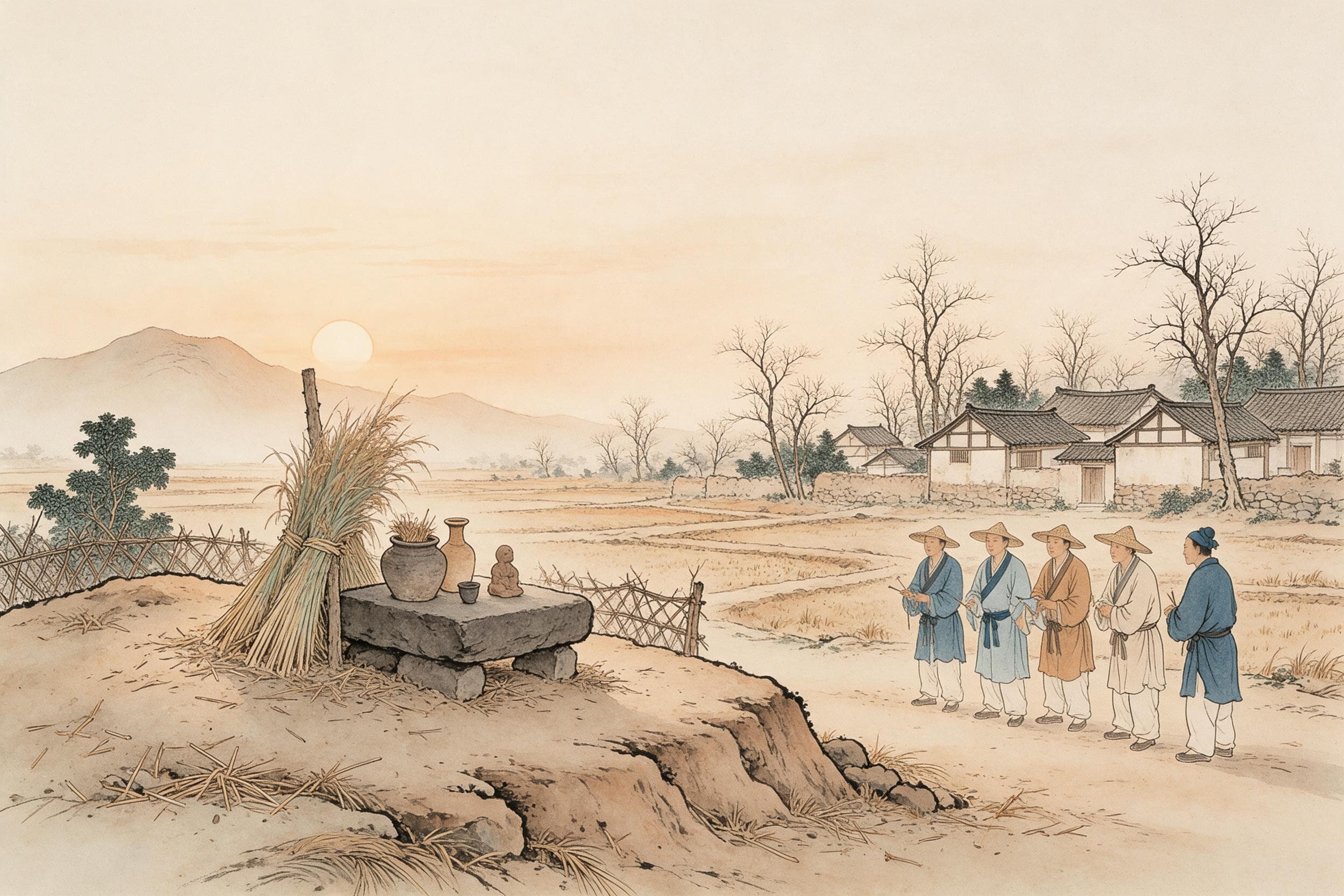
The Jiao Te Sheng first fixes the scale: 'the Son of Heaven's great zha has eight parts; Yi Qi was the first to make the zha' (天子大蜡八。伊耆氏始為蜡). Then the recipients, one after another: 'in the zha sacrifice the chief is the first grains, and the second is the master of grains; the hundred seeds are sacrificed to repay the grains' (主先嗇而祭司嗇也,祭百種以報嗇也); the farmers, the post-stations and field paths, the birds and beasts are all feasted, 'the utmost of benevolence, the utmost of duty'. Two animals are named: 'the cat is welcomed because it eats the field rats; the tiger is welcomed because it eats the field boars — they are welcomed and sacrificed to' (迎貓……迎虎……迎而祭之也). There are also the dyke and the water channel, and a four-line prayer: 'earth return to its dwelling, water return to its channel, insects do not rise, grasses and trees return to the marsh' (土反其宅,水歸其壑,昆蟲毋作,草木歸其澤).
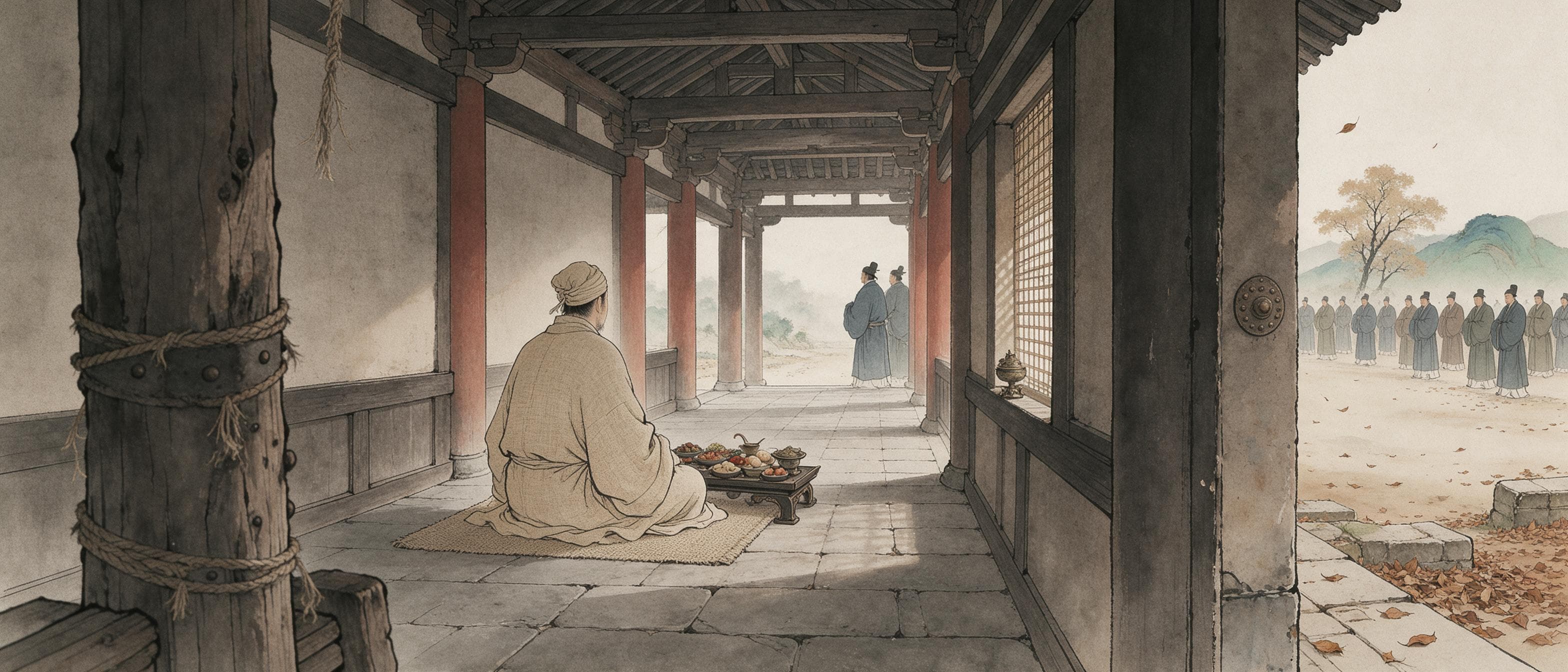
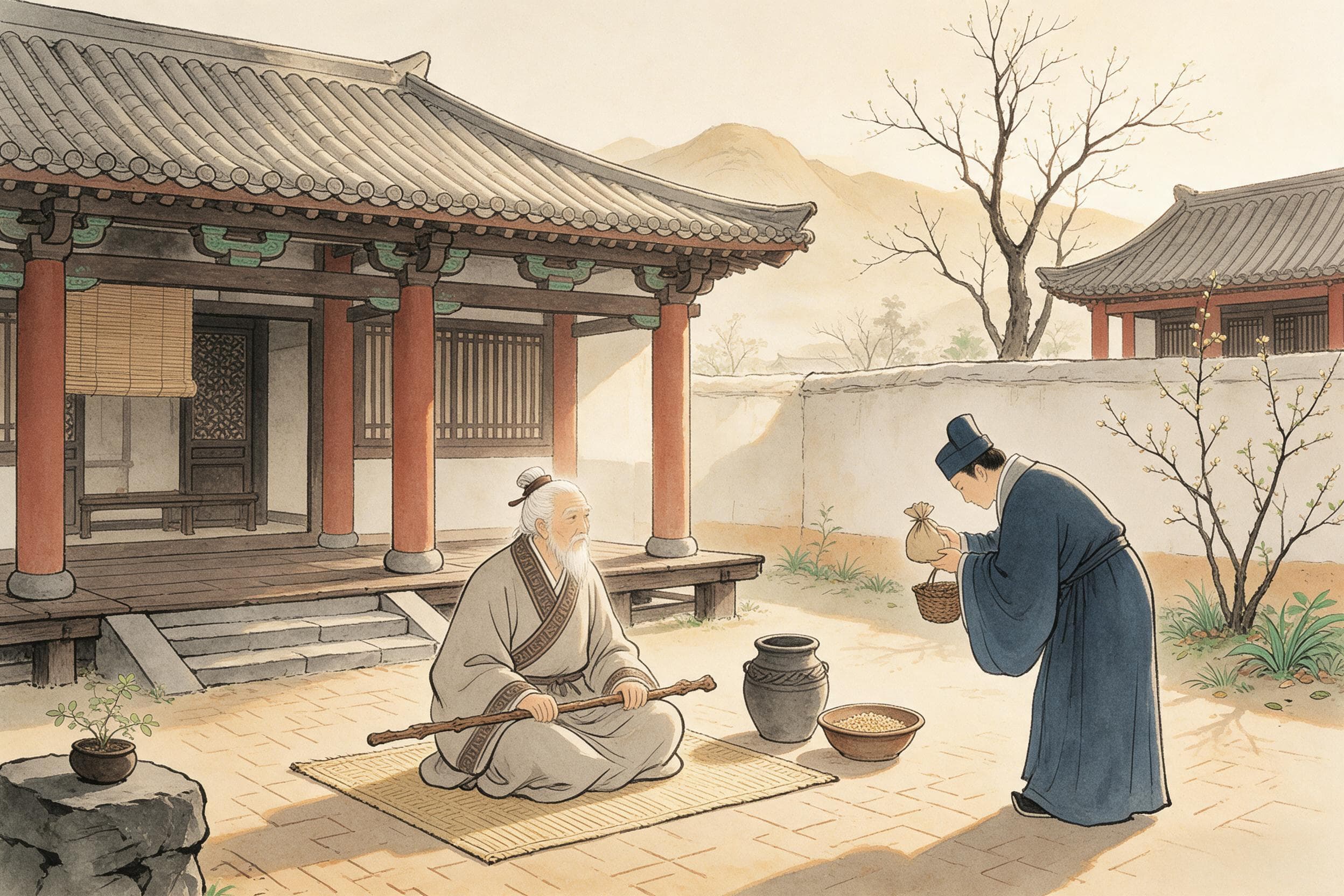
Dress is prescribed too: 'leather cap and plain clothes for the sacrifice; plain clothes are for seeing off the end; a hemp belt and a hazel staff, the diminished form of mourning' (皮弁素服而祭……葛帶榛杖,喪殺也). A second set is for the farmers' rest: 'yellow clothes and yellow cap for the sacrifice, to rest the field workers; the wild men wear yellow caps, and a yellow cap is a grass garment' (黃衣黃冠而祭,息田夫也……黃冠,草服也). The eight parts are tied to the harvest: 'the eight zha record the four quarters; where the year is not favourable, the eight zha are not held, to be careful with the people's goods; where it is favourable, the zha is held, to move the people' (八蜡以記四方……). After the zha the harvest is stored and the people rest, 'and therefore after the zha the gentleman does not begin works' (既蜡而收,民息已).
The Whole Country as If Mad
The scene Zi Gong saw is recorded in the Za Ji, part two: 'Zi Gong watched the zha. Confucius said: Ci, are you enjoying it? He answered: The whole country is as if mad — I do not know what there is to enjoy. The Master said: a hundred days of zha, one day of grace — that is beyond you. To stretch and never slacken, even Wen and Wu could not; to slacken and never stretch, even Wen and Wu would not do; one stretch, one slackening — that is the way of Wen and Wu' (子貢觀於蜡……一張一弛,文武之道也). The speakers are marked: Confucius asks, Zi Gong answers. 'The whole country as if mad' is a line inside that exchange, not a count of people and not a survey of custom.
The same chapter adds arrangements: the Great Luo, who kept the Son of Heaven's birds and beasts, received the tribute of the lords; they came 'with straw hats, honouring the wild dress' (草笠而至,尊野服也); 'Luo presented deer and women, and had the guests told, to warn the lords: those who love the hunt and love women lose their states' (羅氏致鹿與女……好田、好女者亡其國). The zha has two costumes — leather cap and plain clothes with hemp belt and hazel staff for the sacrificers, yellow clothes and yellow caps for the resting farmers. These are the clauses on dress and gifts, not a record of one day.
The She Sacrifices the Soil
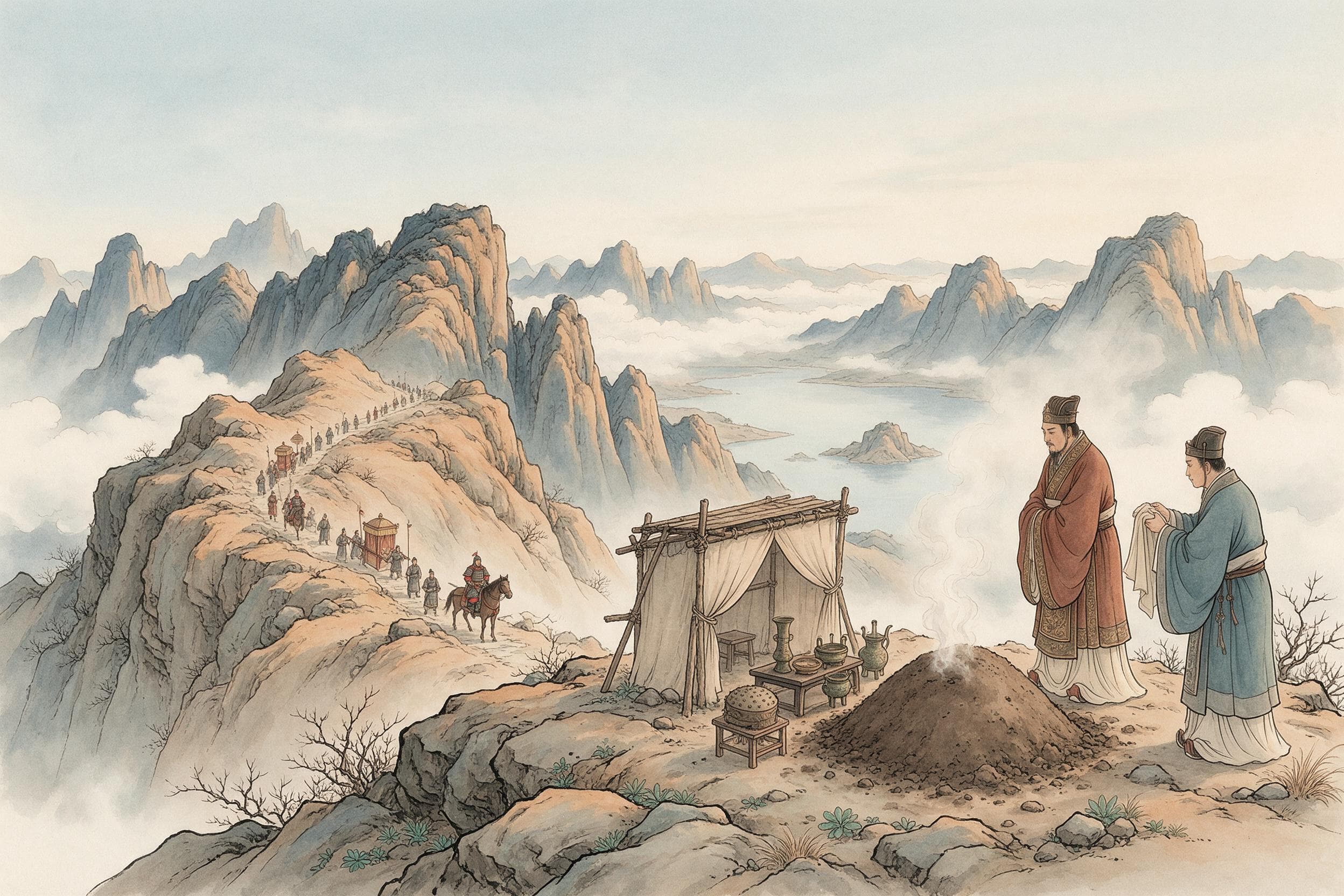
The she is another matter. The Jiao Te Sheng: 'the she sacrifices the soil and takes the dark force as its master; the ruler faces south at the foot of the north wall, answering the dark. The day used is the first of the sexagenary cycle, the beginning of days. The Son of Heaven's great she must receive frost, dew, wind and rain, to reach the force of heaven and earth. Therefore the she of a destroyed state is roofed over, not receiving heaven's yang; the Bo she has a north window, letting the dark be bright. The she is how the way of earth is made divine' (社祭土而主陰氣也……社,所以神地之道也). One line joins house and state: 'the householder makes the central drain its she, the state makes the she its altar, showing the root' (家主中霤而國主社,示本也).
The she also demands labour: 'for the she's business the whole li turns out; for the she's hunt all the people work; for the she the qiu and cheng contribute the sacrificial grain — thus to repay the root and return to the beginning' (唯為社事,單出里……所以報本反始也). The whole li turning out is the usual reading of dan chu li; the page gives no note. The she is tied to war as well: 'in the last month of spring fire is sent out for burning; then the chariots and levies are counted and the companies reviewed, and the ruler in person swears at the she, to practise the army … therefore in war they conquer, and in sacrifice they receive blessing' (君親誓社,以習軍旅……).
Choose a First Day, Order the People's She
The Yue Ling gives the she its season: 'in the second month of spring … choose a first day and order the people's she' (仲春之月……擇元日,命民社). The same passage goes straight on to orders: 'command the officers to inspect the prisons, remove stocks and shackles, allow no reckless beating, and stop litigation' (命有司省囹圄……止獄訟). The she here is not an isolated rite but one item in the second-month orders.
Set side by side, the difference is plain. The zha falls in 'the twelfth month of the year'; the she in the second month of spring, on a chosen first day. The zha 'gathers all things and seeks to feast them', its recipients the first grains, the master of grains, the hundred seeds, the farmers, the post-stations and paths, birds and beasts, cat and tiger, dyke and channel; the she 'sacrifices the soil and takes the dark force as master', with the ruler facing south at the north wall on a first day. The zha ends with 'the harvest stored and the people rested'; the she with 'repaying the root' and 'practising the army'. The pages never make them one thing.
Between the Pages
All three pages are books of rites and of the calendar, not records of custom: no numbers of participants, no costs, no local variations; the zha is dated only to 'the twelfth month', the she only to 'the second month of spring' and 'a first day', and no modern dates are supplied. 'The whole country as if mad' is quoted only as a line of dialogue, never as a statistic; gifts, dates and rules for participants are quoted as written, with nothing added. No general verdict about 'ancient reverence for nature' is offered, and the zha and the she are not merged into one topic called 'ancient festivals' — they were not one thing.
Related reading:Chengpu: The Day of the Three-She Retreat · The Call from the Roof: A Death, Step by Step · Records and Statutes: What the Shang Had, and What Survives
Sources & further reading
- 《礼记·郊特牲》(维基文库本,未与点校本复核) — The two rites described in one chapter, kept apart. The zha: 'the Son of Heaven's great zha has eight parts; Yi Qi was the first to make the zha. The zha is a seeking: in the twelfth month it gathers all things and seeks to feast them' (蜡也者,索也,歲十二月,合聚萬物而索饗之也); the recipients — first grains, master of grains, hundred seeds, farmers, post-stations and field paths, birds and beasts, cat and tiger, dyke and channel; the prayer 'earth return to its dwelling, water return to its channel, insects do not rise, grasses and trees return to the marsh'; the dress — leather cap and plain clothes, hemp belt and hazel staff, 'the diminished form of mourning', and yellow clothes and yellow caps 'to rest the field workers'; 'where the year is not favourable, the eight zha are not held' (四方年不順成,八蜡不通); and 'after the zha the harvest is stored and the people rest' (既蜡而收,民息已). The she: 'the she sacrifices the soil and takes the dark force as its master; the ruler faces south at the foot of the north wall' (社祭土而主陰氣也,君南鄉於北墉下); 'the day used is the first of the cycle' (日用甲); 'the great she must receive frost, dew, wind and rain' (必受霜露風雨); 'the she of a destroyed state is roofed over' (喪國之社屋之); 'the householder makes the central drain its she, the state the she its altar' (家主中霤而國主社); and the labour and war clauses — 'for the she's business the whole li turns out' (唯為社事,單出里), 'for the she's hunt all the people work', 'the qiu and cheng contribute the sacrificial grain', 'the ruler in person swears at the she, to practise the army' (君親誓社,以習軍旅).
- 《礼记·杂记下》(维基文库本,未与点校本复核) — The dialogue that gives the zha its famous line: 'Zi Gong watched the zha. Confucius said: Ci, are you enjoying it? He answered: The whole country is as if mad — I do not know what there is to enjoy. The Master said: a hundred days of zha, one day of grace — that is beyond you. To stretch and never slacken, even Wen and Wu could not; to slacken and never stretch, even Wen and Wu would not do; one stretch, one slackening — that is the way of Wen and Wu' (子貢觀於蜡……一張一弛,文武之道也). The speakers are explicit — Confucius asks, Zi Gong answers — and the 'as if mad' is inside the exchange, not a description of custom.
- 《礼记·月令》(维基文库本,未与点校本复核) — The she's place in the calendar, in the second month of spring: 'choose a first day and order the people's she' (擇元日,命民社), immediately followed by orders to inspect the prisons, remove stocks and shackles, allow no reckless beating and stop litigation (命有司省囹圄,去桎梏,毋肆掠,止獄訟). The chapter also lists the summer and winter sacrifices to the 'altars of soil and grain' (社稷) among the seasonal duties, which is the wider calendar setting; the dating of the she is given only as the second month and a chosen first day.