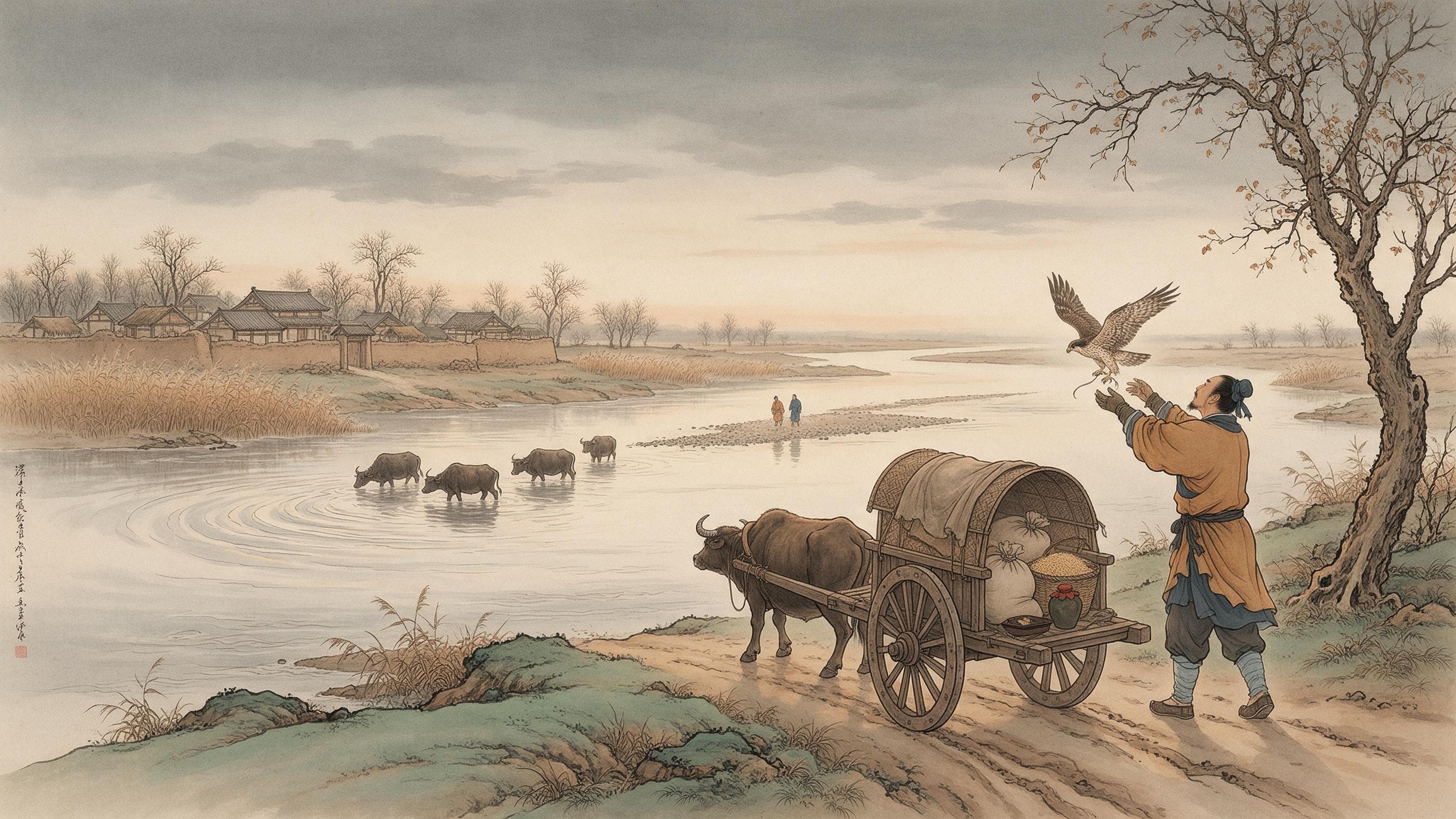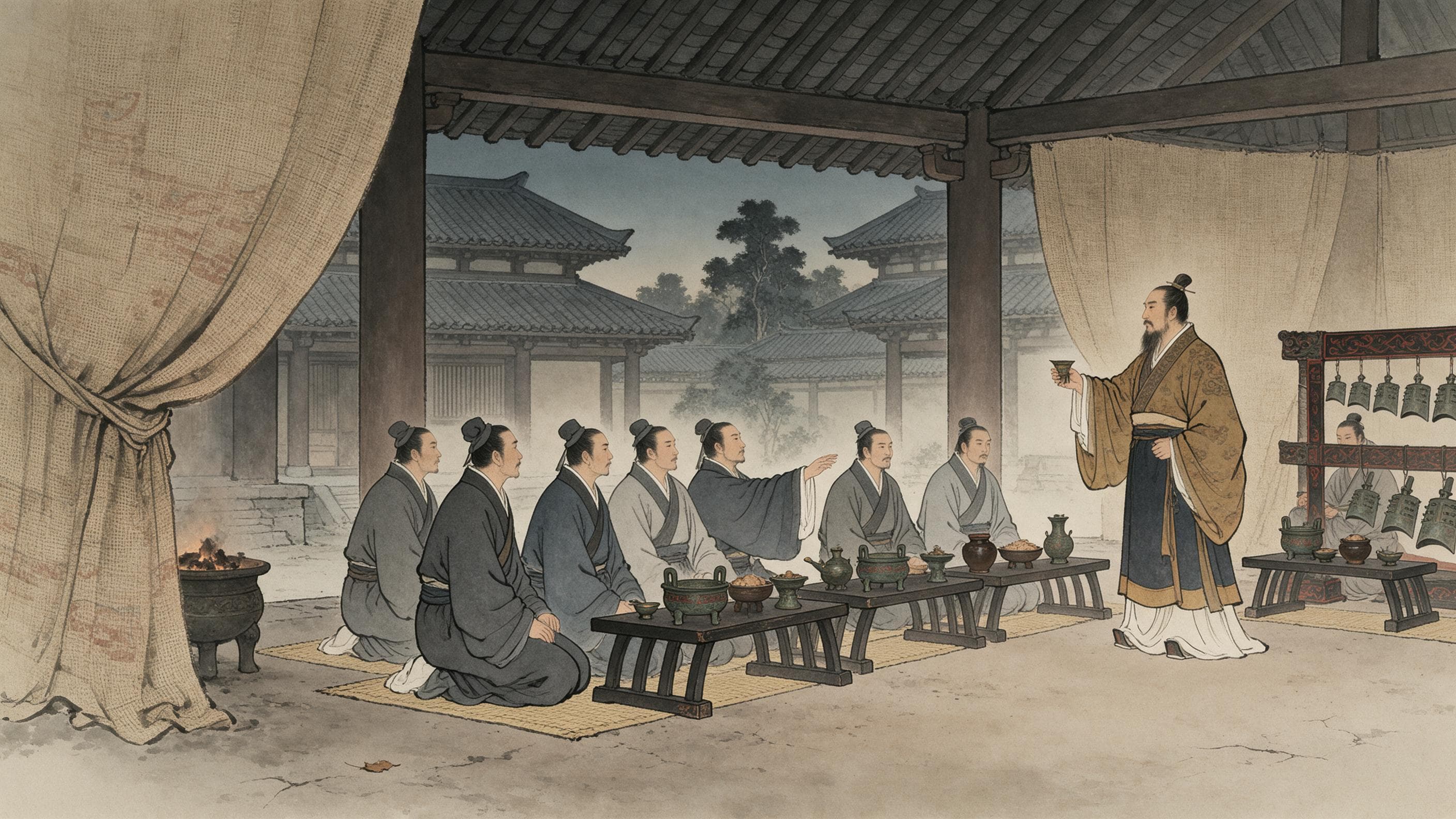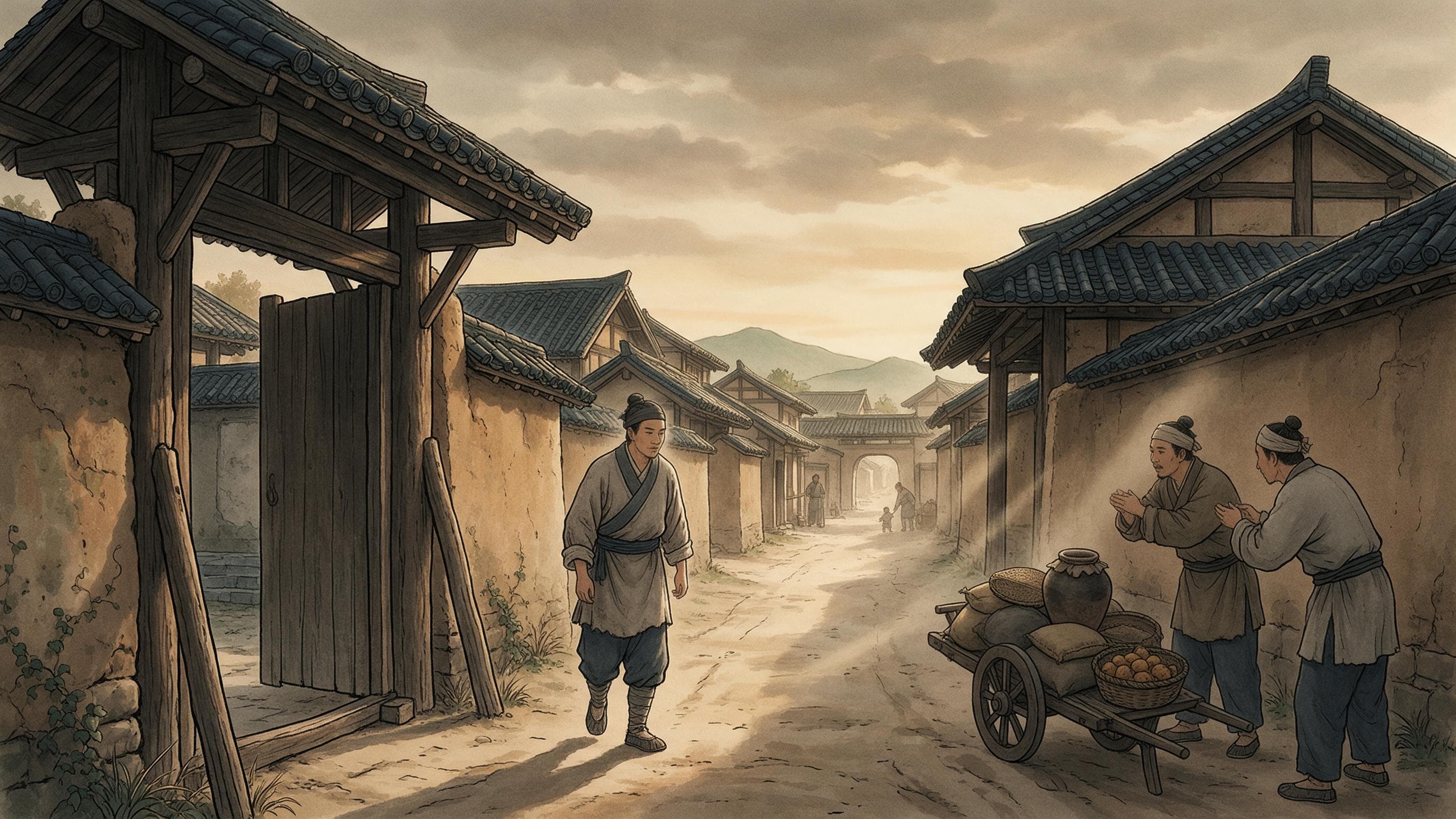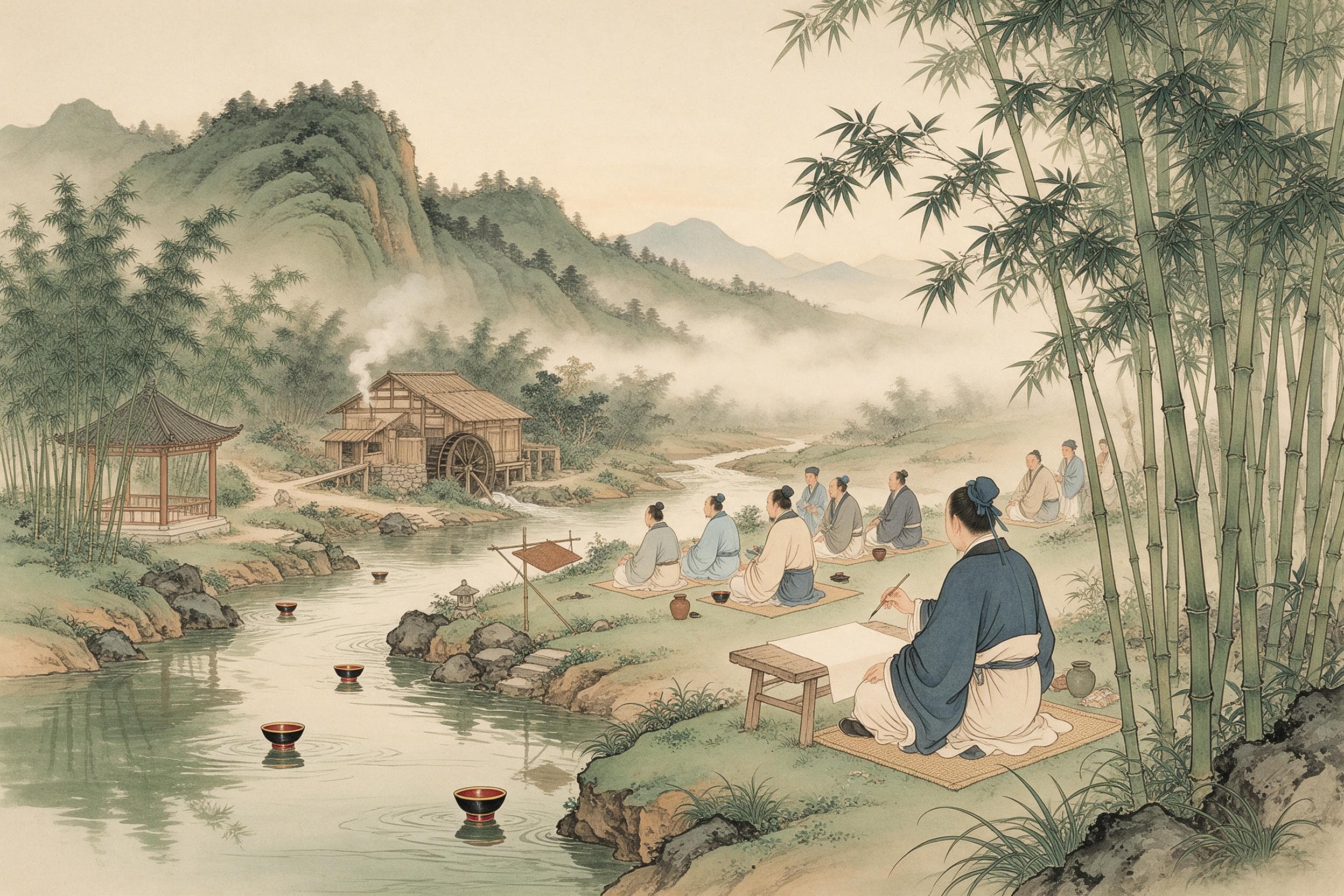
At the start of the last month of spring, in the ninth year of Yonghe, the year guichou (永和九年,歲在癸丑), a group of men sat down along a winding stream outside Kuaiji and set wine cups afloat on it. Afterwards Wang Xizhi wrote a preface — 羲之自為之序, 'Xizhi himself made the preface', as his biography puts it. That preface is what both pages contain: it survives as a text of its own and is quoted in full inside his life in the Book of Jin (晉書). The biography supplies what the preface leaves out: the office he held, the noted men who lived in that country, and what became of him afterwards. For the day itself there is only the preface, and it is not a programme of events. It begins with a picnic and ends with grief over time.
The Date, the Place, the Company
The first sentence gives four things at once: 永和九年,歲在癸丑,暮春之初,會于會稽山陰之蘭亭,脩禊事也 — in the ninth year of Yonghe, the year being guichou, at the beginning of the last month of spring, they met at the Orchid Pavilion in Shanyin, Kuaiji, 'to perform the xi rite'. The era name and the sexagenary year are printed as they stand; neither page converts them. The biography sets the sentence in a career: refused the commandery of Xuancheng, he was made 右軍將軍、會稽內史, General of the Right Army and interior governor of Kuaiji. It also says why the gathering was there: 會稽有佳山水,名士多居之 — Kuaiji had fine mountains and water, many noted scholars lived in it; Xie An lived there too before taking office; Sun Chuo, Li Chong, Xu Xun and the monk Zhi Dun were foremost in letters, built houses in the east and shared his tastes.
The preface itself says only 羣賢畢至,少長咸集 — 'all the worthy came, old and young assembled' — and names nobody. The biography names those men as neighbours and kindred spirits, then says 嘗與同志宴集于會稽山陰之蘭亭: 'he once gathered with like-minded people at the Orchid Pavilion in Shanyin, and Xizhi made the preface to set out his mind'. Which of them were there, and how many came in all, neither page says. The preface does promise a list — 故列敘時人,錄其所述, 'I set out the men of the time and record what they composed' — but no list of names is on either page.
One Word: the Xi Rite
The word 禊 appears once, in 脩禊事也, and otherwise only in the alternative titles the page lists, 禊序 and 禊帖. Neither page explains the rite: what was done, by whom, at what hour, at which water, or what 脩 means. Nothing is added; no later description of the third-month purification fills the gap. The preface page writes 脩禊, the biography 修禊: one word in two forms. In these pages the rite remains a word.
What the text reports is brief: 引以為流觴曲水,列坐其次 — they led the water into a winding course for floating cups and sat down in order along it; and 雖無絲竹管弦之盛,一觴一詠,亦足以暢敘幽情 — though no strings and pipes played, a cup and a poem were enough to speak the deepest feeling. That is the whole of the activity given: water made to wind, seats in order, cups floating, poems, no music. The channel's profile, the cups' material, how they were set afloat and taken up — none is on either page.
The Place, and the Day
The place comes before the weather: 此地有崇山峻嶺,茂林脩竹;又有清流激湍,映帶左右 — high mountains, steep ridges, dense woods, tall bamboo, and clear rushing water belting them left and right. Then the weather: 是日也,天朗氣清,惠風和暢 — clear sky, fresh air, a warm gentle breeze. Then the reason for being there: 仰觀宇宙之大,俯察品類之盛,所以遊目騁懷,足以極視聽之娛,信可樂也 — looking up at the vastness of the cosmos, down at the abundance of kinds, letting eye and heart run until sight and hearing had their fill: 'truly one could be happy'.
From 'Truly a Joy' to 'Is It Not Painful'
Then it turns, and everything before becomes the ground of what follows. 夫人之相與,俯仰一世 — people live together, and a lifetime passes between a look up and a look down. Some talk out what they hold inside in one room; some entrust themselves to what they love and let the body go loose. 雖趣舍萬殊,靜躁不同 — choices differ utterly, quiet or restless — but 當其欣於所遇,暫得於己,快然自足,不知老之將至: pleased by what meets them, briefly at ease, they are satisfied and do not notice old age arriving. 及其所之既倦,情隨事遷,感慨係之矣: when what they pursued palls and feeling shifts with circumstance, sighs attach. 向之所欣,俯仰之間已為陳跡 — what once delighted them is already a trace between a look up and a look down; 況脩短隨化,終期於盡 — and a span, long or short, follows change and ends. Then the borrowed line: 古人云:「死生亦大矣。」豈不痛哉 — the ancients said life and death are a great matter; is it not painful?
The argument: 固知一死生為虛誕,齊彭殤為妄作 — making life and death one thing is empty talk, setting Peng Zu beside a child who dies young is reckless invention. Then the sentence that closes the circle: 後之視今,亦猶今之視昔,悲夫 — later ages will look at this age as this age looks at earlier ones. And the reason for writing: 故列敘時人,錄其所述,雖世殊事異,所以興懷,其致一也 — 'I set out the men of the time and record what they composed; though ages differ and affairs change, what stirs feeling comes to one thing'; 後之覽者,亦將有感於斯文 — 'those who read this later will be moved by it'.
Afterwards, and What Neither Page Gives
The biography adds two things. The first is a comparison and his pleasure in it: 或以潘岳《金谷詩序》方其文,羲之比于石崇,聞而甚喜 — some compared his piece with Pan Yue's preface to the Jingu poems and likened him to Shi Chong; hearing it, he was very pleased. That is the biographer's report of what people said, not a verdict on the writing. The second is an end: in the third month of the eleventh year of Yonghe, two years after the gathering, after a long quarrel with Wang Shu — who had governed Kuaiji before him and whom he replaced, and who later came as governor of Yangzhou to review the commandery's administration — he pleaded illness, left the commandery, and swore an oath at his parents' graves; 朝廷以其誓苦,亦不復徵之, the court, because his oath was so severe, never summoned him again. The biography closes him at fifty-nine.
What neither page gives: how many men came, how many poems, who they were, what the xi rite involved, how the water was led, what the cups were made of, whether the poems survived. Later accounts put the company at forty-two and count the poems; neither figure is in the two pages, and neither is adopted. The piece is famous as a manuscript, and the page's own note repeats the later praise that it is the finest running-script writing under heaven (天下第一行書); that belongs to a later tradition about a manuscript, not to either page's record of the day, and no judgement of the calligraphy is offered here. Nor anything about 魏晉風度, the manners of the age as later ages imagined them.
What the two pages establish is small and exact: a date (永和九年,歲在癸丑,暮春之初), a place (會稽山陰之蘭亭), an occasion called 脩禊, an assembly of old and young, a stream made to wind, cups, poems, no music, fine weather, and a preface that opens in pleasure and closes in grief; and around that, from the biography, an office, neighbours, a comparison that pleased him, and a resignation two years later. The rite itself remains one word, unexplained by either page.
Related reading:The Yin Fields: Seventy Mu, a Public Field, and Millet · Why Tang Attacked Jie: Three Reasons in One Oath · The Suburban Sacrifice: Where the Emperor Met Heaven, and How Often
Sources & further reading
- 《兰亭集序》(东晋王羲之撰;维基文库本,页面为录文,未与中华书局点校本复核) — The preface itself: 'in the ninth year of Yonghe, the year guichou, at the start of the last month of spring, we met at the Orchid Pavilion in Shanyin, Kuaiji, to perform the xi rite'; the company of old and young; the ridges, bamboo and rushing water; the winding stream with floating cups and poems without music; the clear sky and warm breeze; then the turn from 'truly a joy' to a lifetime passing in a look, the sigh that what once delighted one is already a trace, the saying that life and death are a great matter, the refusal to make life and death one thing or to set Peng Zu beside a child who dies young, and the close that later readers will be moved by the text. The page also lists alternative titles (禊序, 禊帖) and carries an editorial note on the manuscript and on the 快然/怏然 variant.
- 《晋书》卷八十·王羲之传(唐房玄龄等撰;维基文库本,页面白文无注,未与中华书局点校本复核) — The biography: his post at the time as General of the Right Army and interior governor of Kuaiji (右軍將軍、會稽內史); that Kuaiji had fine mountains and water where many noted scholars lived, Xie An among them before office, and that Sun Chuo, Li Chong, Xu Xun and the monk Zhi Dun built houses in the east and shared his tastes; 'he once gathered with like-minded people at the Orchid Pavilion in Shanyin, and Xizhi himself made the preface', followed by the full text; then that some compared the piece to Pan Yue's Jingu preface and likened him to Shi Chong, at which he was very pleased; later his quarrel with Wang Shu, his plea of illness and oath at his parents' graves in the third month of the eleventh year of Yonghe, the court's never summoning him again, and his death at fifty-nine.