The Shiji opens its chapter on wandering knights with Han Fei: 儒以文亂法,而俠以武犯禁 — scholars disorder the law with letters, knights break its prohibitions with arms. It is the sixty-fourth chapter of the biographies; the Book of Han's chapter on the same men is the sixty-second of its own. The Book of Han opens from the other end, with a theory of ranks and a verdict on the men it is about to describe. Both keep three figures at the centre: Zhu Jia, Ju Meng and Guo Jie (朱家、劇孟、郭解). One defends them before judging them; the other judges first and concedes their qualities after. The versions are kept apart here.
Two Openings
The Shiji begins with Han Fei and with two men of the lanes, Ji Ci and Yuan Xian, who read books and kept a lone integrity, were laughed at by their age, and died in bare rooms — four hundred years later their disciples still remembered them. Then its case: 今遊俠,其行雖不軌於正義,然其言必信,其行必果,已諾必誠,不愛其軀,赴士之阨困,既已存亡死生矣,而不矜其能,羞伐其德,蓋亦有足多者焉 — their conduct may not follow strict justice, but they keep their word, finish what they undertake, do not spare their bodies, go to a man in his straits, and having saved him do not boast of it: there is much to prize in them. That is the chapter's own argument, Sima Qian's voice. He adds the proverb 竊鉤者誅,竊國者侯,侯之門仁義存.
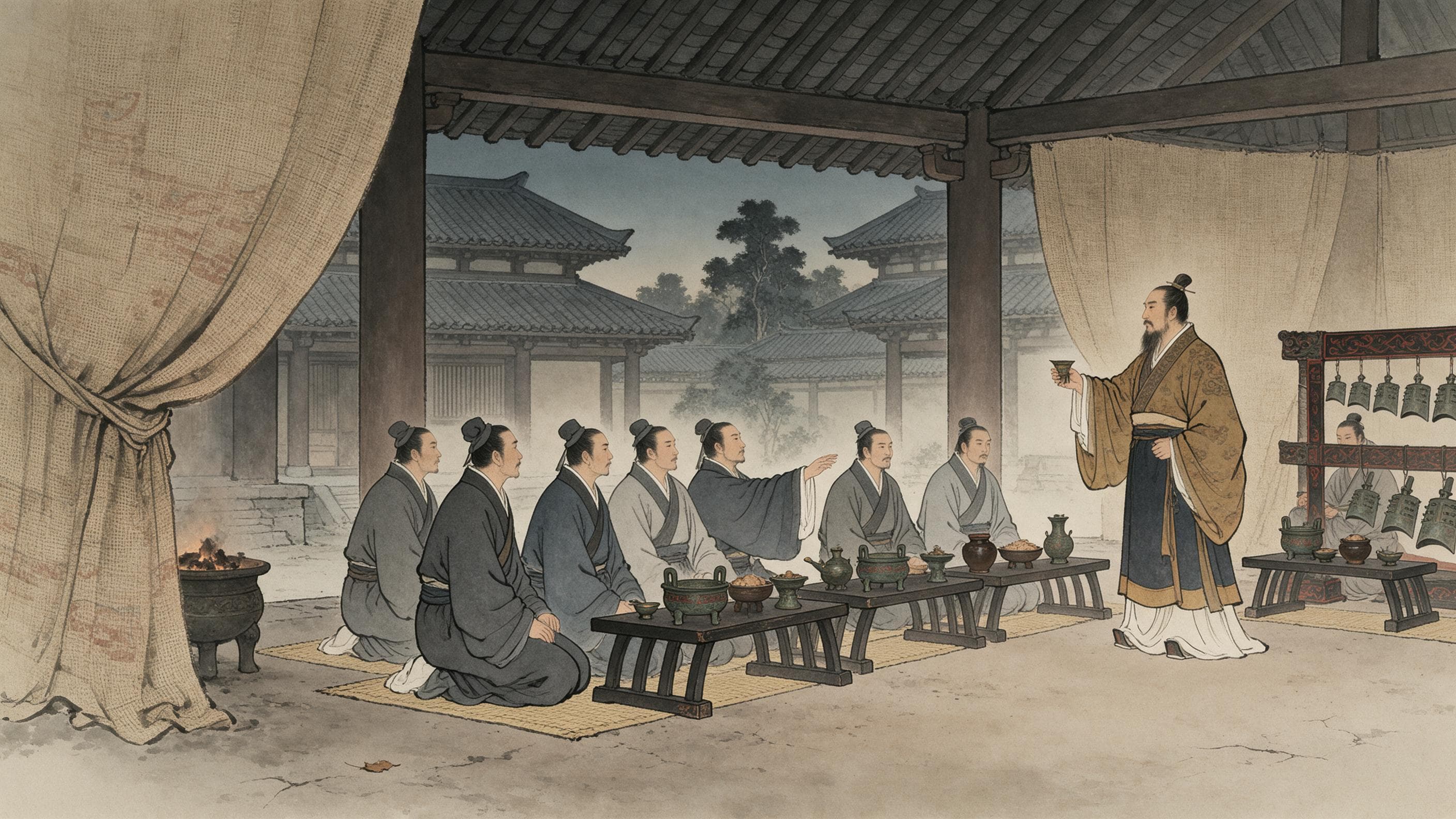
The Book of Han argues from the other end. 古者天子建國,諸侯立家,自卿大夫以至于庶人各有等差,是以民服事其上,而下無覬覦 — in antiquity each rank had its place, so the people served those above them and no one below looked up in ambition; Confucius said 天下有道,政不在大夫. When Zhou declined, ritual and war came from the lords, then power from the ministers, then from their stewards; the four lords of the Warring States 皆藉王公之勢,競為遊俠,雞鳴狗盜,無不賓禮, until 背公死黨之議成,守戰奉上之義廢矣. Then the verdict: 況於郭解之倫,以匹夫之細,竊殺生之權,其罪已不容於誅矣…殺身亡宗,非不幸也. That is Ban Gu, contradicting the Shiji on the first page.
Zhu Jia
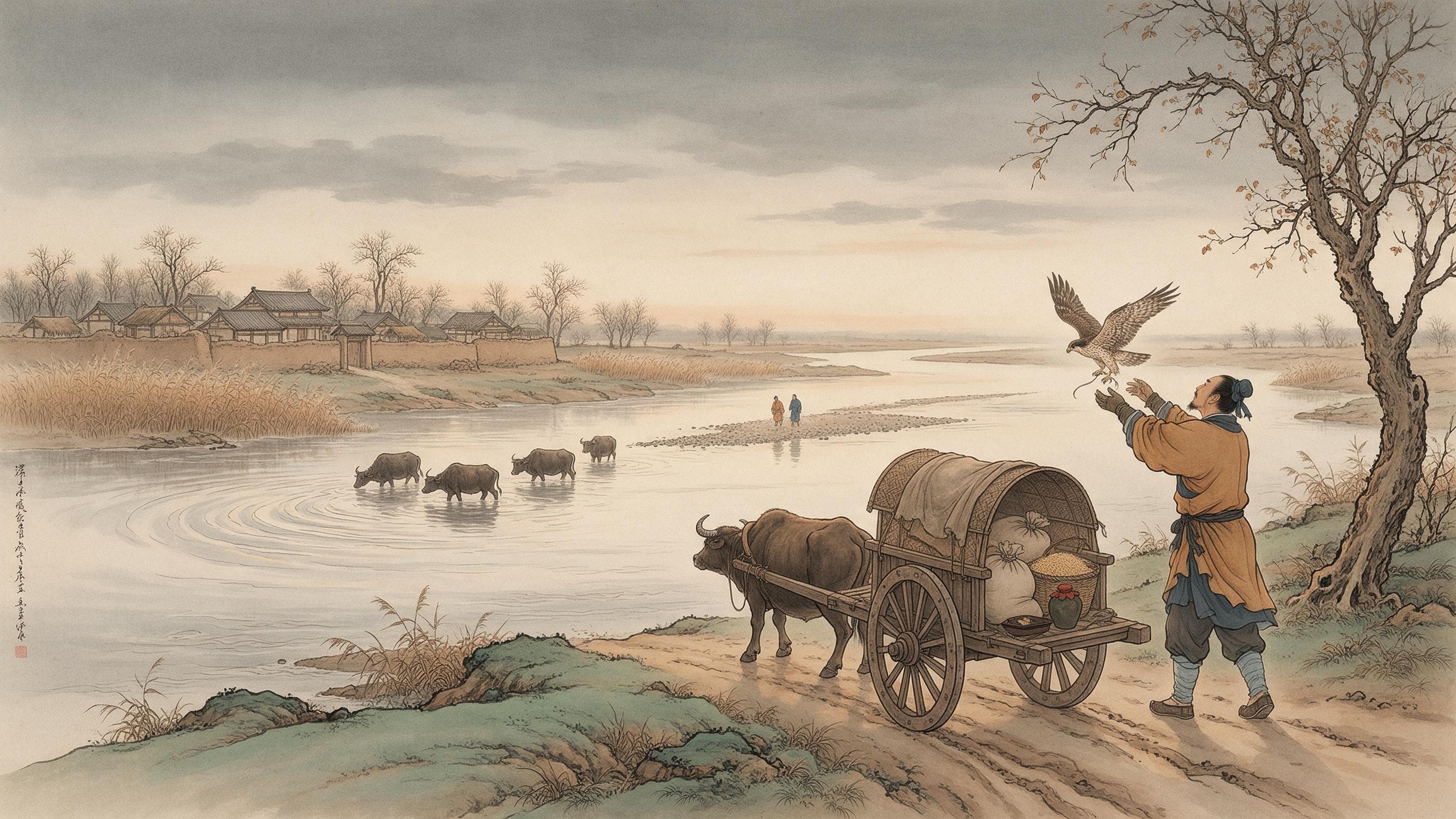
Zhu Jia was a man of Lu of the founder's generation. 魯人皆以儒教,而朱家用俠聞 — Lu was known for scholars, Zhu Jia for knighthood. 所藏活豪士以百數: the bold men he hid and kept alive ran to a hundred. 振人不贍,先從貧賤始; 家無餘財,衣不完采,食不重味,乘不過軥牛; 諸所嘗施,唯恐見之 — whatever he gave, he feared to be seen giving. And the one case the chapter names: 既陰脫季布將軍之阸,及布尊貴,終身不見也 — he got General Ji Bu out of danger, and never met him again once Ji Bu had risen. 自關以東,莫不延頸願交焉 — east of the pass, every neck was stretched to know him. The Book of Han repeats the paragraph with variants — 所臧活, 飲其德, 衣不兼采 — printed beside it, not corrected.
Ju Meng
Ju Meng was of Luoyang. 周人以商賈為資,而劇孟以任俠顯諸侯: the men of Zhou made their living by trade, and Ju Meng was known to the lords for knighthood. In the revolt of Wu and Chu, 條侯為太尉,乘傳車將至河南,得劇孟,喜曰:「吳楚舉大事而不求孟,吾知其無能為已矣。」 — the Marquis of Tiao, as grand commandant, got him on the road and said: Wu and Chu raise a great matter and have not asked for Meng, so they can do nothing. 天下騷動,宰相得之若得一敵國云. He was much like Zhu Jia, 而好博,多少年之戲 — he liked the board game of bo, the pastime of the young; at his mother's funeral 自遠方送喪蓋千乘, and when he died 家無餘十金之財. The Book of Han has 大將軍得之若一敵國 and 家無十金之財.
Guo Jie
Guo Jie was of Zhi in Henei, styled Wengbo, 善相人者許負外孫也 — grandson of Xu Fu, who was good at reading faces; his father was executed for knighthood under Emperor Wen. 解為人短小精悍,不飲酒 — short, wiry and hard, and he did not drink. 少時陰賊,慨不快意,身所殺甚眾; 以軀借交報仇,藏命作姦剽攻,不休及鑄錢掘冢; 適有天幸,窘急常得脫,若遇赦. Then the turn: 及解年長,更折節為儉,以德報怨,厚施而薄望, and 既已振人之命,不矜其功,其陰賊著於心,卒發於睚眦如故云 — he saved lives without claiming credit, and the old fierceness, rooted in him, still came out over a glance; 而少年慕其行,亦輒為報仇,不使知也 — the young avenged him without letting him know.
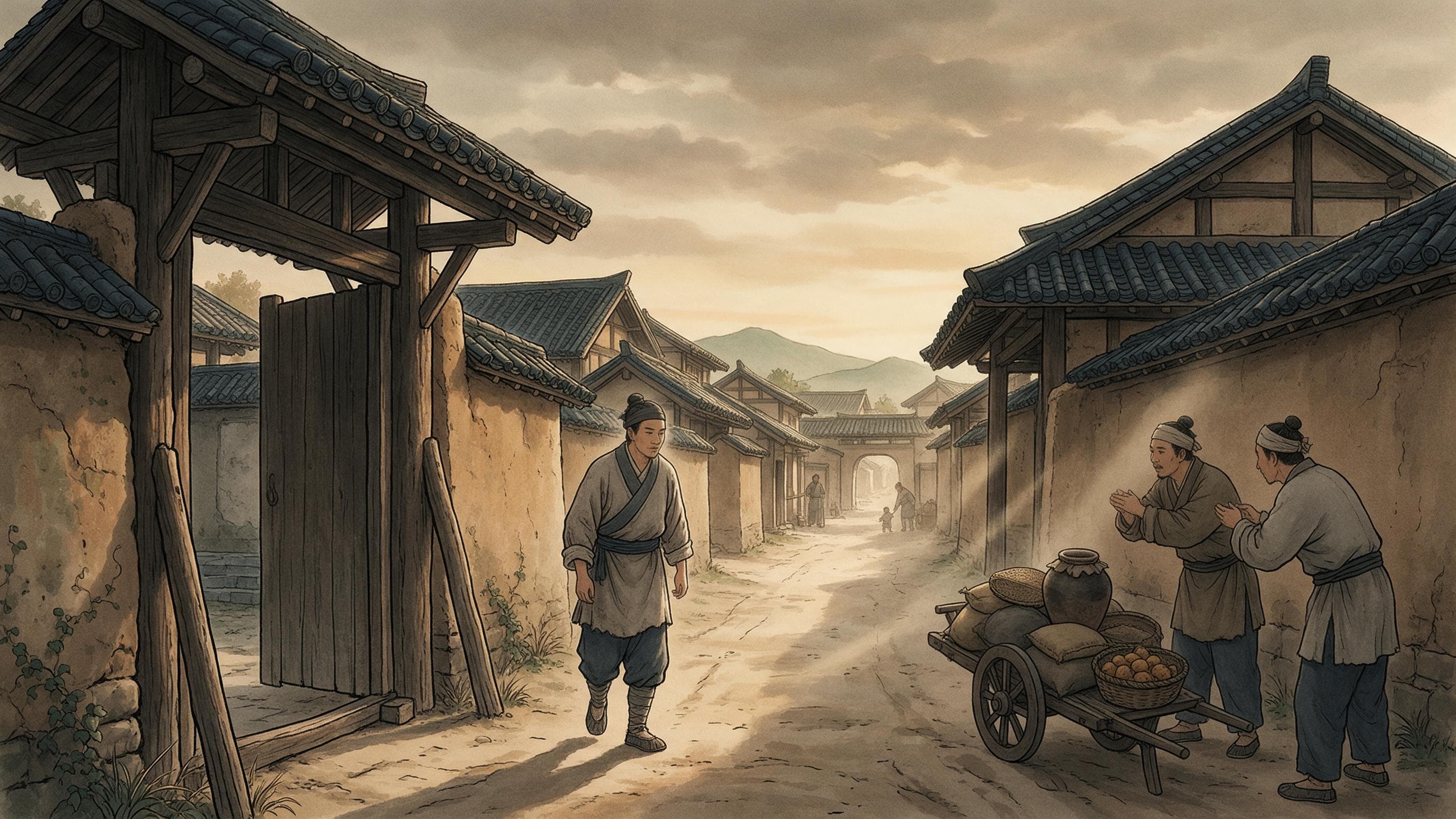
Three episodes carry him. His sister's son, relying on his power, forced drink on a man who could not take it; the man drew a knife and killed him and fled; the sister threw the body into the road and would not bury it, to shame him; the killer came of his own accord and told the truth, and 解曰:「公殺之固當,吾兒不直。」 — you did right to kill him; my boy was in the wrong — and he let him go, blamed his sister's son and buried him. A man sprawled his legs and stared at him as he passed; a guest wanted to kill him, and 解曰:「居邑屋至不見敬,是吾德不脩也,彼何罪!」 — to live in the same ward and not be respected means my virtue is not cultivated; what crime has he? He secretly asked the clerk that the man be spared his labour service when his turn came; the man found out, and came bare-chested to apologise. Two families of Luoyang feuded and a dozen worthies had failed to reconcile them; he went at night and they yielded, and 解曰:「今子幸而聽解,解奈何乃從他縣奪人邑中賢大夫權乎!」 — if you listen to me, how can I take from the worthy men of your city their authority? He left that night and let the local worthies settle it.
Then the move. 及徙豪富茂陵也,解家貧,不中訾,吏恐,不敢不徙 — the rich were being moved to Maoling; Guo Jie was poor and did not meet the threshold, but the clerk did not dare leave him out. General Wei spoke for him, and 上曰:「布衣權至使將軍為言,此其家不貧。」 He went, and 諸公送者出千餘萬. A clerk of Zhi, Yang Jizhu's son, had listed him; Guo Jie's nephew cut off the clerk's head, and the two families became enemies. In the pass, 關中賢豪知與不知,聞其聲,爭交驩解. Yang Jizhu was killed, and the man who carried his family's petition was killed below the palace gate. The emperor had Guo Jie arrested; he fled, and 臨晉籍少公素不知解,解冒,因求出關 — Ji Shaogong passed him through, and when the trail reached him he killed himself. Caught at last, 窮治所犯,為解所殺,皆在赦前 — all the killings were before an amnesty. A scholar said 郭解專以姦犯公法,何謂賢; a guest of Guo Jie killed him and cut out his tongue; Guo Jie did not know, and the killer was never found. 御史大夫公孫弘議曰:「解布衣為任俠行權,以睚眥殺人,解雖弗知,此罪甚於解殺之。當大逆無道。」 遂族郭解翁伯.
Two Verdicts
The Shiji ends with its author: 吾視郭解,狀貌不及中人,言語不足採者。然天下無賢與不肖,知與不知,皆慕其聲,言俠者皆引以為名。諺曰:「人貌榮名,豈有既乎!」於戲,惜哉! — in appearance below the ordinary, nothing worth taking in his speech, yet the whole world, worthy or not, knowing him or not, admired his name, and every man who spoke of knights cited him. That is Sima Qian's own voice at the end of the chapter.
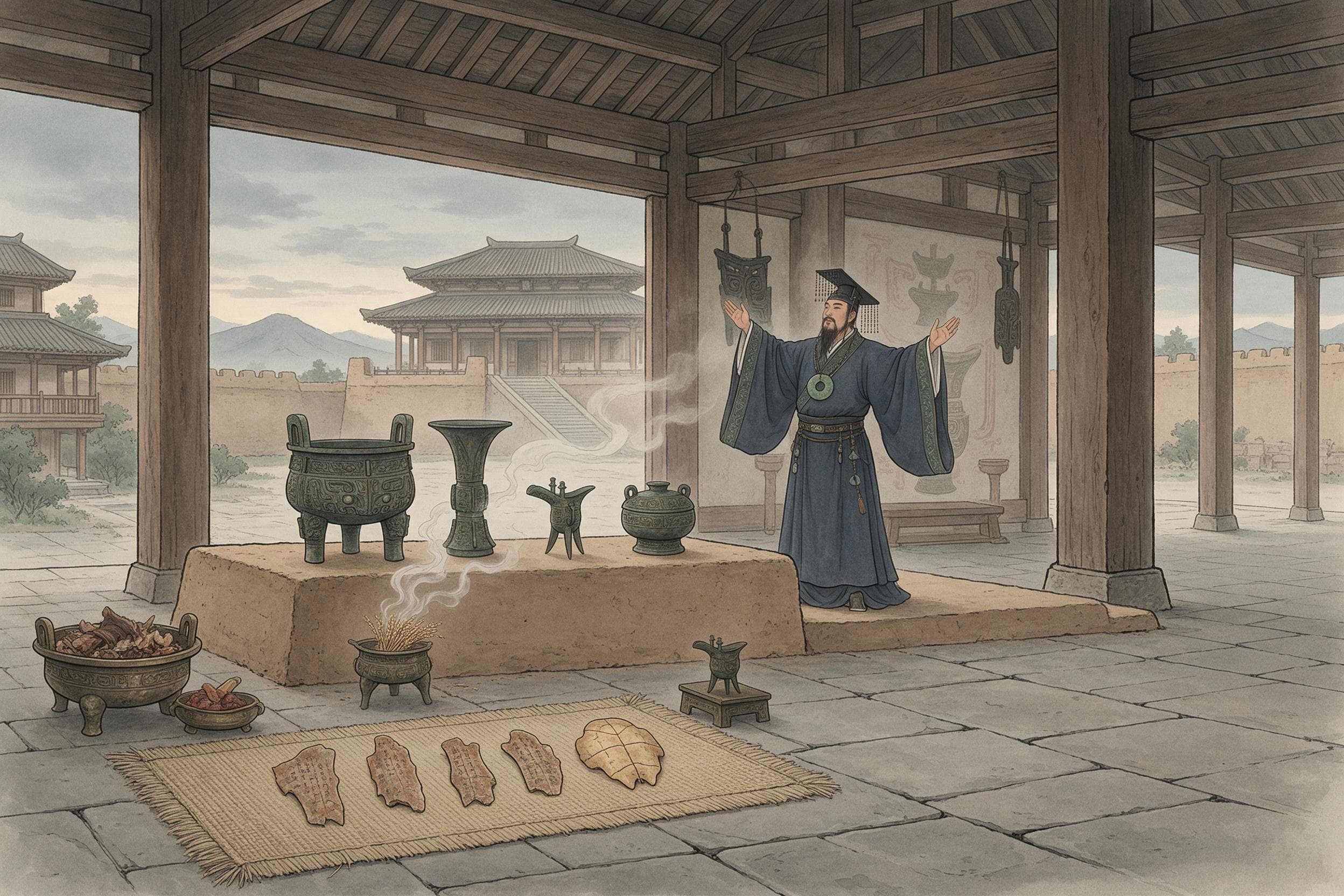
The Book of Han put its verdict at the front, and it is a ladder: 五伯,三王之罪人也;而六國,五伯之罪人也。夫四豪者,又六國之罪人也 — each age worse than the one before, and Guo Jie worst of all; it ends 殺身亡宗,非不幸也. Where the Shiji closes on 惜哉, the Book of Han closes on 'no misfortune'. The selections differ too: the Shiji says 古布衣之俠,靡得而聞已, treats the four lords as another kind — 比如順風而呼,聲非加疾,其勢激也 — and begins the commoner-knights with Zhu Jia; the Book of Han folds the four lords in as Guo Jie's predecessors and goes on past him to Lou Hu and Chen Zun under Emperors Cheng and Wang Mang. Of the knights' money and local networks the pages say little, and nothing is added; nor is a general theory of 俠義 offered — the two chapters disagree, and the disagreement is the subject.
Related reading:The Shang High God: Who Sends Fortune and Calamity · The Yin Fields: Seventy Mu, a Public Field, and Millet · Praying for Rain: Dong Zhongshu's Rite and Wang Chong's Doubt
Sources & further reading
- 《史记》卷一百二十四·游侠列传(西汉司马迁撰;维基文库本,页面白文无注,未与中华书局点校本复核) — Sima Qian's chapter: it opens from Han Fei's line that scholars disorder the law with letters and knights break it with arms, then argues that the wandering knights, though their conduct may not follow strict justice, keep their word and do not boast of what they give, and quotes the proverb about stealing a buckle and stealing a state. Zhu Jia of Lu is described as hiding and keeping alive a hundred bold men while having no surplus wealth and never meeting Ji Bu again after secretly saving him; Tian Zhong, Wang Meng, and the great houses of Jinan and Chen follow; Ju Meng of Luoyang is worth 'a rival state' to the chancellor during the Wu-Chu revolt, with a thousand carriages at his mother's funeral and no ten jin of gold at his death. Guo Jie's life is given in detail — his father's execution, his violent youth, the change to frugality, the three episodes (the sister's son, the sprawling man, the Luoyang feud), the move to Maoling, the killings, the flight, and the chief censor Gongsun Hong's verdict that destroys his clan. The chapter closes with the Grand Historian's own words and 惜哉.
- 《汉书》卷九十二·游侠传(东汉班固撰;维基文库本,页面白文无注,未与中华书局点校本复核) — Ban Gu's chapter on the same theme, written the other way round: it opens with a theory of ranks, Confucius on government not lying with the ministers, the decline from Zhou through the lords and ministers to the four lords of the Warring States, and then a verdict that a commoner like Guo Jie who 'steals the power of life and death' cannot be pardoned, though his gentleness and generosity were exceptional — to die and have his clan destroyed 'was no misfortune'. The lives of Zhu Jia, Tian Zhong, Ju Meng and Guo Jie follow with variant readings, and the chapter continues past the Shiji: Wan Zhang, Lou Hu, Chen Zun and Yuan She, down to the families of the Wang empresses under Emperor Cheng and the men who led the knights under Wang Mang.