The Shiji's chapter 119 is called 循吏列傳; the Book of Han's chapter 89 is called 循吏傳. The titles match; the articles do not. Sima Qian writes of five men of the Spring and Autumn period and not one Han official; Ban Gu writes of officials from the Han founding to Emperor Xuan. 循吏 is the heading under which a historian files a certain kind of man — not an office, and not a rank. Neither page defines it; what they offer is the description each puts at its head.
Two Lists
The Shiji's list: Sunshu Ao of Chu, Zichan of Zheng, Gongyi Xiu of Lu, Shi She of Chu, Li Li of Jin — all Spring and Autumn men. The chapter opens with an argument: 法令所以導民也,刑罰所以禁姦也。文武不備,良民懼然身修者,官未曾亂也。奉職循理,亦可以爲治,何必威嚴哉? — law guides the people and punishment stops the wicked; where these are incomplete and ordinary men still keep themselves, it is because the officers have not been disorderly; to hold office and follow principle is also a way to govern — why must it be severity? That is his standard of selection, and it is his own voice.
The Book of Han's list is built the other way, inside a history. Its preface runs from the founding, when Xiao and Cao 以寬厚清靜為天下帥, through Wen and Jing, when 循吏如河南守吳公、蜀守文翁之屬,皆謹身帥先,居以廉平,不至于嚴,而民從化, through Wu's reign, when only Dong Zhongshu, Gongsun Hong and Ni Kuan 居官可紀, to Emperor Xuan, who interviewed every governor he appointed and answered good government with 璽書勉厲,增秩賜金, so that 漢世良吏,于是為盛. It ends with the list: 王成、黃霸、朱邑、龔遂、鄭弘、召信臣等,所居民富,所去見思,生有榮號,死見奉祀. The lives that follow number six; Zheng Hong, named in the preface, has no life of his own.
The Five Men of the Shiji
Sunshu Ao 三得相而不喜……三去相而不悔. Two episodes show his method. The king, thinking the coinage too light, had it reissued larger and the markets broke; the market officer reported it, and Sunshu Ao said 罷,吾今令之復矣 — leave it, I shall have it restored — and five days later asked the king, and 下令三日而市復如故. The people of Chu liked low carriages; the king wanted an order raising them, and Sunshu Ao said 令數下,民不知所從 — too many orders and the people do not know which to follow; instead he had the wards raise their thresholds, since 乘車者皆君子,君子不能數下車, and within half a year the people raised their own carriages. In neither case did he issue the order; he changed the ground under their feet instead.
Zichan as minister of Zheng: 一年,豎子不戲狎,斑白不提挈,僮子不犁畔。二年,市不豫賈。三年,門不夜關,道不拾遺。四年,田器不歸。五年,士無尺籍,喪期不令而治 — year by year, the boys stop playing, the grey-haired no longer carry loads, the market stops fixing prices, gates are not shut at night, lost things are not picked up, tools are not taken home, and mourning is observed without an order. He governed Zheng for twenty-six years and died, and 丁壯號哭,老人兒啼,曰:「子產去我死乎!民將安歸?」 The Shiji writes its model officials up to the death and the weeping.
The other three are each one scene. Gongyi Xiu 奉法循理,無所變更,百官自正, and refused a gift of fish: 以嗜魚,故不受也。今爲相,能自給魚;今受魚而免,誰復給我魚者? When his household wove cloth well he dismissed his wife and burned the loom, saying 欲令農士工女安所讎其貨乎. Shi She, travelling through his district, chased a killer and found his own father; he let him go, had himself bound, and said 以父立政,不孝也;廢法縱罪,非忠也; the king pardoned him, he refused the order, and cut his throat. Li Li 過聽殺人, had himself arrested and sentenced; the duke said the fault was a subordinate's, and Li Li answered 臣居官爲長,不與吏讓位;受祿爲多,不與下分利, refused the order, and fell on his sword. Three men, three refusals: of a gift, of a pardon, of an excuse.
The Six of the Book of Han
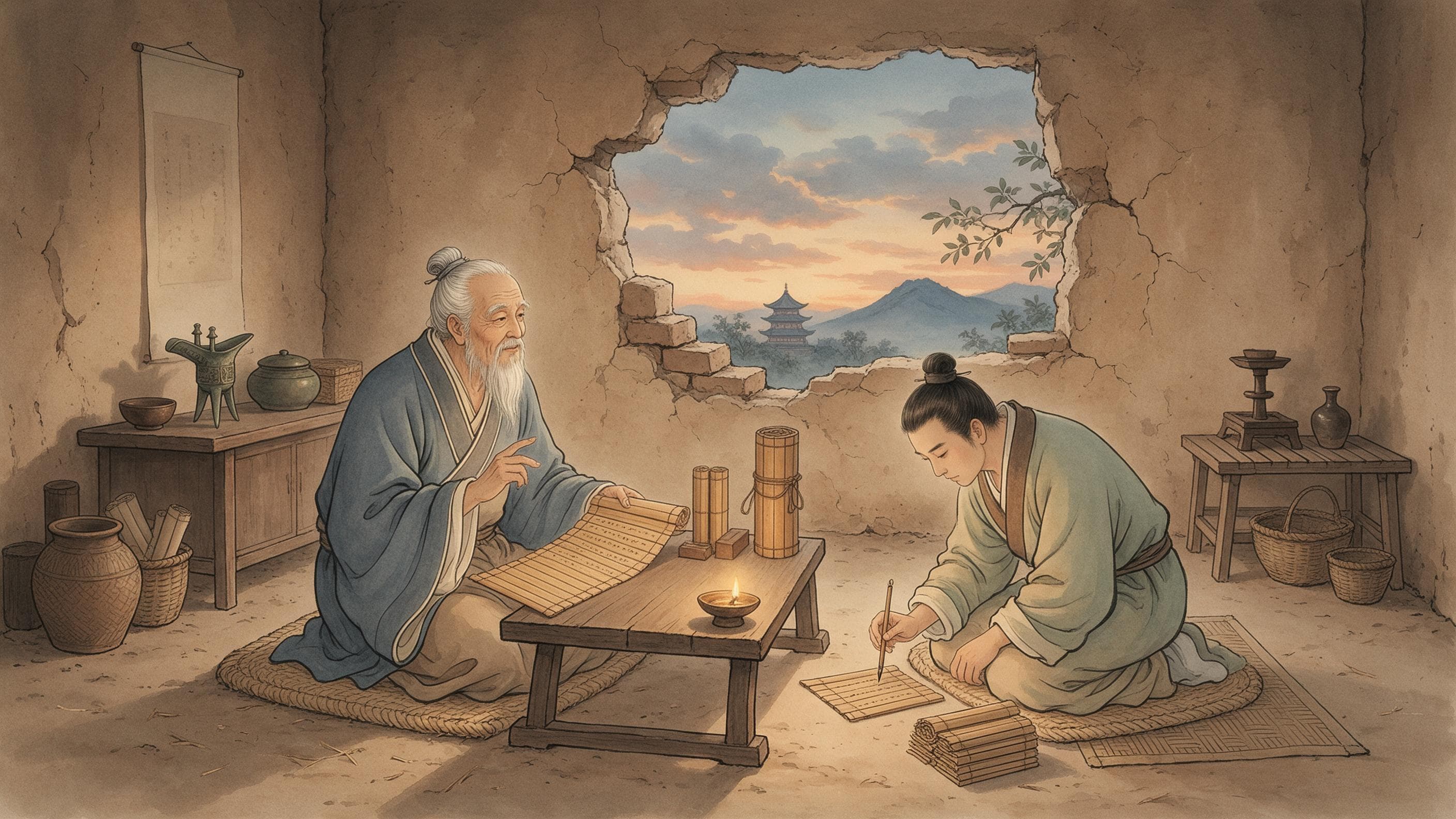
Wen Weng, governor of Shu, 見蜀地辟陋有蠻夷風, picked a dozen clever clerks including Zhang Shu and 遣詣京師,受業博士 — sent them to the capital to study under the erudites; he built a school in Chengdu, exempted its pupils from labour service and made the best of them clerks, until 蜀地學于京師者比齊魯焉 and 至武帝時,乃令天下郡國皆立學校官,自文翁爲之始云. Wang Cheng, chancellor of Jiaodong, reported 流民自占八萬餘口 and was made a marquis; later, when the court asked after the accounts, someone said Wang Cheng 僞自增加,以蒙顯賞 — had inflated the figure to win the reward — and 是後俗吏多爲虛名云. Praise and exposure stand in the same life.
Huang Ba 獨用寬和爲名. As governor of Yingchuan he made the post stations and village offices keep chickens and pigs 以贍鰥寡貧窮者; a clerk eating beside the road had his meat taken by a crow, and when the clerk came back Huang Ba greeted him with 甚苦!食于道旁乃爲烏所盜肉 — hard work, and the crows stole your meat by the road — after which 所問豪氂不敢有所隱. His governorship 戶口歲增,治爲天下第一, and he was given a marquisate and a hundred jin of gold; but as chancellor 風采不及丙、魏、于定國,功名損于治郡 — the page records the falling off as well.
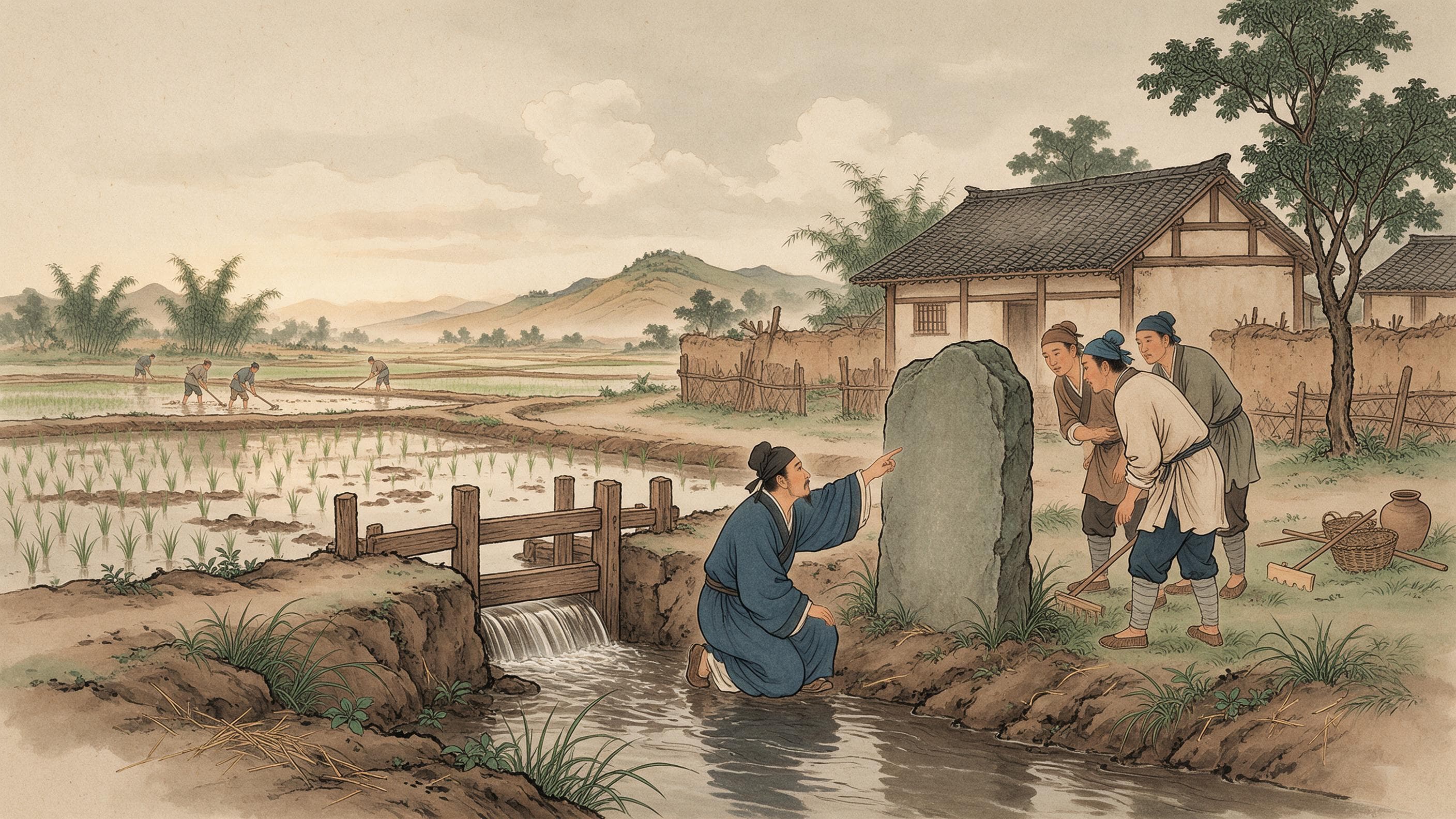
Zhu Yi, a village officer of Tongxiang as a young man, 廉平不苛……未嘗笞辱人; as chief of the grain office he 居處儉節,祿賜以共九族鄉黨,家亡餘財. Dying, he told his son 我故爲桐鄉吏,其民愛我,必葬我桐鄉。後世子孫奉嘗我,不如桐鄉民, and the people 共爲邑起冢立祠. Zhao Xinchen, governor of Nanyang, 好爲民興利, opened channels and built 水門提閼凡數十處, irrigating 多至三萬頃, and 爲民作均水約束,刻石立于田畔,以防分爭; the people called him 召父.
Gong Sui served the king of Changyi as chief of the household guard and 面刺王過, so that the king 掩耳起走 and said 郎中令善媿人. When the king was deposed after twenty-seven days, more than two hundred of his officers were executed and Gong Sui alone 以數諫爭得減死,髡爲城旦. Sent later to the starving, rebellious commandery of Bohai, he said 治亂民猶治亂繩,不可急也 and asked 無拘臣以文法; he proclaimed that 諸持鋤鉤田器者皆爲良民,吏無得問,持兵者乃爲盜賊, and rode alone into the capital of the commandery. He then taught the people to farm, 令口種一樹榆、百本薤、五十本葱、一畦韭,家二母彘、五雞, and made those who wore swords 賣劍買牛,賣刀買犢 — sell the sword and buy an ox, sell the knife and buy a calf — asking 何爲帶牛佩犢.
Two Endings
The Shiji ends with a 太史公曰 of one line each: 孫叔敖出一言,郢市復。子產病死,鄭民號哭。公儀子見好布而家婦逐。石奢縱父而死,楚昭名立。李離過殺而伏劍,晉文以正國法. The Book of Han has no such personal verdict at the end; its judgment sits in the preface, in 所居民富,所去見思,生有榮號,死見奉祀,此廩廩庶幾德讓君子之遺風矣, and in the machinery of praise described before it. One chapter confirms at the grave; the other sets a standard at the door.
What Neither Page Gives
Neither page gives a definition of 循吏, a count of them, the criteria for inclusion, their salaries, or how they were assessed; nor does either give their families. The selections differ: the Shiji gives one life to each man and no Han official, the Book of Han builds a preface and then lives of Han officials. What can be said is exact: five names on one side, six on the other, and a standard stated at the head of each chapter. No general theory of the honest official is offered here, and no modern language of governance is applied to them: what the two pages give is writing, not an institution: names, episodes, and two different ways of praising them.
Related reading:The Announcement to Kang: Governing a Place Just Conquered · The Steward: A Great House's Private Court Turns on Its Lord · The Music Bureau: A Staff List of 829, and 441 Dismissals
Sources & further reading
- 《史记》卷一百一十九·循吏列传(西汉司马迁撰;维基文库本,页面白文无注,未与中华书局点校本复核) — Sima Qian's chapter: the opening 太史公曰 on law and punishment — 'law is what guides the people, punishment what stops wickedness… to hold office and follow principle is also a way to govern; why must it be severity?'; then five men, all of the Spring and Autumn period and none of them Han — Sunshu Ao of Chu (who had the coinage restored and the low carriages raised by teaching the wards to raise their thresholds), Zichan of Zheng (the year-by-year effects of his rule and the wailing at his death), Gongyi Xiu of Lu (who refused a gift of fish and dismissed his wife for weaving well), Shi She of Chu (who let his father go and cut his own throat), and Li Li of Jin (who judged a case wrongly and took the death he had wrongly imposed). The chapter closes with a 太史公曰 giving each man one line.
- 《汉书》卷八十九·循吏传(东汉班固撰;维基文库本,页面白文无注,未与中华书局点校本复核) — Ban Gu's chapter, a different article: a long preface running from the Han founding through Emperors Wen and Jing (Wu Gong of Henan, Wen Weng of Shu), Emperor Wu (Dong Zhongshu, Gongsun Hong, Ni Kuan), and Emperor Xuan's personal scrutiny of governors and his edicts of praise, rank and gold, ending with the list of good officials 'who enriched the people where they governed and were missed where they left'; then lives of Wen Weng (who sent clerks to study in the capital and founded the first commandery school), Wang Cheng (whose eight myriad returned refugees earned a marquisate, and of whom it was later said he had inflated the figure), Huang Ba (the sparrows and the stolen meat, the deaf clerk he refused to dismiss, the first place in the empire, and the lesser fame of his chancellorship), Zhu Yi (who asked to be buried in Tongxiang), Gong Sui (who sold swords for oxen in Bohai) and Zhao Xinchen (who opened irrigation channels, set up water gates, had a water-sharing agreement carved in stone, and was called 'Father Zhao').