Sima Xiangru was poor enough that 'the house had only four walls', and later rich enough to 'buy fields and houses and be a rich man'. Between the two stand a lute and a wine shop. Two pages are used: the life in the Shiji, and the one in the Book of Han, which carries the commentaries of Yan Shigu and others (the page is marked 50% text quality and mixes text with notes). The narrative — the banquet, the lute, the wine shop — and the rhapsodies are kept as two layers: story is story, and the fu is fu.
Poor, and a Banquet
Xiangru was of Chengdu, styled Changqing. 少時好讀書,學擊劍 — as a boy he loved books and learned swordplay — and his family called him Quanzi, 'Doggy'. 慕藺相如之為人,更名相如: he admired Lin Xiangru and took his name. 以貲為郎,事孝景帝,為武騎常侍,非其好也 — he bought a post as attendant and served Emperor Jing, but it was not what he liked. When the emperor proved indifferent to rhapsodies he 因病免,客游梁, left on grounds of illness and lived at the court of Liang, where he 乃著子虛之賦, wrote the Zixu rhapsody. When the king of Liang died he went home 而家貧,無以自業, poor and with no way of making a living; he was close to Wang Ji, magistrate of Linqiong, who said 長卿久宦遊不遂,而來過我 — you have travelled and got nowhere; come to me.
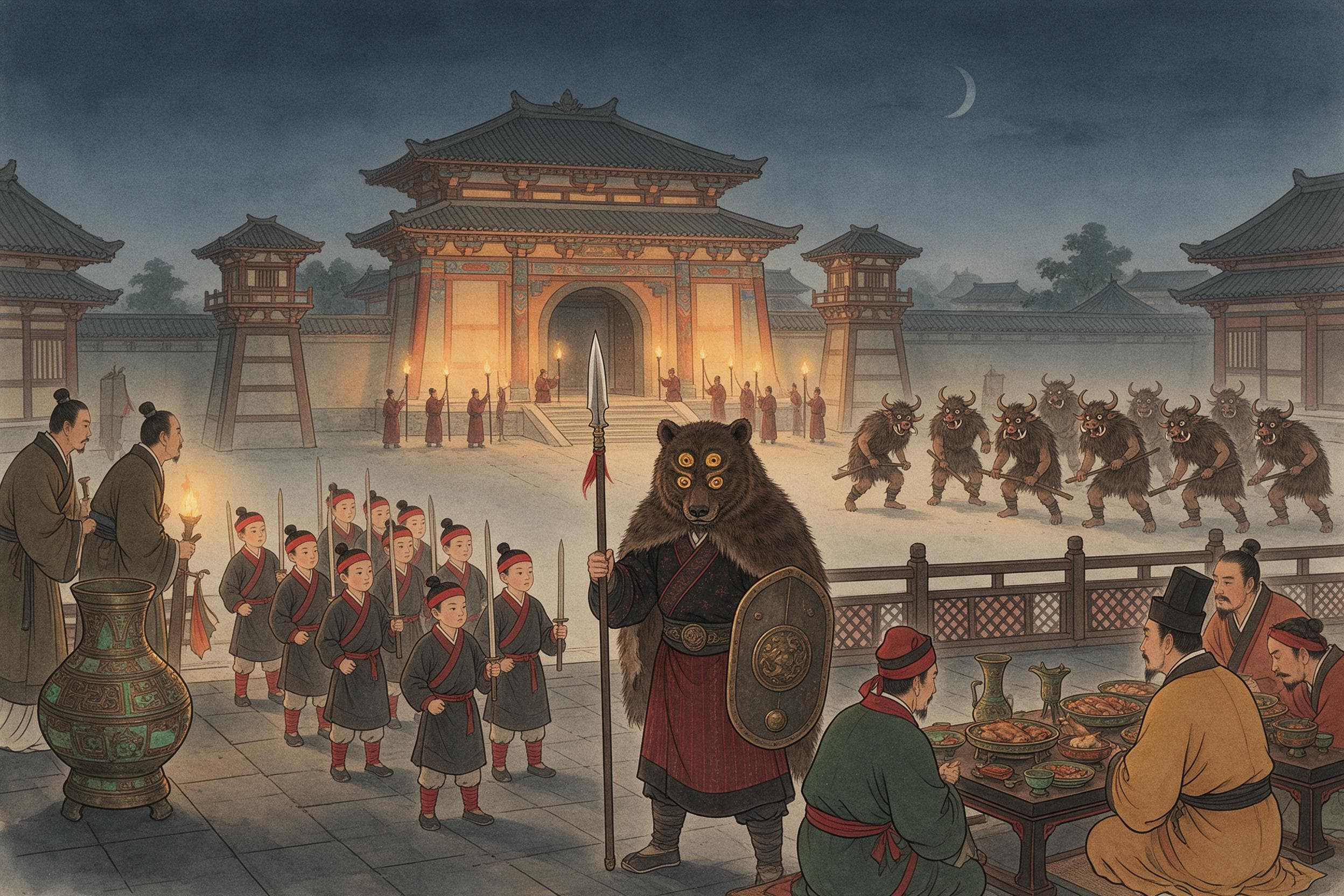
Linqiong was rich in rich men: 卓王孫家僮八百人,程鄭亦數百人 — Zhuo Wangsun kept eight hundred household servants, Cheng Zheng several hundred. The two agreed 令有貴客,為具召之, the magistrate has a distinguished guest, let us prepare a feast and invite him, and invited the magistrate too; 令既至,卓氏客以百數, and when he came the Zhuo guests numbered a hundred. At midday they sent for Sima Changqing and he 謝病不能往, excused himself on grounds of illness; the magistrate 不敢嘗食,自往迎相如, would not taste the food and went himself to fetch him; Xiangru 不得已,彊往,一坐盡傾 — went reluctantly, and the whole company was bowled over. The eight hundred are household servants, not a population or an estate figure; they are printed as given, not multiplied.
The Lute
When the wine had gone round, the magistrate came forward with a lute and said 竊聞長卿好之,原以自娛 — I have heard you like this; please amuse yourself. Xiangru declined, then 為鼓一再行, played one or two tunes. Yan Shigu's note: 行謂曲引也。古樂府長歌行短歌行,此其義也 — a 'hang' is a tune; the old Music Bureau has Long Song and Short Song, and this is the sense. Not a recital: one or two tunes at a dinner table. The next phrase gives the purpose.
是時卓王孫有女文君新寡,好音,故相如繆與令相重,而以琴心挑之 — Zhuo Wangsun's daughter Wenjun was newly widowed and loved music, so Xiangru pretended to be on terms with the magistrate and provoked her with his heart in the lute; 師古注, Yan Shigu glosses: 寄心於琴聲以挑動之也, he put his heart into the sound to stir her. He had come to Linqiong 從車騎,雍容間雅甚都, with carriage and riders, easy and handsome; at the Zhuo house 文君竊從戶窺之,心悅而好之,恐不得當也 — she watched him secretly from the door, was pleased and drawn to him, and feared she was not his match. After the feast he 使人重賜文君侍者通殷勤, sent gifts to her maid to carry his attentions; 文君夜亡奔相如,相如乃與馳歸成都。家居徒四壁立 — she ran to him that night, they galloped back to Chengdu, and the house stood with four walls and nothing else.
The Wine Shop
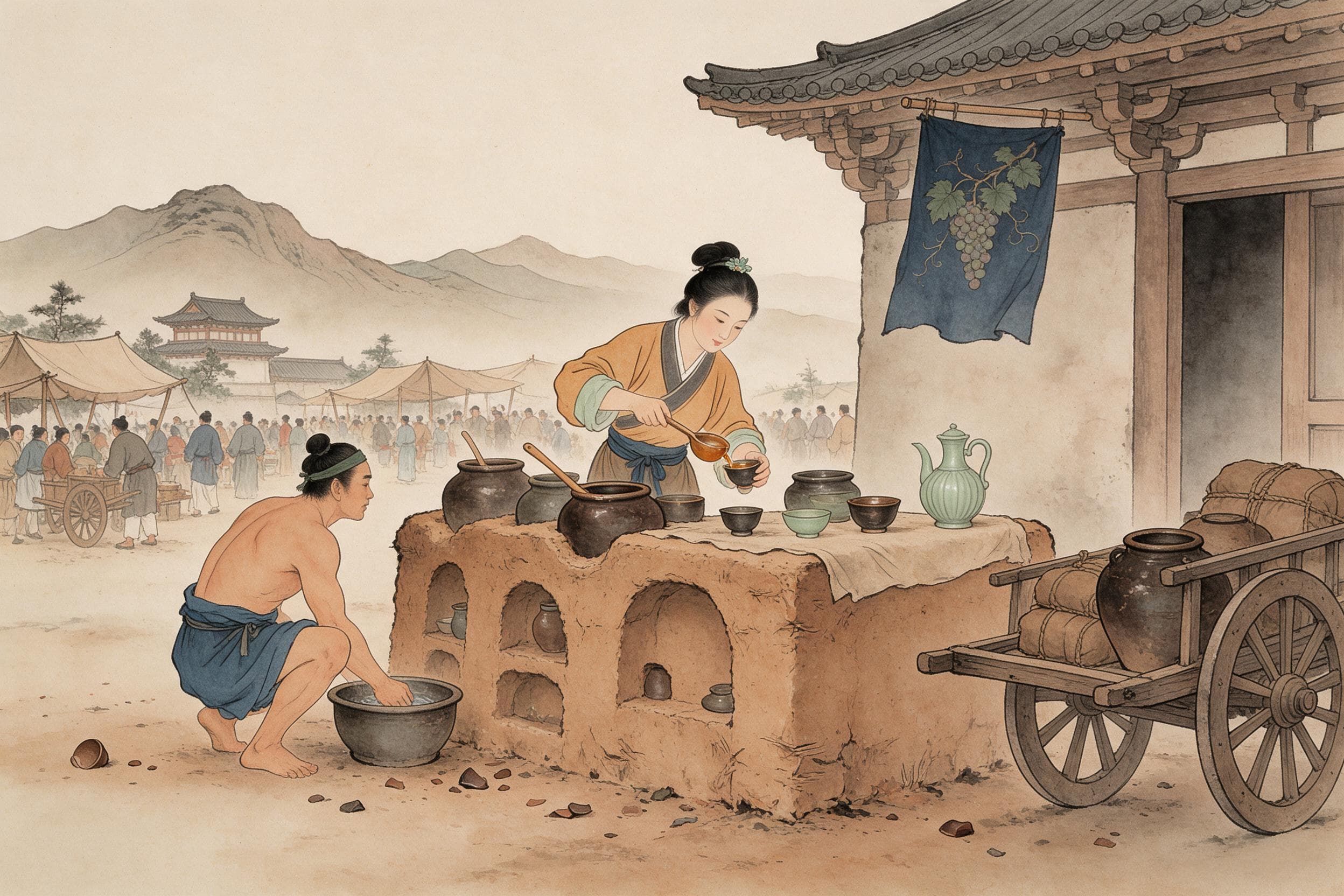
Her father: 卓王孫大怒曰:「女至不材,我不忍殺,不分一錢也」 — he was furious, said his daughter was worthless, that he could not bear to kill her but would not give her a single coin. After a while Wenjun was unhappy and said 長卿第俱如臨邛,從昆弟假貸猶足為生,何至自苦如此 — let us just go to Linqiong; borrowing from my cousins would be enough to live on; why suffer like this? So they went, 盡賣其車騎,買一酒舍酤酒,而令文君當爐 — sold carriage and horses, bought a wine shop, and set Wenjun to stand at the lu. The Book of Han has 買酒舍,乃令文君當盧: 爐 in one, 盧 in the other, and both are printed as they stand.
What the lu was, the note says best: 賣酒之處累土為盧以居酒瓮,四邊隆起,其一面高,形如鍛盧,故名盧耳。而俗之學者,皆謂當盧為對溫酒火盧,失其義矣 — wine is sold where earth is piled into a stand to hold the jars, raised on four sides with one face higher, shaped like a smith's forge, and that is why it is called lu; and the vulgar scholars who take dang lu as facing a fire for warming wine have missed the meaning. The stand is a platform of packed earth, not a stove. That note is the point of this article.
Xiangru 身自著犢鼻褌, wore a short loincloth — 師古注: 即今之衳也,形似犢鼻, shaped like a calf's nose — and 與保庸雜作,滌器於市中, worked among hired men washing cups in the marketplace; the gloss explains 庸 as hired labour and 保 as trusted hired labour. A man who had written a rhapsody, washing cups in the market. Zhuo Wangsun 聞而恥之,為杜門不出, heard of it, was ashamed, and shut his gate. The kinsmen argued with him: 有一男兩女,所不足者非財也 — you have a son and two daughters and what you lack is not money; the man is worth relying on, and he is the magistrate's guest. So he gave way, 分予文君僮百人,錢百萬,及其嫁時衣被財物 — a hundred servants, a million cash, and her wedding clothes and goods; and the two went back to Chengdu, 買田宅,為富人, bought fields and houses and became rich.
The Rhapsodies: Three Invented Men
The rhapsodies are another layer. The life explains the three names in the Zixu rhapsody: 相如以「子虛」,虛言也,為楚稱;「烏有先生」者,烏有此事也,為齊難;「無是公」者,無是人也,明天子之義 — 'Zixu' means empty words and speaks for Chu; 'Master Nowhere' means no such thing happened and presses Qi's case; 'Lord No-Such' means no such man and sets out the Son of Heaven's right. 故空藉此三人為辭,以推天子諸侯之苑囿。其卒章歸之於節儉,因以風諫 — he borrowed these three as mouthpieces to set out the parks of kings and lords, and the closing chapter returns to frugality, and so remonstrates. The names themselves mean nothing.
How the rhapsody reached the throne is recorded too: the emperor read the Zixu rhapsody and thought well of it — 朕獨不得與此人同時哉, I am not fated to share an age with this man; Xiangru was summoned and said 此乃諸侯之事,未足觀也, this is a matter of lords, not worth your looking at, and offered a rhapsody on the imperial hunt; 上許,令尚書給筆札 — the emperor agreed and had the masters of writing supply brushes and tablets. Later, when he presented the Daren rhapsody, 天子大說,飄飄有淩雲之氣,似遊天地之間意 — the emperor was delighted and felt as if he were floating above the clouds, wandering between heaven and earth.
How the Two Pages Close
The life gives a summary of the man: 相如口吃而善著書。常有消渴疾。與卓氏婚,饒於財。其進仕宦,未嘗肯與公卿國家之事,稱病間居,不慕官爵 — he stammered and wrote well; he had a wasting thirst; through the Zhuo marriage he was rich; and once in office he would not involve himself in affairs of state, pleading illness and living quietly, with no craving for rank. Those lines change the colour of the story: the money and the writing are two separate things in his life.
Last comes the Grand Historian: 相如雖多虛辭濫說,然其要歸引之節儉,此與詩之風諫何異。余采其語可論者著於篇 — much of his writing is empty and extravagant, but its main drift leads to frugality, and how is that different from the remonstrance of the Odes? That is Sima Qian's verdict, and it is marked as his. Nothing here comes from the later lute-song or the later ballad: neither page has them. No 'scholar and beauty' romance is told, no literary history is offered; and the figures — eight hundred servants, a hundred servants, a million cash — are printed as the pages give them, not converted and not totalled.
Related reading:The Bo Altar: What to Do with a Conquered Capital's Earth Shrine · Wrestling and Conjurors: Two Shows for Foreign Guests · Paper Dear in Luoyang: How One Rhapsody Raised a Price
Sources & further reading
- 《史记》卷一百一十七·司马相如列传(西汉司马迁撰;维基文库本,页面白文无注,未与中华书局点校本复核) — Sima Qian's life: Xiangru, who admired Lin Xiangru and took his name, bought a post as an attendant, left office when Emperor Jing proved indifferent to rhapsodies and lived at the court of Liang, where he wrote the Zixu rhapsody; after the king of Liang died he went home poor, went to Linqiong where the magistrate Wang Ji was a friend, and was invited to the house of Zhuo Wangsun, who kept eight hundred household servants; at the banquet the magistrate offered him a lute and he played 'one or two tunes', and 'with his heart in the lute' provoked the newly widowed Wenjun, who watched him through the door; that night she ran to him and they went back to Chengdu, where 'the house had only four walls'. Her father refused her a single coin, so they returned, sold the carriage and horses, bought a wine shop, and 'made Wenjun stand at the lu' while Xiangru in a loincloth worked among hired men washing cups in the market; shamed, her father gave a hundred servants and a million cash. The chapter also explains the rhapsody's three figures — Zixu, Master Nowhere, Lord No-Such — and closes with the Grand Historian's verdict on 'much empty phrasing' that nonetheless 'returns to frugality'.
- 《汉书》卷五十七·司马相如传(东汉班固撰,附颜师古等注;维基文库本,页面标注 Textquality 50%,正文与注混排,未与中华书局点校本复核) — Ban Gu's version, used for its commentaries and variants (page marked 50% text quality). Yan Shigu glosses 'dang lu': wine is sold where earth is piled up into a stand to hold the jars, raised on four sides with one side higher, shaped like a smith's forge, hence lu — 'and the vulgar scholars who take dang lu as facing a fire for warming wine have missed the meaning'. The same page glosses 'du bi kun' as a short garment shaped like a calf's nose, 'xing' as a tune, 'mou' as deceit, and 'yong bao' as hired labour and trusted hired labour; it also has 僮客八百人 for the Shiji's 家僮八百人, and 當盧 for the Shiji's 當爐.