It begins with eight characters: about to eat, he felt a swelling, went to the privy, fell in, and died. In 581 BCE Duke Jing of Jin was about to eat the new wheat when his belly swelled; he rose, went to the toilet, fell in, and died. A petty servant carried him out of the privy and was afterwards made a sacrifice. This is the only scene of its kind in the Zuo Zhuan, and it is all the evidence there is: a pit deep enough to drown a man, a mouth narrow enough that he had to be carried out, and nothing else.
Prequel: a duke who fell in
The Spring and Autumn palace privy was a deep pit; those three characters are the whole description. The court had a division of labour: the Zhouli gives the palace attendants charge of the king's six chambers and tells them to "make pits and drains for them, remove what is unclean, get rid of the stench". Old glosses read the pit as a seepage pit and the drain as a covered channel, but the Zhouli was compiled late — a Warring States ideal of offices, not a Spring and Autumn record — and whether either term means a toilet is disputed. What Spring and Autumn toilets looked like, how ordinary people used them, how cities disposed of waste: nothing. The archaeology is blank too. This section can only be a prequel.
Two hundred years later the answer arrived in another form: not words, but a bent pipe in a palace room.
A toilet that could be flushed
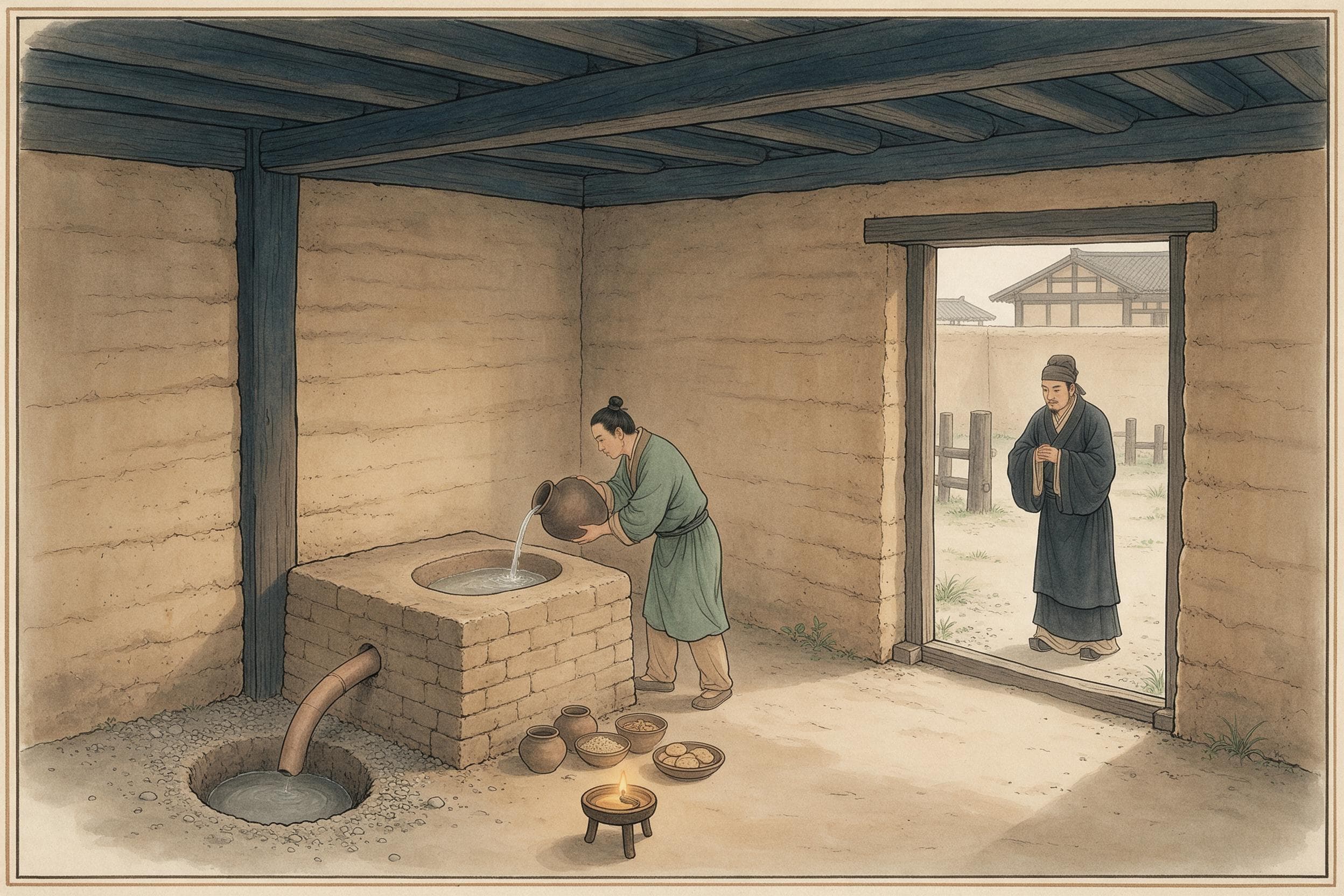
At the Yueyang site in Yanliang, Xi'an, archaeologists found a toilet in the ruins of a palace: the seat was indoors, a bent pipe ran from beneath it to a pit outside, and servants probably poured water into the seat after each use to flush the waste out. Liu Rui of the Institute of Archaeology, Chinese Academy of Social Sciences, is quoted saying it is "the first and only flush toilet ever unearthed in China".
The flushing needs care in translation: this is a manual pour-flush, not running water. There was no tank and no valve, which is why the English reports say manual flush. Yueyang was the Qin capital for about thirty-five years and the first capital of the Han; the site was in use from the mid-Warring States into the early Han. Excavation began in 2012, and the toilet was found in the No 3 walled city.
Not a pit on its own
The same area held other things. In 2020 the team excavated a large area north of the No 3 city, fully exposing buildings four through nine, and found bath facilities, a hearth, a stove and a well among the remains. Xinhua's report says these reflect the life of a Qin rear-palace quarter in the Warring States period.
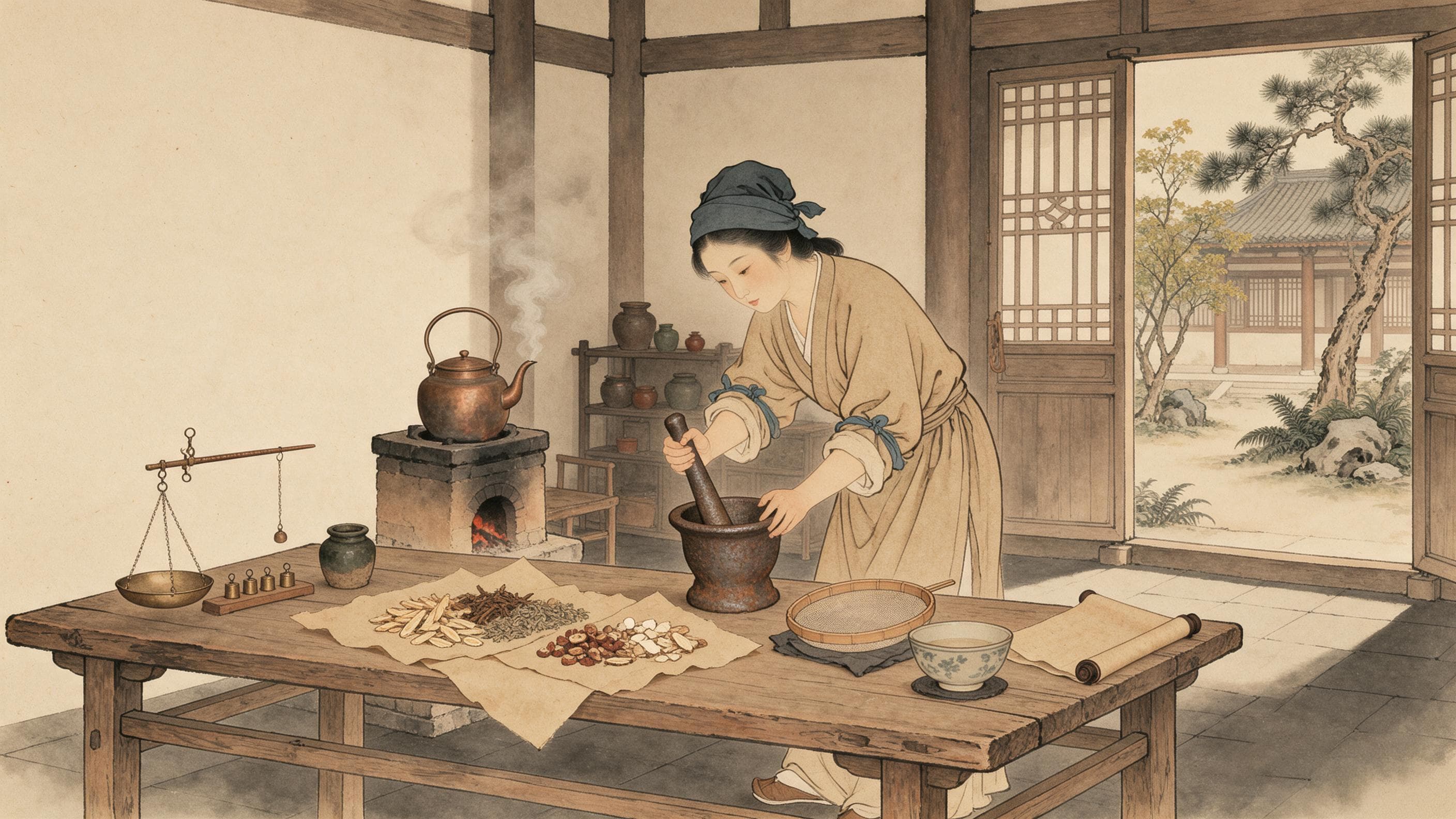
Set them together: washing (bath), drinking (well), warmth (hearth), cooking (stove), and the toilet. A high-status palace already had a full set of daily-life facilities, and the toilet was one room in it — not a hole in a field.
Squat or sit: three open questions
First, squat or sit? The upper half of the toilet was not found, so experts cannot confirm whether users sat or squatted. Based on older evidence such as stone carvings on Western Han royal tombs, they likely squatted. That is an inference, not a conclusion.
Second, who used it? The site runs from the mid-Warring States to the early Han, and the user may have been Qin Xiangong, Qin Xiaogong or Liu Bang, the Han founder; the report lists all three, and the article must not pick one. What is firm is rank: the excavator calls a flush toilet a "luxury object" that could only have been used by members of the highest rank.
Third, what is in the soil? Experts are analysing the soil inside, hoping to find traces of human faeces and reconstruct the diet of the time. So far the samples have yielded only traces of fertiliser used by Han-dynasty farmers. The question of what Warring States people ate is still open, and the evidence so far reaches only to the Han.
A palace toilet, not "the Warring States toilet"
One distinction must be kept: this was a palace fixture. There is no direct evidence at all for the toilets of ordinary people, who can only be assumed to have used some kind of pit. Treating this palace toilet as "how people in the Warring States went to the toilet" would turn one rank's luxury into everyone's daily life.
Two claims also need hedging. "The first and only in China" is the excavator's wording and needs "so far" — archaeology can change the count. The excavator also notes that before this find, the first manual flush toilet was believed to have been built by John Harington for Queen Elizabeth I in the sixteenth century; that comparison can be reported, but it must be attributed to the excavator, not treated as settled scholarship.
So the conclusion holds on two levels. How ordinary people relieved themselves in the Warring States remains a blank; but in a Qin palace, someone already used an indoor seat with a bent pipe, flushed by a servant pouring water. Between a duke falling into a pit and a pipe running through a wall lie not two hundred years but two ways of living.
Sources & further reading
- China Daily〈Unearthed flush toilet dates back 2,400 years〉(Chen Meiling, 16 February 2023) — The Yueyang structure — indoor toilet, bent pipe to an outdoor pit, servants pouring water — plus the date range, the possible users, the missing upper half, the 'first and only' claim, and the soil analysis that so far found only Han-era fertiliser.
- 新华网客户端〈浴室、水井、壁炉、冲水式厕所……秦国后宫遗址被发现〉(2023-02-15) — The 2020 excavation of the northern part of the No. 3 walled city, the bath, hearth, stove and well remains in the 'rear palace' area, and the site's dating from the mid-Warring States to the early Western Han.
- 《左传·成公十年》(Zuo Zhuan, Duke Cheng, year 10) — Duke Jing of Jin goes to the privy, falls in and dies; a servant carries him out and is made a sacrifice — the prehistory of the story.
- 李光坡《周礼述注》·天官·宫人 (Li Guangpo, Zhouli Shuzhu, "Palace Attendants") — The Zhouli duty to make 'pits and drains', remove what is unclean and get rid of the stench, with the old gloss on the seepage pit and the covered drain.