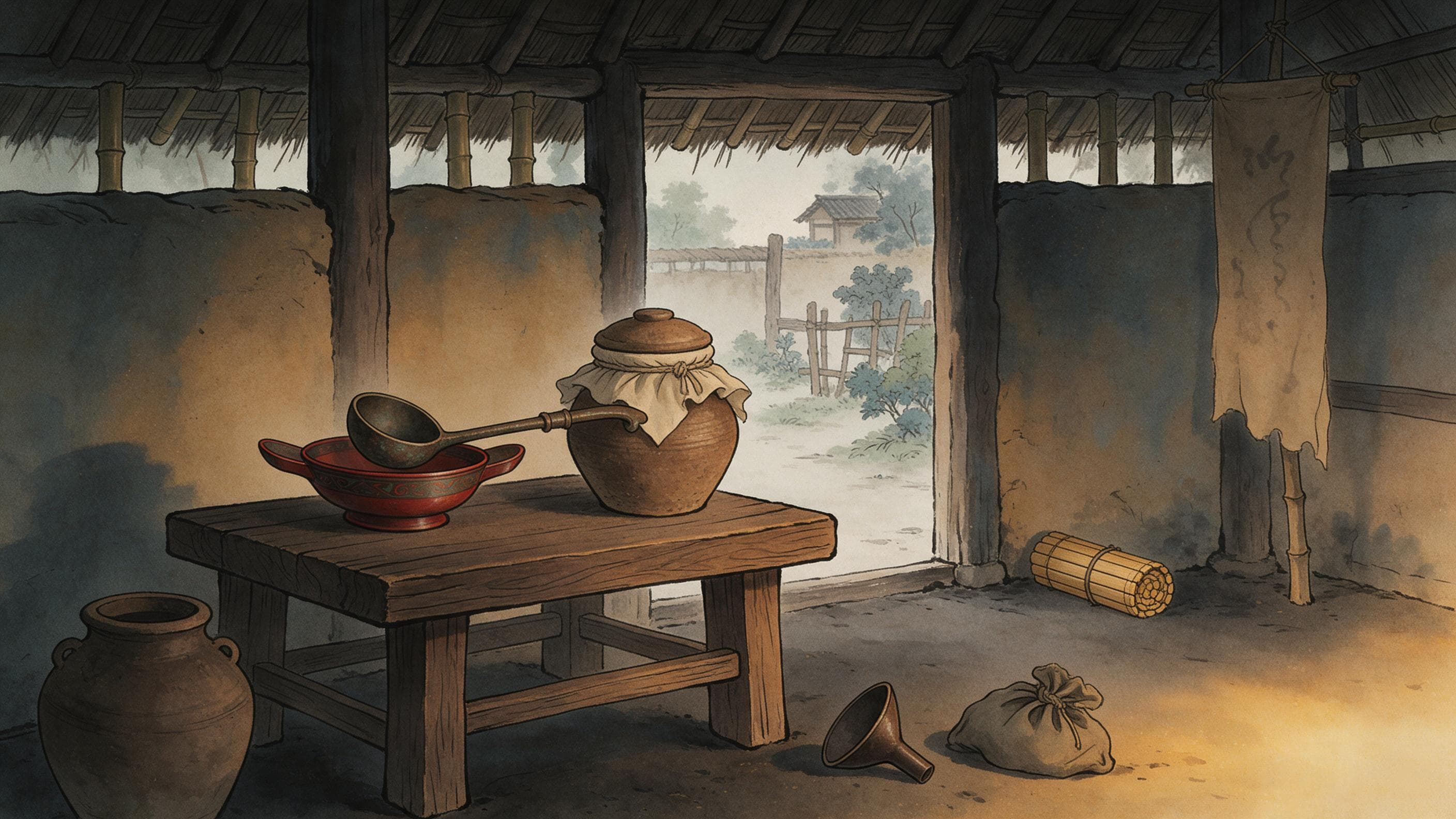
魏国刚立,徐邈做尚书郎,「时科禁酒,而邈私饮至于沈醉」。校事赵达来问曹事,他答一句:「中圣人。」赵达报上去,太祖大怒。度辽将军鲜于辅解释:「平日醉客谓酒清者为圣人,浊者为贤人,邈性修慎,偶醉言耳。」结果「竟坐得免刑」。
中圣人
这是列传,不是法令。「科禁酒」的「科」是科条,条文本身没有引,也没有留下来——没有年份,没有刑名,没有程序。留下的是一个场面:一个喝酒的官、一句问话、一个隐语、一位发怒的君主,和一句把醉话解释成无害的话。「坐得免刑」四个字说明有罪可坐,但没说会坐什么刑;也没有说这科条写了什么、管到什么范围、是不是新立的。
故事还有后话:文帝到许昌,问徐邈「颇复中圣人不」;徐邈引子反、御叔两个古人的醉事自嘲,说自己是「以醉见识」,帝大笑。这是轶事,可以收一段;它没有年份,「魏国初建」是官职叙事的时间坐标,不是禁令颁布年。
彼有其具
蜀中的禁令起于天旱:「时天旱禁酒,酿者有刑。」吏在人家搜到酿具,论者要按酿酒同罪。简雍跟先主出门,路上看见一男一女,说:「彼人欲行淫,何以不缚?」先主问怎么知道,简雍答:「彼有其具,与欲酿者同。」先主大笑,「而原欲酿者」。
锋利的不在笑话,在证据:器具不是酒,念头不是行为。但记录对「发生了什么」很谨慎:「论者欲令同罚」是提议,而且被谏止了,不是已经实行的连坐法。赦免的是「欲酿者」这一批,不等于废掉禁令;起因只写「天旱」,年份不明。
两封信
汉廷那道禁酒,是曹操的。范晔正文只有一句:「时年饥兵兴,操表制酒禁,融频书争之,多侮慢之辞。」信本身只保存在唐李贤注里(注引《融集》)。第一书从「酒之为德久矣」说起:天上有酒星,地上有酒泉,人有旨酒之德;尧不千钟建不了太平,孔非百觚堪不了上圣;樊哙解鸿门之厄靠豕肩钟酒,高祖醉斩白蛇,景帝醉幸唐姬,袁盎靠醇醪脱命,定国酣饮一斛才能决法——结句是:「酒何负于政哉?」
第二书更短也更利。孔融先承认「以酒亡者,实如来诲」,再反问:徐偃王行仁义而亡,如今并不禁仁义;燕哙以让失社稷,如今并不禁谦退;鲁因儒而损,如今并不弃文学;夏、商以妇人失天下,如今并不断婚姻。「而将酒独急者,疑但惜谷耳,非以亡王为戒也。」——这是他猜曹操的动机:舍不得谷,不是怕亡国。猜的,不是史家定论。信是论辩,不是记事:尧千钟、孔百觚,是修辞,不是史实。
同一封信,两个样子
这封信还有一个本子。《艺文类聚》卷七十二收它,题作「后汉孔融难魏武帝禁酒书」,开篇就不一样:「公初当来,邦人咸抃舞踊跃,以望我后。亦既至止,酒禁施行。」字句也不同:「酒星」一作「酒旗」,「豕肩钟酒」一作「彘肩卮酒」,「酒何负于政哉」一作「酒何负于治者哉」。可以择一引,另一个只能当异文,不能拼成一段「原文」。
两个本子拼不起来:维基文库这页标 50%、未与点校本复核;《融集》原书本轮没核到;两个本子的先后关系也没有材料可判。能说的只是:信存在过,被抄过不止一次,抄本之间不完全一样——这本身就是这些文字流传下来的样子。
没有那道令
背景有记录,禁令没有。建安元年车驾到洛阳,「宫闱荡涤」「百官披荆棘而居」,州郡各拥强兵,「委输不至」;魏武「募良民屯田许下」,岁「数千万斛」充兵戎;平定袁氏之后,收田租「亩粟四升,户绢二匹而绵二斤」。记这些的《晋书》卷二十六,一个字没提酒禁。这一卷讲的是粮,不是酒。禁酒与缺粮有关,是合理的推测——「年饥兵兴」是范晔自己的框架——但没有一道诏令把两头接起来。
所以文章停在材料停的地方。三个场面:一个醉官被放过,一个家里有酿具的人被放过,两封信争了、没有回音。信有两封,其中一封还有两个本子。没有留下来的是东西本身:没有年份,没有令文,没有刑名,没有执行范围。三处属于三个政权,不能拼成一道令。禁酒确实执行过——这一点记载们一致——也几乎只一致到这一点。
参考来源与延伸阅读
- 陈寿《三国志》卷二十七·魏书·徐邈传、卷三十八·蜀书·简雍传 (Chen Shou, Sanguozhi, juan 27, Life of Xu Miao, and juan 38, Life of Jian Yong) — J uan 27: Xu Miao, a Gentleman of the Secretariat when the Wei state was newly founded, drank privately to drunkenness while wine was forbidden by regulation; asked about official business he answered 'I am in the sage', and was let off punishment after a general explained that drinkers call clear wine the sage and cloudy wine the worthy. No date, no statute text, no named penalty. Juan 38 (https://zh.wikisource.org/wiki/三國志/卷38): in a drought wine-making was banned and brewers punished; officers found brewing vessels in a house and some proposed punishing the owner like a brewer, until Jian Yong's joke about a man and woman on the road 'having the equipment' made Liu Bei laugh and pardon those who had meant to brew. A proposal, not an enacted collective punishment.
- 范晔《后汉书》卷七十·郑孔荀列传·孔融(唐李贤注引《融集》)(Fan Ye, Hou Han shu, juan 70, Life of Kong Rong, with Li Xian's Tang commentary) — Fan Ye's main text: 'the year was famine-stricken and war had arisen; Cao Cao memorialised for a wine ban, and Kong Rong repeatedly wrote to dispute it, with much insolent language.' The two letters survive only in Li Xian's commentary, quoting Kong Rong's collected works: the first lists wine's service to ritual and politics and ends 'how has wine failed government?'; the second concedes that dynasties fell through wine but argues that wine alone is treated as urgent because 'you grudge the grain, not because you take the fall of kings as a warning'. Letters in commentary, not main text, and undated.
- 欧阳询等《艺文类聚》卷七十二·食物部·酒(维基文库 50% 页,未与中华书局点校本复核)(Ouyang Xun et al., Yiwen leiju, juan 72, 'Wine') — Tang encyclopedia excerpt of the same letter under the title 'Kong Rong disputing Emperor Wu of Wei's wine ban', with a different opening ('when you first came... the ban was enforced') and variant readings (wine banner for wine star; pig shoulder with a cup for pig shoulder with a bell-shaped vessel; 'failed governance' for 'failed government'). A second witness, not a fuller text; the page is marked unproofread.
- 房玄龄等《晋书》卷二十六·食货志 (Fang Xuanling et al., Jin shu, juan 26, 'Food and Money') — Background only, and never mentions a wine ban: in 196 the court reached Luoyang to find the palaces stripped and no supplies arriving from the provinces; Cao Cao settled people as military farmers near Xu and drew tens of millions of hu a year; after Hebei was taken the land tax was set at four sheng of grain a mu with two bolts of silk and two jin of floss a household.