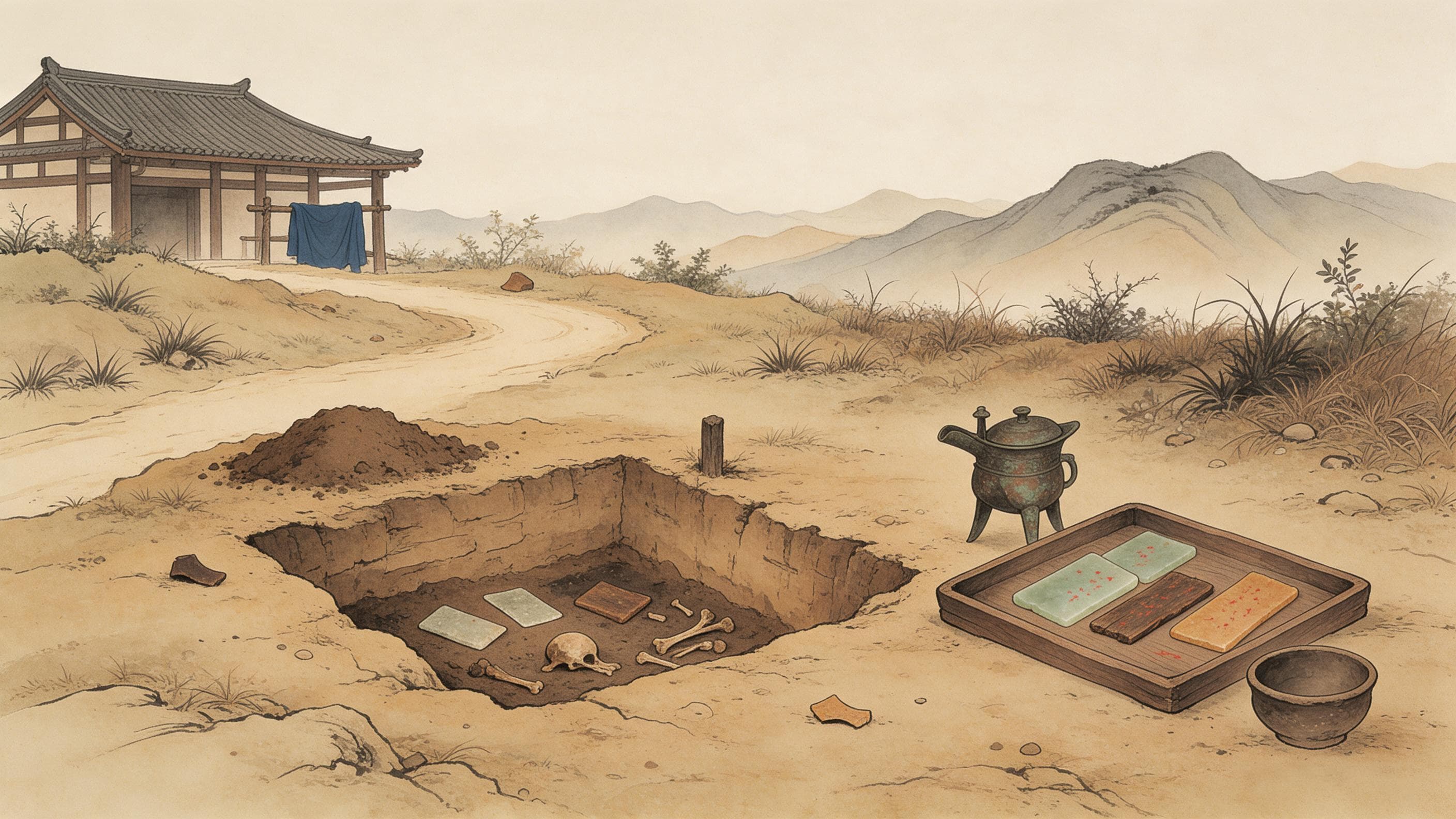
宋真宗景德年间,太常博士王曙、户部员外郎李维到辽廷贺国主生辰。回去以后他们说了一件事:「国主见汉使彊服衣冠,事已,即幅巾杂蕃骑出射猎矣。」——见宋使时勉强穿上汉服衣冠,事一完,换上幅巾,混在契丹骑兵里出猎去了。一个场面,把两套衣服分得清清楚楚。
两套衣服
《辽史·仪卫志》把规矩写得很直:「辽国自太宗入晋之后,皇帝与南班汉官用汉服;太后与北班契丹臣僚用国服,其汉服即五代晋之遗制也。」两班人,两种衣服,一个朝廷。
《契丹国志》说得更直接:「国母与蕃官皆胡服,国主与汉官即汉服。」但两本书不是一路货:《辽史》是元人修的制度史,《契丹国志》是南宋人追述、转述使臣见闻;前者写「应该怎样」,后者写「看见怎样」。这里并排摆着,不合成一句。
国服:毡冠与貂裘
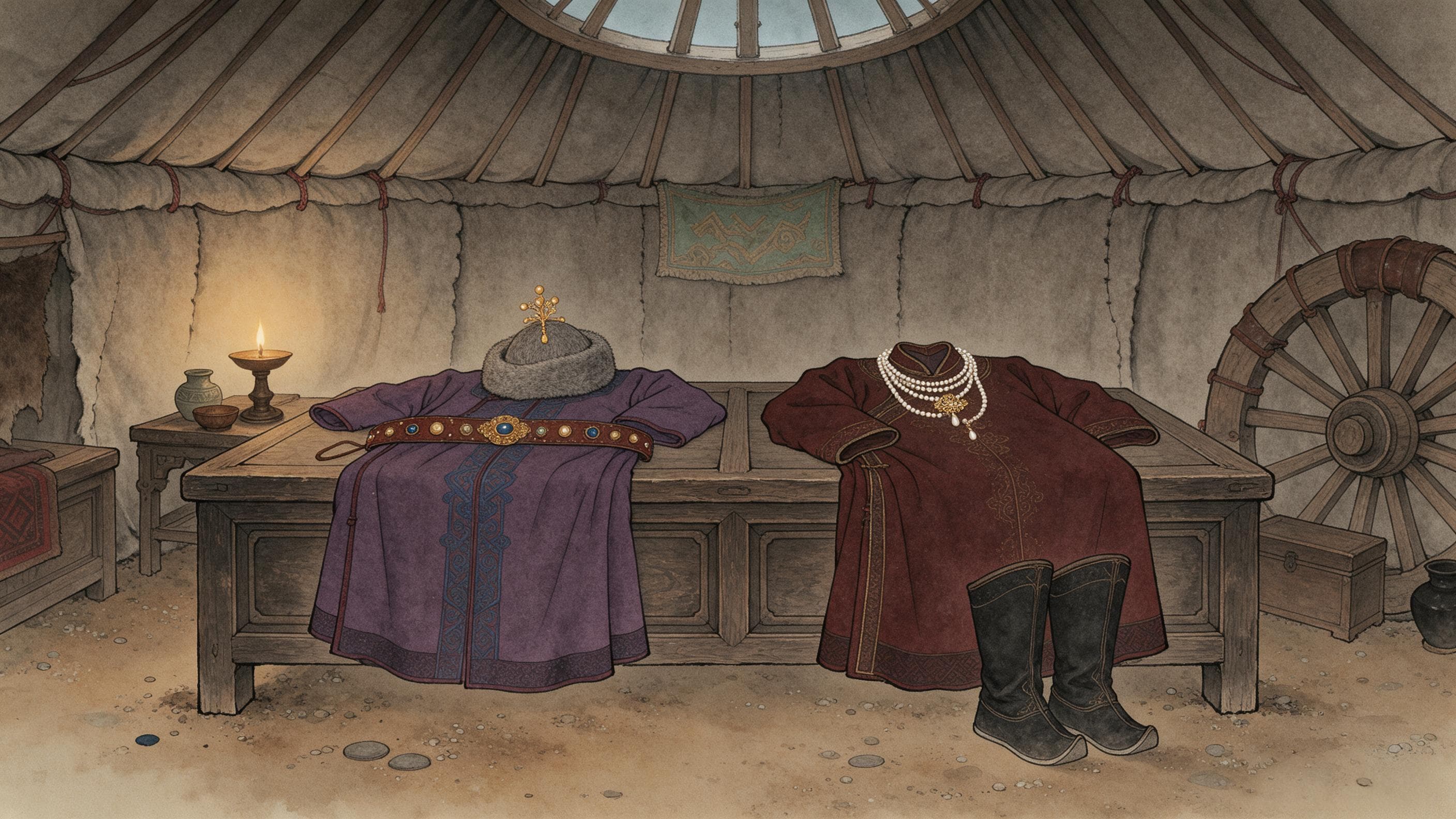
国服的样子,两书都写得细:蕃官戴毡冠,上有金花为饰,或加珠玉翠毛;额后垂一条金花织成的夹带,「中贮发一总」——夹带里收着一束头发;服紫窄袍,系占鞢带,带「以黄红色绛裹革为之,用金玉、水晶、靛石缀饰」,叫「盘紫」。另有一种纱冠,「制如乌纱帽,无檐,不擫双耳」,额前缀金花,上结紫带,带末缀珠。
等级写在皮子和颜色上:「贵者披貂裘,以紫黑色为贵,青次之;又有银鼠,尤洁白;贱者貂毛、羊、鼠、沙狐裘。」公服叫「展裹」,著紫;兴宗重熙二十二年诏八房族巾帻,道宗清宁元年又诏:非勋戚之后、夷离堇副使并承应有职事人,不带巾——连戴不戴头巾,也分人。田猎时皇帝幅巾、擐甲戎装,「以貂鼠或鹅项、鸭头为扞腰」;蕃汉诸司使以上并戎装,「衣皆左衽,黑绿色」。制度也不严:「禁制疏阔,贵适用而已。」
汉服:衮冕与五辂
汉服这一半,是随仪物一起进来的。太宗会同元年,晋使冯道、刘煦等备车辂法物,上皇帝、皇太后尊号册礼,「自此天子车服昉见于辽」;大同元年入晋,备法驾受贺于汴京崇元殿,「唐晋文物,辽则用之」。五辂各有其用:玉辂祀天祭地享宗庙,金辂飨射饮至,象辂行道,革辂巡狩武事,木辂田猎;此外还有耕根车、安车、四望车、凉车。两种车是给公主的:青幰车,二螭头、盖部饰银,驾用驼,公主下嫁赐之;送终车,驾以牛,上载羊一,谓之祭羊,亦赐公主。
礼服是整套的汉制:衮冕「金饰,垂白珠十二旒」,玄衣纁裳十二章;通天冠配绛纱袍,用于冬至朔日受朝、元会;翼善冠配柘黄袍、九环带、六合靴,用于朔视朝。官员按品级分颜色和带:五品以上紫袍、金玉带,六品以下绯衣、银带,八九品绿袍、鍮石带;笏也分牙、木。文官佩手巾、算袋、刀子、砺石、金鱼袋;武官佩「占鞢七事」:佩刀、刀子、磨石、契真、噦厥、针筒、火石袋。
什么时候换
两套的分量在变。会同年间定的是:太后与北面臣僚国服,皇帝与南面臣僚汉服。乾亨以后,「大礼虽北面三品以上亦用汉服」;重熙以后,「大礼并汉服矣」。但「常朝仍遵会同之制」——大礼一步步换成汉服,日常朝会还留着旧规矩。制度不是一刀切,是一层一层挪。
车舆也是双轨。契丹旧俗便于鞍马:「随水草迁徙,则有毡车,任载有大车,妇人乘马,亦有小车,贵富者加之华饰」;汉舆那边是五辂、大凤辇(主辇八十人)、芳亭辇(百廿人)、逍遥辇(辇官十二人)这些排场。一边是「贵适用」,一边是仪注。
能说的与不能说的
边界:两书性质不同,一是元修制度史,一是南宋追述加使臣转述,都不是契丹人自述;不写「游牧民族服饰」通论;不把国服与汉服合成一套;不写谁取代了谁;不折尺寸;不引没核过的材料。
留下的是一朝两柜衣服、一套场合规矩:毡冠后面收着一束头发,貂裘从紫黑排到沙狐,带子上缀着金玉水晶;旁边是十二旒的冕、绛纱袍、八十人抬的辇。宋使看见的正是那道缝:见客穿汉服,客走换幅巾。两套衣服,一个朝廷,什么时候穿哪套,写在制度里,也写在人身上。
参考来源与延伸阅读
- 脱脱等《辽史》卷五十五·仪卫志一(舆服)、卷五十六·仪卫志二(国服、汉服)(Tuo Tuo et al., Liao shi, juan 55 and 56, 'Ceremonial Guards') — Yuan compilation of Liao institutions. Juan 55 states the rule that after Taizong took the Jin capital the emperor and southern-rank Chinese officials wore Chinese dress while the empress dowager and northern-rank Khitan officials wore national dress, and describes the Khitan carriages (felt carts, big wagons, women on horseback) and the Chinese five carriages and palanquins taken from the Jin. Juan 56 (https://zh.wikisource.org/wiki/遼史/卷56) gives the national dress in detail — felt cap with gold flowers, a woven band holding a lock of hair, purple narrow robe, the studded zhantie belt called 'coiled purple', gauze cap, sable ranked from purple-black to sand-fox, the hunting guard of sable or goose-neck or duck-head — and the Chinese ceremonial dress with its mian, twelve strings of pearls, twelve insignia, tongtian crown and graded robes and belts. Also records the shifts: after Qianheng northern officials of the third rank and above wore Chinese dress at great rites, after Chongxi all great rites did, while ordinary court kept the older rule.
- 叶隆礼《契丹国志》卷二十三·衣服制度 (Ye Longli, Qidan guozhi, juan 23, 'Clothing Regulations') — Southern Song account, compiled from earlier records and envoys' reports, not a Khitan self-description: 'the empress dowager and the Khitan officials all wear barbarian dress; the ruler and the Chinese officials wear Chinese dress'; describes the felt cap with its gold-flower band and lock of hair, the gauze cap without a brim, the purple narrow robe and studded belt, sable ranked purple-black, blue and silver-weasel, the base wearing sheep, rat and sand-fox, the waist guard of sable or goose-neck or duck-head; and reports that in the Jingde period Song envoys saw the Liao ruler force himself into Chinese dress and cap to receive them and, the audience over, put on a cloth head-wrap and ride out hunting among Khitan horsemen.