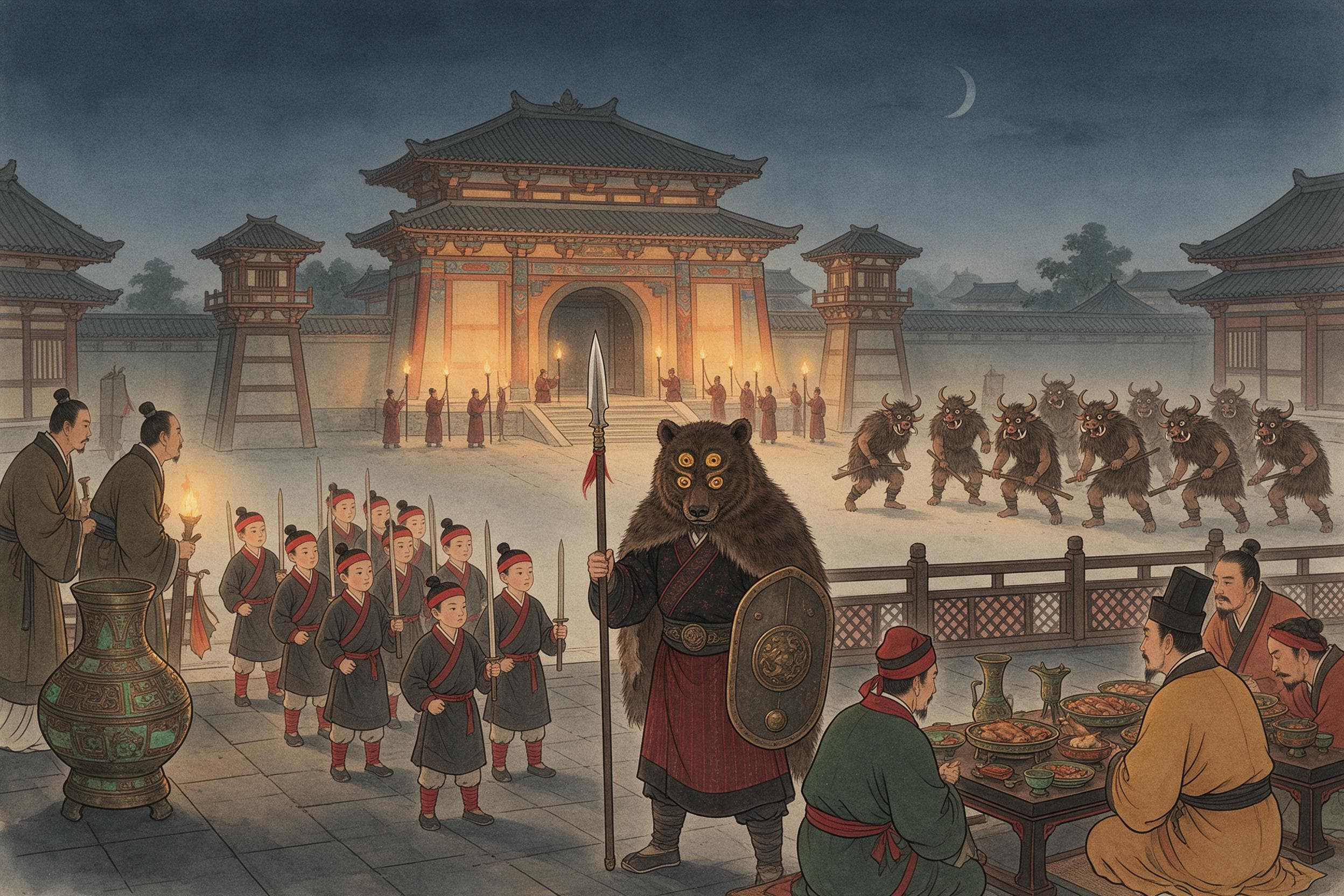
经只有一句半:「高宗肜日,越有雊雉。」——高宗行肜祭的那一天,飞来一只雉,叫了。整篇《尚书·高宗肜日》一百来字,就从这个日子和这只鸟开始。这一篇分三层写:经里的这一天与祖己的训辞、史书里的叙事、汉儒对这只鸟的三种读法。
一、经:一句话与一段训辞
原文短,可以全录:「高宗肜日,越有雊雉。祖己曰:『惟先格王,正厥事。』乃训于王曰:『惟天监下民,典厥义。降年有永有不永;非天夭民,民中绝命。民有不若德,不听罪;天既孚(付)命正厥德,乃曰:其如台?呜呼!王司敬民;罔非天胤,典祀无丰于昵。』」——祖己说的第一句是「惟先格王,正厥事」,然后才训王:天监下民,年有永有不永,不是天夭折人,是人自己中断了命;最后落到「王司敬民;罔非天胤,典祀无丰于昵」——王的事是敬民,都是天的后裔,常祀不要对自己的近亲过于丰厚。
这一页的边界要写死:「肜日」是什么祭,本页不解释;雉为什么被当成异象,本页也不解释;哪一天、在哪里、祭的是谁、来了多少人,都不给。本篇因此明写「不解释」,不拿后世的解释——比如《汉书·五行志》那一套——去补经文的空白:那本来就是汉儒的话,不是商代人的话。
二、史:登鼎耳与「立庙为高宗」
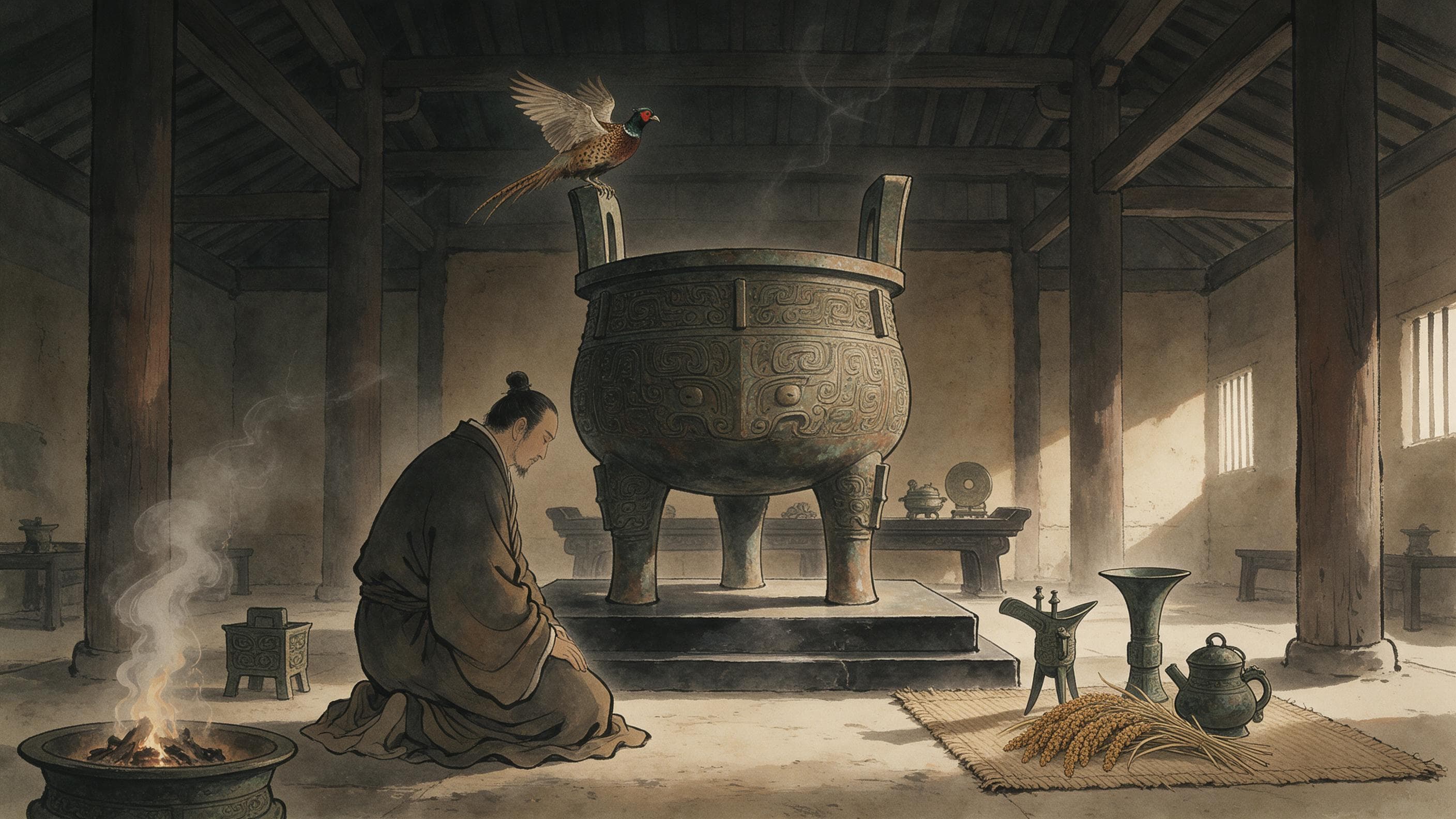
《史记·殷本纪》把这一天写成了事:「帝武丁祭成汤,明日,有飞雉登鼎耳而呴,武丁惧。祖己曰:『王勿忧,先修政事。』」——武丁祭成汤,第二天,一只飞雉落在鼎耳上叫,武丁害怕;祖己先说「王勿忧,先修政事」,然后才训。与经对读,有三处不同:经作「雊雉」,史记作「飞雉登鼎耳而呴」;经没有「明日」;史记把「祭成汤」写明了。训辞的文字两书也不同(史记作「唯天监下典厥义……常祀毋礼于弃道」),本篇并列照录,不合并成一段。
史记还给了这篇经的来历:「武丁修政行德,天下咸驩,殷道复兴」;「祖己嘉武丁之以祥雉为德,立其庙为高宗,遂作高宗肜日及训」。——祖己赞许武丁把这只「祥雉」当作修德的事,为他立庙,称高宗,于是作了《高宗肜日》与《训》。这是史记对这篇经的说明,本篇照录并标明是史记的说法;「祥雉」的「祥」也是史记的用词。
三、汉儒:一只鸟的三种读法
《汉书·五行志》先引书序:「书序又曰:『高宗祭成汤,有蜚雉登鼎耳而雊。』祖己曰:『惟先假王,正厥事。』」——这里「蜚雉」的「蜚」,与经的「雊雉」、史记的「飞雉」又不同,三个写法并列。读法也各归各人:「刘向以为雉雊鸣者雄也,以赤色为主。于易,离为雉,雉,南方,近赤祥也。刘歆以为羽虫之孽。」——刘向:雉鸣的是雄,以赤色为主,在《易》里离为雉,雉属南方,近于「赤祥」;刘歆:这是「羽虫之孽」。两种说法并列,本篇不裁断。
接着是鼎的读法,也是汉书的解释,不是商代人的想法:「易有鼎卦,鼎,宗庙之器,主器奉宗庙者长子也。野鸟自外来,入为宗庙器主,是继嗣将易也。」——鼎是宗庙之器,掌器奉宗庙的是长子;野鸟从外面来,做了宗庙器物的主人,这是「继嗣将易」。「一曰,鼎三足,三公象,而以耳行。野鸟居鼎耳,小人将居公位,败宗庙之祀。」——另一种说法:鼎三足象三公,鼎靠耳移动;野鸟停在鼎耳上,是小人将居公位、破坏宗庙之祀。两个「一曰」并列照录,不合并。
五行志最后把这件事收在武丁身上:「武丁恐骇,谋于忠贤,修德而正事,内举傅说,授以国政,外伐鬼方,以安诸夏,故能攘木鸟之妖,致百年之寿。」——武丁害怕,与忠贤谋,修德正事;内举傅说授以国政,外伐鬼方以安诸夏;所以能「攘木鸟之妖」,得百年之寿。这是汉书的因果叙述,本篇标明;其中「外伐鬼方」这一层,史记这一段里没有,不拿它回填史记。
四、三个「雉」字,与一个不解释的词
文本层可以并排看:经作「雊雉」,史记作「飞雉……呴」,汉书引书序作「蜚雉……雊」。三个写法,本篇都照录,不替它们定哪个是正字。「雉」是野鸡还是别的雉类,两汉说法不一,本篇不替它定种。至于「肜日」——三页都不解释这个祭名;经只说「高宗肜日」,史记只说「祭成汤」,五行志也只是引书序。所以这一篇不给它下定义,也不拿汉儒的灾异说去替它补。
五、两页之外
分线写一句:写商颂祭祖现场的篇目讲的是乐舞与祭仪,写龟的来路的篇目讲的是占卜用龟——这一篇只写这一只鸟、这一句话和后来的三种读法。也不写「天人感应起源」这类通论:三页给的是经、史、汉儒解释三层,不是一部思想史。缺口列清:商代卜辞原件、祭祀现场细节、雉的种属、「肜日」的祭法——三页都不给,或只出现在汉儒口中,本篇不补。留下的是一只鸟落在鼎耳上、一句「王司敬民」,和三种读法。
参考来源与延伸阅读
- 《尚书·高宗肜日》(维基文库本,未与点校本复核) — The whole chapter, about 130 characters: 'On the rong day of Emperor Gao Zong, there was a crowing pheasant' (高宗肜日,越有雊雉). Zu Ji says, 'let the king first be corrected, and set his affairs right' (惟先格王,正厥事), and then instructs the king: 'Heaven oversees the people below and presides over their righteousness; the years it sends down are sometimes long and sometimes not; it is not Heaven that shortens men's lives — men cut their own lives short. When men do not follow virtue and do not listen to their guilt, Heaven has already charged them to correct their virtue, and they say, What can we do? Alas! The king's business is to reverence the people; all are Heaven's descendants; in the regular sacrifices do not be lavish toward your near kin' (王司敬民;罔非天胤,典祀無豐于昵). The page carries one editorial bracket, 孚(付), which is a transcriber's note and is quoted as the main text. The page does not say what a rong day was, why a pheasant counted as a portent, or what was being sacrificed.
- 司马迁《史记》卷三〈殷本纪〉(维基文库本,未与点校本复核) — The narrative version: 'Emperor Wu Ding sacrificed to Cheng Tang; the next day a flying pheasant came down on the ear of a cauldron and crowed, and Wu Ding was afraid. Zu Ji said: Let the king not worry; first put the government in order' (帝武丁祭成湯,明日,有飛雉登鼎耳而呴,武丁懼。祖己曰:王勿憂,先修政事). It then gives its own wording of the instruction ('Heaven oversees the people below and presides over righteousness… in the regular sacrifices do not be lavish toward the abandoned way' 常祀毋禮于棄道), and the sequel: 'Wu Ding put the government in order and practised virtue; all under Heaven rejoiced and the Yin way revived' (武丁修政行德,天下咸驩,殷道復興). Finally the origin of the chapter: 'Zu Ji admired Wu Ding for making the auspicious pheasant a matter of virtue, set up his temple and called him Gao Zong, and then made the Gao Zong Rong Ri and the Instruction' (祖己嘉武丁之以祥雉為德,立其廟為高宗,遂作高宗肜日及訓).
- 《汉书》卷二十七〈五行志〉(维基文库本,未与点校本复核) — The Han scholars' readings, quoted with their authors. 'The Preface to the Documents also says: Gao Zong sacrificed to Cheng Tang, and a flying pheasant came down on the ear of a cauldron and crowed' (有蜚雉登鼎耳而雊). Then: 'Liu Xiang held that a crowing pheasant is male and takes red as its master; in the Changes, li is the pheasant, the pheasant is the south, so it is near to a red portent' (劉向以為雉雊鳴者雄也,以赤色為主……近赤祥也); 'Liu Xin held it to be a plague of feathered creatures' (劉歆以為羽蟲之孽). 'In the Changes there is the hexagram ding; the ding is a vessel of the ancestral temple, and the one who holds the vessel and serves the temple is the eldest son. A wild bird comes from outside and enters as master of the temple vessel — this is the heir about to change' (野鳥自外來,入為宗廟器主,是繼嗣將易也). And an alternative: 'the ding has three legs, the image of the three ducal offices, and it moves by its ears; a wild bird perching on the ding's ear means a petty man about to occupy a ducal seat and ruin the temple sacrifices' (一曰……小人將居公位,敗宗廟之祀). The treatise closes the case with Wu Ding's reform, the promotion of Fu Yue, the campaign against the Guifang, and 'driving off the omen of wood and bird, and attaining a hundred years of life' (攘木鳥之妖,致百年之壽).