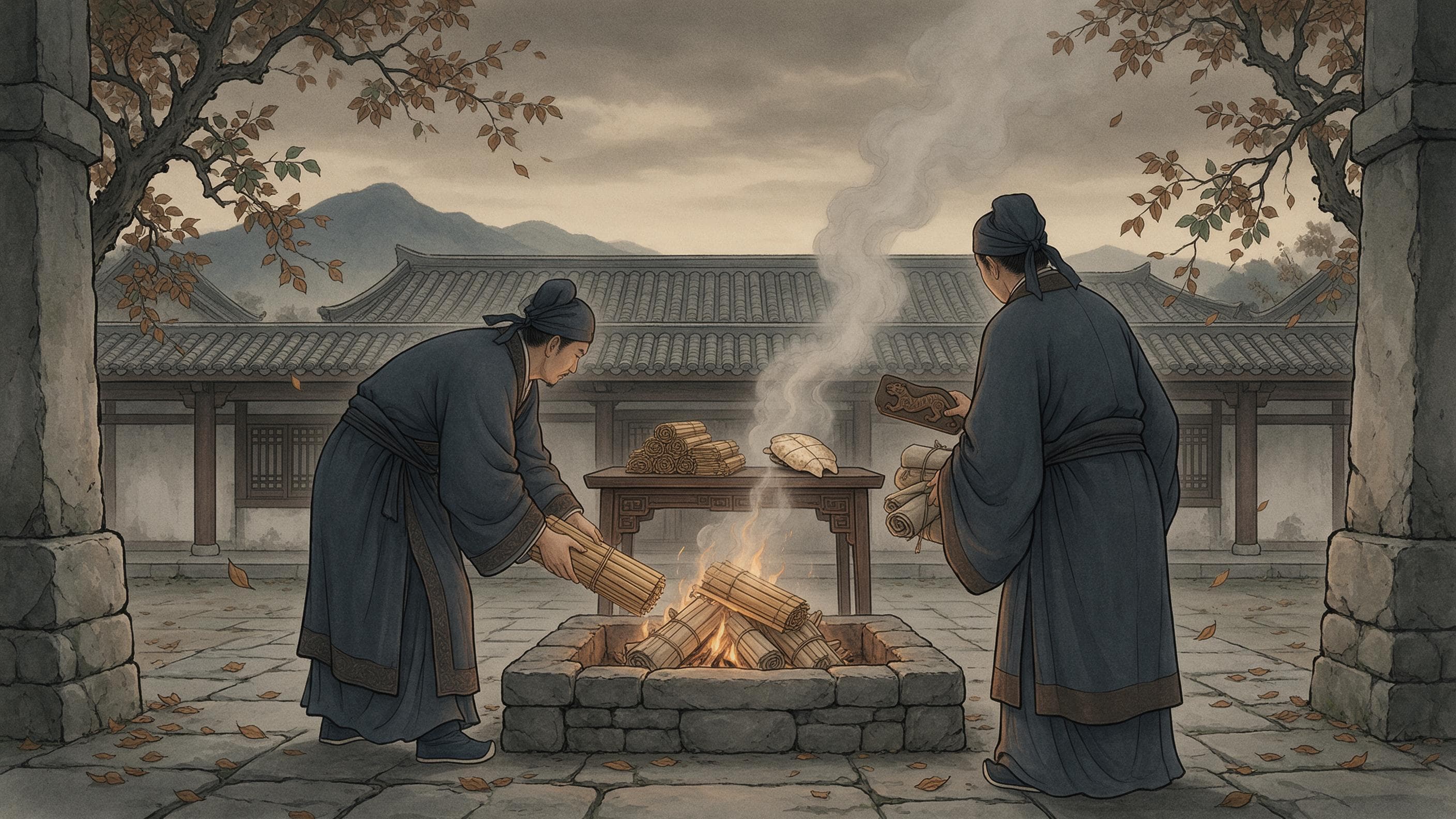
三十四年,始皇置酒咸陽宮,博士七十人前為壽。僕射周青臣進頌,博士齊人淳于越進諫,丞相李斯上議——這道奏議就是焚書令的底本。先把來源層說清:《史記》是漢人所寫,這一篇是漢人對秦事的記述,不作秦代實錄;本文只做一件事,把「燒哪些、留哪些」逐條照錄,不用「焚書」兩個字把它們併掉。
一、從一場酒宴到一道奏議
前情很短。宴上,周青臣頌「以諸侯為郡縣,人人自安樂,無戰爭之患,傳之萬世」;淳于越反對:「臣聞殷周之王千餘歲,封子弟功臣,自為枝輔……事不師古而能長久者,非所聞也。今青臣又面諛以重陛下之過,非忠臣。」始皇把這件事「下其議」,交給群臣討論。
李斯的議論先說理由,再提條文:「五帝不相復,三代不相襲,各以治,非其相反,時變異也……今諸生不師今而學古,以非當世,惑亂黔首。」又說「私學而相與非法教,人聞令下,則各以其學議之,入則心非,出則巷議……如此弗禁,則主勢降乎上,黨與成乎下。禁之便。」——「禁之便」三個字之後,才是具體條目。
二、燒哪些
第一條:「臣請史官非秦記皆燒之。」——史官所藏,不是秦國史記的,都燒。第二條:「非博士官所職,天下敢有藏詩、書、百家語者,悉詣守、尉雜燒之。」——除了博士官所職掌的,天下敢私藏《詩》《書》與百家語的,一律送到郡守、郡尉那裡燒掉。注意這兩條的對象不同:一條是史官的官藏,一條是民間的私藏;句式也說明了範圍——「非博士官所職」這一限定,把博士官掌管的書劃在外面。
接著是四條例罰,照錄:「有敢偶語詩書者棄市。以古非今者族。吏見知不舉者與同罪。令下三十日不燒,黥為城旦。」——偶語《詩》《書》者棄市;以古非今者族;官吏知情不舉者同罪;命令下達三十天還不燒的,黥為城旦。刑名不解釋、不折算,就按頁面寫。
三、留哪些
一句總說:「所不去者,醫藥卜筮種樹之書。」——不燒的:醫藥、卜筮、種樹三類。再一句是學法令的出路:「若有欲學法令者,以吏為師。」——想學法令的,以官吏為師。這一句裡的「法令」,兩處記載不同,見第四節。
「留」還有另一半,藏在第二條的限定裡:既然燒的是「非博士官所職」,那麼博士官所職掌的書,就不在燒的範圍。但博士官到底掌哪些書、有多少——兩頁都不說,本文也不補;「不燒」的意思是相對於那條燒令而言,不等於那些書一定完好。
四、同書兩處,一部漢志
同一部《史記》裡,這件事記了兩遍。《李斯列傳》的版本短得多:「臣請諸有文學詩書百家語者,蠲除去之。令到滿三十日弗去,黥為城旦。所不去者,醫藥卜筮種樹之書。若有欲學者,以吏為師。」始皇「可其議」,然後「收去詩書百家之語以愚百姓,使天下無以古非今」。與《秦始皇本紀》對讀,少了「史官非秦記皆燒之」,少了「偶語詩書者棄市」「以古非今者族」「吏見知不舉者與同罪」;「悉詣守、尉雜燒之」作「蠲除去之」;「令下三十日不燒」作「令到滿三十日弗去」;最要緊的一處是「欲學法令者」與「欲學者」——一有一無。兩處並列,不合成一條「法令原文」。
《漢書·藝文志》又是另一種寫法,只有總述,沒有條目:「至秦患之,乃燔滅文章,以愚黔首。」又說《易》:「及秦燔書,而易為筮卜之事,傳者不絕。」——易因作卜筮之用而未絕,這一句與「卜筮之書不去」正好對上。這兩句都是漢人的話,標作漢志,不當秦代原文;漢志也沒有列「燒了哪些書」的清單。
五、兩頁不給的
不給燒了多少書、不給被燒書目、不給博士官所掌書目、不給執行記錄(誰去燒、燒了幾天、有無例外);也不給年份以外的系年,三十四年照錄,不折公元。坑儒是另一件事,本文只在分線時說一句:不在這一篇的材料裡,不合併敘述。
能確定的,只有這道奏議的條目:燒史官所藏的非秦記;燒民間私藏的詩、書、百家語;四條例罰(棄市、族、同罪、黥為城旦);三類書不去(醫藥、卜筮、種樹);學法令的以吏為師;制曰可。同一部《史記》兩處所記略有出入,漢志只有一句總述。燒掉多少、留下了什麼,這三頁都不回答,本文也不寫「文化浩劫」之類的評價。
延伸閱讀:微子之問:一個王子問「走還是留」 · 方田與粟米:漢代算書裡的日常題 · 賜姓命氏:春秋人的姓與氏
參考來源與延伸閱讀
- 《史记》卷六·秦始皇本纪(西汉司马迁撰;维基文库本,页面白文无注,未与中华书局点校本复核) — The thirty-fourth year: a banquet at Xianyang, seventy court scholars, Zhou Qingchen's praise and Chunyu Yue's objection that without following antiquity no rule lasts; the emperor refers the matter down, and Li Si's memorial follows item by item — histories other than Qin's records to be burned; outside what the court scholars hold, anyone privately keeping the Songs, the Documents or the hundred schools to have them taken to the commandant and burned; those who discuss the Songs and Documents together to be executed in the market; those who use antiquity to condemn the present to be exterminated with their kin; officials who know and do not report to share the penalty; thirty days after the order, failure to burn to mean branding and hard labour. What is not to be removed: books on medicine, divination and tree-planting; those wishing to study the laws to take officials as teachers. The reply: approved.
- 《史记》卷八十七·李斯列传(西汉司马迁撰;维基文库本,页面白文无注,未与中华书局点校本复核) — The same affair in the biography, shorter and differently worded: Li Si asks that 'all who have literary writings, the Songs, the Documents and the hundred schools be done away with'; the deadline is 'when the order arrives, thirty days and not removed', the penalty the same branding and hard labour; the books not removed are again medicine, divination and tree-planting; and 'those who wish to learn' take officials as teachers — without the words 'the laws' found in the annals. The burnings themselves are summarised as the emperor 'taking away the words of the Songs, Documents and hundred schools to make the people stupid, so that the world should have no means to condemn the present by antiquity'.
- 《汉书》卷三十·艺文志(东汉班固撰;维基文库本,页面白文无注,未与中华书局点校本复核) — The Han summary in the bibliographic treatise: 'when it came to Qin, this troubled them, and they burned and destroyed the writings to make the people stupid'; and, in the note on the Changes, 'when Qin burned the books, the Changes were a matter of divination, and those who transmitted it did not break off.' The treatise lists books and their transmission, not the Qin order's items; neither this page nor the Shiji gives a list of what was destroyed.