
EVERYDAY LIFE · SHANG TO QING
Stories
Small questions open a window onto a different world.
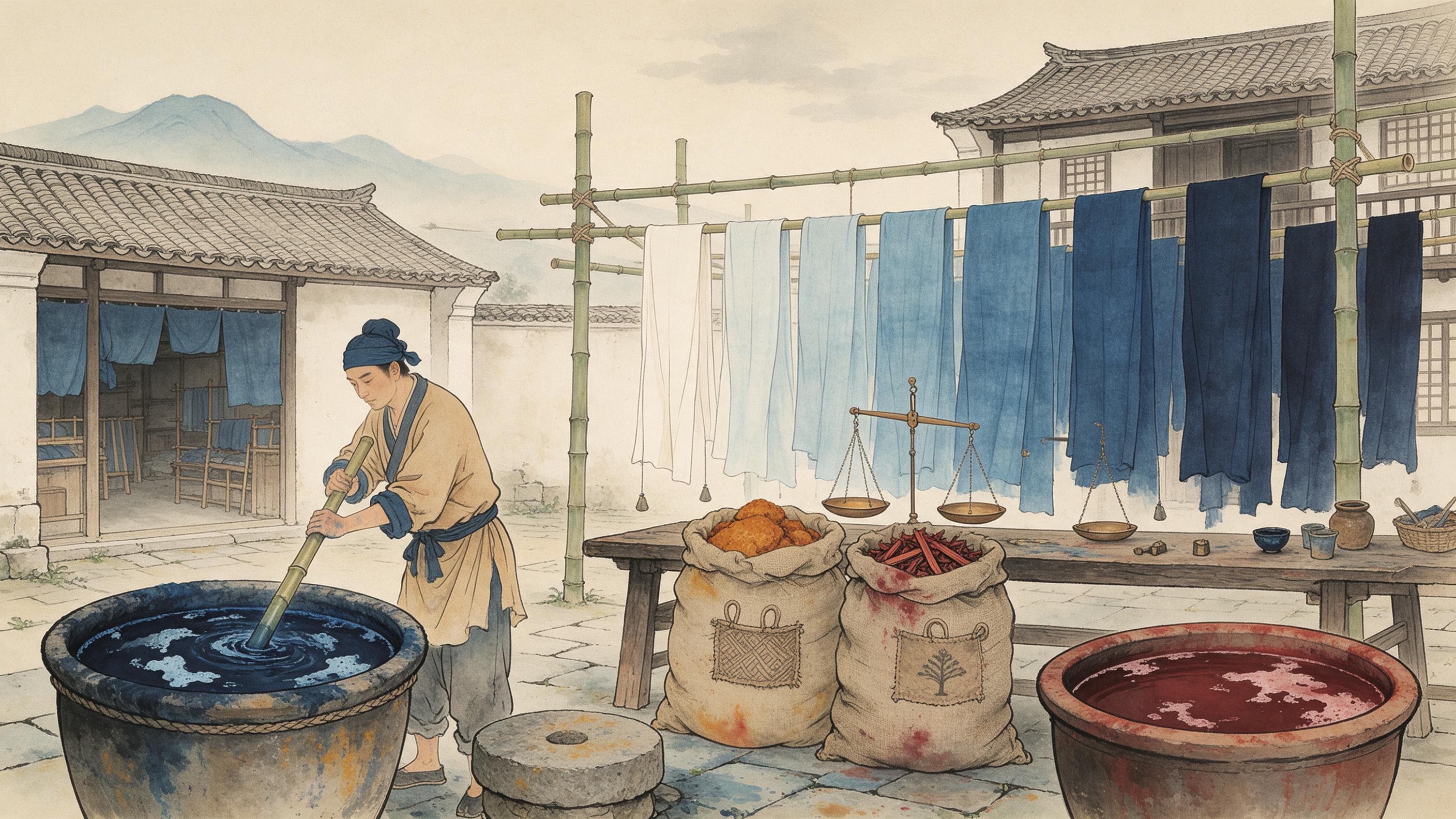
What Colour Could an Ordinary Person Wear? Cloth, Dyes and One Penalty in Ming China
A Ming craft manual gives recipes for thirty-odd colours, from safflower red to indigo black. The Ming code punished some of them. What the two records can, and cannot, say about an ordinary person's clothes.
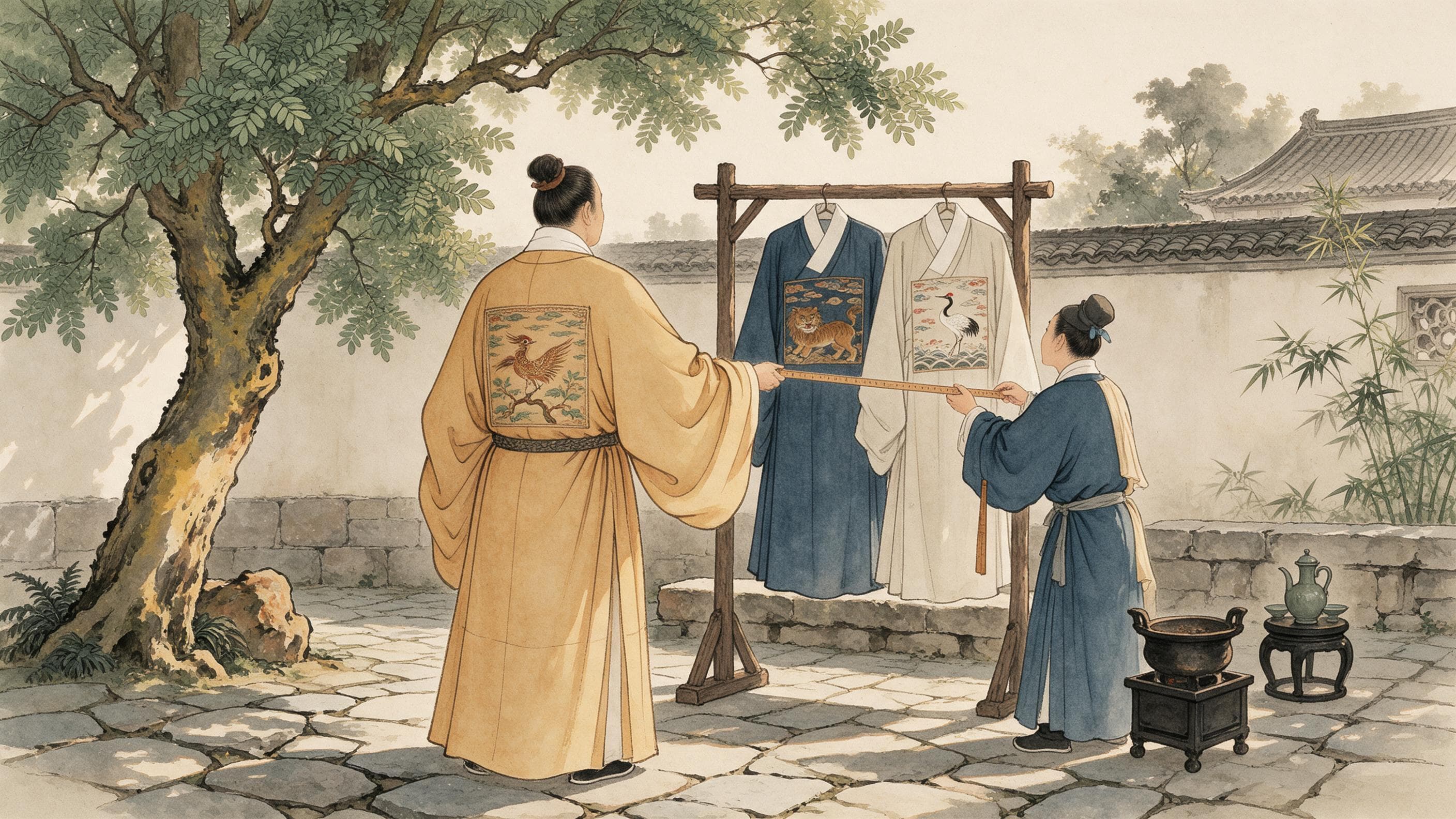
Two Horns on a Fish: Dress, Badges and Rank in Ming China
In 1537 the emperor spotted a python robe on a second-rank minister and asked why a flying fish had two horns. Ming rules fixed rank by badge, cap ridge, robe colour and belt — and fined the dyer who helped.
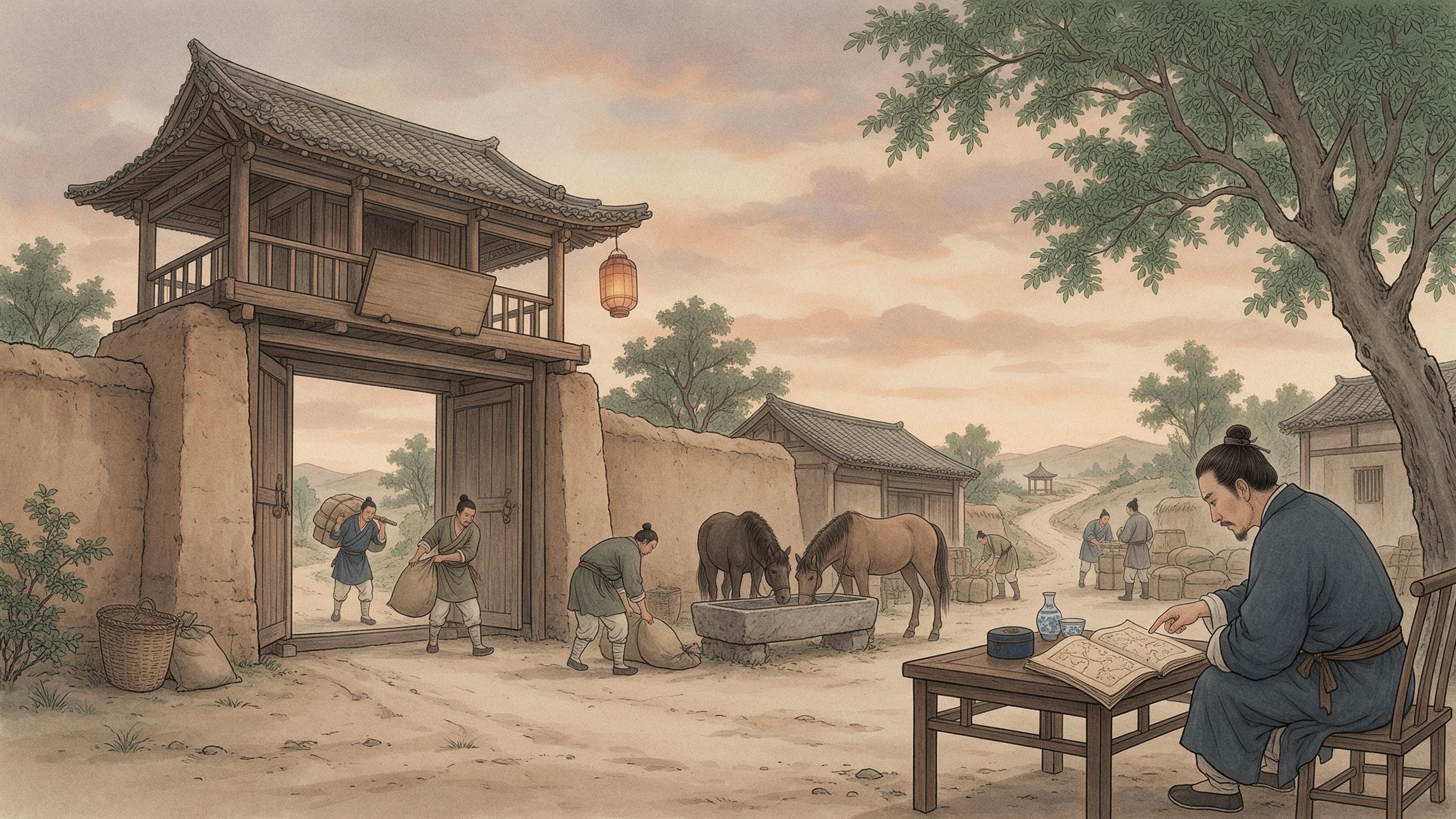
From Beijing to Nanjing: A Huizhou Merchant's Road Book
A Huizhou merchant spent twenty-seven years compiling a route book of Ming China: stations from Beijing to Nanjing, 4,320 li to Chengdu, sixty li a stage on one frontier road. It records distance and danger, never price.
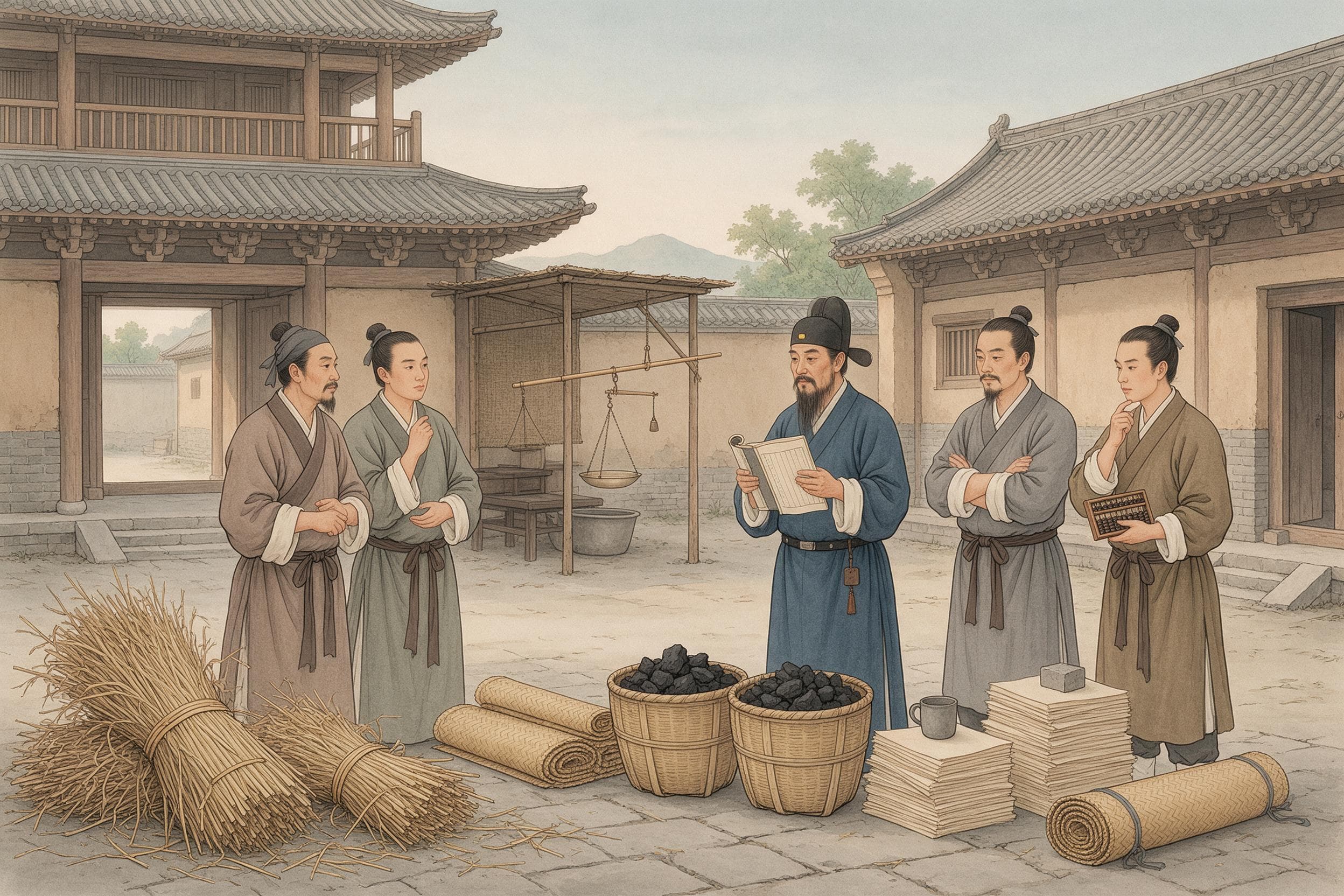
Seven Fen Five Li for Fifteen Brooms: A County Ledger from Wanli Beijing
A Wanping magistrate recorded what one county bought for its altars, tombs and processions, down to the fen and li — and the levies that paid for it. Procurement prices, not retail; a register, not a population.
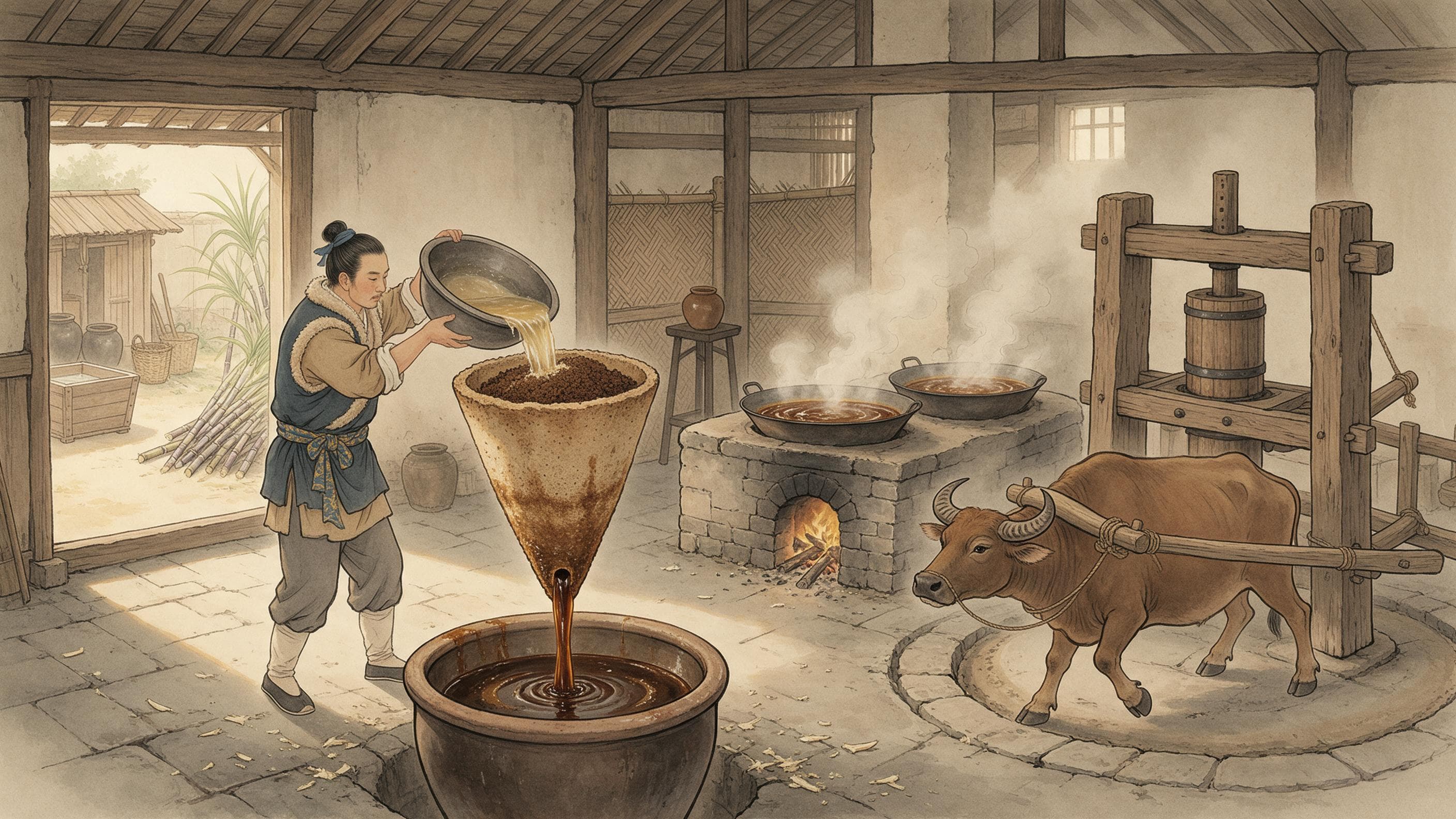
Washed with Yellow Mud: Making White Sugar in Ming China
Packed into a clay cone and washed with yellow mud water, Ming dark sugar came out as white frost, in five grades. Rock sugar was a separate process, not a finer grade of the same thing.
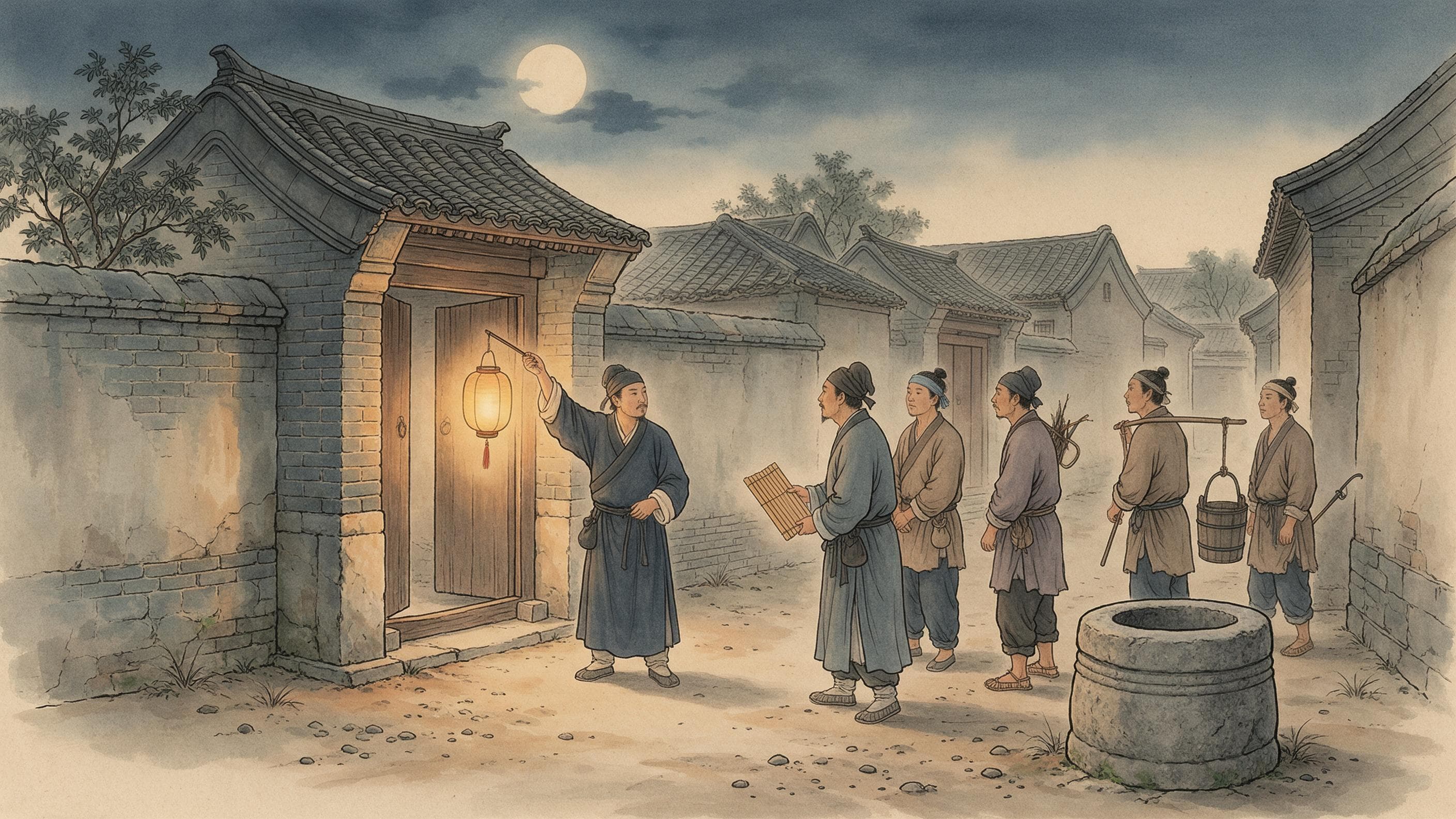
How a Ming City Ran: The Ward Headman's Night Round
A Ming city ran on curfews, ward headmen, state-built shopfronts and a scale checked every three days, not on a city government with a budget.