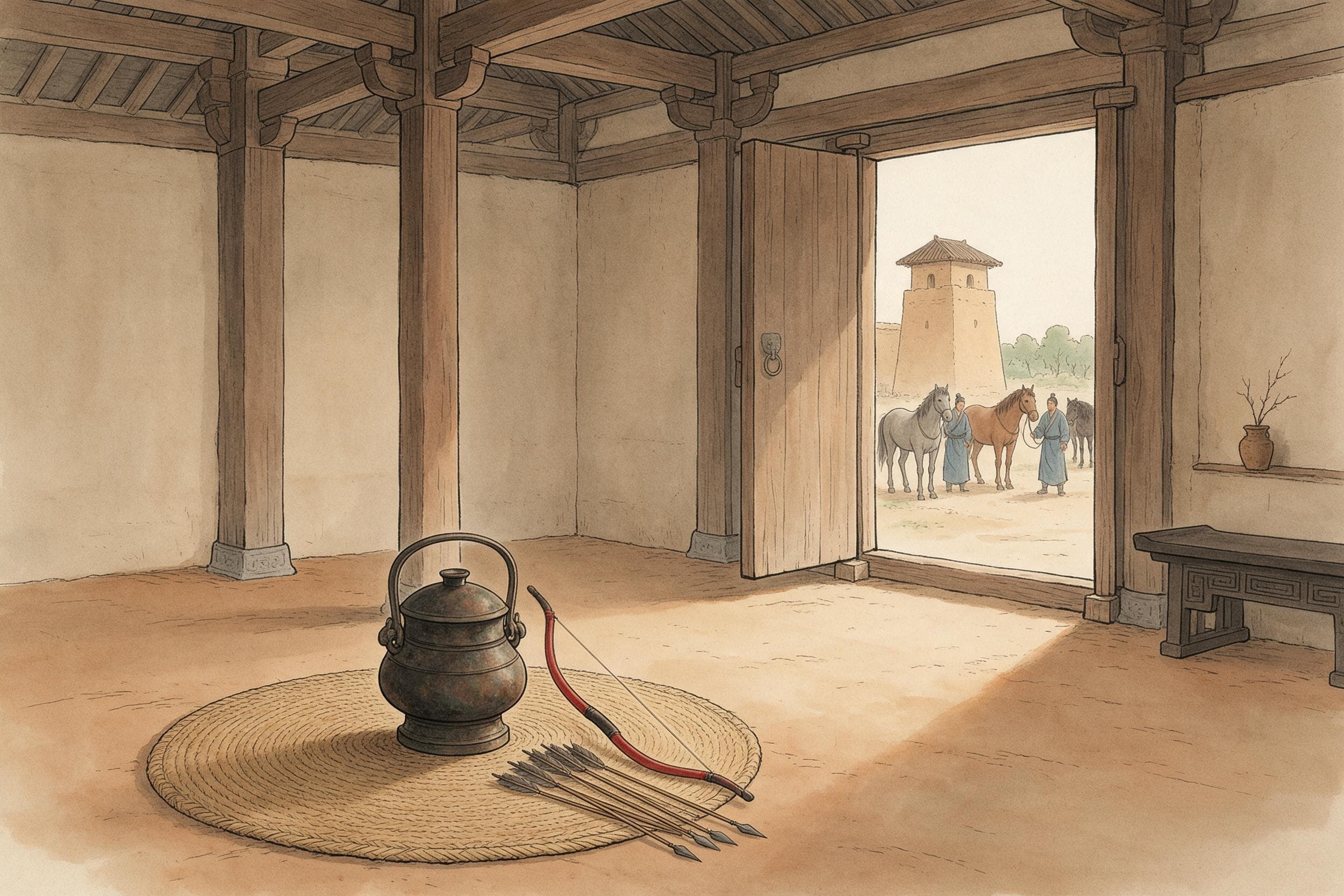
A royal reward can be as short as six items: 'I bestow on you one you-vessel of black-millet wine; one red bow, a hundred red arrows; one black bow, a hundred black arrows; four horses' (用賚爾秬鬯一卣;彤弓一,彤矢百;盧弓一,盧矢百;馬四匹). Six items, each with a number; read aloud, it is a list. These are the king's words to 'Father Yihe' in the Charge to the Marquis Wen, a chapter of the Book of Documents.
Six Items in a Charge
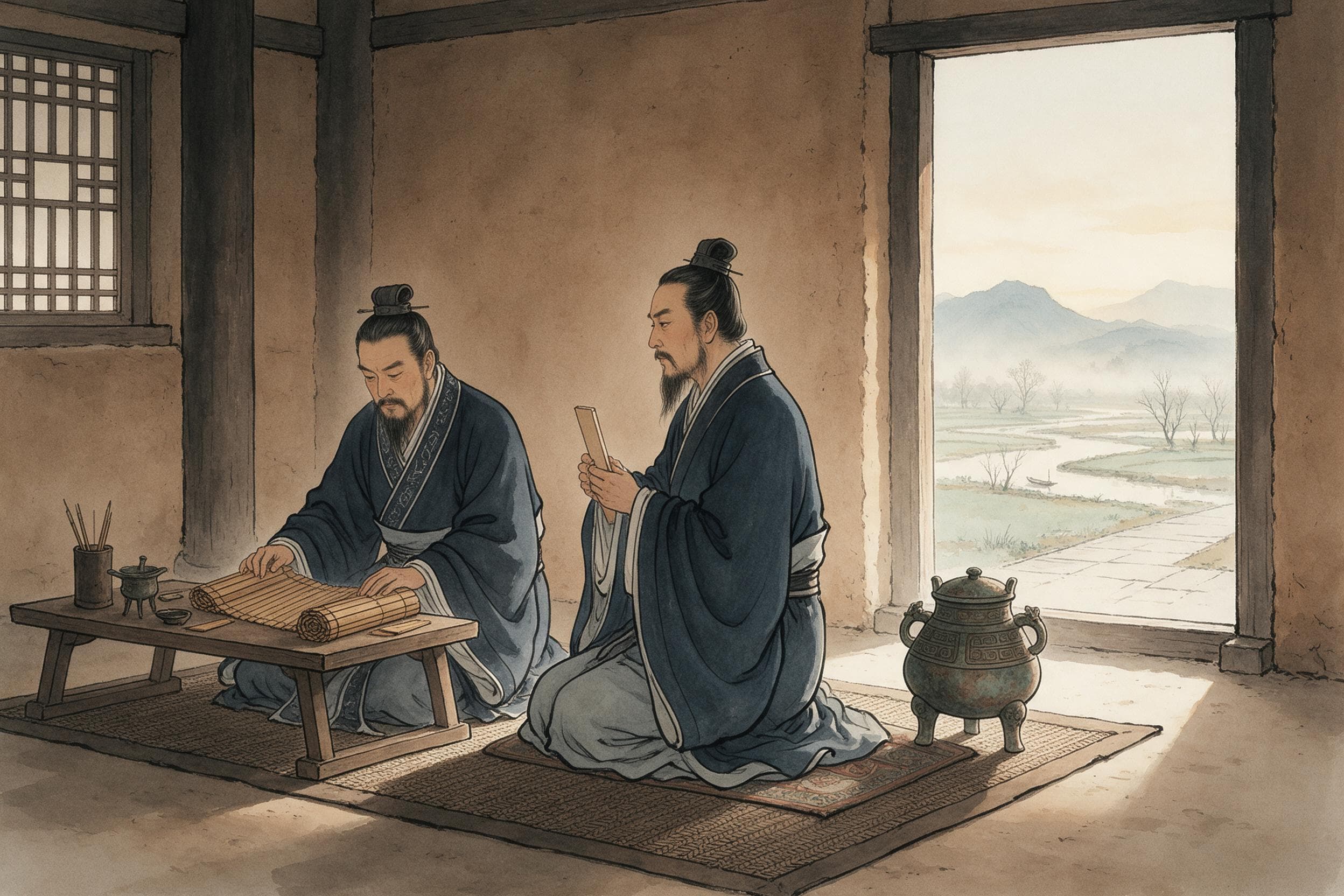
Before the gift comes a speech. The king recalls that Wen and Wu 'were careful of bright virtue, so that it rose on high and spread below', that the former ministers upheld their rulers so 'the ancestors rested in their seats'; then he speaks of himself, a small child who met 'Heaven's great fault', with no seasoned officers left in service; and then of the man before him: 'You were able to make bright your illustrious ancestors; you took Wen and Wu as your model, gathered the lords to continue your ruler, and pursued filial duty to the former men of culture. You have greatly cultivated yourself and defended me in hardship' (汝克昭乃顯祖……捍我于艱). Half the chapter is speech, and not one object in it.
The second speech carries both the charge and the reward: 'Return and look to your troops, pacify your state. I bestow on you one you-vessel of black-millet wine; one red bow, a hundred red arrows; one black bow, a hundred black arrows; four horses. Go, father: be gentle to the distant, able with the near, kind and tranquil to the small people, without idleness or ease' (其歸視爾師……用成爾顯德). The reward sits between two instructions, and the text never calls it a condition of service. The verbs of giving differ too: the Charge uses 賚, the poem uses 釐 and 錫.
One Object, Two Kinds of Text
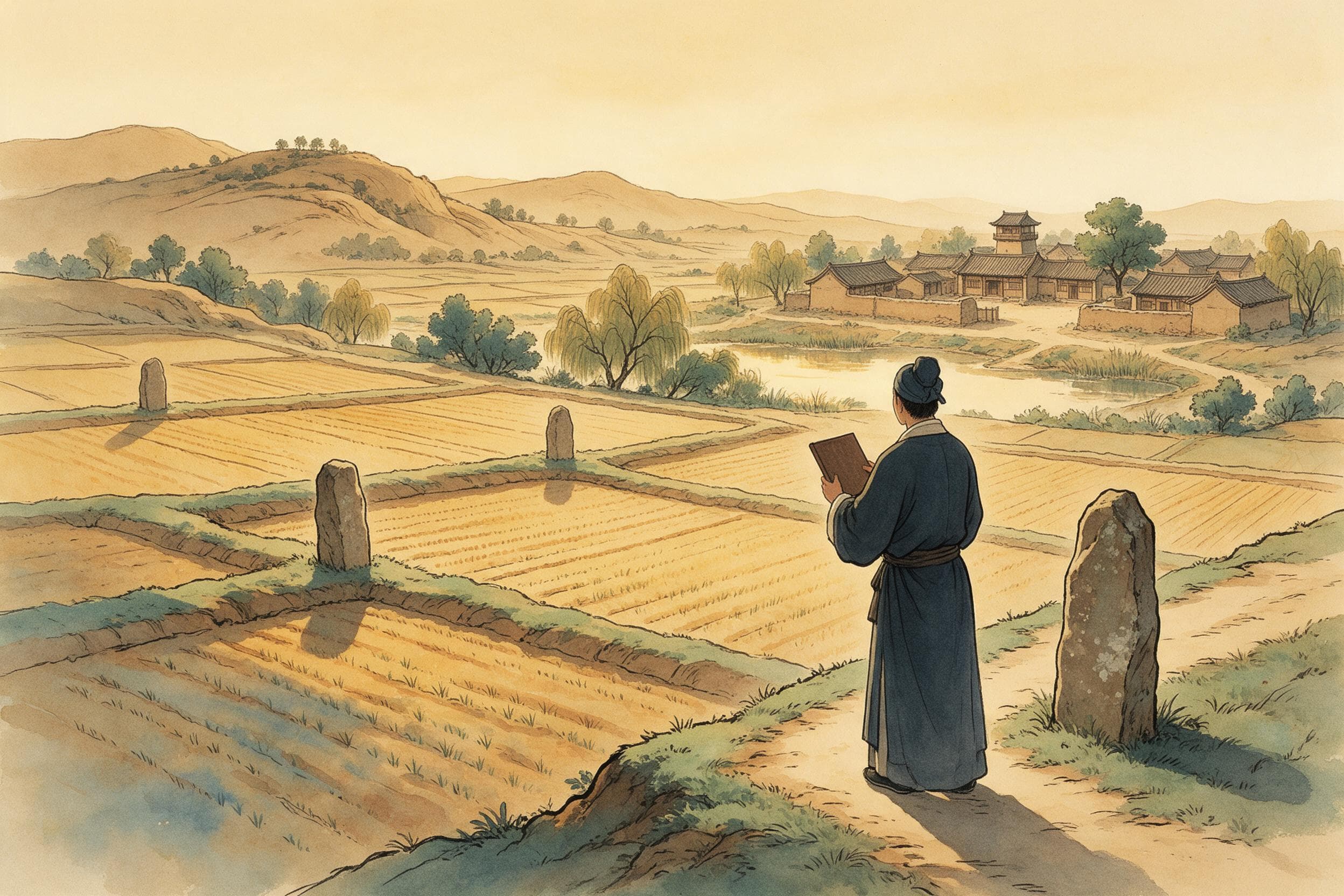
The poem Jiang Han in the Greater Odes has another list, written quite differently. It first tells of war and boundaries: 'By the bank of the Jiang and Han the king commanded Zhao Hu: spread out the four quarters, lay out my borders.' Then the charge: 'The king commanded Zhao Hu, to survey and to proclaim… Zealously discharge your martial service, and I shall bestow blessing on you' (肇敏戎公,用錫爾祉). What is actually given comes in the next stanza: 'I bestow on you a jade ladle and one you-vessel of black-millet wine, announcing it to the men of culture; I bestow hills and fields, receiving the charge in Zhou, from the charge of your ancestor Shao. Hu bows his head: the Son of Heaven ten thousand years' (釐爾圭瓚,秬鬯一卣,告于文人。錫山土田,于周受命,自召祖命).
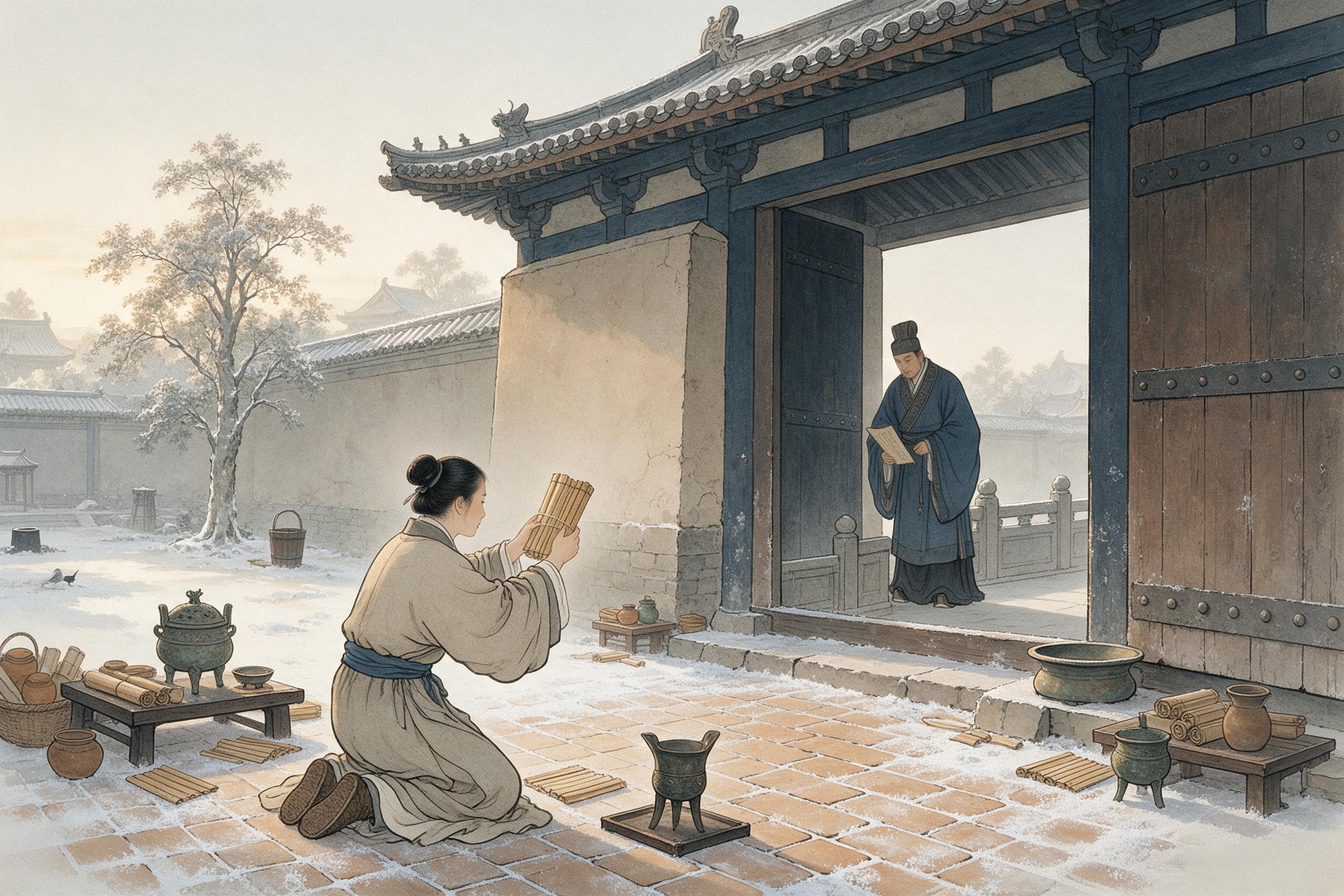
Set side by side, the two pages share exactly one object: 'one you-vessel of black-millet wine'. The charge adds bows, arrows and horses; the poem adds a jade ladle and 'hills and fields'. The numbers make their own contrast: arrows are counted to the hundred, horses to four; the land is only three characters, 'hills and fields', with no acreage and no number of districts. The two cannot be merged into one 'standard package of reward'; they can only be listed side by side. The one ritual action the poem records is in the line 'announcing it to the men of culture' (告于文人): the gift is announced to the ancestors.
The Poem Is a Praise Poem
At the head of the Jiang Han page stands the Mao preface: 'Jiang Han: Yin Jifu praised King Xuan; able to raise the fallen and set right disorder, he ordered the Duke of Shao to pacify the Huaiyi' (《江漢》,尹吉甫美宣王也). That is a Han composition, not the poem itself, and must be marked as such. The poem's close says: 'Hu bows his head and extols the king's bounty; he makes a vessel for the Duke of Shao; the Son of Heaven ten thousand years' (虎拜稽首,對揚王休). 'Extolling the king's bounty' is the poem's own statement of what it is for; the reward inside it belongs to praise, not to bookkeeping.
The Charge is a document of investiture: the king speaks directly to a subject, both speeches beginning 'The king said'. One is a king to a minister, the other a poet praising a king; that is the most important difference between the two. Neither records the cycle of rewards, differences of rank, any return, or any enforcement: not how often, not which rank got what, not what the recipient gave back, not where or in what order anything was done.
The Object Names: No Commentary Here
None of the objects — the black-millet wine, the jade ladle, the red bow, the black bow, the you-vessel — is glossed on either page. The Charge is plain text; the Jiang Han page carries no Mao commentary and no Zheng Xuan annotation, and its 'notes' section is empty. So only the usual glosses can be given, and they must be labelled as such: it is generally held that ju is black millet, chang an aromatic wine, you a wine vessel, a jade ladle a jade libation scoop, tong red and lu black. What these objects looked like and how they were used the pages do not say, and this article does not fill the gap from archaeology.
The quantities are quoted as written: one you of wine; one red bow and a hundred red arrows; one black bow and a hundred black arrows; four horses; and in the poem a jade ladle, one you of wine, hills and fields. No valuation, no conversion, no capacity estimates — 'one you' is not turned into pints or pecks.
What the Two Pages Do Not Have
No date and no name: the Charge calls the recipient only 'Father Yihe' and gives no year; it is generally placed in the early Eastern Zhou, and the old identification with the Marquis Wen of Jin is a later account — both must be marked as such, never as what the page says. There is no hierarchy of rewards, no cycle, no obligation to return anything, no record of enforcement, no value. So this article writes no 'Zhou system of rewards', no causal claim that gifts bought loyalty, and brings in no bronze inscriptions — that would need another set of sources. Nor is it the same subject as the site's piece on the tribute lists: that is tribute going up, this is reward coming down. Together the two pages give two lists and a praise poem; beyond the lists, nothing. Their silence is part of the evidence: the texts itemise gifts and never theorise them.
Related reading:The Cash Box: How a Warring States Market Ran · Six Names for One Banknote: How Jin China Kept Renaming Its Paper Money · The Markets of Chang'an: A Two-Hundred-and-Sixty-Six-Pace Square and a Roll of Merchants
Sources & further reading
- 《尚书·文侯之命》(维基文库本,未与点校本复核) — A royal charge, not a ceremony record. The king first recalls Wen and Wu and the former ministers, speaks of his own misfortunes and lack of veteran officers, and praises the addressee: 'You were able to make bright your illustrious ancestors… you have greatly cultivated yourself and defended me in hardship' (汝克昭乃顯祖……捍我于艱). Then the second speech: 'Return and look to your troops, pacify your state. I bestow on you one you-vessel of black-millet wine; one red bow, a hundred red arrows; one black bow, a hundred black arrows; four horses. Go, father: be gentle to the distant, able with the near…' (用賚爾秬鬯一卣;彤弓一,彤矢百;盧弓一,盧矢百;馬四匹……). The page is plain text: no date, no name for the recipient beyond 'Father Yihe', no commentary. The traditional identification with the Marquis Wen of Jin is a later account, and the dating to the early Eastern Zhou is the usual modern view; the page itself supplies neither.
- 《诗经·大雅·江汉》(维基文库本,未与点校本复核) — A six-stanza praise poem, with the Mao preface at its head: 'Jiang Han: Yin Jifu praised King Xuan; able to raise the fallen and set right disorder, he ordered the Duke of Shao to pacify the Huaiyi' (《江漢》,尹吉甫美宣王也). That preface is a Han composition, to be marked as such; the page has no Mao commentary or Zheng Xuan annotation, and its 'notes' section is empty. The reward lines: 'The king commanded Zhao Hu… Zealously discharge your martial service, and I shall bestow blessing on you' (肇敏戎公,用錫爾祉); 'I bestow on you a jade ladle and one you-vessel of black-millet wine, announcing it to the men of culture; I bestow hills and fields, receiving the charge in Zhou, from the charge of your ancestor Shao. Hu bows his head: the Son of Heaven ten thousand years' (釐爾圭瓚,秬鬯一卣,告于文人。錫山土田,于周受命,自召祖命。虎拜稽首,天子萬年). The poem closes with 'Hu bows his head and extols the king's bounty' (對揚王休) — praise is its business.