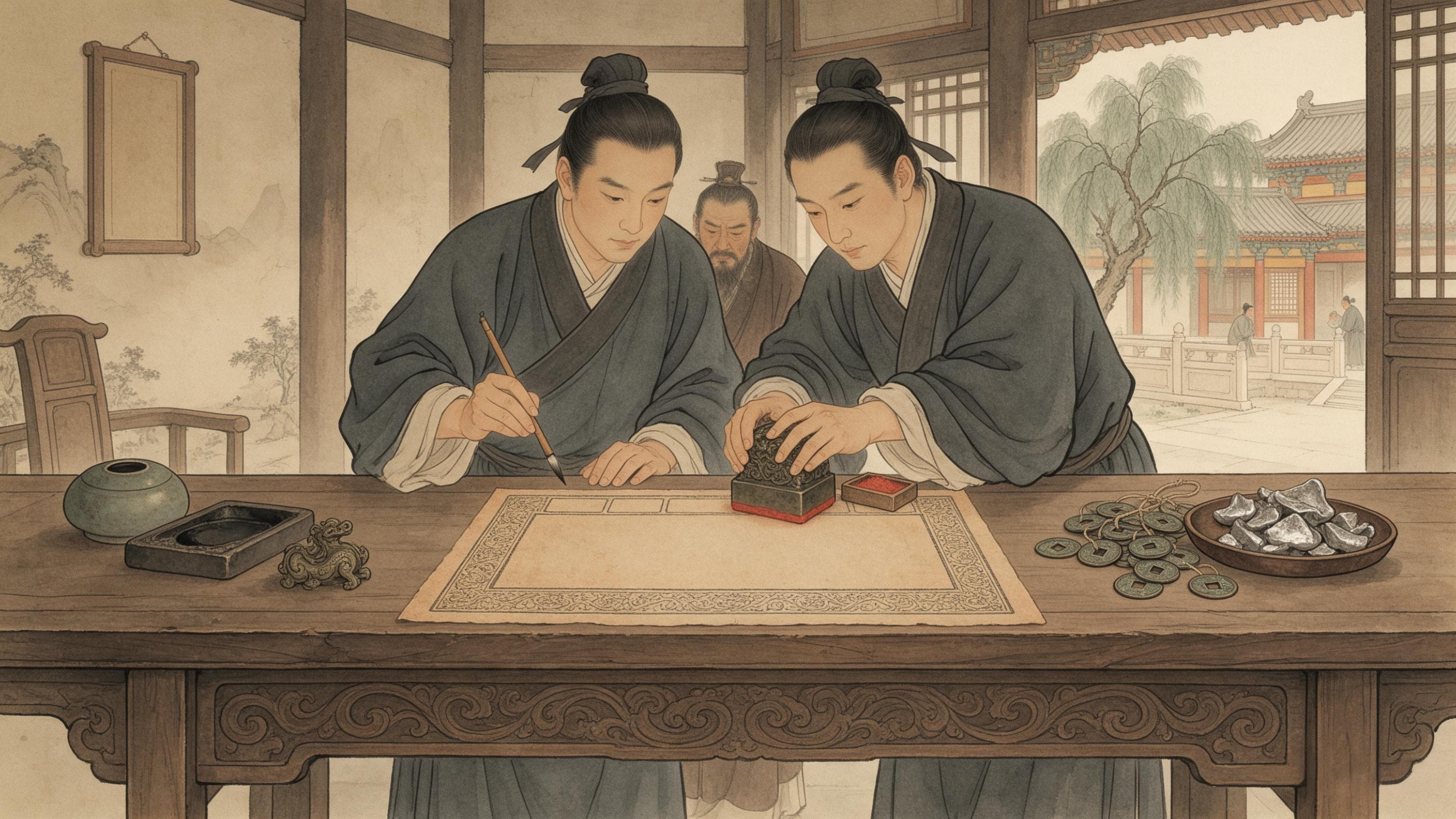
A Jin dynasty note had a face you could read off a page. A patterned border enclosed the sheet; across the top, the denomination was written horizontally; at the left was a batch mark, at the right a serial. Outside the frame, in seal script: "Forgers of paper money are beheaded; informers receive three hundred strings." Below the marks came the issuing office, then a chain of signatures — the treasury clerk, the ledger clerk, the deputy, the commissioner, each signing, with the date, up to the officials of the Ministry of Revenue. The credit of the note was that chain of names.
Paper because there was not enough bronze
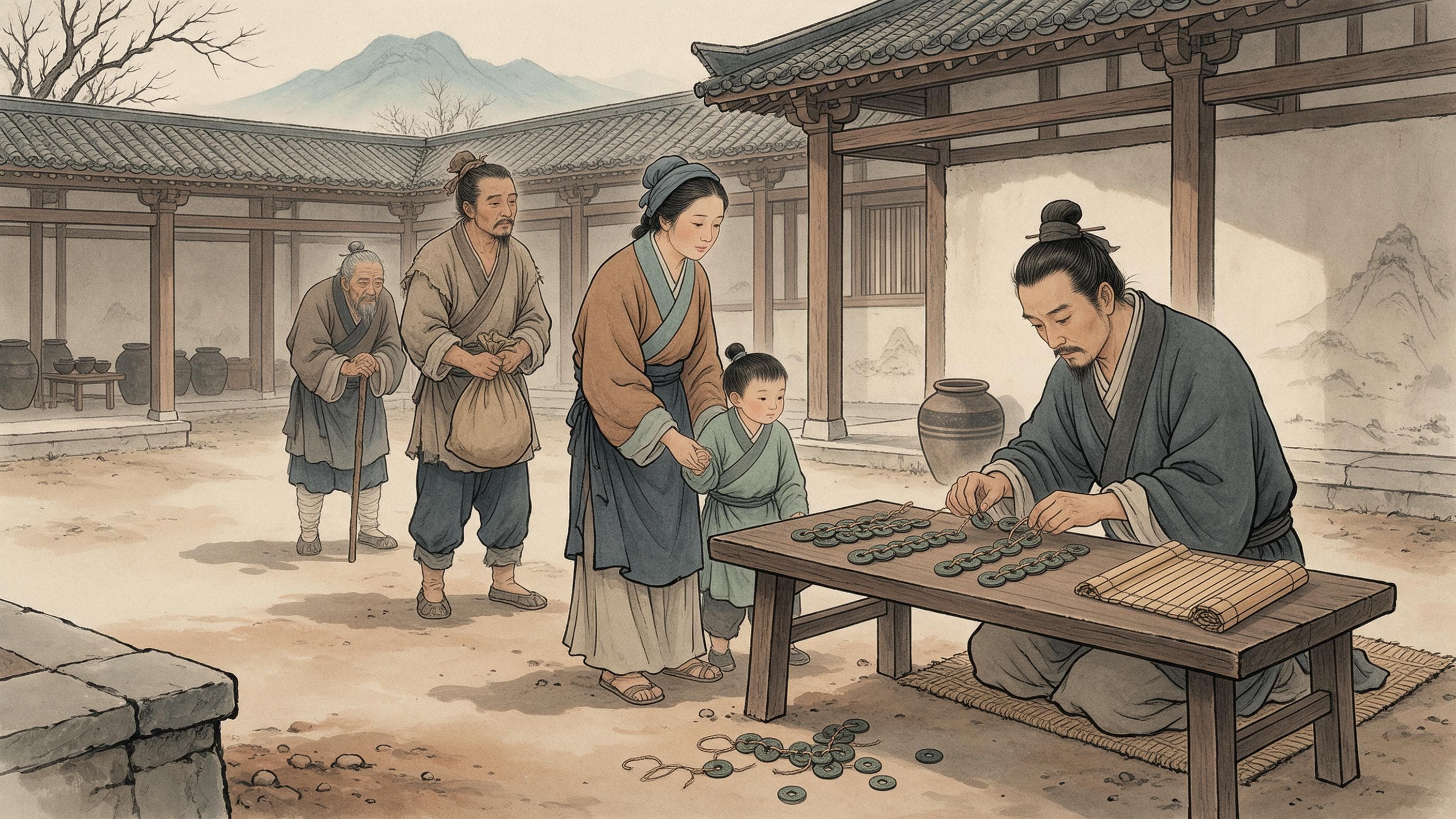
According to the History of Jin, in 1154, after the court moved its capital, the minister Cai Songnian revived the note-and-licence system and "made the jiaochao, to circulate alongside coin". There were two sets of denominations: one, two, three, five and ten strings, called the large notes, and one hundred to seven hundred cash, called the small ones. They ran beside bronze coin rather than replacing it, and they came "with a seven-year limit, old exchanged for new": every seven years the old notes had to be brought to a treasury and changed. The history is candid about the borrowing: this followed the Sichuan paper of the Song, with the term stretched out, and it existed "because bronze was scarce, a makeshift arrangement".
Four characters that cut the return path
In 1189 the officials asked for the limit to be abolished. Notes were as good as cash, they argued; merchants going far preferred to carry paper and buy it with coin, which suited both state and public; the only thing causing doubt was the expiry itself. Let the seven-year rule be cut, they said, and let people use the notes as long as they liked, exchanging worn ones at a local treasury. The court agreed. The history's sentence is the hinge of the whole story: the seven-year limit was abolished, notes were changed only once their writing had faded, "and from this the method began; collection had no technique, more went out than came in, and the people came to think lightly of it".
The mechanism behind that sentence is simple. Under the old rule, every note printed had to come back to a treasury within a fixed term — a return path. With the term gone, a note came back only when its ink wore off. What was issued had no matching withdrawal, and the paper in circulation grew heavier by the year and lighter in value, until the historians themselves wrote the diagnosis: collection had no technique.
What it cost to print a note
For a while the state even charged a printing fee. The old rule took fifteen cash for every string exchanged; in 1183 this became eight cash per sheet regardless of value; in 1197 the ministers asked for the old system back and the emperor set the price himself at twelve cash a string; in 1205 it was ordered down to six cash, and in 1207 to two qian per sheet. The unit changes from cash to qian along the way, and is left as recorded rather than converted.
By the end the fee had become a joke at the note's expense. In 1215 an official reported that ten-string notes were piled up in private hands with nowhere to go, so trade had fallen back on coin, and "each string of paper was worth one cash, less than the cost of its own printing". That same year the chancellor wrote that a note for a thousand cash "is worth a few cash, printed as fast as it is spent". These are officials' phrases in memorials, not market statistics, and should be read as such.
Silver to the rescue, then five renamings
In 1197 the state tried silver. Salaries and frontier supply were being paid in a mix of silver and notes; the old rate was fifty liang of silver to a hundred strings, but people were cutting ingots into pieces and the price moved with the pieces. So silver was cast into a named coin, the Chengan treasure, in five grades from one to ten liang, each liang set at two strings, to serve as the reserve behind the paper. Three years later it was abandoned: forgers had begun alloying it with copper and tin, it would no longer pass, and "the capital's shops closed". The history records the shops closing.
Then came the renaming, five times in all: from jiaochao to certificate, treasury note, fountain, precious good and assembly. In 1215 the jiaochao was renamed the Zhenyou treasure certificate; the law was unchanged, only the name. In 1217 a Zhenyou treasury note was issued at one string "worth a thousand strings". In 1222 came the Xingding treasure fountain, at one string worth four hundred of the previous notes, two strings to a liang of silver; later that same year its value was cut to fifty, and a further note, the Yuanguang precious good, was printed on silk damask — even the material had changed. The last, the Tianxing treasure assembly, was printed at Caizhou in 1233 in four grades from one to four qian; within months the state was gone.
The sharpest evidence is one comparison in the same unit. In 1221 a minister noted that the Zhenyou note had first stood at four strings to a liang of silver; it now stood at more than eight hundred. That is an official rate, not a price index, but the direction needs no commentary.
As the paper sank, the state turned against talk. In 1207, when people were grumbling in the markets about the constant changes, an edict authorised the arrest and informing on anyone who "gathered to discuss the difficulty of the note law", with three hundred strings for the informer. In 1223, after restricting silver — no liang above three hundred strings of the new notes, and no silver at all for goods worth less than three liang, and above that one part silver to two parts notes and precious goods — "the markets closed by day and traders stopped travelling", and the court had to withdraw the rule. That sentence is often attached to the earlier silver coin; it belongs here instead.
What this record is, and is not
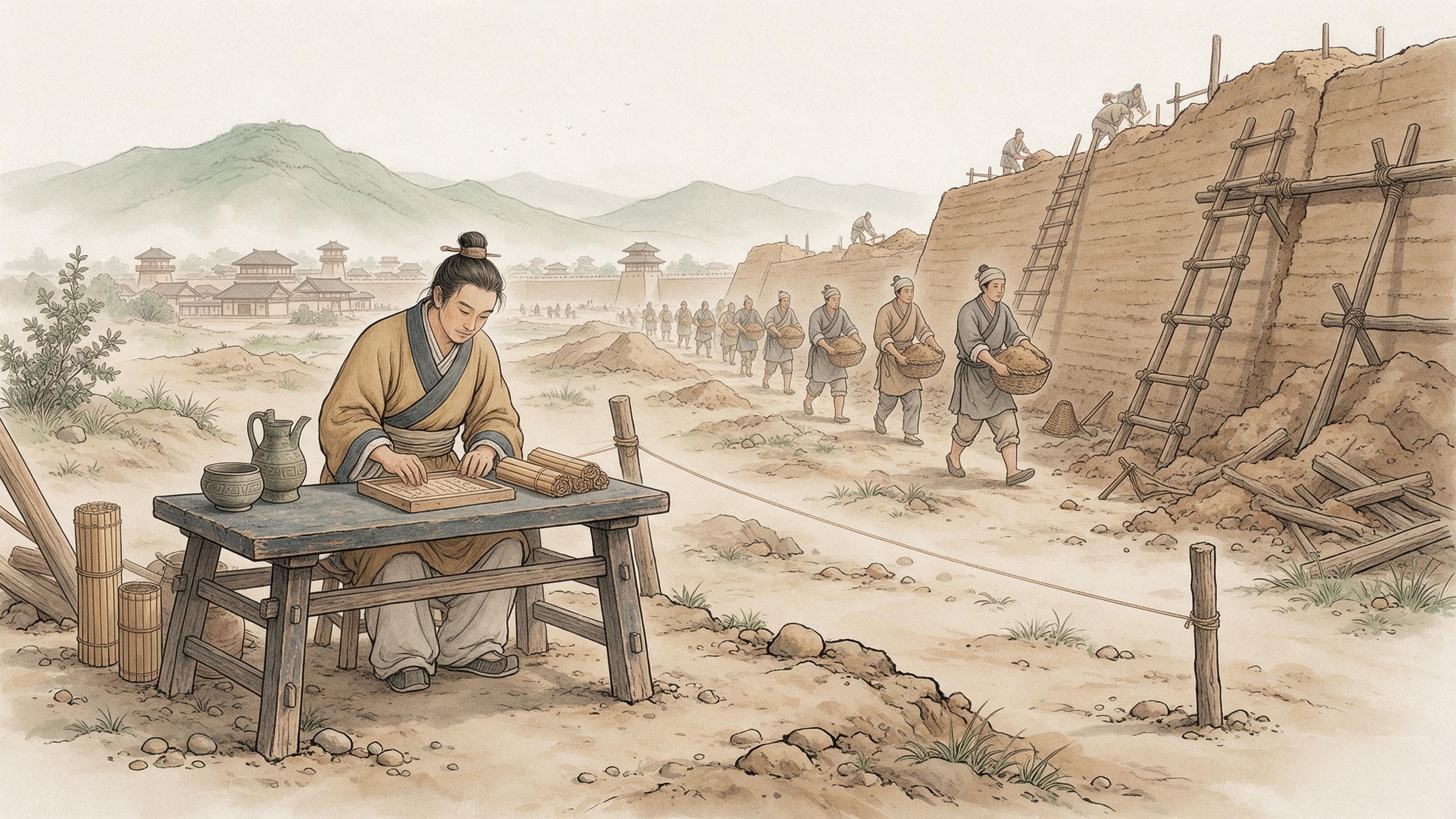
Everything above comes from one chapter: juan 48 of the History of Jin, the treatise on food and money. The book was compiled under the Yuan, with Tuotuo (脱脱) at the head of the commission, and completed in 1344, from Jin court diaries and state records; it is an edited version of primary material, not a Jin ledger. That a dynasty's money is described here from a single chapter is itself something the article has to say.
It also cannot supply certain things. There are no mintage or issue figures, no treasury stocks, no surviving note or printing plate. The denominations, exchange rates and printing fees are regulations and officials' proposals, not market averages. The vivid phrases about a string of paper being worth a cash are rhetoric in a memorial, usable as evidence of what officials said, not as statistics.
So the story is not "paper money failed". It is a single institutional detail: the state removed the one mechanism that brought its paper back into the treasury, then renamed the problem again and again. The note itself had promised, in print, that at such-and-such a treasury one could exchange coin for notes and notes for coin. Once there was no longer a reason for it to come back, renaming was the only move left.
Sources & further reading
- 脫脫等《金史》卷四十八·食貨三·錢幣(Tuotuo et al., History of Jin, juan 48, "Food and Money III: Coins and Notes") — The core source for Jin paper money, compiled under the Yuan in 1344: the issue of jiaochao in 1154 with five large and five small denominations, the seven-year redemption cycle, its abolition in 1189 when notes were exchanged only once their writing had faded, the printed layout and the printing fee, and the later sequence of renamed notes down to 1233.
- 脫脫等《金史》卷四十八·食貨三·錢幣(承安寶貨條)(same juan, entry on the Chengan treasure silver) — Silver ingots of fifty liang stood at a hundred strings of cash; in 1197 silver was cast in five grades from one to ten liang at two strings a liang, and the issue was abandoned three years later after forgers alloyed it with copper and tin and the capital's shops closed.