The Liji holds two conversations in two neighbouring chapters. In one, Confucius is at rest at home (仲尼燕居) with Zhang, Gong and Yan You beside him, and the talk drifts to ritual. In the other, also at rest (孔子閒居), Zi Xia is beside him, asking about the line in the Odes: 凱弟君子,民之父母, "the kindly and gentle lord, father and mother of the people." One teacher, two sets of students, adjacent topics — but not one argument: one conversation is about the measure of ritual, the other about the root of poetry and music.
At Rest: Three Ways to Miss the Measure
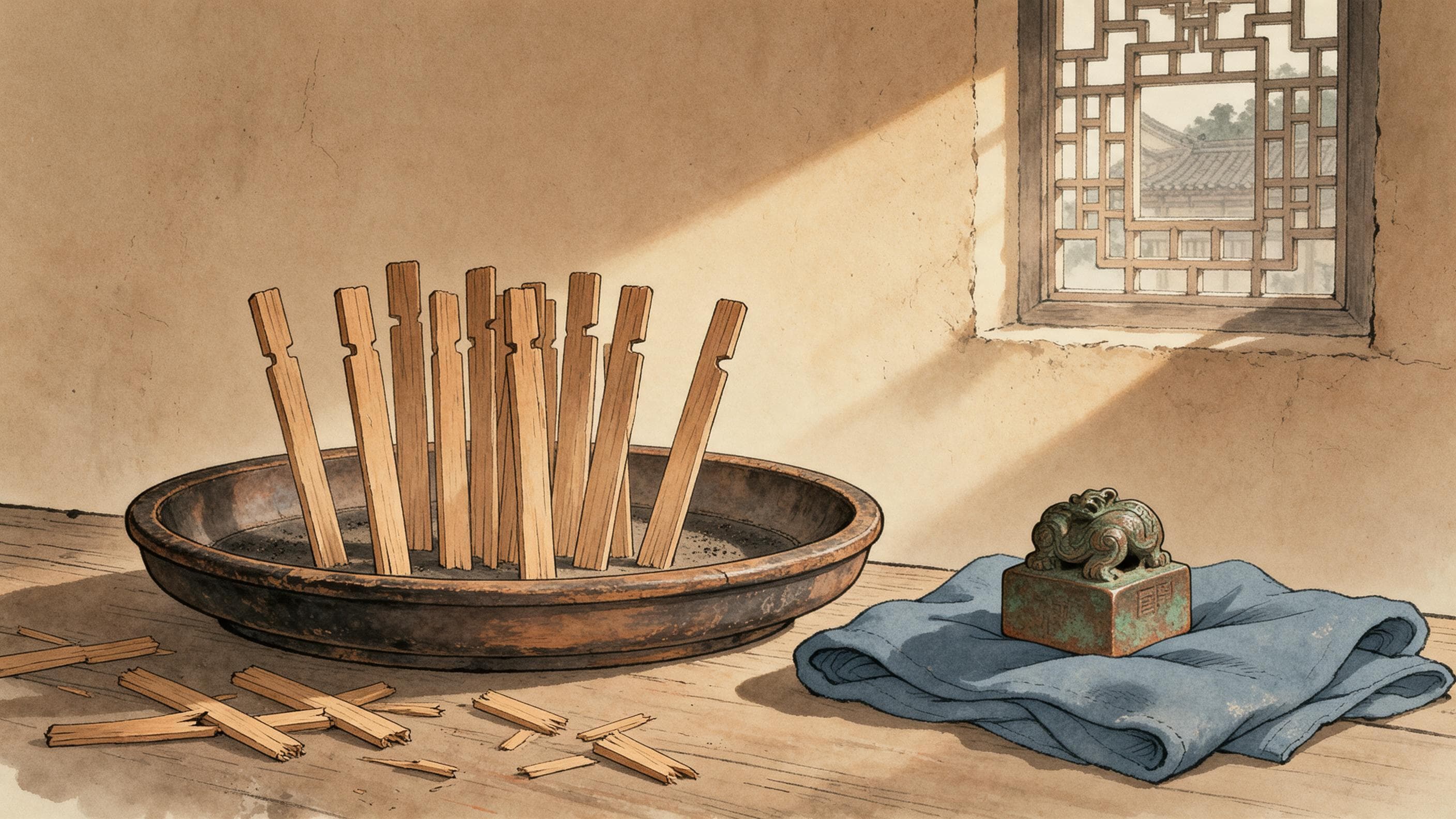
At rest, Confucius opens: 居,女三人者!吾語女禮,使女以禮周流,無不徧也 — sit, all three of you; I shall speak to you of ritual, so that you may carry it round everywhere without leaving a place out. Zi Gong rises from his mat and asks how. The answer comes in three clauses: 敬而不中禮謂之野,恭而不中禮謂之給,勇而不中禮謂之逆 — reverence that does not hit the measure is rusticity; deference that does not hit the measure is slickness; courage that does not hit the measure is perversity. Reverence, deference and courage are all good words; off the measure, they turn into wildness, glibness and contrariety. He adds: 給奪慈仁 — slickness takes away kind-heartedness. Then he marks two students: 師!爾過,而商也不及 — Shi overshoots, Shang falls short; and of Zi Chan, 猶衆人之母也,能食之,不能教也, like the mother of the crowd, able to feed them, not to teach them. Asked what the measure is, he answers 禮乎禮。夫禮,所以制中也 — ritual, ritual: ritual is what fixes the mean.
What Ritual Is: Leading Evil Away, Keeping the Good
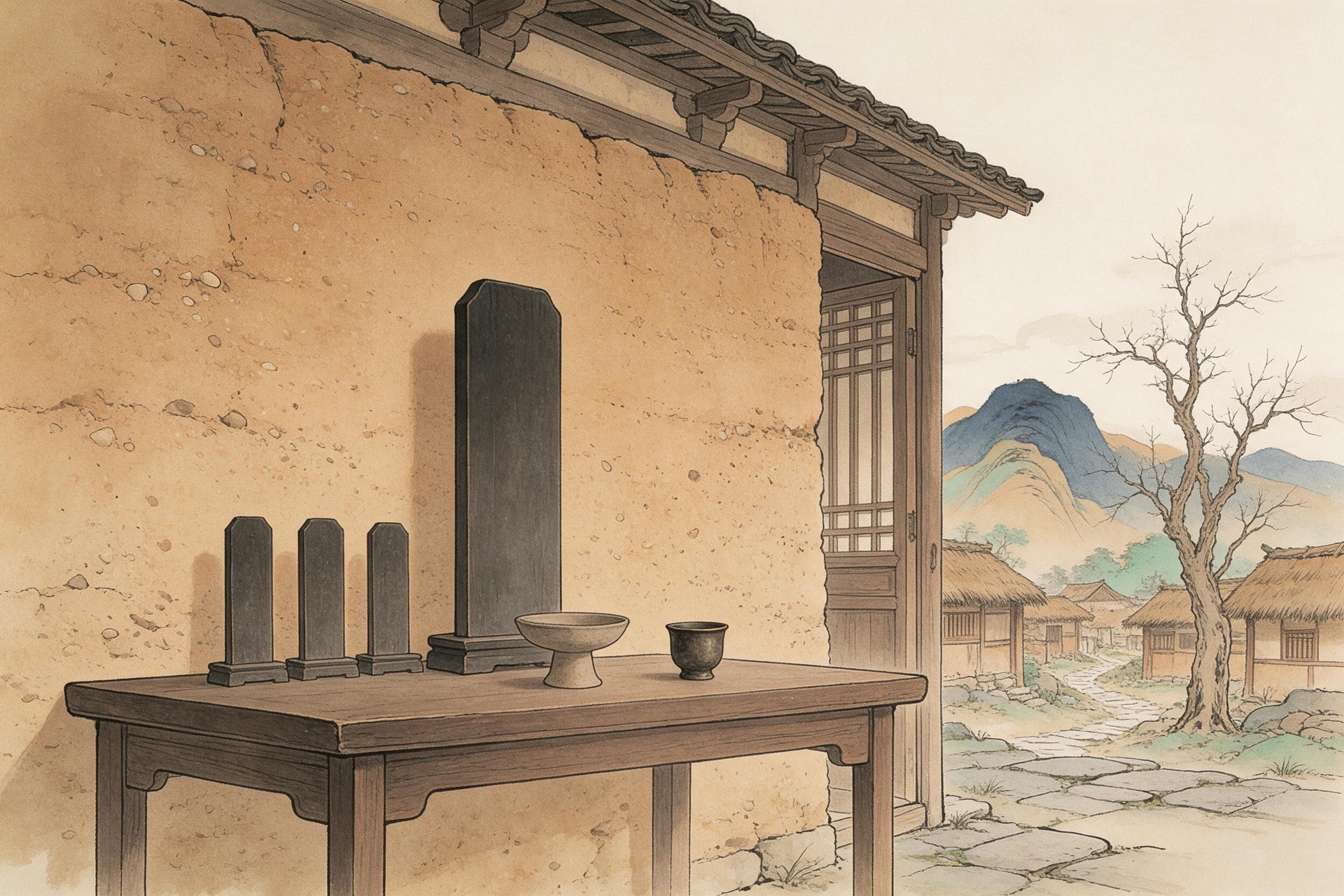
Yan You steps forward: 敢問禮也者,領惡而全好者與? — is ritual the thing that leads evil away and keeps the good whole? Yes, says Confucius, and gives five clauses: 郊社之義,所以仁鬼神也。嘗禘之禮,所以仁昭穆也。饋奠之禮,所以仁死喪也。射鄉之禮,所以仁鄉黨也。食饗之禮,所以仁賓客也 — the meaning of the suburban and altar sacrifices is to be kind to the ghosts and spirits; the seasonal sacrifices, to be kind to the ancestral order; the offerings to the dead, to be kind in death and mourning; the archery and district rites, to be kind to the neighbourhood; the feasts, to be kind to guests. Five rites, five "so as to be kind to". The passage says where kindness is placed; it does not describe how any rite is performed.
Then the effects: 明乎郊社之義,嘗禘之禮,治國其如指諸掌而已乎 — understand these and governing a state is like pointing at your palm. There follows a run of clauses: with ritual in daily life, old and young are distinguished; in the women's quarters, the three branches of kin are harmonious; at court, ranks are in order; in the hunt, military matters are practised; in the army, martial achievement is completed. The reverse is said too: without ritual, every one of these falls out of order.
So what is ritual? 禮者何也?即事之治也 — ritual is the ordering of the matter in hand. A state without it is 譬猶瞽之無相與!倀倀乎其何之?譬如終夜有求於幽室之中,非燭何見? — like a blind man walking without a guide, lost, with nowhere to go; like searching all night in a dark room: without a candle, what can you see?
Three more clauses tie poetry, music and virtue together: 不能詩,於禮繆。不能樂,於禮素。薄於德,於禮虚 — without the Odes, ritual goes wrong; without music, ritual is bare; with thin virtue, ritual is hollow. And: 禮也者,理也。樂也者,節也。君子無理不動,無節不作 — ritual is the pattern, music the measure; the gentleman moves by nothing without pattern, acts by nothing without measure.
Zi Zhang Asks About Government: Ritual Is Not the Mats and Cups
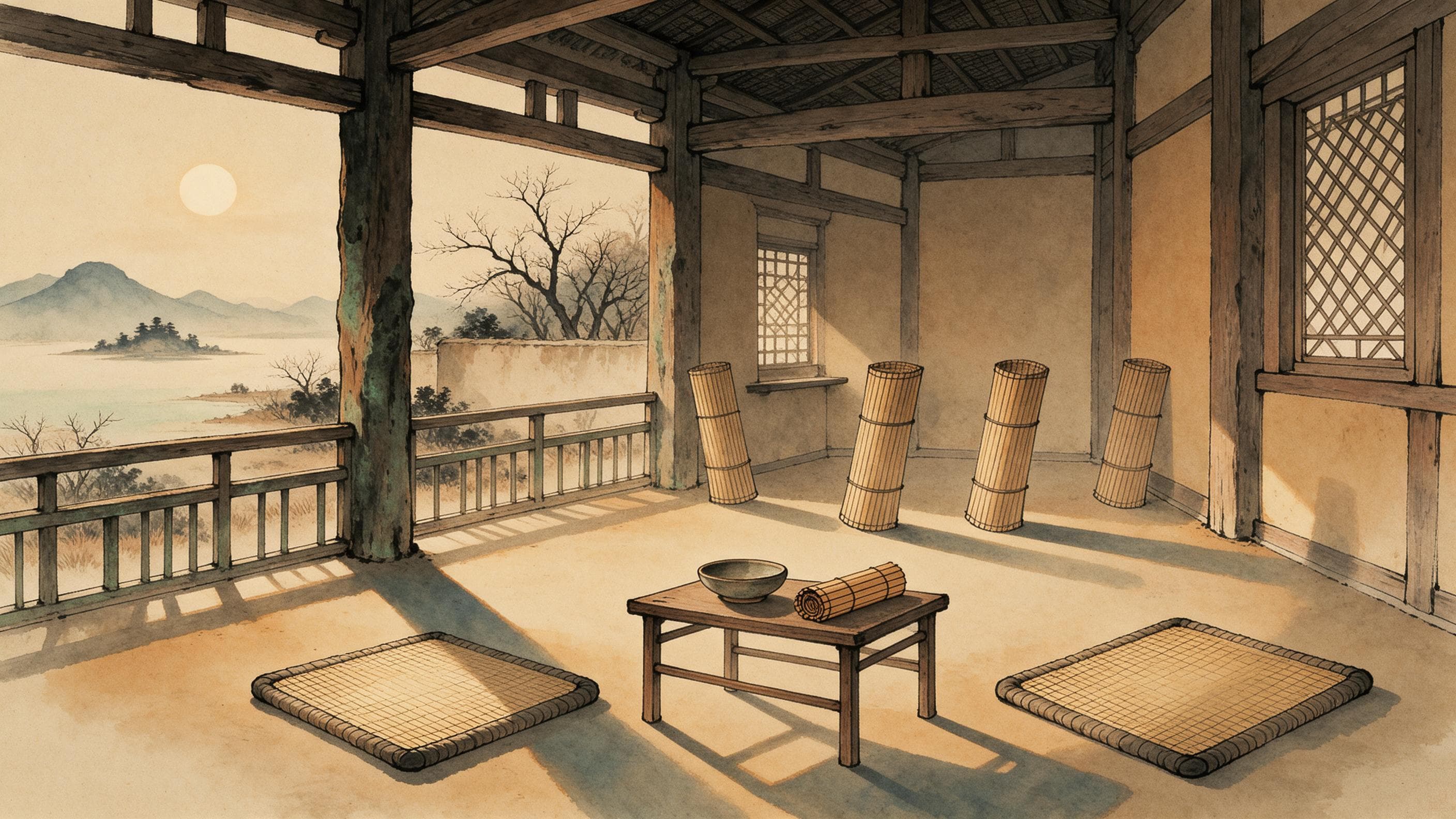
Zi Zhang asks about government, and Confucius answers with a question: 爾以爲必鋪几筵,升降、酌獻、酬酢,然後謂之禮乎?爾以爲必行綴兆,興羽籥,作鐘鼓,然後謂之樂乎? — do you think ritual means laying out the mats, going up and down, pouring and toasting? Do you think music means forming the ranks, raising the feathers and flutes, striking the bells and drums? Then the definition: 言而履之,禮也。行而樂之,樂也 — to say a thing and carry it out is ritual; to do it and take joy in it is music.
Order is not in the grand scene but in what is in front of you: 目巧之室,則有奥阼,席則有上下,車則有左右,行則有隨,立則有序 — a well-made room has its corner and its steps; a mat has high and low; a carriage has left and right; walking has a following; standing has a rank. Hence 禮之所興,衆之所治也。禮之所廢,衆之所亂也 — where ritual rises, the many are governed; where it falls, the many are in disorder.
At Rest Again: Father and Mother of the People
The other chapter changes the student. At rest, with Zi Xia beside him, Confucius is asked about 凱弟君子,民之父母: what must one be to be father and mother of the people? 夫民之父母乎!必達於禮樂之原,以致五至,而行三無,以横於天下,四方有敗,必先知之 — one must reach the root of ritual and music, bring about the Five Reaches, practise the Three Absences, and so spread across the world; when any quarter is failing, one knows it first.
The Five Reaches are five arrivals: 志之所至,詩亦至焉;詩之所至,禮亦至焉;禮之所至,樂亦至焉;樂之所至,哀亦至焉。哀樂相生 — where the will arrives, the Odes arrive; where the Odes arrive, ritual arrives; where ritual arrives, music arrives; where music arrives, grief arrives; grief and joy give birth to each other. The page gives this chain and no further gloss, and none is supplied here. It closes: 志氣塞乎天地 — the will and vital breath fill heaven and earth.
The Three Absences, and the Three Impartialities
The Three Absences are named only: 無聲之樂,無體之禮,無服之喪,此之謂三無 — music without sound, ritual without bodily form, mourning without mourning dress. Asked which lines of the Odes come near them, he gives one each: 夙夜其命宥密 — music without sound; 威儀逮逮,不可選也 — ritual without form; 凡民有喪,匍匐救之 — mourning without dress. How each line matches is not explained on the page, and is not invented here. Later there are 五起, five rounds of three lines; the first round is kept: 無聲之樂,氣志不違;無體之禮,威儀遲遲;無服之喪,内恕孔悲.
The last question is how the virtue of the three kings can match heaven and earth, and the answer is 奉三無私以勞天下 — 天無私覆,地無私載,日月無私照, heaven covers without partiality, earth bears without partiality, sun and moon shine without partiality. At this, 子夏蹶然而起,負牆而立 — Zi Xia starts up, stands with his back to the wall, and says 弟子敢不承乎, would the disciple dare not accept it? Both chapters are records of speech in one book of rites, both short, and they cannot serve as two independent witnesses. This article is not the one about the Great Unity and the Lesser Peace, nor any of the pieces on particular ceremonies: it is only how these two conversations talk about ritual, and no rite is described.
Related reading:Cutting the Net and Spinning Hemp: Two Small Things Stopped on the Spot · The Great Unity and the Lesser Peace: Two Worlds Confucius Never Saw · The Junior's Manner and the Deep Robe: Conduct, Then a Garment in Twelve Panels
Sources & further reading
- 《禮記·仲尼燕居》(維基文庫本,白文無注;頁頭資訊未能在本次導出中複核;未與中華書局點校本複核) — One of two conversations in this article, and a record of speech, not a manual. Confucius at rest with Zi Zhang, Zi Gong and Yan You, talk drifting to ritual: 使女以禮周流,無不徧也. The three failures: 敬而不中禮謂之野,恭而不中禮謂之給,勇而不中禮謂之逆, plus 給奪慈仁. The two students: 師!爾過,而商也不及; and Zi Chan 能食之,不能教也. The measure: 禮乎禮。夫禮,所以制中也. Yan You's question 領惡而全好者與, and the five clauses on where kindness is placed (郊社/嘗禘/饋奠/射鄉/食饗). 禮者何也?即事之治也; the blind man without a guide and the dark room without a candle. 不能詩,於禮繆。不能樂,於禮素。薄於德,於禮虚; 禮也者,理也。樂也者,節也. Zi Zhang's question about government and the answer that ritual is not 鋪几筵,升降、酌獻、酬酢, nor music 行綴兆,興羽籥,作鐘鼓: 言而履之,禮也。行而樂之,樂也. Order in room, mat, carriage, walking and standing; 禮之所興,衆之所治也。禮之所廢,衆之所亂也. The elaborate 兩君相見 passage and the 大饗有四 passage are ritual procedure and are not used.
- 《禮記·孔子閒居》(維基文庫本,白文無注;頁頭資訊未能在本次導出中複核;未與中華書局點校本複核) — The second conversation, with Zi Xia. His question on 凱弟君子,民之父母, and the answer 必達於禮樂之原,以致五至,而行三無,以横於天下,四方有敗,必先知之. The Five Reaches: 志之所至,詩亦至焉;詩之所至,禮亦至焉;禮之所至,樂亦至焉;樂之所至,哀亦至焉。哀樂相生, then 正明目而視之,不可得而見也;傾耳而聽之,不可得而聞也。志氣塞乎天地. The Three Absences named only: 無聲之樂,無體之禮,無服之喪; the three Odes lines given for them (夙夜其命宥密/威儀逮逮,不可選也/凡民有喪,匍匐救之); and 五起, of which only the first round is quoted. The close: 奉三無私以勞天下 — 天無私覆,地無私載,日月無私照; and 子夏蹶然而起,負牆而立,曰:弟子敢不承乎. The page gives no gloss on 五至 or 三無, and none is invented here.