A new dynasty, and one of its first acts is to write down what its officials may not do. The list is short: dancing all night in the palace, singing drunk in the inner rooms; greed for goods and for women; hunting without end. These are called the three winds. They survive in the Yixun, the Instructions of Yi Yin, and the setting is a single ceremony: in the first year, twelfth month, on a yichou day, Yi Yin sacrificed to the former kings and brought the new king to see his ancestors. What follows is not a code of law. It is a warning addressed to men who hold office — and it may be the earliest thing in the received Shangshu that looks like a list of rules.
Where the List Comes From
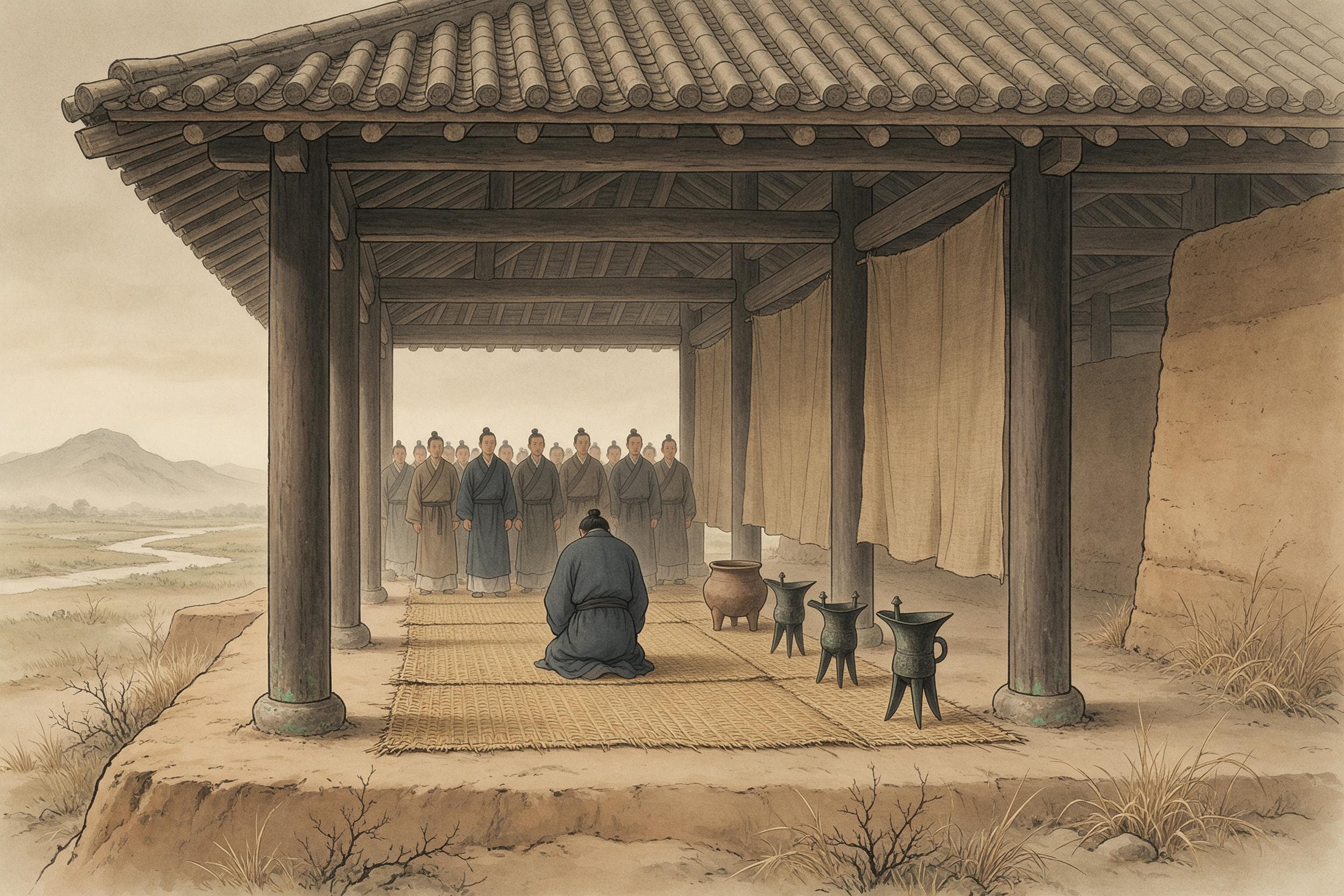
The page opens with a date and a room: 惟元祀,十有二月,乙丑,伊尹祠于先王,奉嗣王祗見厥祖,侯甸群后咸在,百官總己以聽冢宰 — first year, twelfth month, a yichou day: Yi Yin sacrificed to the former kings, led the heir to see his ancestors; the lords of Hou and Dian were all present, and the hundred officers listened to the chief minister. 元祀 is read as the first year, 乙丑 is a day in the sexagenary cycle and is not converted, and 侯甸 and 冢宰 are given by name only. Then 伊尹乃明言烈祖之成德,以訓于王 — Yi Yin set out the founders' virtue to instruct the king: 肇修人紀,從諫弗咈…檢身若不及. And then the seven characters the list hangs on: 制官刑,儆于有位 — he made the official punishment, to warn those who hold place. The three winds are official discipline, aimed at office-holders, not statute. No articles, no procedure, no schedule of penalties: this is a 訓, an instruction, not a code.
Three Winds: Three Sentences, Eight Items
The three sentences are these: 敢有恒舞于宮、酣歌于室,時謂巫風;敢有殉于貨色、恒于游畋,時謂淫風;敢有侮聖言、逆忠直、遠耆德、比頑童,時謂亂風. A shaman wind: constant dancing in the halls, drunken singing in the chambers. A wanton wind: dying for goods and beauty, never resting from hunting. A wind of disorder: mocking sage words, defying the loyal and upright, keeping old virtue at a distance, drawing close to stubborn boys. Two items, two items, four items — eight in all.
The next sentence, however, calls them 惟茲三風十愆 — these three winds and ten faults. The ten is the text's own figure; the page does not list ten. This article gives the three sentences and counts eight, and will not fill the gap. One arithmetic is worth recording as nothing more: split 貨色 into goods and beauty, 游畋 into hunting and ranging, and the three winds yield ten — but that is a way of counting, not the page's list. Whether the 巫 of 巫風 is the 巫 of shamans the page does not say, and this article does not guess.
The Consequences: A House, a State, and the Man Who Says Nothing
The consequences come in two grades: 惟茲三風十愆,卿士有一于身,家必喪;邦君有一于身,國必亡 — of these three winds and ten faults, if a minister has one in his person his house will surely be lost; if a lord of a state has one, his state will surely perish. The same list, priced by rank. Then a line that reaches sideways: 臣下不匡,其刑墨,具訓于蒙士 — if those below do not correct him, their punishment is ink; it is taught in full to the 蒙士. 墨 is given as a name of punishment only, and how it was carried out is not on the page; 蒙士 is not explained there either.
The list closes on commonplaces: 惟上帝不常,作善降之百祥,作不善降之百殃 — heaven is not constant; it sends a hundred blessings on good and a hundred calamities on evil. And then: 爾惟德罔小,萬邦惟慶;爾惟不德罔大,墜厥宗 — no virtue is too small to count, and no fault is too small to bring down a lineage. That is the whole enforcement mechanism the page offers: a doctrine of consequences, not a schedule of penalties.
The Other Page: A Founder's Unease
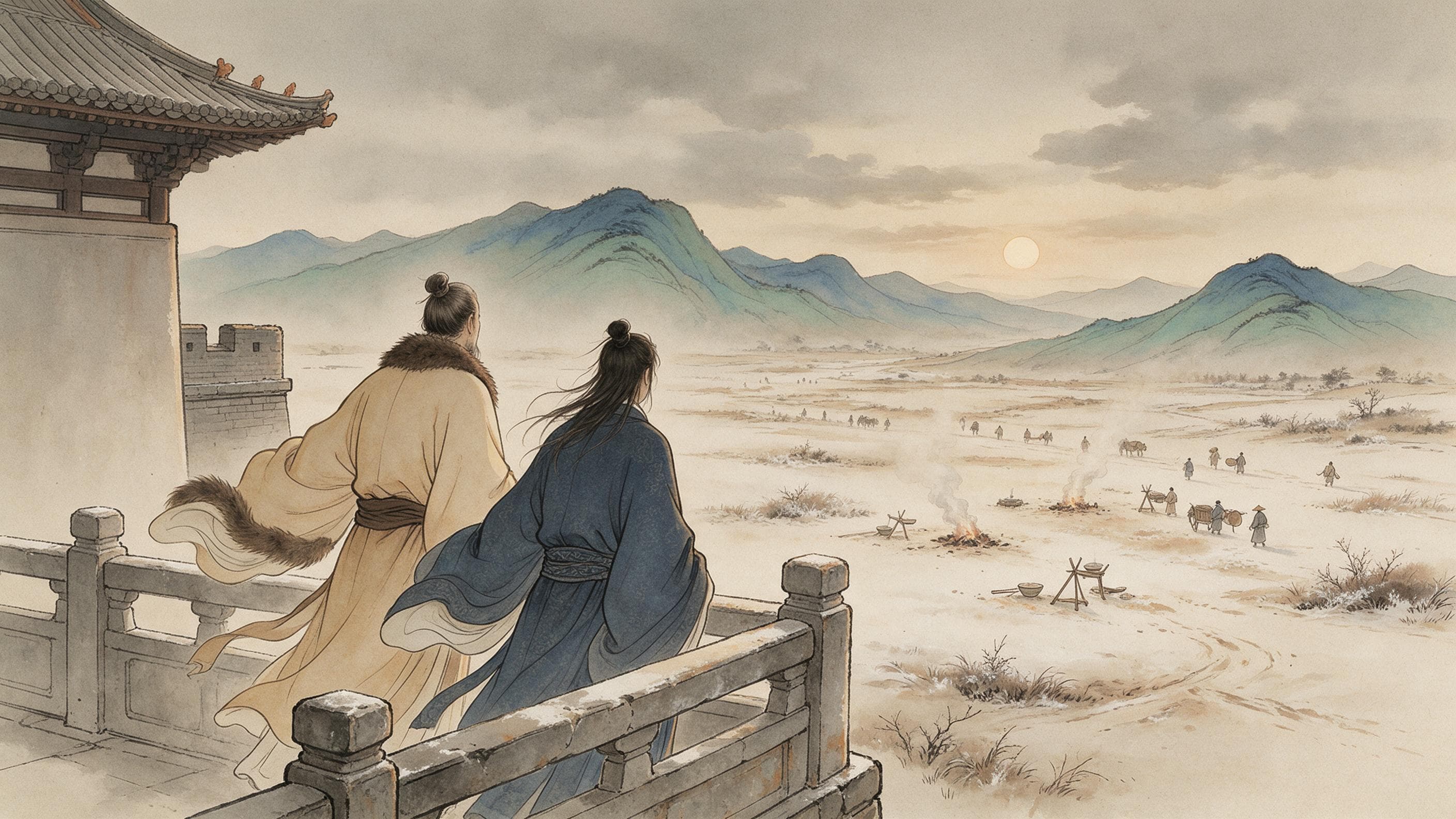
The second page begins with the historian, not with the speaker. 成湯放桀于南巢,惟有慚德,曰:予恐來世以台為口實。仲虺乃作誥 — Tang of Shang drove Jie of Xia away to Nanchao and was left with a sense of shame, saying: I fear that later ages will make this a handle against me. Only then does Zhonghui make his proclamation. Note the order: the shame and the sentence are the narrator's frame, placed before Zhonghui speaks; 台 is conventionally read as 'I', Tang's own word, and 放 means driven out, not killed. Nothing in the chapter shows Tang saying anything else.
Zhonghui argues from the ground up. 惟天生民有欲,無主乃亂;惟天生聰明時乂 — heaven gave birth to people with desires, and without a ruler they fall into disorder; so heaven produces the clear-sighted to govern them in season. Then the transfer: 有夏昬德,民墜涂炭,天乃錫王勇智,表正萬邦,纘禹舊服 — Xia's ruler was benighted, the people fell into mud and fire, and heaven gave the king courage and wisdom to set a standard for the ten thousand states and to continue Yu's old domain. The claim is careful: Shang continues Yu, not Jie. Xia's crime is 矯誣上天,以布命于下, falsely invoking heaven to issue commands below. And then the sharpest image on either page: 肇我邦于有夏,若苗之有莠,若粟之有秕;小大戰戰,罔不懼于非辜 — in Xia's eyes the rising Shang was tares among sprouts and chaff among millet, so that great and small trembled, fearing guilt they had not earned.
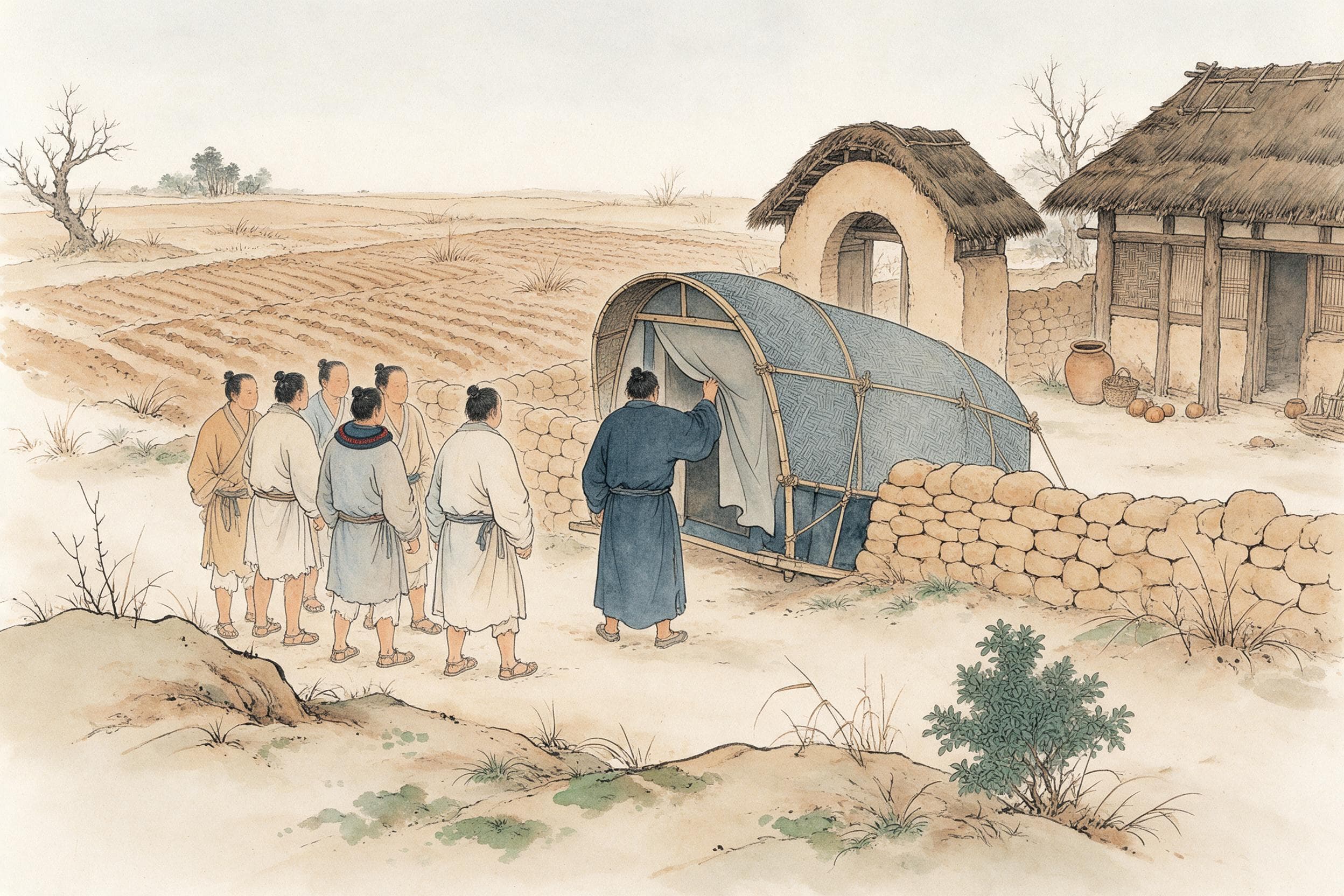
He then counts the king's virtues: 不邇聲色,不殖貨利 — no closeness to music and women, no multiplying of goods and profit; 德懋懋官,功懋懋賞 — where virtue was abundant he rewarded it with office, where merit was abundant with bounty; 用人惟己,改過不吝,克寬克仁,彰信兆民. The war has a beginning here, and it is not the same beginning as in the Yixun: 乃葛伯仇餉,初征自葛,東征西夷怨,南征北狄怨;曰:奚獨後予 — the Earl of Ge took offence over the sending of food, and the first campaign was at Ge; march east and the western tribes complained, march south and the northern tribes complained, saying, why are we last? The people's line is the best on the page: 攸徂之民,室家相慶,曰:徯予后,后來其蘇 — wherever he went the households rejoiced, saying, we waited for our lord; now our lord has come, and we live.
The two pages start the war in two places. The Yixun counts from the last battle: 造攻自鳴條,朕哉自亳 — the attack began at Mingtiao, and we began from Bo. The Zhonghui counts from the first: 初征自葛. Same conquest, two starting points, and this article keeps them apart. It ends on maxims: 德日新,萬邦惟懷;志自滿,九族乃離; 能自得師者王,謂人莫己若者亡; 好問則裕,自用則小; 慎厥終,惟其始 — which is the same advice as the Yixun's 罔不在初, everything lies in the beginning.
Versions, and What These Pages Cannot Say
The two pages do not carry the same marks, and that has to be said page by page. The Zhonghui page's head has 梅賾, and also 僞 and 本作品收錄於《古文尚書》. The Yixun page's head has 梅賾 only — no 僞. So it is not true that 'the pages mark both as forged Old Text'; the page-level evidence is unequal. The usual account is that both belong to the Mei Ze recension of the Old Text Shangshu and are later compositions, not Shang archives — which is why every claim in them, including 天乃錫王勇智, is read here as Zhonghui's argument, not as a record.
Four limits. The ten items of the ten faults are not supplied. The 墨 punishment is named and not described. The battles at Mingtiao and Ge are named and not narrated, and Jie's crimes are not filled in beyond 昬德 and 矯誣上天. Yi Yin and Zhonghui get no biographies; the pages give them one action each, a sacrifice and a proclamation. This site has written about the oath Tang made before the campaign, about Shang punishments, about the Zhou prohibition on drinking, and about Shang ministers; this piece is one list and one man's unease.
Related reading:Why Tang Attacked Jie: Three Reasons in One Oath · Pao-ge, Pickle and Jerky: What Can Be Known About Shang Punishments · How the Zhou Talked About Shang Drinking: Orders, Exceptions, and an Explanation
Sources & further reading
- 《尚書·伊訓》(舊題商伊尹作;維基文庫本,白文無注,頁頭署「梅賾」,無「(僞)」標記,未與中華書局點校本複核) — A page headed 伊訓 with the name 梅賾 at its head and no 偽 mark, standing between 湯誥 and 太甲上: an Old Text chapter of the received Shangshu, therefore a later text and not a Shang archive. It gives one occasion — 惟元祀,十有二月,乙丑,伊尹祠于先王,奉嗣王祗見厥祖,侯甸群后咸在,百官總己以聽冢宰 — and one speech: the good days of Xia and the failure of its descendants (于其子孫弗率,皇天降災,假手于我有命;造攻自鳴條,朕哉自亳), the virtues of the founders (先王肇修人紀…檢身若不及), and then 制官刑,儆于有位: three winds and their consequences. The three winds are given in three clauses and list eight items, not ten: 恒舞于宮、酣歌于室 (巫風); 殉于貨色、恒于游畋 (淫風); 侮聖言、逆忠直、遠耆德、比頑童 (亂風). Then 卿士有一于身,家必喪;邦君有一于身,國必亡 and 臣下不匡,其刑墨,具訓于蒙士. It closes on 惟上帝不常,作善降之百祥,作不善降之百殃 and 爾惟德罔小,萬邦惟慶;爾惟不德罔大,墜厥宗.
- 《尚書·仲虺之誥》(頁頭署「梅賾」,另標「(僞)」與「本作品收錄於《古文尚書》」;維基文庫本,白文無注,未與中華書局點校本複核) — This is the page that carries the marks: 梅賾 at the head, plus (僞)and 古文尚書 — the 伊訓 page has only the name. It opens with the historian's sentence before Zhonghui speaks: 成湯放桀于南巢,惟有慚德,曰:予恐來世以台為口實。仲虺乃作誥,曰… The argument runs: 惟天生民有欲,無主乃亂;惟天生聰明時乂; 有夏昬德,民墜涂炭,天乃錫王勇智,表正萬邦,纘禹舊服; 夏王有罪,矯誣上天,以布命于下; 肇我邦于有夏,若苗之有莠,若粟之有秕; the king's virtues (不邇聲色,不殖貨利;德懋懋官,功懋懋賞;用人惟己,改過不吝;克寬克仁,彰信兆民); the other starting point of the war, 乃葛伯仇餉,初征自葛,東征西夷怨,南征北狄怨,奚獨後予; the people's line 徯予后,后來其蘇; and the maxims 德日新,萬邦惟懷;志自滿,九族乃離, 能自得師者王,謂人莫己若者亡, 好問則裕,自用則小, 慎厥終,惟其始.