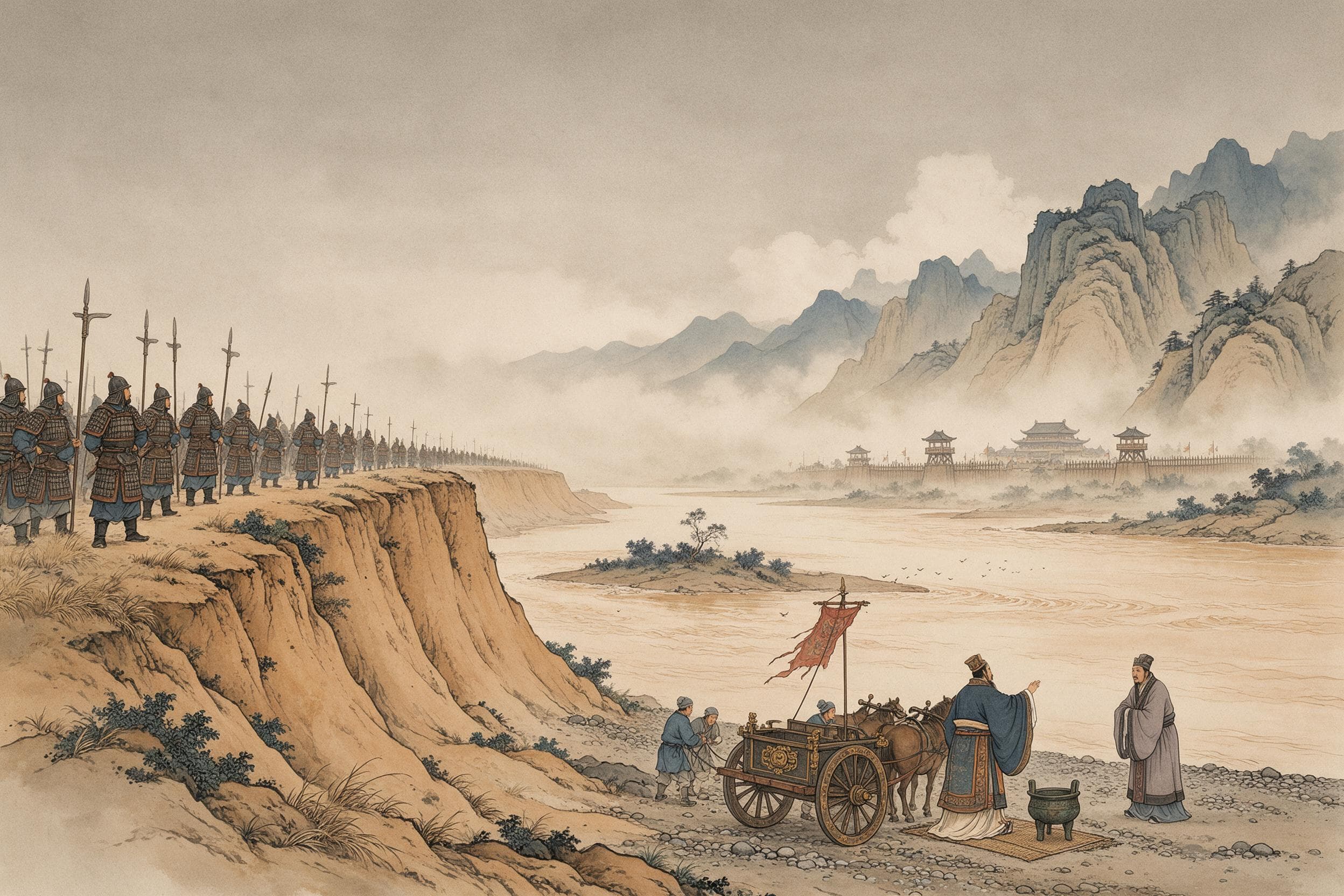
The statute counts trees. In the Book of Wei, in the treatise on the economy: 'plant fifty mulberry trees, five jujubes and three elms; where the soil will not carry mulberry, one mu is given and elms and jujubes are planted as the law requires' (種桑五十樹,棗五株,榆三根。非桑之土,夫給一畝,依法課蒔榆、棗). Three numbers and a substitute. It does not say how a mulberry is grown or how a silkworm is kept. That is in another book.
A Clause That Counts Trees
The rest is deadline and permission: 'the limit is three years to finish the planting; what is not planted, that land is taken away' (限三年種畢,不畢,奪其不畢之地); 'in the mulberry and elm plots other fruit may be planted mixed, and planting more mulberry and elm is not forbidden' (於桑榆地分雜蒔餘果及多種桑榆者不禁). Servants are counted like commoners: 'slaves each according to the free' (奴各依良). The mu figures in the same passage are not used here; only the half saying what to plant and how many. A statute can count as far as the tree. What happens between one tree and the next it does not touch.
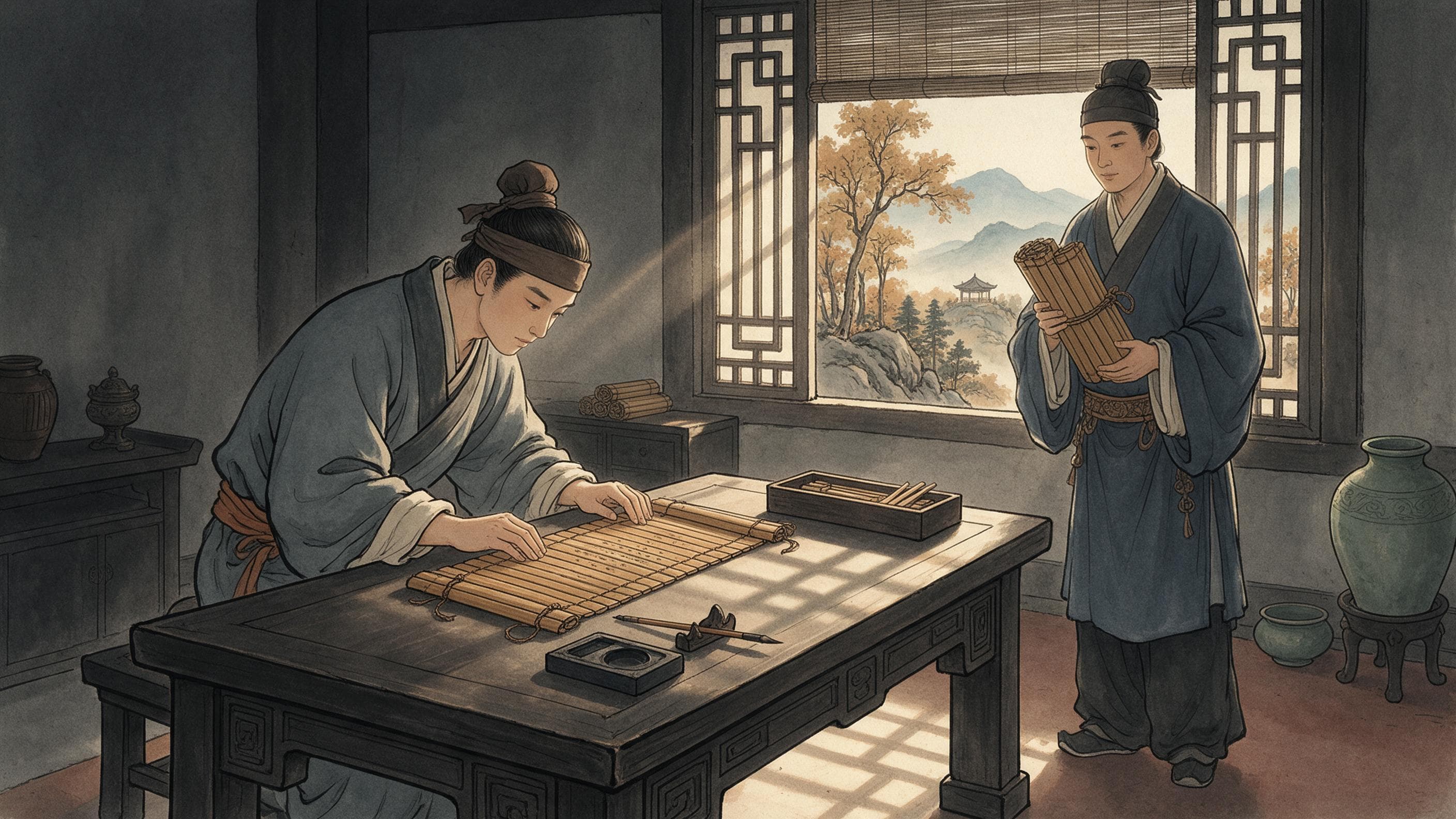
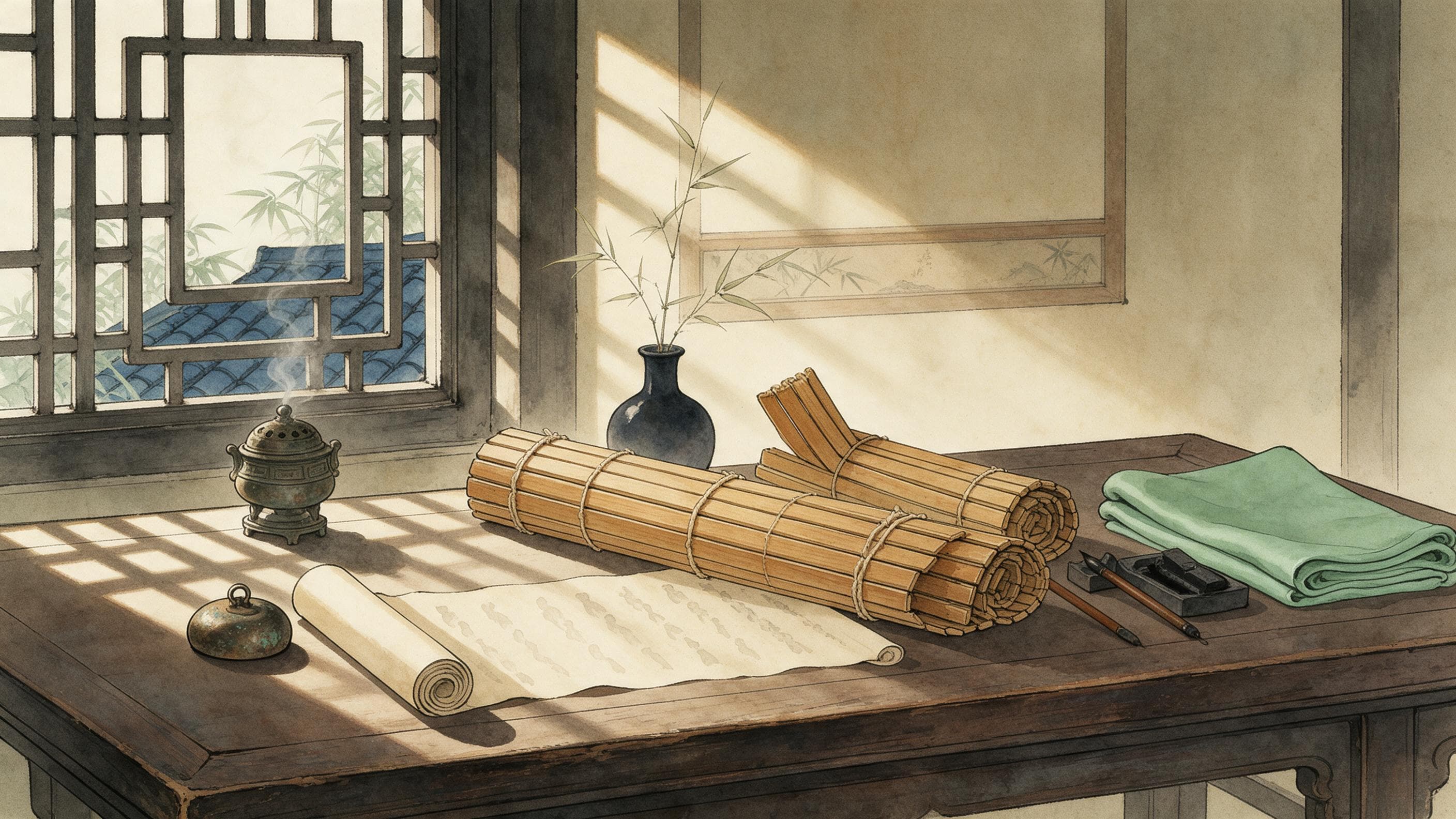
The two pages are not the same kind of document. The Book of Wei is a dynastic history, and its economic treatise carries a rule: what a landholder must plant, by when, and what happens if he does not. The Essential Techniques for the Common People (齊民要術) is a northern farm manual, generally placed in the sixth century, and this chapter is instruction: what to collect, when to sow, how far apart to set the trees, when to prune. A practice in the manual is not a state regulation, and neither page is used here as evidence for the other.
From One Berry
The manual starts with the fruit. 'When the mulberries ripen, take the black Lu mulberries' (桑椹熟時,收黑魯椹); a note says the yellow Lu mulberry 'does not last', and quotes a proverb: 'a hundred Lu mulberries, plenty of silk floss and cloth' (魯桑百,豐綿帛) — the manual's words: this tree is good, little work, much use. The seed is washed out the same day, dried and sown in beds, kept weeded; 'the next year, in the first month, transplant them', the second and third months also allowed (明年正月,移而栽之). Spacing is 'five feet to a root' (率五尺一根): close, not thin, because a tree the plough can pass under easily dies, and close planting grows faster; seed is slow, layering quick. The page also notes 'nowadays there are the names Jing mulberry and ground mulberry' (今世有荊桑、地桑之名).
Beans go between the trees: 'dig under them constantly and sow mung beans and small beans' (其下常斸掘種菉豆、小豆), since 'the two beans are good and enrich the mulberry' (二豆良美,潤澤益桑). For two years after planting 'do not pick and do not wash' (慎勿採、沐); picking young, the note says, doubles the wait. When the trunk is 'as thick as an arm' it is moved again in the first month, 'ten paces to a tree' (率十步一樹) — shade that touches harms grain and beans — and the rows 'at a slight angle, not squarely opposite' (行欲小掎角,不用正相當), since square rows obstruct the plough. Layering: a lower branch hooked to the ground with dry earth, cut off and planted the next year. Ploughing keeps off the trees; where it cannot reach, dig, 'cut away the surface roots and manure with silkworm droppings' (斫去浮根,以蠶矢糞之).
Pruning has a calendar: 'the twelfth month is the best time, the first month next, the second month last' (十二月為上時,正月次之,二月為下) — if the white sap runs, the leaves suffer — and a tree with many branches should be cut hard, few branches sparingly. Spring picking takes gear and men: 'long ladders and high stands, several men to a tree, the branches turned back and the leaves taken clean' (長梯高機,數人一樹,還條復枝,務令淨盡), done 'at dawn and dusk, avoiding the heat' (要欲旦、暮,而避熱時); the note lists the failures: short ladders break high branches, few men exhaust them, branches not turned back grow crooked, unclean picking leaves the tree crow-footed. Autumn picking is sparing, only what obstructs. What 沐 and 剶 mean the page does not gloss; the usual account is that 剶 is pruning, marked here as the usual account, not the text's words.
Berries Against a Bad Year
The chapter keeps the fruit for famine: 'when the mulberries ripen, collect many and dry them in the sun; in a bad year, when millet is short, they can be eaten in its place' (椹熟時,多收,曝乾之,凶年粟少,可以當食). The note quotes the Weilüe: Yang Pei, magistrate of Xinzheng, had the people store dried mulberries, more than a thousand hu, and when the Grand Ancestor (太祖) passed with a thousand men and no grain, presented them. The note also gives the scale: 'north of the Yellow River the big households collect a hundred shi, the smaller still several tens of hu' (大家收百石,少者尚數十斛). That is dried fruit, not leaves; and it is a note, an older story, not the manual's own trial.
The Silkworm Room
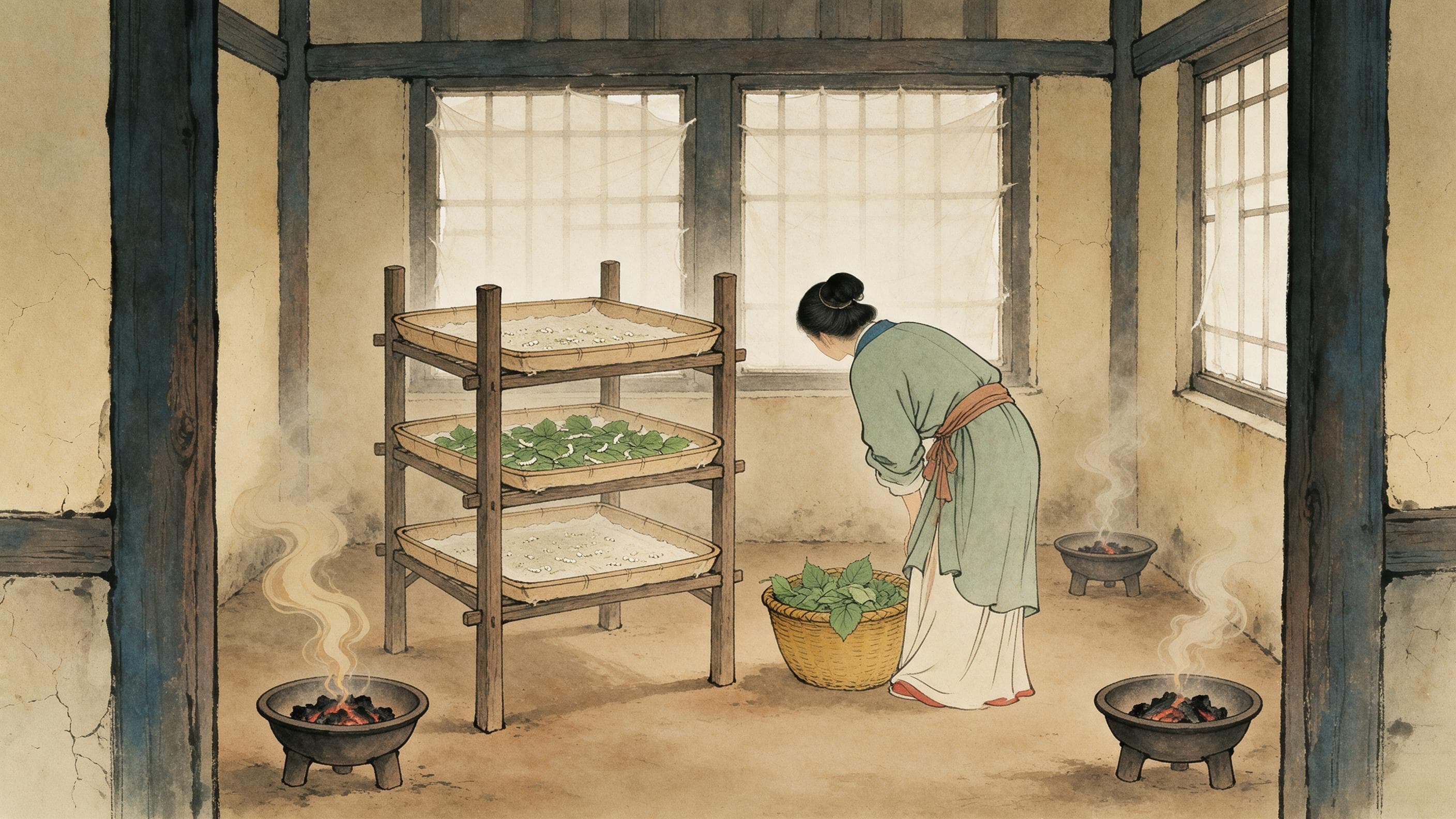
The chapter begins with the room. The walls are daubed with a 'blessing-and-profit' earth (福德利), unexplained on the page. 'The room should have windows on four sides, pasted with paper, with thick fencing; inside, set fire at the four corners' (屋欲四面開窗,紙糊,厚為籬。屋內四角著火): if the fire is in one place, the note says, the heat is uneven. The newly hatched are brushed with a feather; a reed brush injures them. Up to the second moult they are kept on three racks: 'in the middle rack place the worms, leave the upper and lower empty' (中箔上安蠶,上下空置) — the lower screens the damp of the floor, the upper keeps off dust.
Feeding has its own small rules. In the first days the leaves come from the 'blessing-and-profit' mulberry and are 'warmed in the bosom, then cut' (著懷中令暖,然後切之), because small worms should not meet the dew. At every feed the window curtain is rolled up, then lowered: worms eat in the light, and eating makes them grow. Old worms in rain spoil their cocoons, so they are clustered indoors: brushwood spread thin on the rack, the worms scattered over it, more brushwood on top, 'one frame holds ten racks' (一槌得安十箔); or big bundles of mugwort hung from beams, with a little charcoal below — warm makes them spin quickly, cold slowly. Breeding cocoons come from the cluster's middle: 'those near the top give thin silk, those near the ground give no eggs' (近上則絲薄,近地則子不生).
Killing the Cocoons, and What Is Missing
Two ways of killing the cocoon are set against each other: 'kill the cocoons with salt: they reel easily and the silk is tough; those killed by sun-drying, though white, are thin and brittle' (用鹽殺繭,易繰而絲肕。日曝死者,雖白而薄脆). The chapter also has the silkworm fed on thorn mulberry (柘): its silk 'can make strings for zither and lute, clear and ringing, far better than ordinary silk' (柘葉飼蠶絲,可作琴瑟等絃,清鳴響徹,勝於凡絲遠矣). The same plant is grown for wood, with a chain of uses from a walking-stick at three years to cart timber at twenty, and prices in the notes: three coppers a root, ten for a horsewhip, a hundred for a folding stool, three hundred for a bow. Those are prices for thorn-mulberry timber, not for silk, and they are not mixed with it here.
Neither page gives what a farmer would ask first: the leaf yield of a mu, the weight of cocoons from a rack, the price of silk, the cost of weaving. The chapter has one figure that looks like a yield — 'one mu feeds three racks of silkworms' (一畝食三箔蠶) — but it sits in a note quoting the Fan Shengzhi shu, neither this manual's rule nor a Northern Wei regulation; it is printed as a quotation, not a standard. Nor do the pages say the Northern Wei promoted sericulture. One says how many trees; the other says how to grow them and how to keep the worms; the two are not evidence for each other.
Related reading:Forty Li of Purple Silk, Fifty of Brocade: Shi Chong and Wang Kai · Mud, Silk and Gold: The Qixi Dolls of Song China · From Buried Coins to Burned Paper: The Making of Money for the Dead
Sources & further reading
- 《齐民要术》卷第五·种桑柘第四十五(养蚕附)(维基文库本,正文与双行小注同页;一般认为成书于六世纪,未与点校本复核) — A northern farm manual's chapter on mulberry and silkworm. Planting: take black Lu mulberries when ripe (a note quotes the proverb 'a hundred Lu mulberries, plenty of silk floss and cloth'), wash out the seed, sow in beds, transplant in the first month at five feet to a root — close rather than thin, since a tree the plough can pass is easily killed — plant beans between the trees, leave the trees unplucked and unwashed for two years, move them when as thick as an arm at ten paces apart and in slightly angled rows, propagate by layering, cut the surface roots and manure with silkworm droppings, prune in the twelfth month by preference, pick in spring with long ladders and several men to a tree at dawn and dusk, and store dried berries against famine (a note quotes the Weilüe on Yang Pei and gives the scale of the trade). Silkworms: a room with papered windows on four sides and a fire in each of the four corners, feather-brushing the newly hatched, three racks with the middle loaded, leaves warmed in the bosom before cutting, curtains rolled up at each feed, indoor clustering in wet weather, breeding cocoons from the middle of the cluster, and salt-killed cocoons against sun-dried ones. Thorn mulberry for silk strings and for timber, with timber prices in the notes.
- 《魏书》卷一百一十·食货志(维基文库本,未与点校本复核) — Quoted here only for the planting clause of the land regulations: fifty mulberry trees, five jujubes and three elms to be planted; where the soil will not carry mulberry, one mu is given for elms and jujubes; slaves counted like commoners; three years to finish or the unplanted land is forfeited; mixed fruit and extra mulberry or elm not forbidden. The mu figures in the same passage — the open field and the mulberry field allotments — belong to the separate land-allotment article and are not used here.