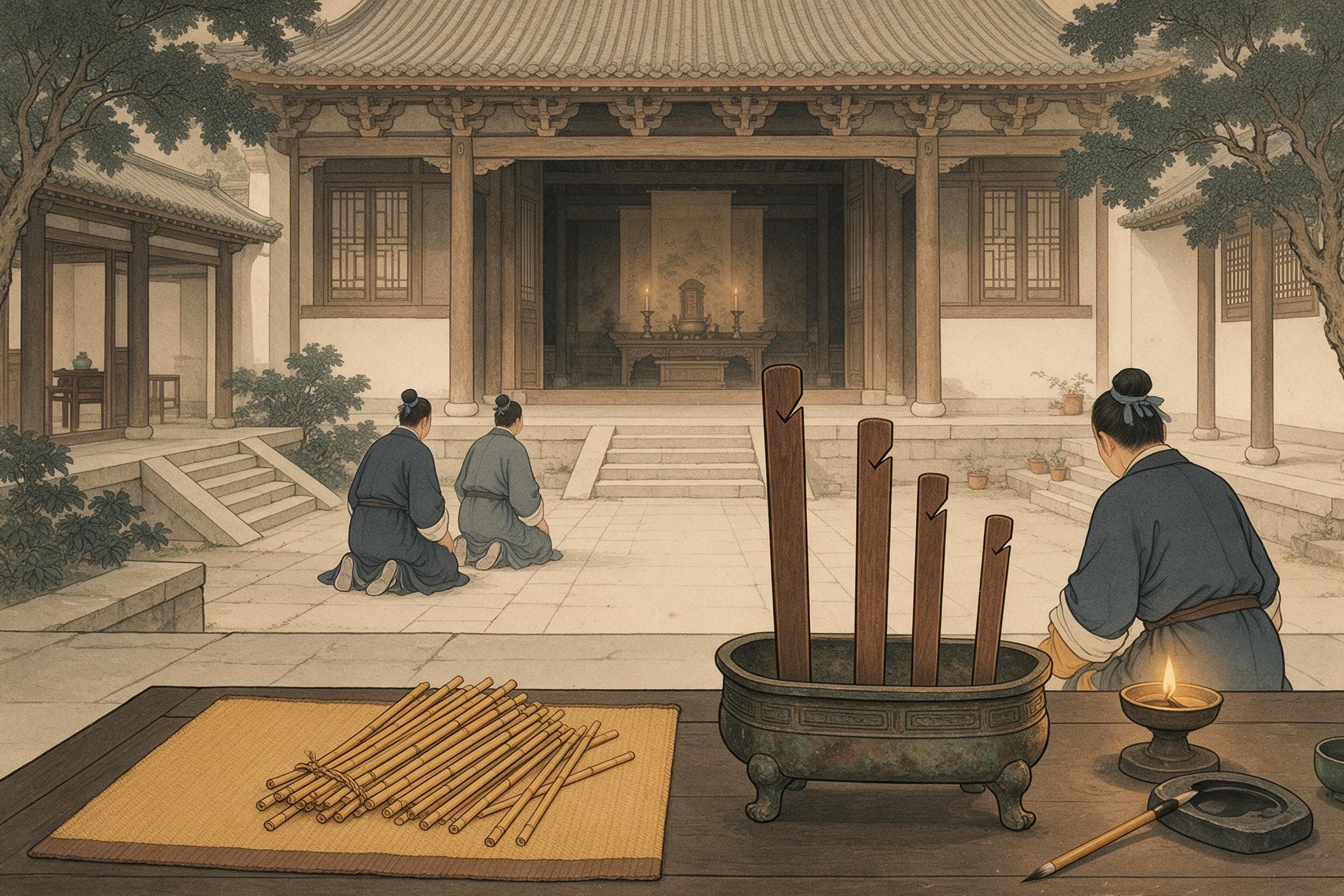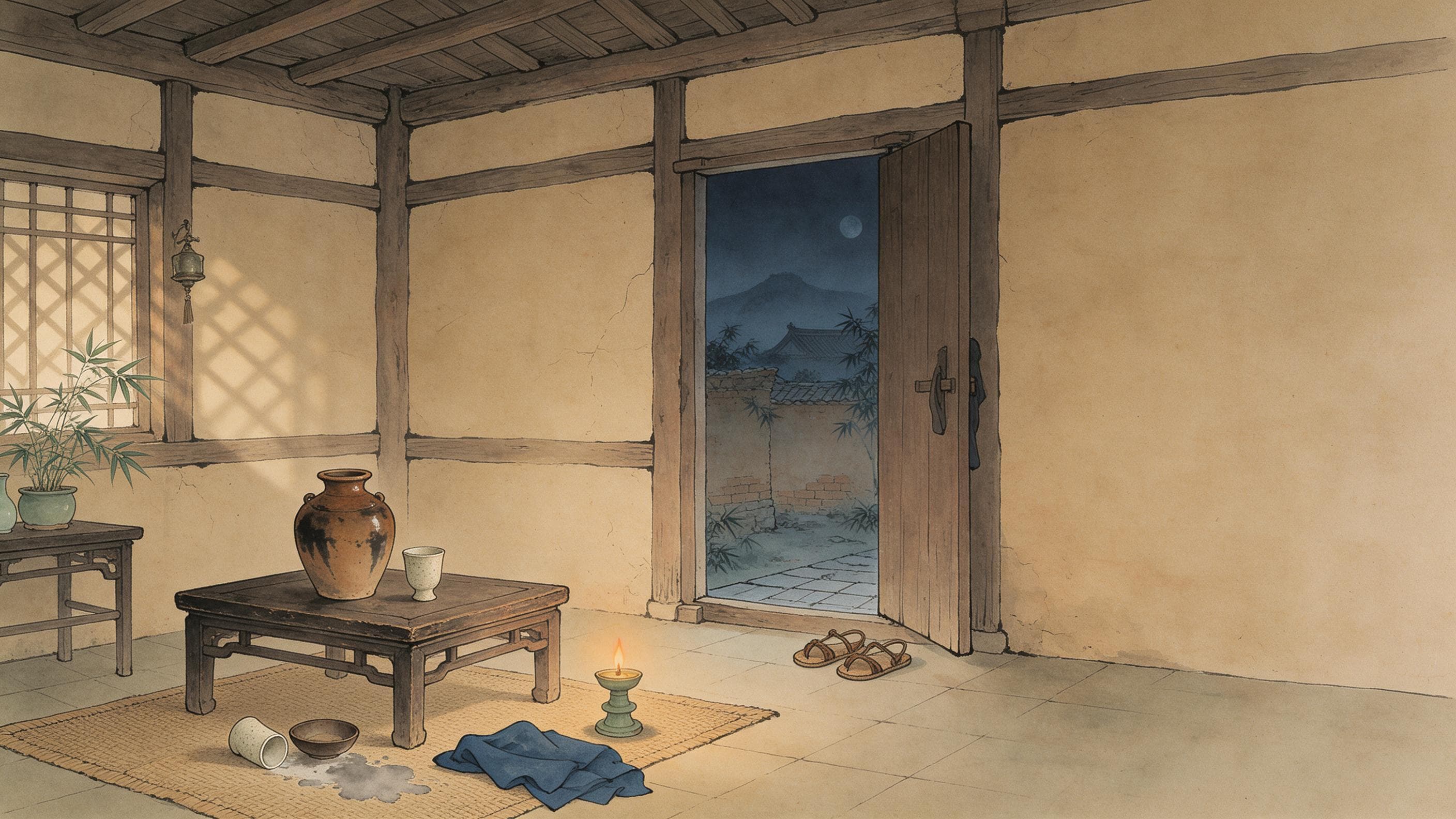
A man has been drinking too much. His wife pours the wine away, smashes the cups and weeps as she argues with him: 君飲太過,非攝生之道,必宜斷之. He agrees — he cannot restrain himself, so he will swear an oath before the gods: bring wine and meat for the offering. She brings them. He kneels and prays: 天生劉伶,以酒為名,一飲一斛,五斗解酲。婦人之言,慎不可聽 — Heaven made Liu Ling and wine is his name; one drink one hu, five dou to cure the hangover; a woman's words are not to be listened to. Then 便引酒進肉,隗然已醉矣: he ate the offering and drank it, and was drunk on the spot.
The prayer contains an arithmetic problem, and the problem is the point. A hu is ten dou, so five dou — half a hu — would not cure the hangover from one hu. This is not a ration but a joke in verse, a number a character invents about himself. The pages carry other numbers of the same kind: 醉六十日, 貯酒數百斛. They are recorded here as written, not as quantities, and not converted into modern measures.
One: a drawer labelled Renden
The book that keeps the story is arranged by category, not by date. The page's own heading gives the author as Liu Yiqing, the section as 任誕, the section before it 寵禮 and the one after 簡傲. Its first entry says what the drawer collects: 陳留阮籍,譙國嵇康,河內山濤,三人年皆相比,康年少亞之。預此契者:沛國劉伶,陳留阮咸,河內向秀,琅邪王戎。七人常集于竹林之下,肆意酣暢,故世謂「竹林七賢」。 Seven men, one bamboo grove, and the phrase 肆意酣暢 — letting themselves drink their fill. That is the compiler's account of the group; the men themselves are not asked.
So 任誕 is the compiler's label. Nobody on these pages calls himself that; the words the book uses of these men are 放達, 縱酒, 肆意酣暢. The section title is a judgement written on the front of a drawer, and the next drawer is 簡傲 — arrogance — which is a different judgement on similar scenes. To read one section of the Shishuo is to read an editor's filing system, and the filing is not neutral.
Two: Liu Ling, twice
The whole entry is a handful of sentences: 劉伶病酒,渴甚,從婦求酒。婦捐酒毀器,涕泣諫曰:「君飲太過,非攝生之道,必宜斷之!」伶曰:「甚善。我不能自禁,唯當祝鬼神,自誓斷之耳!便可具酒肉。」婦曰:「敬聞命。」供酒肉於神前,請伶祝誓。伶跪而祝曰:「天生劉伶,以酒為名,一飲一斛,五斗解酲。婦人之言,慎不可聽。」便引酒進肉,隗然已醉矣。 A note follows, glossing one word: 毛公注曰:「酒病曰酲。」 The gloss is a note, not part of the story; the entry itself never explains 酲, and never explains 隗然.
The same man has a second entry in the same section: 劉伶恆縱酒放達,或脫衣裸形在屋中,人見譏之。伶曰:「我以天地為棟宇,屋室為㡓衣,諸君何為入我㡓中?」 The joke turns on 㡓, the word for trousers. Its note gives another draft of the answer: 吾以天地為宅舍,以屋宇為㡓衣,諸君自不當入我㡓中,又何惡乎? One line in two versions, one in the text and one in the note; the page keeps both, and this article does not choose between them. The other book gives him a biography rather than entries. It begins with his body and his gear: 身長六尺,容貌甚陋; he rode a deer-cart with a jug of wine, a man with a spade walking behind, and said 死便埋我 — if I die, bury me here. The oath is there too, with small differences: 婦兒之言,慎不可聽 rather than 婦人之言, and 隗然復醉 rather than 隗然已醉矣. The biography ends him differently: 嘗為建威參軍。泰始初對策,盛言無為之化。時輩皆以高第得調,伶獨以無用罷。竟以壽終 — he sat the examination, argued for non-action, everyone else was promoted, he was dismissed as useless, and he died of old age.
Three: Bi Zhuo, one sentence
The crab belongs to a single sentence: 畢茂世云:「一手持蟹螯,一手持酒桮,拍浮酒池中,便足了一生。」 That is all the section gives him — a quoted wish, one crab claw, one cup, a pool of wine. The note below supplies an incident: 太興末,為吏部郎,嘗飲酒廢職。比舍郎釀酒熟,卓因醉,夜至其甕間取飲之。主者謂是盜,執而縛之,知為吏部也,釋之 — he drank on duty, and one night went into a neighbour's wine jars, was tied up as a thief, and released when they saw who he was. The other book's biography gives the same wish at greater length: 得酒滿數百斛船,四時甘味置兩頭,右手持酒杯,左手持蟹螯,拍浮酒船中,便足了一生矣 — a boat holding several hundred hu of wine, delicacies at both ends, and 酒船 where the Shishuo has 酒池. One wish, two vessels; both are left standing.
Four: Ruan Ji, the other entries
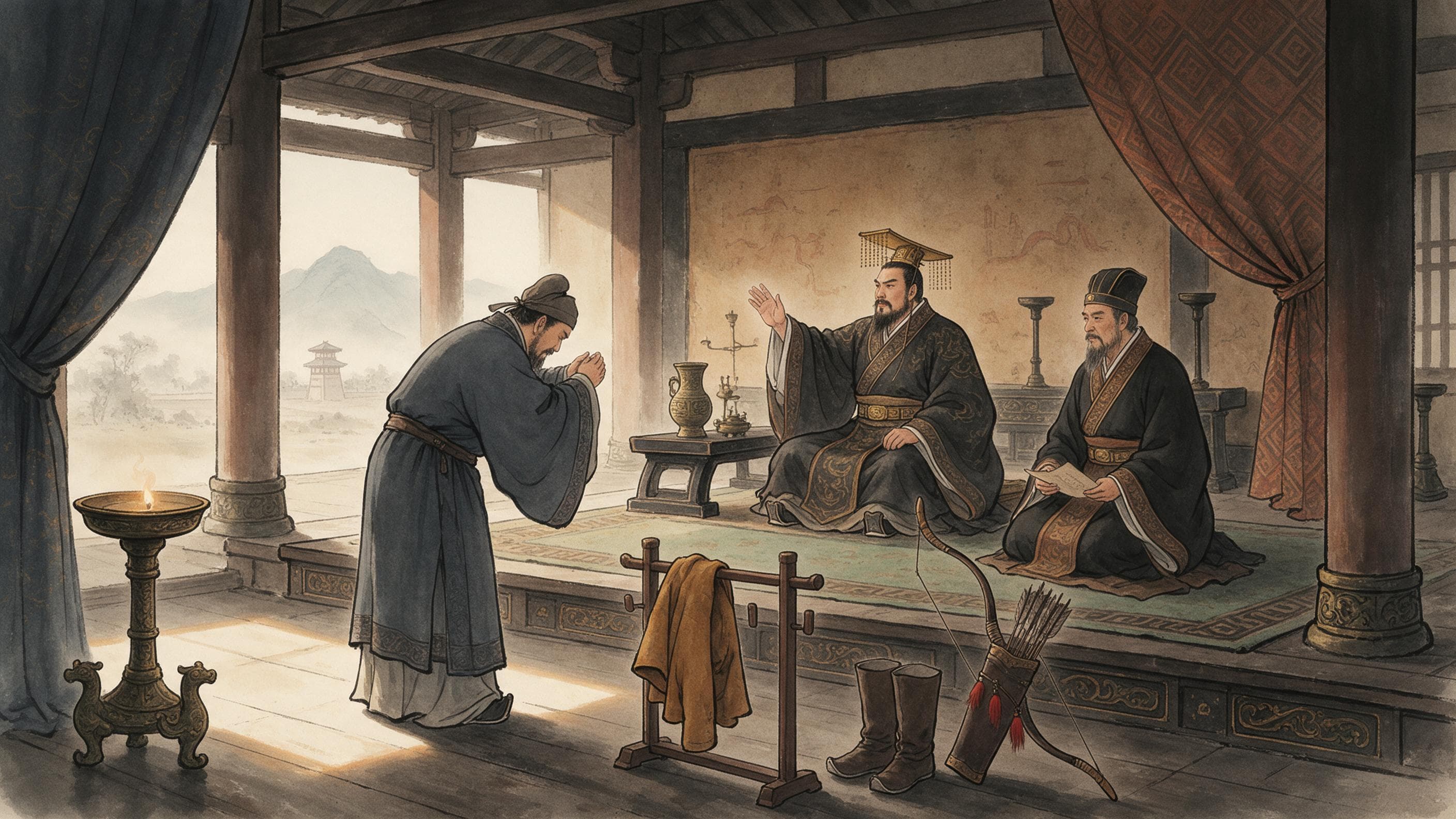
Ruan Ji is in this section too, and the entries used here are the ones the article on his request for office does not take. The first is a dinner: 阮籍遭母喪,在晉文王坐,進酒肉。司隸何曾亦在坐,曰:「明公方以孝治天下,而阮籍以重喪,顯於公坐,飲酒食肉,宜流之海外,以正風教。」文王曰:「嗣宗毀頓如此,君不能共憂之,何謂?且有疾而飲酒食肉,固喪禮也!」籍飲噉不輟,神色自若。 The quarrel here is about mourning rules, and the defence is also a rule: illness permits wine and meat. Nobody in the entry says 任誕.
Three more items come from the biography. The marriage proposal: 文帝初欲為武帝求婚於籍,籍醉六十日,不得言而止 — sixty days drunk so that it could not be put to him. His mother's death: 正與人圍棋,對者求止,籍留與決賭。既而飲酒二斗,舉聲一號,吐血數升; at the burial 食一蒸肫,飲二斗酒……因又吐血數升,毀瘠骨立,殆致滅性. And the condolence call: 裴楷往弔之,籍散髮箕踞,醉而直視 — hair loose, legs sprawled, drunk; Pei Kai wept and left, and when asked why a guest mourned when the son did not, said 阮籍既方外之士,故不崇禮典;我俗中之士,故以軌儀自居, and 時人歎為兩得. The Shishuo has the same scene with Pei Kai's words and the same verdict. One disagreement remains: the Shishuo text says 飲酒二斗, its note quotes Deng Can's Jinji with 三斗. The request for the post with three hundred hu of wine in the kitchen belongs to another article.
Five: what the pages give, and do not
- The label is the compiler's. 任誕 is a drawer in an arrangement, between 寵禮 and 簡傲; nobody on these pages uses the word of himself, and the section's first entry is what defines the group.
- Text and note are two layers. The notes quote 晉陽秋, 鄧粲晉紀, 晉中興書, 竹林七賢論, 名士傳, 王隱晉書, 魏氏春秋, 干寶晉紀, 文士傳 and others; where note and text differ, both are reported. 毛公注「酒病曰酲」 is a note, and so is Bi Zhuo's night among the wine jars.
- The numbers are rhetoric, not measures: one hu and five dou, sixty days, two dou, several sheng of blood, three hundred hu — recorded as written, with no conversion, no totals, and no attempt to make one hu agree with five dou.
- Two books, one event: Liu Ling's oath, Bi Zhuo's crab and Ruan Ji's sprawl all appear twice, with different wording (婦人之言 / 婦兒之言, 酒池 / 酒船, 二斗 / 三斗). They stand side by side; no verdict is given.
- Ji Kang appears once, in the list of the seven worthies, and is given no section here.
- Lines kept apart: the article on Ruan Ji's request for the post with three hundred hu of wine is a separate piece; no general talk of Wei-Jin style or 名士放達, and no psychological reading of anyone here.
What the pages leave is not a portrait of an age but a set of short sentences: an oath that is really a drinking rule, a retort that turns a house into a pair of trousers, a crab claw and a cup, two dou of wine at a funeral. The book files them under 任誕; the notes file the variants underneath. The only thing in the file that nobody inside it ever said is the name of the drawer.
Related reading:Twelve Scrolls, 118 Chapters: How an Acupuncture Classic Was Assembled · Tao Qian's Resignation: Five Dou of Rice, a Field of Millet, and One Piece of Prose · Ruan Ji: Three Hundred Hu of Wine for a Colonelcy
Sources & further reading
- 《世说新语·任诞》(维基文库本,白文,注以括注形式随文,未与中华书局点校本复核) — Page header: 作者 劉義慶, section 任誕, previous 寵禮, next 簡傲 — the book is arranged by category. The entries used: 陳留阮籍,譙國嵇康,河內山濤……七人常集于竹林之下,肆意酣暢,故世謂「竹林七賢」; 阮籍遭母喪,在晉文王坐,進酒肉……籍飲噉不輟,神色自若; 劉伶病酒,渴甚,從婦求酒……伶跪而祝曰:「天生劉伶,以酒為名,一飲一斛,五斗解酲。婦人之言,慎不可聽。」便引酒進肉,隗然已醉矣; 劉伶恆縱酒放達,或脫衣裸形在屋中,人見譏之。伶曰:「我以天地為棟宇,屋室為㡓衣,諸君何為入我㡓中?」; 步兵校尉缺,廚中有貯酒數百斛,阮籍乃求為步兵校尉 (not used here — it belongs to the article on that request); 阮步兵喪母,裴令公往弔之。阮方醉,散髮坐床,箕踞不哭……時人嘆為兩得其中; 畢茂世云:「一手持蟹螯,一手持酒桮,拍浮酒池中,便足了一生。」 The annotations in the page give 毛公注「酒病曰酲」, 鄧粲晉紀's second draft of Liu Ling's answer, 晉中興書's account of Bi Zhuo and the wine jars, 干寶晉紀 and 魏氏春秋 on Ruan Ji, and others.
- 《晋书》卷四十九〈阮籍传〉附刘伶、毕卓传(维基文库本,未与中华书局点校本复核) — The biography gives the same anecdotes with small variants. 劉伶: 身長六尺,容貌甚陋……常乘鹿車,攜一壺酒,使人荷鍤而隨之,謂曰:「死便埋我。」……伶跪祝曰:「天生劉伶,以酒為名。一飲一斛,五斗解酲。婦兒之言,愼不可聽。」仍引酒禦肉,隗然復醉……嘗為建威參軍。泰始初對策,盛言無為之化。時輩皆以高第得調,伶獨以無用罷。竟以壽終。 畢卓: 卓少希放達……嘗飲酒廢職。比舍郎釀熟,卓因醉夜至其甕間盜飲之,為掌酒者所縛,明旦視之,乃畢吏部也,遽釋其縛……卓嘗謂人曰:「得酒滿數百斛船,四時甘味置兩頭,右手持酒杯,左手持蟹螯,拍浮酒船中,便足了一生矣。」及過江,為温嶠平南長史,卒官。 阮籍: 文帝初欲為武帝求婚於籍,籍醉六十日,不得言而止……性至孝,母終,正與人圍棋,對者求止,籍留與決賭。既而飲酒二斗,舉聲一號,吐血數升。及將葬,食一蒸肫,飲二斗酒……因又吐血數升,毀瘠骨立,殆致滅性。裴楷往弔之,籍散髮箕踞,醉而直視,楷弔唁畢便去……時人歎為兩得。