A man stands at the side of a seat holding a knife. It is the first entry in a section of the Shishuo Xinyu called Bearing and Looks: 魏武將見匈奴使,自以形陋,不足雄遠國,使崔季珪代,帝自捉刀立床頭. Wei Wu was to receive a Xiongnu envoy, thought his own form too poor to overawe a distant state, had Cui Jigui take his place, and stood by his seat with a blade. 床頭 is the side of a sitting couch, not a bed, and 捉刀 is generally taken to mean standing by with a knife. Asked what he made of the king, the envoy said: 魏王雅望非常;然床頭捉刀人,此乃英雄也 — uncommon dignity, but the man with the knife, that one was a hero. What Wei Wu did about it is the last line of this article.
One: thirty-nine entries, and almost no faces
The Shishuo Xinyu is a Liu-Song collection of anecdotes, and its chapters are drawers the editor made. The page headers put 豪爽第十三 before 容止 and 自新第十五 after it, making it the fourteenth; inside stand thirty-nine entries, counted on the page, a sentence or two each and no dates. Three shapes recur: 時人目, the people of the time judged him; 見者嘆曰, those who saw sighed and said; 或云, someone said. Almost none describes a face. An entry converts a person into an object and lets the object carry the judgement. The three verbs are not the same act: 目 is judging with the eye, 嘆 marks admiration, and 或云 leaves the speaker unnamed.
The vocabulary is small and used with great confidence. A jade mountain: 李安國頹唐如玉山之將崩 — slack and crumbling, like a jade mountain about to fall; and 見裴叔則如玉山上行,光映照人 — like walking on a jade mountain, the light shining on people. Pearls and jade: 珠玉在側,覺我形穢 — with pearls and jade beside me I feel my own form is dirty; and for a room full of people, 觸目見琳琅珠玉. A crane among chickens: 卓卓如野鶴之在雞群, one clause only, since the reply to it reaches for a father who belongs to another article. Eyes: 眼爛爛如巖下電. The lightest: 濯濯如春月柳 — bright and washed like a willow in spring. Eight characters for bearing: 飄如遊雲,矯若驚龍. Only one entry writes the face: 面如凝脂,眼如點漆,此神仙中人. The same objects come back for different men, and not one comparison gives a measurement.
Two: bearing, not beauty
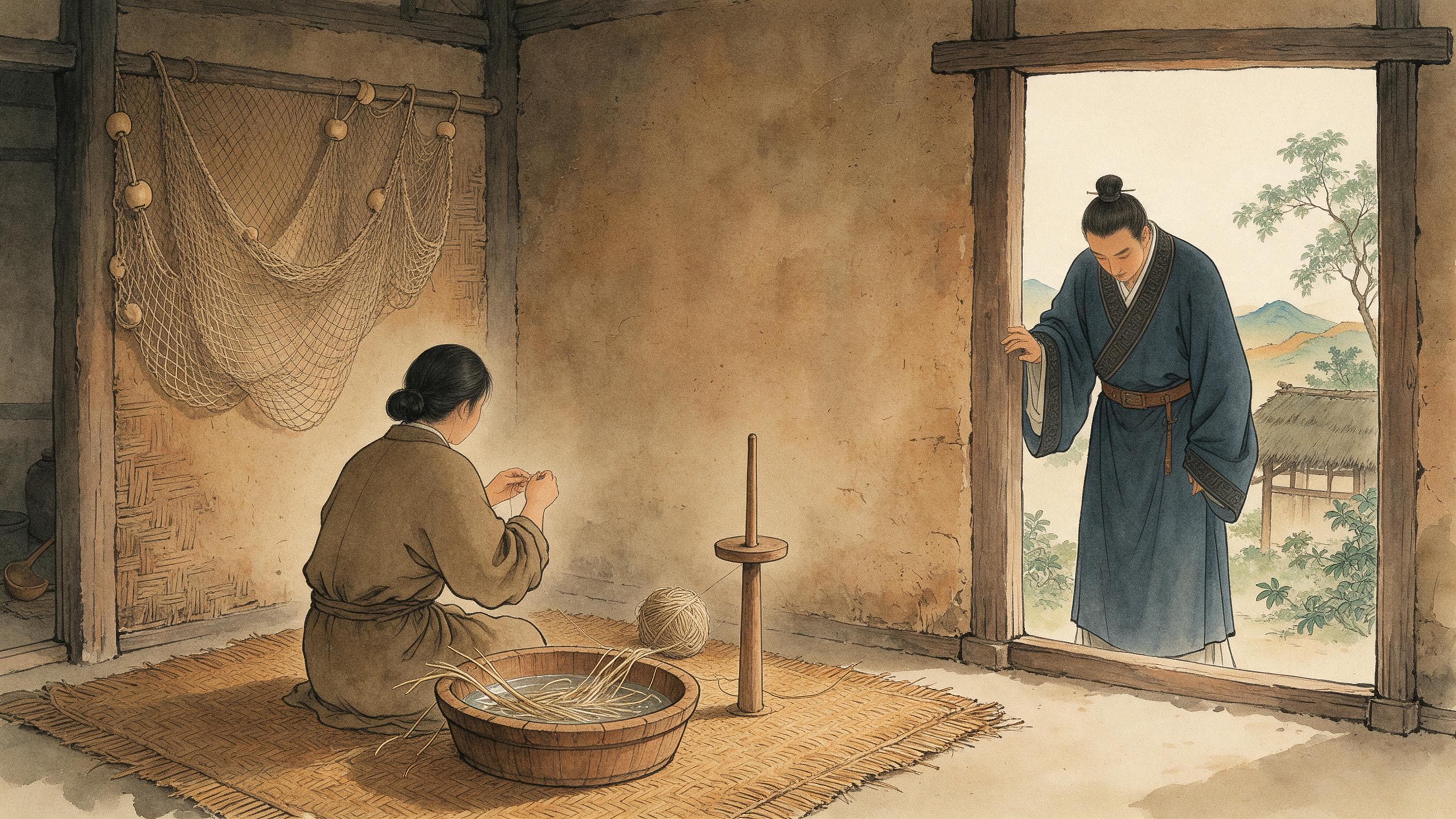
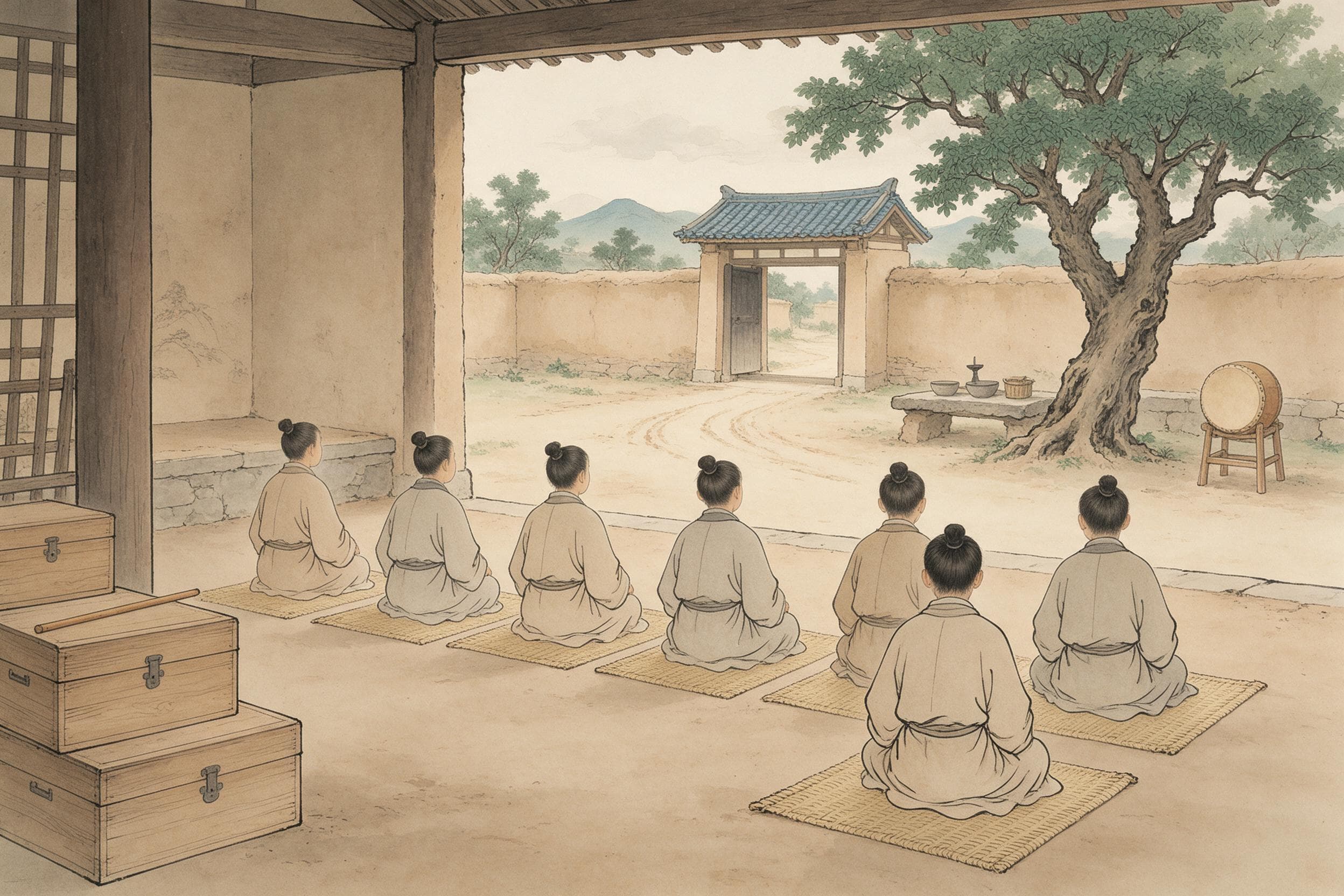
Half the section has nothing to do with a face. One man is praised for coming through a door: 斂衿作一來,何其軒軒韶舉 — he gathered his lapels and came in once, and how tall and fine it was. Another for sitting: 恭坐捻鼻顧睞,便自有寢處山澤閒儀 — sitting correctly, pinching his nose, looking around, already the manner of a man among hills and marshes. Another for his entrance: 乃策杖將一小兒,始入門,諸客望其神姿,一時退匿 — staff in hand with a small boy, and at the door the guests looked and all at once drew back. The hardest entry refuses the premise: 王敬豫有美形,問訊王公。王公撫其肩曰:阿奴恨才不稱 — a fine form, and his father put a hand on his shoulder and said, child, the pity is your talent does not match. The section takes 劉伶身長六尺,貌甚醜顇,而悠悠忽忽,土木形骸 — six chi, ugly and careworn, adrift, his body like earth and wood. These entries describe movement and posture rather than appearance, and the page gives no measurement for any of it. Also 庾子嵩長不滿七尺,腰帶十圍,頹然自放 — not seven chi, a belt of ten spans, letting himself go.
Three: three scenes of being looked at
He Yan's whiteness. 何平叔美姿儀,面至白,魏明帝疑其傅粉;正夏月,與熱湯餅 — the emperor suspected powder and in high summer served him hot soup cakes. 既噉,大汗出,以朱衣自拭,色轉皎然 — he ate, sweated, wiped himself with a red robe, and the colour came out brighter. Then Liu Xiaobiao's note quotes a source saying 動靜粉帛不去手,行步顧影 — never without powder and silk, walking and watching his own shadow — and gives the opposite verdict: 按:此言,則晏之妖麗,本資外飾. One entry, two conclusions, and the note is not the text. 傅粉 is face powder, and the test is designed to take it off.
Pan Yue and Zuo Si, the same street. 潘岳妙有姿容,好神情。少時挾彈出洛陽道,婦人遇者,莫不連手共縈之 — out with his pellet bow, the women who met him joined hands and closed round him. 左太沖絕醜,亦復效岳遊遨,於是群嫗齊共亂唾之,委頓而返 — the ugly Zuo Si made the same tour, and a crowd of old women spat at him until he went home beaten. The note quotes the Yulin: 老嫗以果擲之,滿車 …… 小兒以瓦石投之,亦滿車, and adds 二說不同. The famous fruit-throwing is in the annotation, not the text. The note marks its second quotation as a different account without choosing between them.
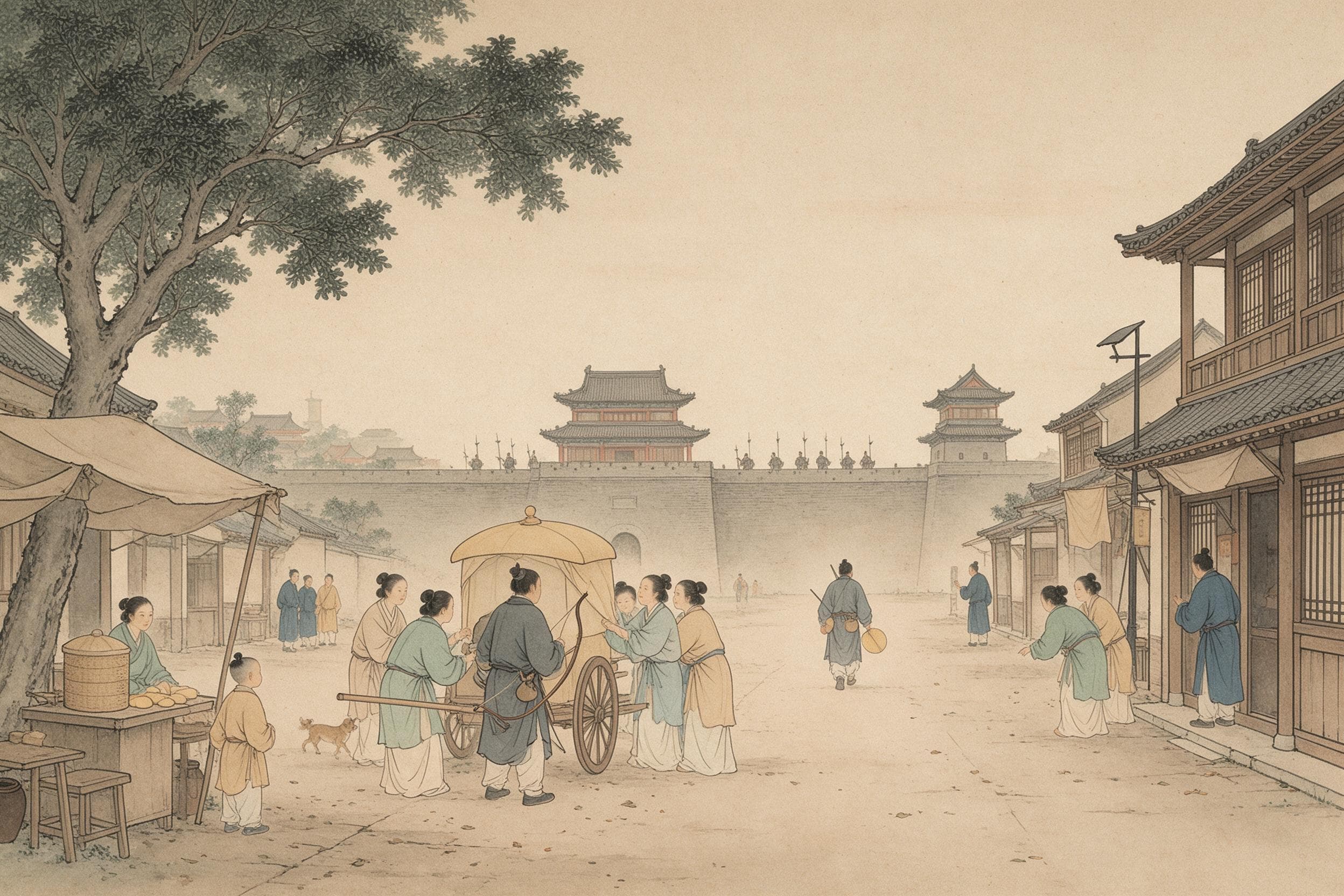
Wei Jie. 衛玠從豫章至下都,人久聞其名,觀者如堵牆 — onlookers like a wall. 玠先有羸疾,體不堪勞,遂成病而死。時人謂「看殺衛玠」 — he had a frail illness, could not bear the strain, sickened and died; people called it being looked to death. 羸疾 is a frail or wasting illness, and the page gives it no name. Then the note does the arithmetic: 玠以永嘉六年五月六日至豫章,其年六月二十日卒 …… 此則玠之南度豫章四十五日,豈暇至下都而亡乎 — six weeks and three days from arrival to death, so where was the time for the lower capital? The note says the text's itinerary does not work. 觀者如堵牆, onlookers like a wall of rammed earth, is the phrase both books use.
Four: two kinds of book
The Jinshu gives the same man as a biography. 玠字叔寶,年五歲,風神秀異 — at five his bearing was already remarkable, and his grandfather said he would not live to see him grow. 總角乘羊車入市,見者皆以為玉人,觀之者傾都 — as a child he rode a sheep cart into the market, and the whole city turned out. The two books differ in wording: the note has 白羊車 and 璧人, the biography 羊車 and 玉人. The biography adds what the anecdotes lack: 好言玄理, he loved metaphysical talk, and being often ill his mother 恆禁其語; and two sayings of the time, 王家三子,不如衛家一兒 and 婦公冰清,女婿玉潤 — the father-in-law ice-clear, the son-in-law jade-smooth. 玄理 is metaphysical talk, and the couplet makes the marriage the point: ice and jade, father-in-law and son-in-law.
The death has three accounts. The Shishuo's text has him reach the lower capital; its note, having done the dates, puts him at Yuzhang. The Jinshu has him 求向建鄴, then 京師人士聞其姿容,觀者如堵, then 永嘉六年卒,時年二十七,時人謂玠被看殺, and one line later 葬於南昌 — the capital and a grave at Nanchang. Three texts, no single route. And both books mark their own limits: an entry runs two sentences and the note beneath it runs longer, quoting the Wei shi chunqiu for Cao Cao's 姿貌短小 and the Wei zhi for Cui Yan's 鬚長四尺; the Jinshu is Tang, plain text, Wei Jie appended to the life of Wei Guan, with offices and a death year. Neither is a contemporary record. The note's presence is itself the point: an anecdote is not allowed to stand alone.
Five: text, note, and limits
- Thirty-nine entries, counted on the page; 容止 is the editor's drawer, not a word the men described used of themselves.
- Two genres, one man: the Shishuo is a Liu-Song anecdote collection, the Jinshu a Tang history; Wei Jie is an anecdote in one and a biography in the other, and the two are kept apart.
- Text and note are separate layers: 以果擲之,滿車, 行步顧影, 姿貌短小, 鬚長四尺, 白羊車/璧人 and 本資外飾 are all in Liu Xiaobiao's note and marked as such; the note also corrects the text.
- 容止 is not a beauty ranking: the section takes ugly men, unkempt men, and men praised only for how they came through a door; it never ranks anyone by face.
- Numbers are copied as written: 六尺, 十圍, 四尺, 五歲, 二十七, with no conversion; and 看殺 stays the phrase people used, not a medical cause of death.
- Lines kept apart: 任誕 for behaviour, 賢媛 for women, and the article on qingtan; no general talk of Wei-Jin style, and no portraits from later hands.
Which returns to the first entry. The envoy's one sentence judged two men and judged them right, and 魏武聞之,追殺此使 — Wei Wu heard it, and had the envoy killed. The man who looked most accurately paid for the accuracy.
Related reading:Renden: A Chapter of Men Who Broke the Rites · How Not to Hold Office: An Earthen Cave, a White Society and a One-String Zither · Worthy Women: A Few Women, A Few Sentences
Sources & further reading
- 《世说新语》·容止(南朝宋刘义庆编,梁刘孝标注;维基文库本,白文+刘孝标注,页头未标 textquality,未与中华书局点校本复核) — Thirty-nine entries, almost none of them describing a face: what they do is turn a person into an object. 李安國頹唐如玉山之將崩; 見裴叔則如玉山上行,光映照人; 珠玉在側,覺我形穢; 觸目見琳琅珠玉; 卓卓如野鶴之在雞群 (the reply to it points to his father, and is not used here); 眼爛爛如巖下電; 濯濯如春月柳; 飄如遊雲,矯若驚龍; and the one direct description of a face, 面如凝脂,眼如點漆. Bearing rather than beauty: 斂衿作一來,何其軒軒韶舉; 恭坐捻鼻顧睞,便自有寢處山澤閒儀; 諸客望其神姿,一時退匿; 阿奴恨才不稱; 劉伶身長六尺,貌甚醜顇,而悠悠忽忽,土木形骸. Scenes: He Yan and the hot soup cakes, with the note that contradicts the story (行步顧影; 按:此言,則晏之妖麗,本資外飾); Pan Yue and Zuo Si, with the fruit-throwing version in the note and the note's own 二說不同; Wei Jie, 觀者如堵牆 and 看殺, with the note doing the arithmetic (四十五日) and rejecting the itinerary. The first entry, Cao Cao and the envoy, ends 魏武聞之,追殺此使. Page headers put 豪爽第十三 before and 自新第十五 after, so the section is the fourteenth; the commentary is interleaved in 〈〉 inside each entry.
- 《晋书》卷三十六·卫瓘传附卫玠(唐房玄龄等撰;维基文库本,白文,页头未标 textquality,未与中华书局点校本复核) — The same Wei Jie as a biography: 玠字叔寶,年五歲,風神秀異; his grandfather's remark that he would not live to see him grow; 總角乘羊車入市,見者皆以為玉人,觀之者傾都 (against the note's 白羊車 and 璧人); the uncle's 珠玉在側,覺我形穢 and 冏若明珠之在側; then what the anecdotes lack — 好言玄理, his mother 恆禁其語, Wang Cheng 輒歎息絕倒, and the sayings 衛玠談道,平子絕倒, 王家三子,不如衛家一兒, 婦公冰清,女婿玉潤. The end: fearing Wang Dun was no loyal subject he 求向建鄴; 京師人士聞其姿容,觀者如堵; 玠勞疾遂甚,永嘉六年卒,時年二十七,時人謂玠被看殺; 葬於南昌 — the biography itself inconsistent about where he died. Xie Kun's 棟樑折矣 and Wang Dao's 此君風流名士 are on the page and not used.