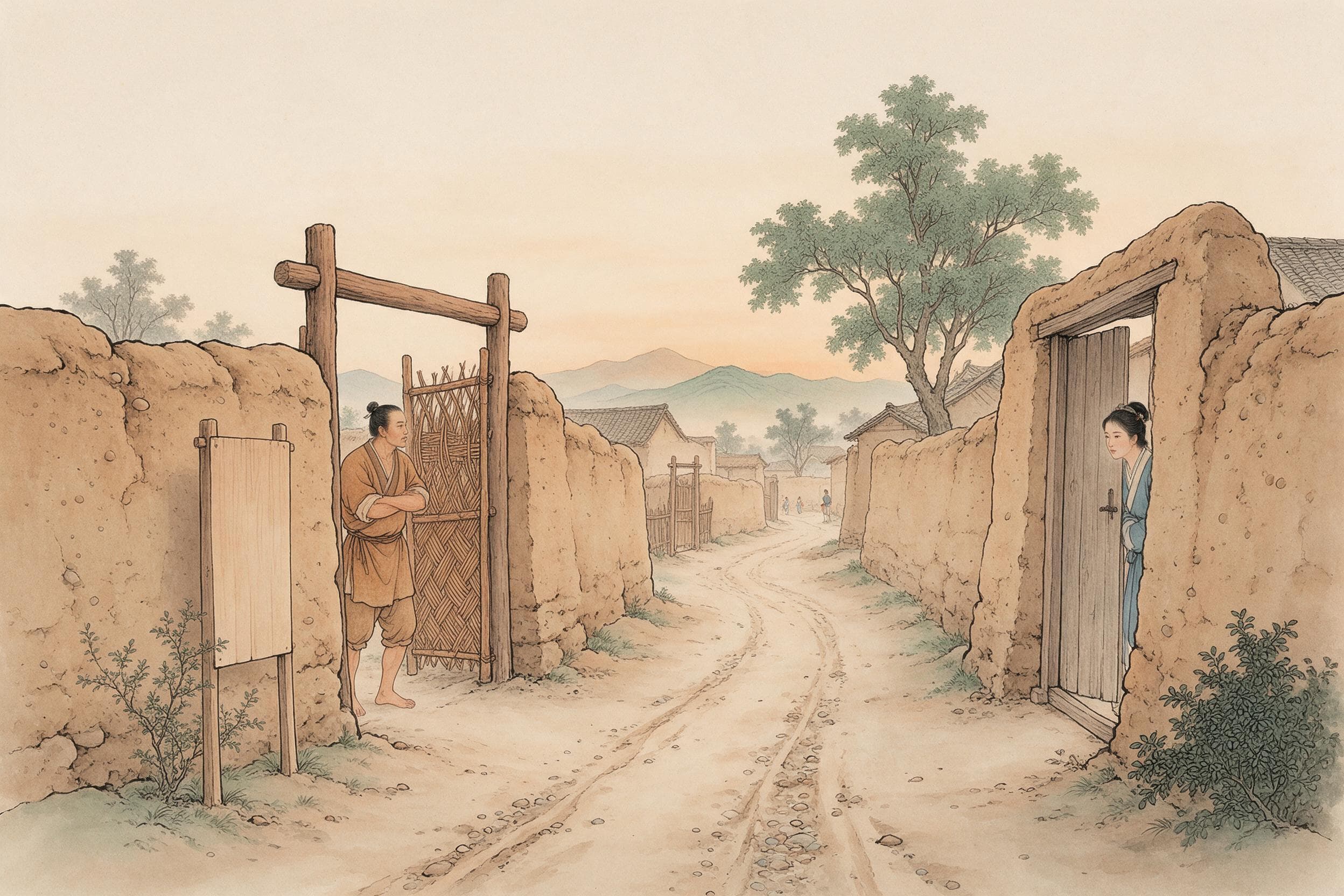
The first thing the Shiji says about several of the Han founders is not their ancestry but their trade. One wove thin mats and played the flute at funerals; one killed dogs; one sold cloth in Suiyang; one worked in the stables of Pei. Two biographies in the same book give these details, and they are two biographies, not two independent sources. This article reads what the pages say about each trade, and marks what they do not say. The order of information is itself a claim: trade first, then the empire.
Zhou Bo: Three Things, Not One
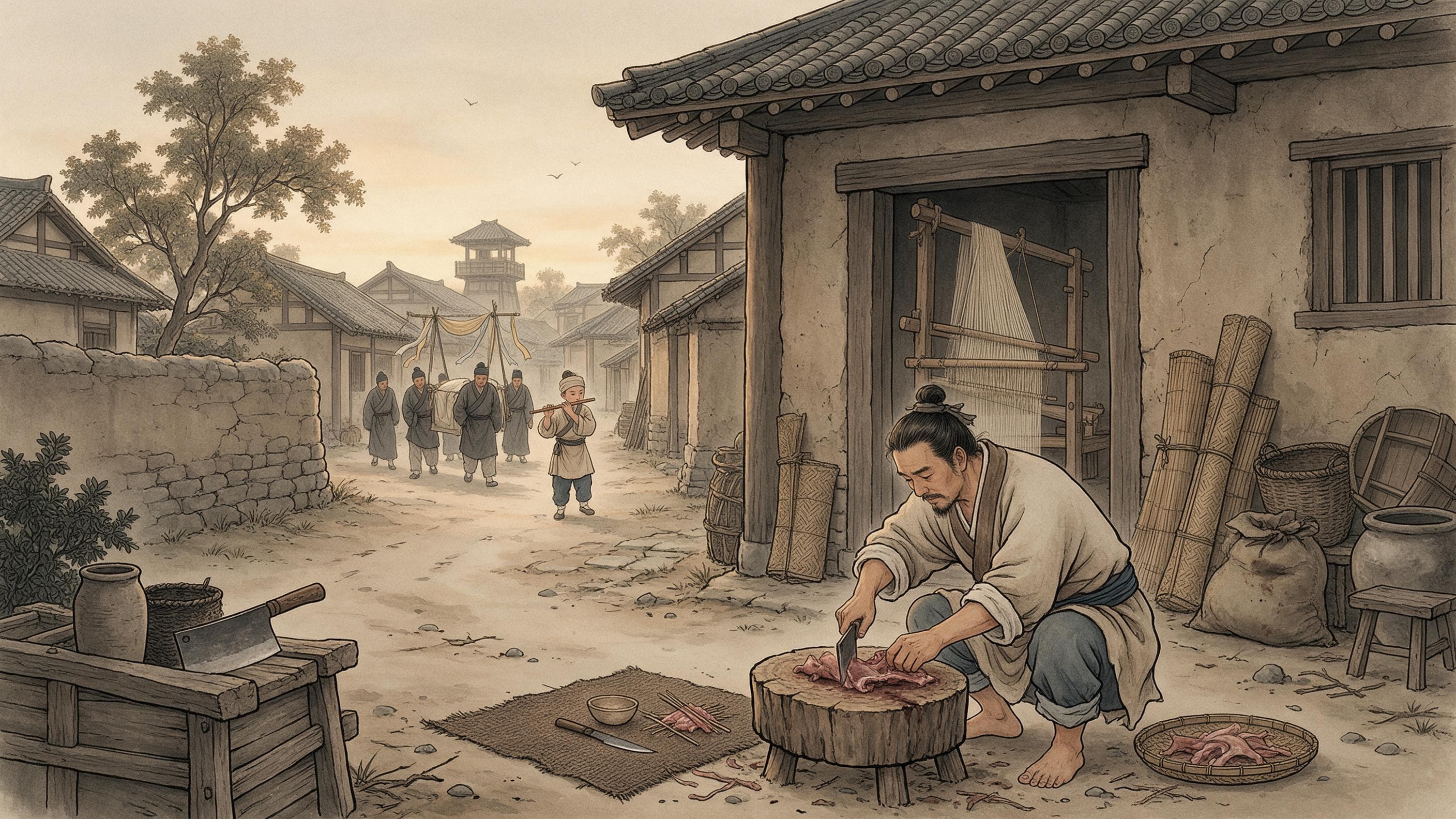
The 絳侯周勃世家 opens with a single sentence after his name and origin: 勃以織薄曲為生,常為人吹簫給喪事,材官引彊. Three things are listed side by side: he made his living weaving 薄曲; he often played the flute for other people's funerals, 給喪事; and he was a 材官引彊. The sentence is a list, and the page gives no explanation of any of the three. The sentence is doing the work of a whole biography in one line: before any campaign, it tells you what the man did for a living. The list is short and flat, with no ranking among the three.
What 薄曲 was, how the flute was used at a funeral, what a 材官 was and how a strong bow was drawn — the page does not say. At this point it is plain text with no commentary, and this article does not fill the gaps from later glosses. The three phrases stay names. A commented edition might explain these names; this page carries no commentary here, so this article stops at the names.
One thing the sentence does settle: the three are separate. Weaving mats for a living, playing at funerals and drawing a bow as a 材官 are not one trade in three stages; the page lists them as three facts about one man before it lists a single campaign. To read them as one career would be this article's invention, not the page's. The page puts the three side by side, and that is the argument: one is a trade for a living, one is work done for other people, one is a soldier's skill.
Fan Kuai, Guan Ying, Xiahou Ying
The 樊酈滕灌列傳 opens its first life the same way: 舞陽侯樊噲者,沛人也。以屠狗為事,與高祖俱隱 — a man of Pei who made dog-killing his 事 and went into hiding with the future emperor. 屠狗 is given as his occupation and nothing else: what dog meat was in that place, who bought it, how the trade was run, the page does not say. Fan Kuai later became Marquis of Wuyang; this sentence is only about what he was doing before any of that.
Guan Ying's opening is a single clause: 潁陰侯灌嬰者,睢陽販繒者也. He was a man of Suiyang who sold 繒, a woven cloth; by what road he carried it, with what capital, to whom, the page does not say. The verb 販 is all the detail there is. The title comes first and the trade second, both in one sentence: the page never separates the cloth-seller from the marquis.
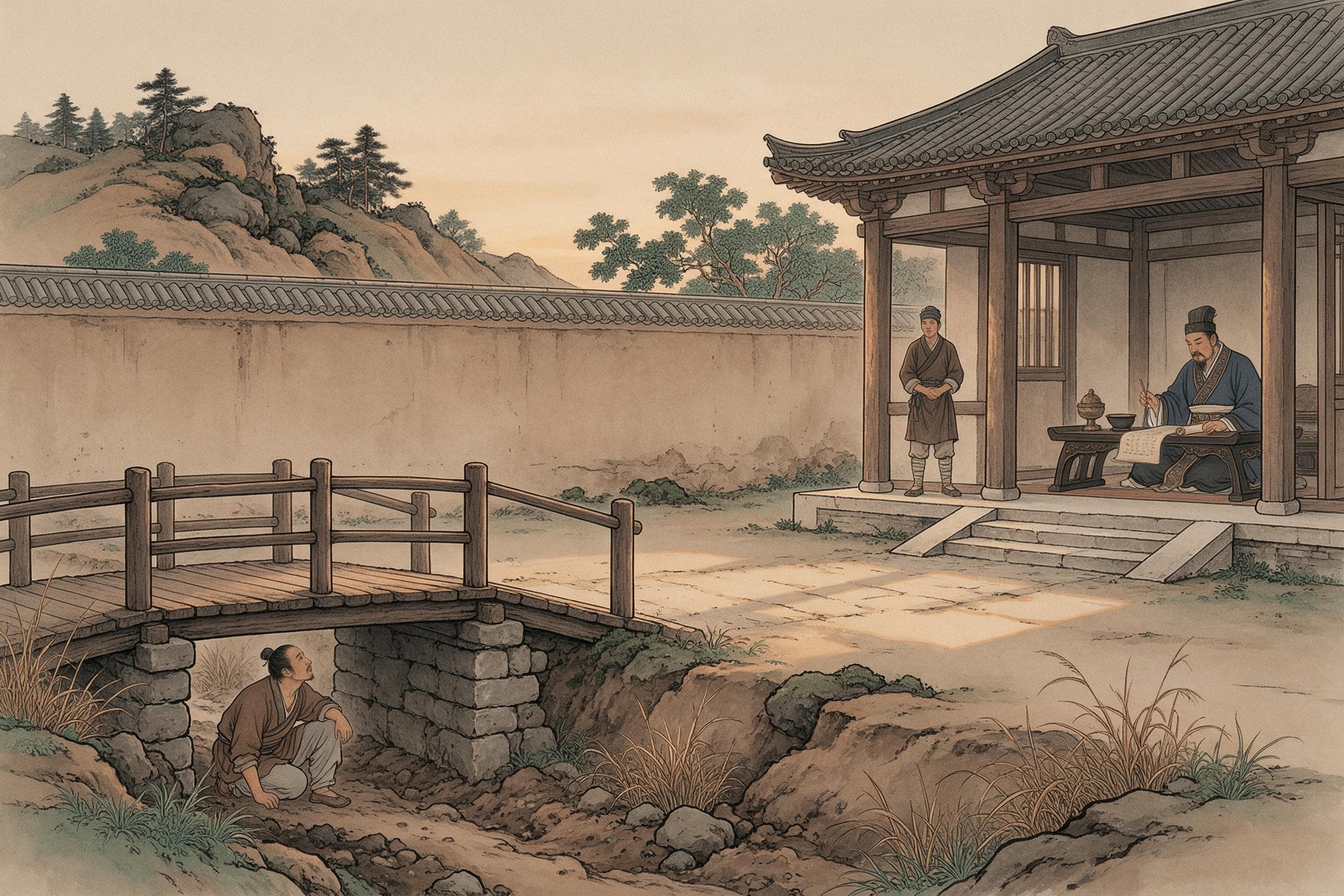
Xiahou Ying gets an office rather than a trade: 汝陰侯夏侯嬰,沛人也。為沛廄司御 — he served as 廄司御 in Pei, an office in the stables whose duties the page does not describe. What follows is not about the office: 每送使客還,過沛泗上亭,與高祖語,未嘗不移日也, whenever he came back from escorting envoys and passed the pavilion at Sishang, he talked with the future emperor and the day was never long enough.
Four men, four ways of saying it. Zhou Bo 以織薄曲為生, 'made his living by weaving'; Fan Kuai 以屠狗為事, 'made dog-killing his work'; Guan Ying is simply 睢陽販繒者也, 'a cloth-seller of Suiyang', a judgement with no verb of making at all; Xiahou Ying 為沛廄司御, 'served as stable officer', an office. The page does not flatten the four into one formula, and this article does not either. The variation in wording is the only thing the page varies.
What the Book Does With Them
The book does not leave the trades hanging. Each man is given a fief and a household count: Zhou Bo 食絳八千一百八十戶, Guan Ying 食潁陰二千五百戶, and Fan Kuai's grants run 益食八百戶, then 千五百戶, until 定食舞陽五千四百戶. These are fiefs and households, not earnings from the trades, and this article keeps them as the page writes them. The household counts grow from man to man, and that is the book placing its founders in order; it is not what their trades earned. The figures are kept in households because that is the unit the page uses.
Then the historian comments. In the 樊酈滕灌列傳: 吾適豐沛,問其遺老,觀故蕭、曹、樊噲、滕公之家,及其素,異哉所聞!方其鼓刀屠狗賣繒之時,豈自知附驥之尾,垂名漢廷,德流子孫哉 — I went to Feng and Pei, asked the old men, looked at the houses of Xiao, Cao, Fan Kuai and Duke Teng, and what I heard of their beginnings was strange; when they were wielding the knife, killing dogs and selling cloth, how could they have known they would ride on the tail of a swift horse and leave a name at the Han court? On Zhou Bo he says 始為布衣時,鄙樸人也,才能不過凡庸. Both sentences are the historian's: the swift horse is his image, and this article does not turn it into a moral. He calls Zhou Bo 才能不過凡庸 and asks of the others 豈自知; both are judgements, and they come after the page has already set the trade and the war side by side.
What the Pages Do Not Give
Three kinds of blank. The crafts: how thin mats were woven, how a dog was killed and sold, how cloth was carried and traded — none of it is on the page. The rite: how a flute was used at a funeral, who paid, what was played — not on the page. The offices: what a 材官 was, what a 廄司御 did — not on the page. A later hand added a summary couplet at the end, 屠狗販繒,攻城野戰, dog-killing and cloth-selling, attacking cities and fighting in the field; that is the 索隱述贊, not part of the biography, and it is marked as such here. None of the three blanks can be filled with a number: no price, no process, no headcount.
What This Article Leaves Out
It does not write humble trades as a story of self-improvement: the pages give a trade, then a war, then a fief, and the comment on the change is the historian's, not this article's. It does not identify these trades with later crafts or add technical detail. The chapter on merchants in the 貨殖列傳, the one on the wandering swordsmen and the one on model officials each take another kind of life; this one stays with a handful of opening sentences. The characters are kept as printed, including 彊, 廄, 繒 and 販. It also does not liken them to the merchants of the 貨殖列傳: that chapter is about men whose business was trade, while this one is about what a few future marquises did before they were anything. The trades are left as the biography's first sentence left them.
Related reading:From Zhaoyi to Yezhe: Fourteen Ranks of the Han Palace and Their Stipends · Three Hundred and Fifty Hu a Month: Two Han Salary Tables That Don't Match · Half a Million South: Five Armies and Thirteen Years Among the Yue
Sources & further reading
- 《史記》卷五十七·絳侯周勃世家第二十七(西漢司馬遷撰;維基文庫本,頁面白文) — The opening sentence: 絳侯周勃者,沛人也。其先卷人,徙沛。勃以織薄曲為生,常為人吹簫給喪事,材官引彊. Later: 食絳八千一百八十戶,號絳侯, and 太史公曰 始為布衣時,鄙樸人也,才能不過凡庸.
- 《史記》卷九十五·樊酈滕灌列傳第三十五(西漢司馬遷撰;維基文庫本,頁面白文) — The three openings: 舞陽侯樊噲者,沛人也。以屠狗為事,與高祖俱隱; 汝陰侯夏侯嬰,沛人也。為沛廄司御…每送使客還,過沛泗上亭,與高祖語,未嘗不移日也; 潁陰侯灌嬰者,睢陽販繒者也. Also the fief figures (食潁陰二千五百戶; 定食舞陽五千四百戶) and 太史公曰 方其鼓刀屠狗賣繒之時,豈自知附驥之尾,垂名漢廷,德流子孫哉? The page closes with a 索隱述贊: 屠狗販繒,攻城野戰.