The market in Chang'an had a name, and the name is most of what the page gives: 司馬季主者,楚人也。卜於長安東市 — Sima Jizhu, a man of Chu, divined in the Eastern Market of Chang'an. Fifteen characters: a native place and a place of business. This is the opening of chapter 127 of the Shiji, the Rizhe liezhuan, and it is not a report from the street. It is an essay with a scene in it, built so that a diviner can say what the historian thinks of office. The other page used here is the preface to chapter 82 part one of the Hou Hanshu — a classified biography in a much later book about the Eastern Han, which files the trade under 'techniques'. Two books, two ages, two kinds of page: one argues, the other catalogues.
A Stall in the Eastern Market
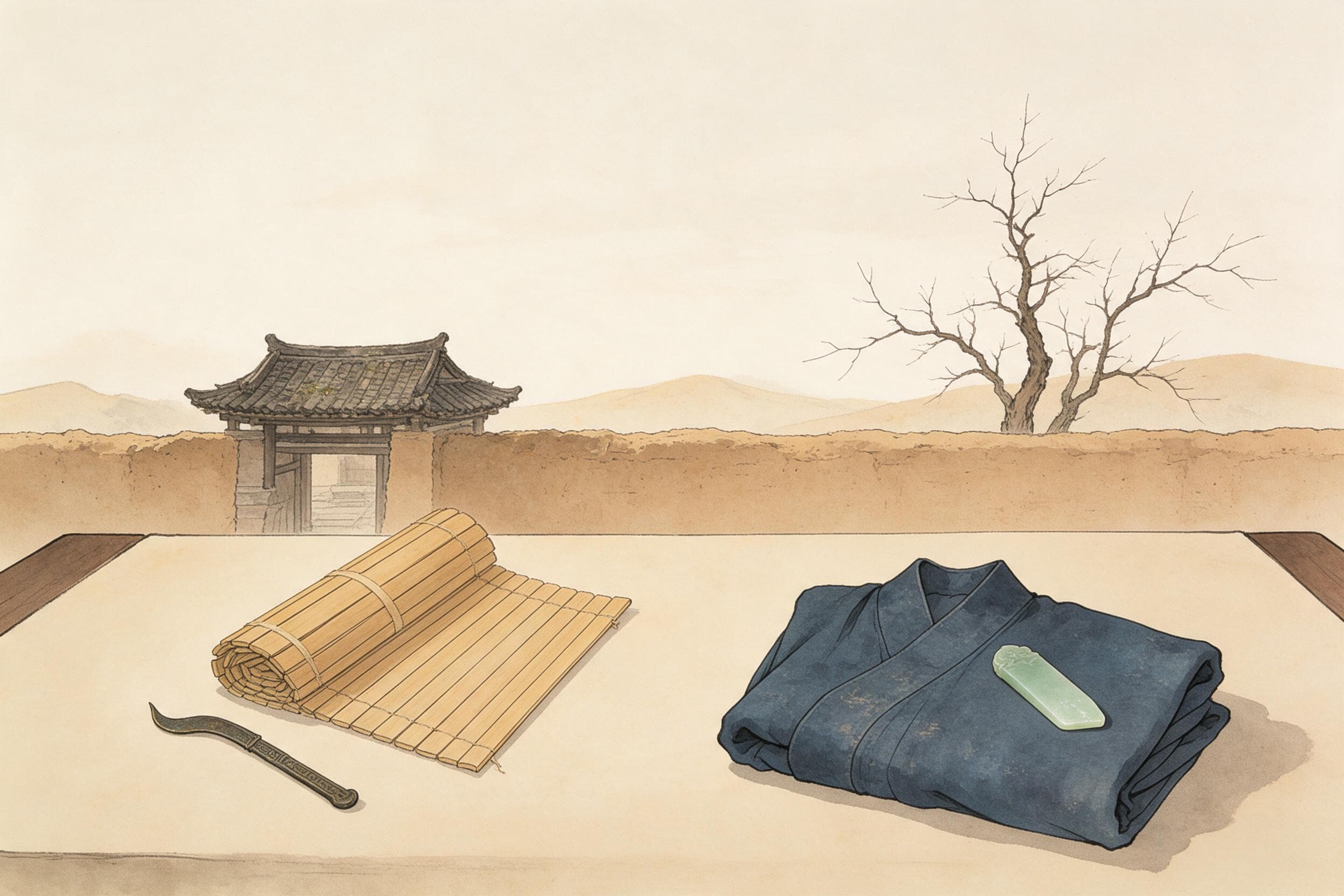
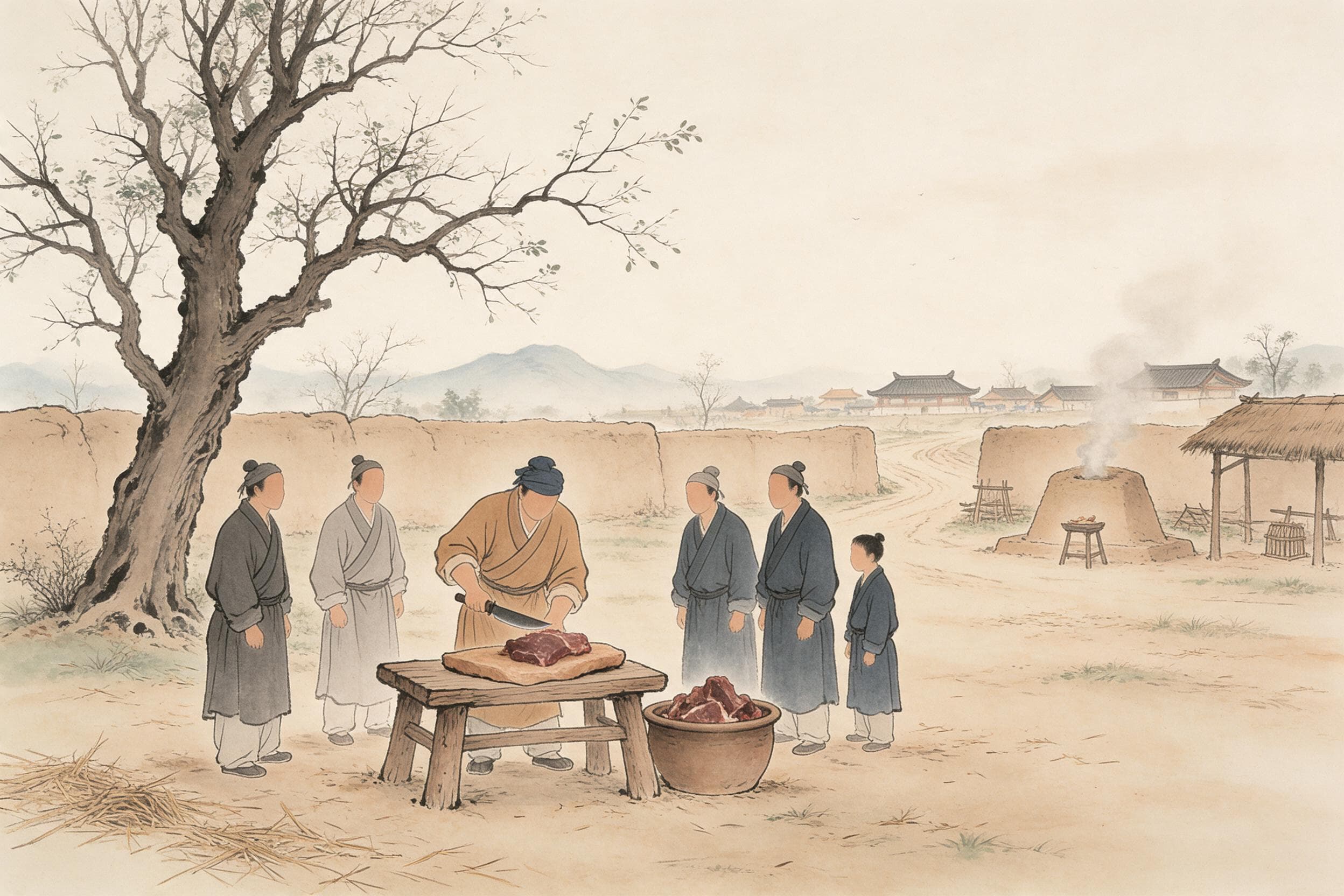
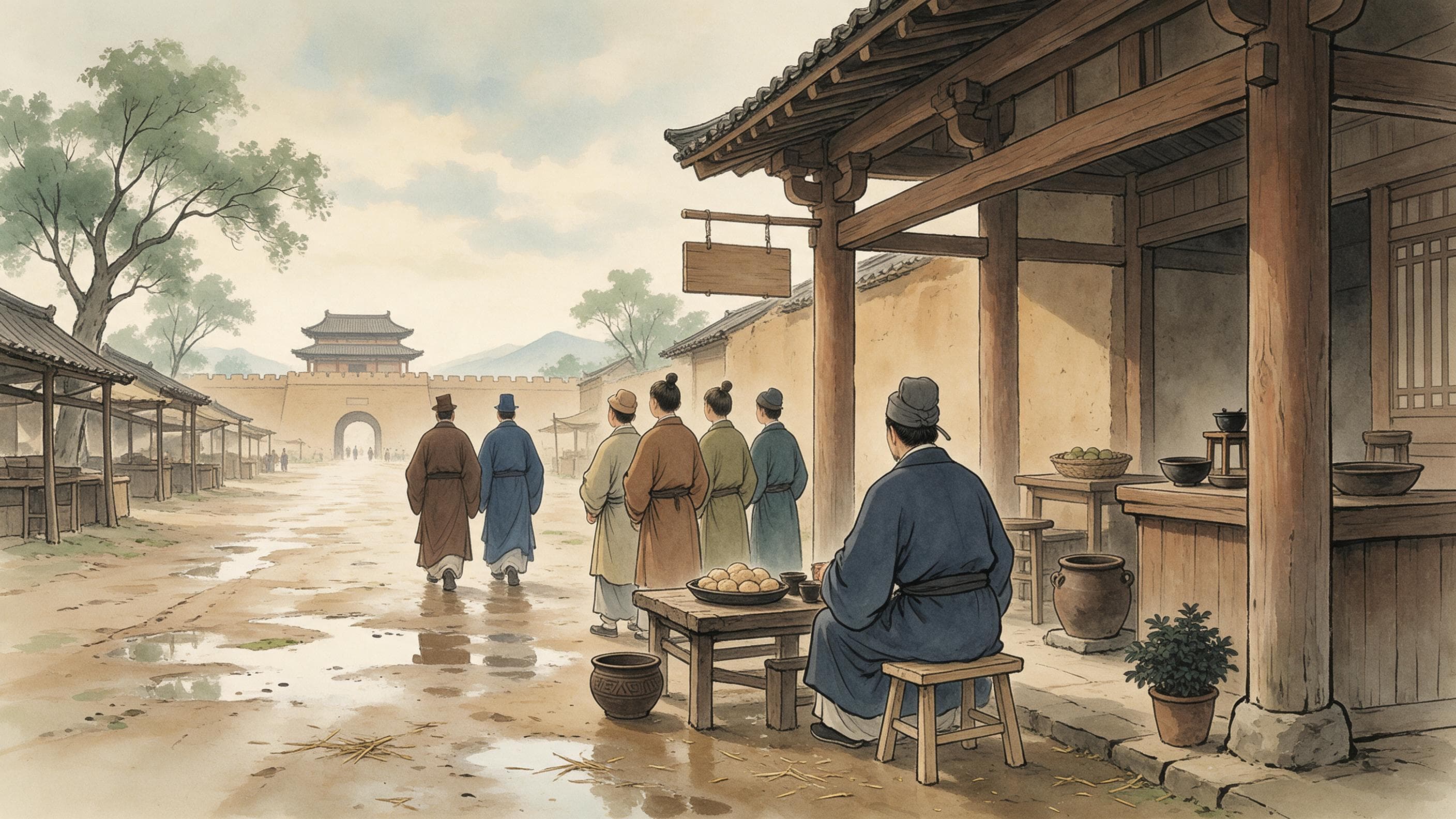
What the stall looked like comes out of the argument. It had just rained: 天新雨,道少人 — the roads were nearly empty. Jizhu sat at leisure with 弟子三四人侍, three or four disciples in attendance, discoursing on 天地之道,日月之運,陰陽吉凶之本 — the way of heaven and earth, the movements of sun and moon, the root of yin and yang, good and ill. The etiquette of the trade he states himself: 埽除設坐,正其冠帶,然後乃言事 — sweep the ground, set the mat, straighten cap and belt, and only then speak of the matter. What he charged: 以義置數十百錢, by what is right, a few tens or hundreds of coins. What the trade owned: 積之無委聚,藏之不用府庫,徙之不用輜車 — nothing piled in store, no treasury, no cart to move it. The fee is his own defence, not a market price; no page gives a price list.
Two Officials on Their Day Off
The visitors are two officials, Song Zhong, a 中大夫, and Jia Yi, a 博士, 同日俱出洗沐 — out together on the bathing day, talking over the way of the sages, and 相視而嘆, looking at each other and sighing. Jia Yi says: 吾聞古之聖人,不居朝廷,必在卜醫之中 — the sages of old, when they did not hold court office, were to be found among diviners and doctors. So 二人即同輿而之市: the two took one carriage into the market and went into the shop.
Their question is one line: 今何居之卑,何行之汙 — why live so low, why work so dirty? Their evidence is the world's opinion, listed in five clauses: 多言誇嚴以得人情, too many words and too much gravity to win people; 虛高人祿命以説人志, exalting a man's lot to please him; 擅言禍災以傷人心, talking up disaster to wound; 矯言鬼神以盡人財, invoking ghosts to empty a purse; 厚求拜謝以私於己, demanding a heavy thank-you. Jizhu laughs till his belly shakes: 觀大夫類有道術者,今何言之陋也,何辭之野也 — you look like men who know a method, and this is how you talk?
The Answer: Your Trade Is the Dirty One
The answer is not a defence of divination; it is an attack on office. 今公所謂賢者,皆可爲羞矣 — the men you call worthy are a disgrace: 卑疵而前,孅趨而言, they come forward cringing and speak fawningly; 相引以勢,相導以利, they pull each other up by influence and guide each other toward profit; 以官爲威,以法爲機,求利逆暴 — they make office their authority and the law their trap, and take profit by force: 譬無異於操白刃劫人者也, no different from men who hold a naked blade and rob. Then three steps down: 此夫爲盜不操矛弧者也, thieves who carry no bow or spear; 攻而不用弦刃者也, attackers who use no string or blade; 欺父母未有罪而弒君未伐者也, men who wrong their parents and go uncharged, kill a ruler and go unpunished.
Divination has a warrant, he says, and it lies in antiquity. 必法天地,象四時,順於仁義,分策定卦,旋式正棋,然後言天地之利害 — the diviner takes heaven and earth as his model, images the four seasons, follows benevolence and right, divides the stalks, sets the hexagram, turns the board and squares the pieces, and only then speaks of benefit and harm. 昔先王之定國家,必先龜策日月 — the early kings, settling a state, first consulted shell and stalks. 自伏羲作八卦,周文王演三百八十四爻而天下治 — from Fuxi's eight trigrams and King Wen's three hundred and eighty-four lines the world was ordered; 越王句踐放文王八卦以破敵國, and the king of Yue used King Wen's trigrams to break a rival state. Two citations follow: Laozi's 上德不德,是以有德, highest virtue does not count itself virtuous, and so has virtue; Zhuangzi's 君子內無饑寒之患,外無劫奪之憂, the gentleman has no hunger or cold within him and no robbery to fear without. Then the property again: nothing in store, no treasury, no cart; a man holds what cannot be exhausted and moves through a world without end.
Out the Door, and Three Days Later
The officials cannot answer. 忽而自失,芒乎無色,悵然噤口不能言 — they lose themselves, go colourless, fall silent; 出門僅能自上車,伏軾低頭,卒不能出氣 — outside they can barely get into the carriage, heads down over the yoke, unable to let their breath out. Three days later Song Zhong says to Jia Yi: 道高益安,勢高益危 — the higher the way, the safer, the higher the position, the more dangerous; 夫卜而有不審,不見奪糈;爲人主計而不審,身無所處 — a diviner who misreads loses his ration, a man who miscalculates for a ruler has nowhere to stand. Then the essay disposes of both: 宋忠使匈奴,不至而還,抵罪; 賈誼爲梁懷王傅,王墮馬薨,誼不食,毒恨而死; 此務華絶根者也 — that is what it is to tend the flower and cut the root. It is the essay closing itself, not two biographies. 太史公曰 says only 及至司馬季主,余志而著之, I set it down because of Sima Jizhu.
The Supplement: The Same Street, the State's Ledger
The chapter has a second author. The last section begins 褚先生曰, Master Chu says — this part is not Sima Qian 臣爲郎時,游觀長安中,見卜筮之賢大夫 — when I was a palace gentleman I walked the capital and saw the worthy men of the divining trade, 誓正其衣冠而當鄕人也, straightening cap and gown to face the townspeople. One line is about customers: 見性好解婦來卜,對之顏色嚴振,未嘗見齒而笑也 — when a woman who liked things explained came to divine, his face was stern and he never showed his teeth in a smile.
Chu's point is the market, not the spirits: 富爲上,貴次之;既貴各各學一伎能立其身 — wealth first, rank second; once a man had rank he still learned a skill to stand on. The names are trades: 相馬, judging horses, made 黃直, a grandee, and 陳君夫, a woman, famous under heaven; 齊張仲 and 曲成侯 were known for the sword; 留長孺 by judging pigs; 滎陽褚氏 by judging cattle. And his rule for teaching: 非其地,樹之不生;非其意,教之不成 — plant in the wrong ground and it will not grow; teach against a man's bent and it will not take.
The best scene is a ruling. Under Emperor Wu the specialists were gathered and asked whether a certain day was fit for taking a wife: 五行家曰可,堪輿家曰不可,建除家曰不吉,叢辰家曰大凶,歷家曰小凶,天人家曰小吉,太一家曰大吉 — the five-phase men said yes, the geomancers no, the day-builders inauspicious, the cluster-stars greatly unlucky, the calendrists slightly unlucky, the heaven-men slightly lucky, the Taiyi school greatly lucky. Seven schools, seven answers, 辯訟不決,以狀聞; and the throne's ruling took one line: 避諸死忌,以五行爲主 — avoid the death-prohibitions; let the five phases decide.
The second book is another world. Its preface starts from Confucius: 卜筮者尚其占 — of the four ways of the gentleman in the Changes, the diviner values its prognostication; and defines it as 先王所以定禍福,決嫌疑,幽贊於神明,遂知來物者也, what the early kings used to fix fortune and misfortune, decide doubts, secretly assist the spirits, and so know things to come. Then it files the techniques: 風角、遁甲、七政、元氣、六日七分、逢佔、日者、挺專、須臾、孤虛之術 — ten names, and the day-masters, 日者, are one item among them. Then three emperors: 漢自武帝頗好方術, from Emperor Wu on the Han had a taste for techniques; 王莽矯用符命, Wang Mang used the tally-mandates for his own ends; 光武尤信讖言, Guangwu believed in prophecies above all. Then outcomes: 王梁、孫咸,名應圖籙,越登槐鼎之任, whose names answered the charts and who leapt to the seats of the three excellencies; 鄭興、賈逵,以附同稱顯, famous for agreeing; 恆譚、尹敏,以乖忤淪敗, ruined for going against. There was pushback — 通儒碩生…以為宜見藏擯, the great scholars argued it should be suppressed — and the preface keeps a reserve: 聖人不語怪神,罕言性命, the sage does not speak of prodigies and spirits; 極數知變而不詭俗,斯深於數術者也, to fathom number and know change without turning vulgar is to be deep in the arts of number; 苟非其人,道不虛行, if the man is not right the way does not walk for nothing.
Two limits. The books are not one picture: one is a Western Han essay, the other a much later history of the Eastern Han; Sima Jizhu exists only in the first, and what the second describes is a classification, not a shop. And neither page shows a divination: no method, no price, no customer, no record of whether a reading came true — the techniques appear as names, and this article does not judge them. This site has written about Guo Pu, about divination questions in the Spring and Autumn period, about where turtle shells came from, and about Han medicine; this piece is one stall in one market, and a later state's ledger of the trade.
Related reading:Guo Pu's Divinations: A Horse, Beans, and a Donkey-Rat · The Day Was Divined, the Night Was Not: Two Ways of Asking in Spring and Autumn China · Tribute Turtles: Where Divination Shells Were Said to Come From
Sources & further reading
- 《史記》卷一百二十七·日者列傳第六十七(西漢司馬遷撰,末段「褚先生曰」為褚少孫補;維基文庫本,繁體白文,未與中華書局點校本複核) — An essay with a scene in it, not a record of a street: 司馬季主者,楚人也。卜於長安東市; 宋忠 and 賈誼 on a bathing day 同輿而之市, 游於卜肆中; 天新雨,道少人; 弟子三四人侍; the question 何居之卑,何行之汙; the world's five charges (多言誇嚴以得人情…厚求拜謝以私於己); 司馬季主捧腹大笑 and answers that the men called worthy 譬無異於操白刃劫人者也; the warrant from antiquity (必先龜策日月; 伏羲作八卦,周文王演三百八十四爻); 老子 and 莊子 quoted; the trade's property (積之無委聚…止而用之無盡索之時); the officials 伏軾低頭,卒不能出氣; three days later 道高益安,勢高益危 and 夫卜而有不審,不見奪糈;爲人主計而不審,身無所處; their ends 宋忠使匈奴…賈誼…毒恨而死,此務華絶根者也; 太史公曰:及至司馬季主,余志而著之. The 褚先生曰 supplement: 臣爲郎時,游觀長安中,見卜筮之賢大夫…誓正其衣冠而當鄕人也; 見性好解婦來卜…未嘗見齒而笑也; 黃直、陳君夫以相馬立名天下, 齊張仲、曲成侯以善擊刺學用劍, 留長孺以相彘, 滎陽褚氏以相牛; 富爲上,貴次之;既貴各各學一伎能立其身; 非其地,樹之不生; the seven schools disputing one wedding day and the ruling 避諸死忌,以五行爲主.
- 《後漢書》卷八十二上·方術列傳第七十二上(南朝宋范曄撰;維基文庫本,白文,未與中華書局點校本複核) — The preface only, and a different kind of page: a classified biography's opening. 仲尼稱《易》有君子之道四焉,曰卜筮者尚其占; 佔也者,先王所以定禍福,決嫌疑,幽贊於神明,遂知來物者也; the list 風角、遁甲、七政、元氣、六日七分、逢佔、日者、挺專、須臾、孤虛之術, with 望雲省氣,推處祥妖; 聖人不語怪神,罕言性命; the three emperors 漢自武帝頗好方術…王莽矯用符命…光武尤信讖言; the outcomes 王梁、孫咸,名應圖籙,越登槐鼎之任;鄭興、賈逵,以附同稱顯;恆譚、尹敏,以乖忤淪敗; 習為內學,尚奇文,貴異數 and the pushback 通儒碩生…以為宜見藏擯; 子長亦云:觀陰陽之書,使人拘而多忌; and the standard 極數知變而不詭俗,斯深於數術者也…苟非其人,道不虛行. The rest of the chapter is individual lives; this article uses only the preface.