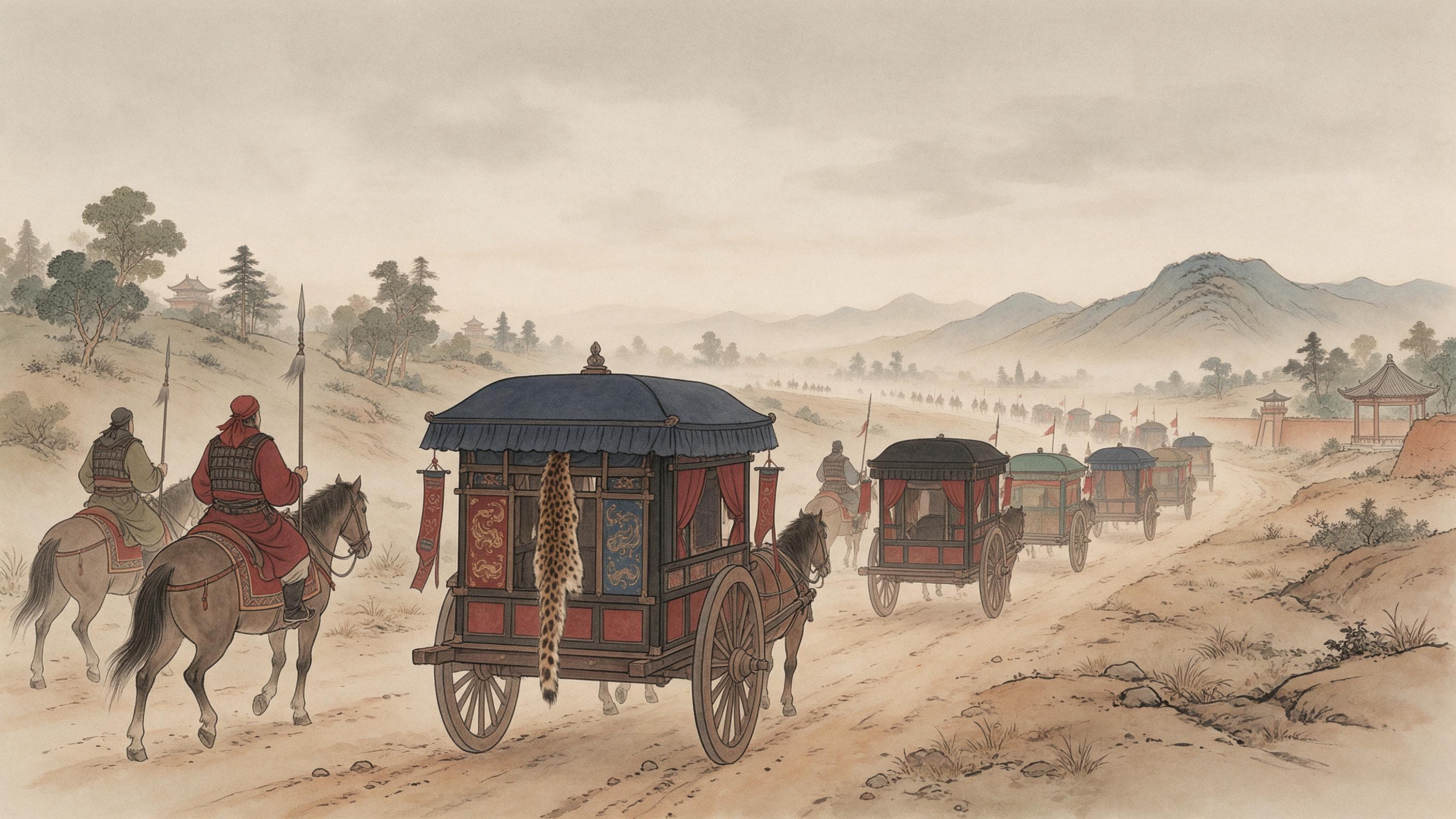
At the end of a long line of carriages, the last one carried a leopard tail on its rear pole: 豹尾以前比省中, and everything ahead of that tail counted as inside the palace. That is not a figure of speech but a border drawn into an order of march. The Hou Hanshu: 乘輿大駕,公卿奉引,太僕御,大將軍參乘。屬車八十一乘,備千乘萬騎 — the ministers lead, the grand coachman drives, the grand general rides beside, eighty-one carriages follow, and a thousand chariots and ten thousand horsemen are made ready. The eighty-one still needs reading as the kind of number it is: the same chapter says 東都唯大行乃大駕, in the eastern capital only the funeral of an emperor used the grand form, and 春秋上陵,尤省於小駕, the tomb visits were reduced below the lesser form. It is an establishment, not a turnout; nowhere on the page is it said how many carriages actually went out.
One: eighty-one, thirty-six, and less
The difference between the two processions is people: 乘輿法駕,公卿不在鹵簿中。河南尹、執金吾、雒陽令奉引,奉車郎御,侍中參乘。屬車三十六乘 — no ministers in the legal progress; the governor of Henan and the prefect of Luoyang lead instead. It has its own vanguard, 前驅有九斿雲罕,鳳皇闟戟,皮軒鸞旗,皆大夫載……後有金鉦黃鉞,黃門鼓車, and its own manager: 大駕,太僕校駕;法駕,黃門令校駕. On any outing clerks with tablets kept the column in order, 皆執注,以督整車騎,謂之護駕.
The reduced form: 行祠天郊以法駕,祠地、明堂省什三,祠宗廟尤省,謂之小駕 — the sacrifice to Heaven took thirty-six, Earth and the Bright Hall cut three tenths more, the ancestral temple was cut furthest and called the lesser progress. Where the number came from: 古者諸侯貳車九乘。秦滅九國,兼其車服,故大駕屬車八十一乘,法駕半之 — in antiquity a lord had nine secondary carriages; Qin destroyed the nine states and took their carriages and dress, and so the grand progress had eighty-one, half of that for the legal one. This is the treatise's account, quoted without asserting the cause; the arithmetic linking nine to eighty-one is not written on the page, and this article does not do it. The following carriages were uniform: 屬車皆皁蓋赤裡,朱轓,戈矛弩箙,尚書、御史所載。最後一車懸豹尾,豹尾以前比省中 — black canopies, red lining, halberds and crossbows in cases, occupied by secretaries and censors, with the leopard tail marking both the end of the column and the edge of the palace.
Two: what was in the column
The top is the jade carriage: 天子玉路,以玉為飾,鍚樊纓十有再就,建太常,十有二斿,九仞曳地,日月昇龍. Its origin is given in one line: 秦並天下,閱三代之禮,或曰殷瑞山車,金根之色。漢承秦制,御為乘輿. The next rank shares one set of fittings: 乘輿、金根、安車、立車,輪皆朱班重牙,貳轂兩轄……駕六馬……左纛以氂牛尾為之,在左騑馬軛上,大如斗,是為德車. These differ by degree, not shape, and the line that matters is 所御駕六,餘皆駕四,後從為副車 — the emperor's team is six horses, all the rest four, following as subsidiary carriages. The left banner's size is given only as 大如斗, as big as a dou, and is not converted here.
The working carriages carry names and decorations: 耕車……有三蓋。一曰芝車,置耒耜之箙,上親耕所乘也; 戎車……蕃以矛麾金鼓羽析幢翳,胄甲弩之箙; 獵車……重輞縵輪,繆龍繞之。一曰闟豬車,親校獵乘之; 輕車,古之戰車也。洞朱輪輿,不巾不蓋……藏在武庫 — the light carriage, an old war chariot kept in the armory, carried in the column by the archery corps on grand and legal progresses. What these entries give is a name and fittings; not one gives a dimension or a plan. How wide, how high, how many spokes: neither page says.
Three: who rode what
The empresses and princesses are sorted by carriage and horse: 太皇太后、皇太后法駕,皆御金根,加交絡帳裳。非法駕,則乘紫罽軿車……左右騑,駕三馬。長公主赤罽軿車。大貴人、貴人、公主、王妃、封君油畫軿車……皆右騑而已 — the golden-root carriage with added curtains, then purple felt, red felt, painted felt, one rank each, with two outriders and three horses for the dowager and the right outrider only for the princesses. Below: 皇太子、皇子皆安車……皇子為王,錫以乘之,故曰王青蓋車。皇孫則綠車以從。皆左右騑,駕三. Dukes and marquises rode the an carriage (公、列侯安車). Then the officials: 中二千石、二千石皆皁蓋,朱兩轓。其千石、六百石,朱左轓.
Here comes one of the page's rare carriage dimensions: 轓長六尺,下屈廣八寸,上業廣尺二寸,九文,十二初,後謙一寸,若月初生,示不敢自滿也 — the side screen six chi long, eight cun across at the lower bend, one chi two cun at the top, with the last cun held back like the new moon. Kept as chi and cun, not converted. The same passage gives a date and a rule, 景帝中元五年,始詔六百石以上施車轓,得銅五末; a ladder of canopies, 三百石以上皁布蓋,千石以上皁繒覆蓋,二百石以下白布蓋; and a prohibition, 賈人不得乘馬車.
Four: three things worn rather than ridden
The other chapter covers the head and the waist. The 通天冠: 高九寸,正豎,頂少邪却,乃直下為鐵卷梁,前有山,展筩為述,乘輿所常服. The ribbon is a ladder of its own: 乘輿黃赤綬,四采,黃赤縹紺,淳黃圭,長二丈九尺九寸,五百首; a king's red ribbon 長二丈一尺,三百首; the green ribbons of the nobles of the kingdoms and the chancellors 長二丈一尺,二百四十首; dukes, marquises and generals purple 長丈七尺,百八十首; the nine ministers and the ranks of full two thousand shi and two thousand shi blue 長丈七尺,百二十首; the thousand- and six-hundred-shi ranks black 長丈六尺,八十首; four hundred down to two hundred shi yellow 長丈五尺,六十首; a hundred-shi ribbon of one colour 長丈二尺. The weaving has figures too: 凡先合單紡為一系,四系為一扶,五扶為一首,五首成一文,文采淳為一圭。首多者系細,少者系麤,皆廣尺六寸 — four strands to a fu, five fu to a head, five heads to a pattern; fine threads for the many-headed ribbons and coarse for the few, all one chi six cun wide.
The sword is graded by workmanship: 佩刀,乘輿黃金通身貂錯,半鮫魚鱗,金漆錯,雌黃室,五色罽隱室華。諸侯王黃金錯,環挾半鮫,黑室。公卿百官皆純黑,不半鮫 — the emperor all gold inlay and half sharkskin, a king half sharkskin, the ministers plain black. And the ribbons have a second set of figures: a note quoting Ding Fu's Han yi gives the imperial ribbon as 四百首,長二丈三尺 and a king's as 二百六十首, where the main text has 五百首 and 二丈九尺九寸. Both are reported; neither is chosen.
Five: what the two chapters give, and do not
- The two sources are two treatises of one book: volume 119 on carriages, volume 120 on caps, ribbons and swords. Strictly one book in two chapters, not two independent documents, and the article says so.
- Eighty-one and thirty-six are establishments, not turnouts, and the page says so itself: 東都唯大行乃大駕, 春秋上陵,尤省於小駕. The Ganquan procession list is not given in the text — only an official note keeps its name — and is not unfolded here.
- Car types come with names and fittings, not shapes: golden-root, plough, war, hunting and light carriages, blue-canopy and black-canopy carriages. Width, height, spokes and construction are nowhere on either page; apart from the six-chi side screen there is no carriage dimension.
- 秦滅九國,兼其車服,故大駕屬車八十一乘 is the treatise's own account, quoted without asserting the cause; since the page never links nine to eighty-one arithmetically, this article does not either.
- Units are kept as written: chi, cun, ren, dou (大如斗), shou and cheng — no centimetres or feet, no areas or volumes. Checked against the pages before filing: eighty-one, thirty-six, nine, two zhang nine chi nine cun, five hundred heads, nine cun, teams of six, four and three horses.
- Lines kept apart: the Qin road and wheel gauge, the Warring States chariot dimensions and the two ways of counting a cheng, and the cutting of a Han robe are other articles; this one stays with the order of march and the seating ranks. No general talk of Han carriage institutions or of hierarchy.
What the two chapters leave is a set of numbers: eighty-one and thirty-six, six horses and four, three and a right outrider, two zhang nine chi nine cun and five hundred heads, a cap nine cun high and a side screen six chi long. The denser the numbers, the less can be seen. How the column formed, how a carriage was built, how a rider got in — none of it is on the page. What is there is names, fittings, degrees, and a leopard tail at the end.
Related reading:Sorrowful Brows, Tear Makeup, the Falling-Horse Bun: How a Set of Styles Got into a Book of Omens · The Yin Used the Jia: Names of Ancient Ritual Vessels · The Sun Was Eaten: One Eclipse, One Leap Month
Sources & further reading
- 《后汉书》卷一百一十九(舆服志上·车舆)(维基文库本,未与中华书局点校本复核) — The page's own header reads 志第三十 輿服下, but its content is the carriages (玉輅, 乘輿, 金根, 安車, 立車, 耕車, 戎車, 獵車, 青蓋車, 綠車, 皁蓋車, 大駕, 法駕, 小駕, 輕車, and the rest), while 卷120 has caps, ribbons and swords. The header's 志 number does not match its content, so this article cites by volume only. The procession: 乘輿大駕,公卿奉引,太僕御,大將軍參乘。屬車八十一乘,備千乘萬騎。西都行祠天郊,甘泉備之。官有其註,名曰甘泉鹵簿。東都唯大行乃大駕。大駕,太僕校駕;法駕,黃門令校駕。 / 乘輿法駕,公卿不在鹵簿中。河南尹、執金吾、雒陽令奉引,奉車郎御,侍中參乘。屬車三十六乘。前驅有九斿雲罕,鳳皇闟戟,皮軒鸞旗,皆大夫載……後有金鉦黃鉞,黃門鼓車。 / 古者諸侯貳車九乘。秦滅九國,兼其車服,故大駕屬車八十一乘,法駕半之。屬車皆皁蓋赤裡,朱轓,戈矛弩箙,尚書、御史所載。最後一車懸豹尾,豹尾以前比省中。 / 行祠天郊以法駕,祠地、明堂省什三,祠宗廟尤省,謂之小駕。 / 每出,太僕奉駕上鹵簿,中常侍、小黃門副;尚書主者,郎令史副;侍御史,蘭台令史副。皆執注,以督整車騎,謂之護駕。春秋上陵,尤省於小駕. Cars: 天子玉路,以玉為飾,鍚樊纓十有再就,建太常,十有二斿,九仞曳地,日月昇龍; 秦並天下,閱三代之禮,或曰殷瑞山車,金根之色。漢承秦制,御為乘輿; 乘輿、金根、安車、立車,輪皆朱班重牙,貳轂兩轄……駕六馬……左纛以氂牛尾為之,在左騑馬軛上,大如斗,是為德車……所御駕六,餘皆駕四,後從為副車; 耕車……有三蓋。一曰芝車,置耒耜之箙,上親耕所乘也; 戎車……蕃以矛麾金鼓羽析幢翳,胄甲弩之箙; 獵車……重輞縵輪,繆龍繞之。一曰闟豬車,親校獵乘之; 輕車,古之戰車也。洞朱輪輿,不巾不蓋……藏在武庫. Ranks: 太皇太后、皇太后法駕,皆御金根,加交絡帳裳。非法駕,則乘紫罽軿車……左右騑,駕三馬。長公主赤罽軿車。大貴人、貴人、公主、王妃、封君油畫軿車……皆右騑而已; 皇太子、皇子皆安車……皇子為王,錫以乘之,故曰王青蓋車。皇孫則綠車以從。皆左右騑,駕三; 中二千石、二千石皆皁蓋,朱兩轓。其千石、六百石,朱左轓。轓長六尺,下屈廣八寸,上業廣尺二寸,九文,十二初,後謙一寸,若月初生,示不敢自滿也。景帝中元五年,始詔六百石以上施車轓,得銅五末……三百石以上皁布蓋,千石以上皁繒覆蓋,二百石以下白布蓋……賈人不得乘馬車.
- 《后汉书》卷一百二十(舆服志下·冠、绶、佩刀)(维基文库本,未与中华书局点校本复核) — The cap: 通天冠,高九寸,正豎,頂少邪却,乃直下為鐵卷梁,前有山,展筩為述,乘輿所常服. The ribbon ladder: 乘輿黃赤綬,四采,黃赤縹紺,淳黃圭,長二丈九尺九寸,五百首; 諸侯王赤綬,四采……長二丈一尺,三百首; 太皇太后、皇太后,其綬皆與乘輿同,皇后亦如之; 諸國貴人、相國皆綠綬,三采……長二丈一尺,二百四十首; 公、侯、將軍紫綬,二采……長丈七尺,百八十首; 九卿、中二千石、二千石青綬,三采……長丈七尺,百二十首; 千石、六百石黑綬,三采……長丈六尺,八十首。四百石、三百石長同; 四百石、三百石、二百石黃綬,一采……長丈五尺,六十首; 百石青紺綬,一采,宛轉繆織圭,長丈二尺; the weave: 凡先合單紡為一系,四系為一扶,五扶為一首,五首成一文,文采淳為一圭。首多者系細,少者系麤,皆廣尺六寸. The sword: 佩刀,乘輿黃金通身貂錯,半鮫魚鱗,金漆錯,雌黃室,五色罽隱室華。諸侯王黃金錯,環挾半鮫,黑室。公卿百官皆純黑,不半鮫. A note quoting 丁孚《漢儀》 gives different ribbon figures (乘輿 四百首,長二丈三尺; 諸王 二百六十首,長二丈一尺; 黑綬 八十首,長一丈七尺; 黃綬 八十首,丈七尺), reported beside the main text without a choice being made.