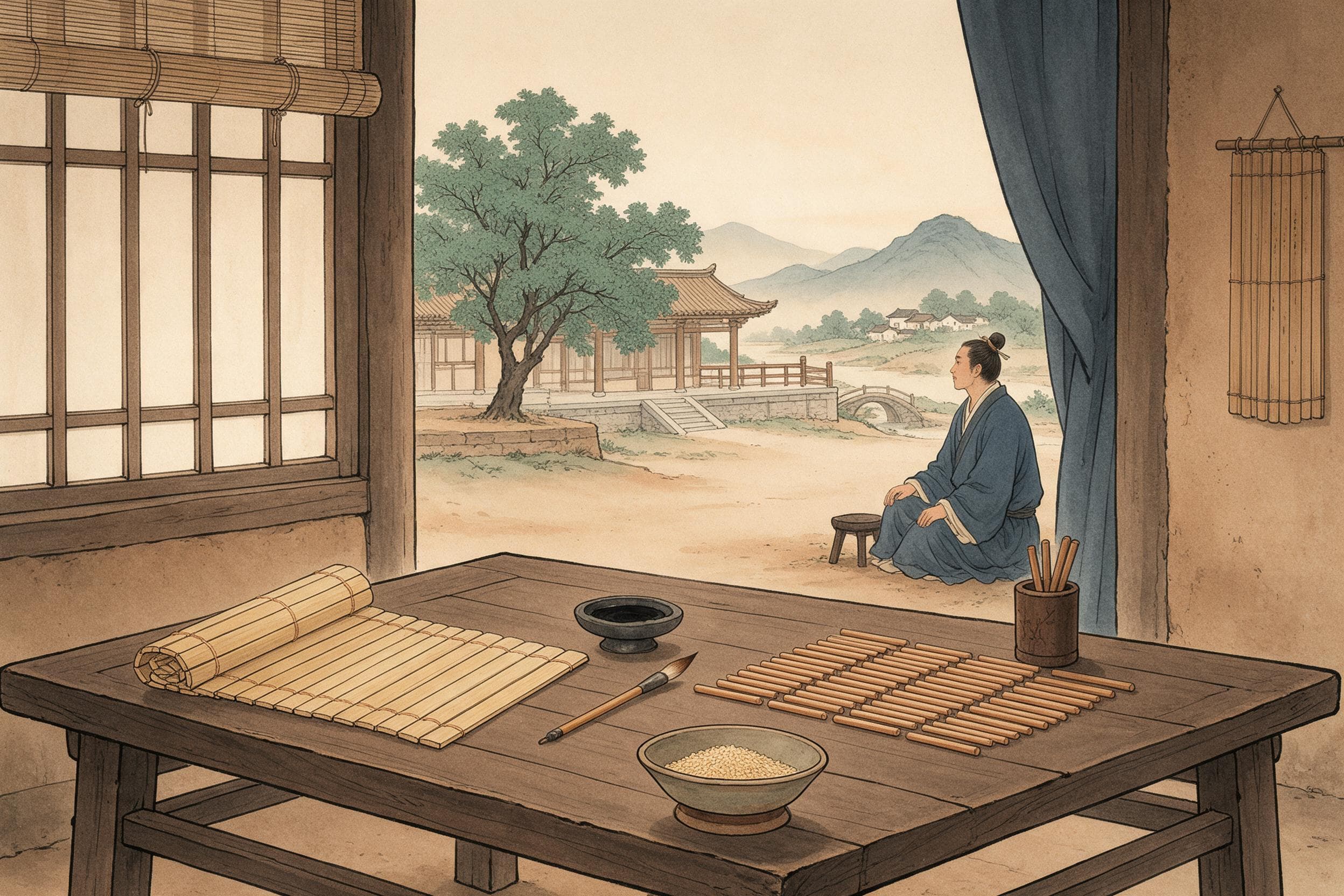
In the thirty-fourth year the First Emperor held a banquet at Xianyang, with seventy court scholars in attendance. The director of attendants, Zhou Qingchen, offered praise; the scholar Chunyu Yue objected; and the chancellor Li Si submitted the memorial that became the book order. The source layer first: the Records of the Grand Historian was written under the Han, and this chapter is a Han account of Qin affairs, not a Qin record. This article does one thing — it sets out item by item what was to be burned and what was to be spared, rather than folding them into the two words 'book burning'.
From a Banquet to a Memorial
The lead-in is short. At the banquet Zhou Qingchen praised the emperor for making the feudal lords into commanderies and counties, 'so that every man is at peace and there is no trouble of war, and it is transmitted for ten thousand generations'; Chunyu Yue objected: 'I have heard that the kings of Yin and Zhou ruled for more than a thousand years because they enfeoffed sons, brothers and meritorious ministers as branches and supports… to serve without taking antiquity as a model and yet last long is what I have never heard of. And now Qingchen flatters Your Majesty's face to double his fault — he is no loyal minister' (事不師古而能長久者,非所聞也). The emperor 'referred the matter down' for discussion.
Li Si argues before he legislates: 'the Five Emperors did not repeat each other, the Three Dynasties did not follow each other, and each governed, not because they contradicted one another, but because the times had changed' (五帝不相復,三代不相襲……時變異也); 'now the scholars do not take the present as their model but study antiquity, to condemn the present age and confuse the common people'; private schools dispute the teaching, and 'when an order comes down each argues it from his own school, in private disagreeing in their hearts, in public talking in the lanes' (入則心非,出則巷議). 'To forbid it is proper' (禁之便) — and only then come the items.
What Was to Burn
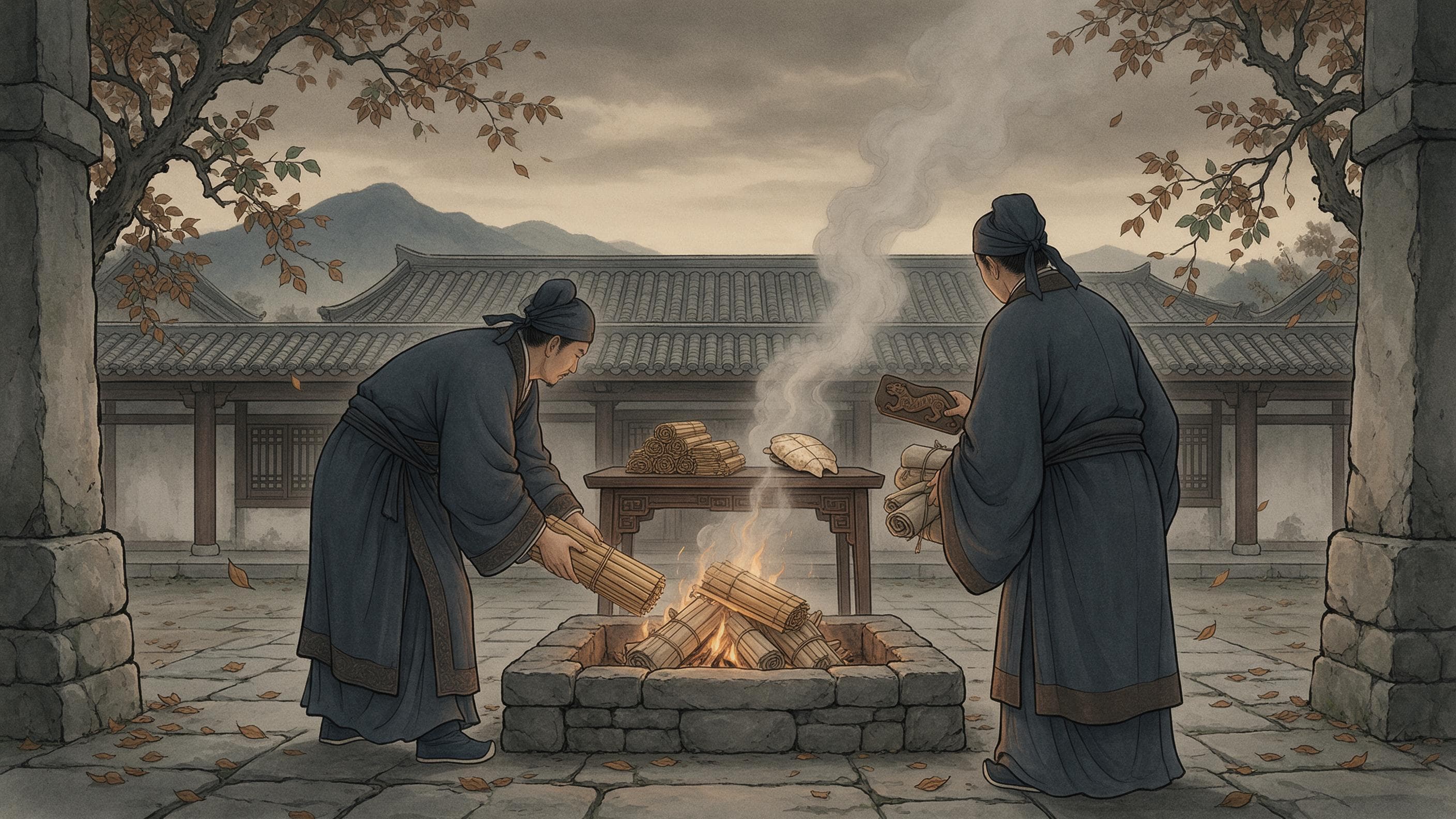
First item: 'I ask that the histories of the scribes other than Qin's records be burned, all of them' (臣請史官非秦記皆燒之). Second: 'outside what the court scholars hold in their office, wherever in the world anyone dares to keep the Songs, the Documents or the hundred schools, let them all be taken to the commandant and the commandery captain and burned together' (非博士官所職,天下敢有藏詩、書、百家語者,悉詣守、尉雜燒之). The two items have different objects — the official archives of the scribes in one, private holdings in the other — and the second carries its own limit: 'outside what the court scholars hold' puts the scholars' books outside the burn.
Then four penalties, as printed: 'Those who dare to discuss the Songs and Documents together are to be executed in the market. Those who use antiquity to condemn the present are to be exterminated with their kin. Officials who know and do not report are to share the penalty. Thirty days after the order, those who have not burned are to be branded and made wall-builders' (有敢偶語詩書者棄市。以古非今者族。吏見知不舉者與同罪。令下三十日不燒,黥為城旦). The names of the punishments are printed as they stand, not explained and not converted.
What Was to Be Spared
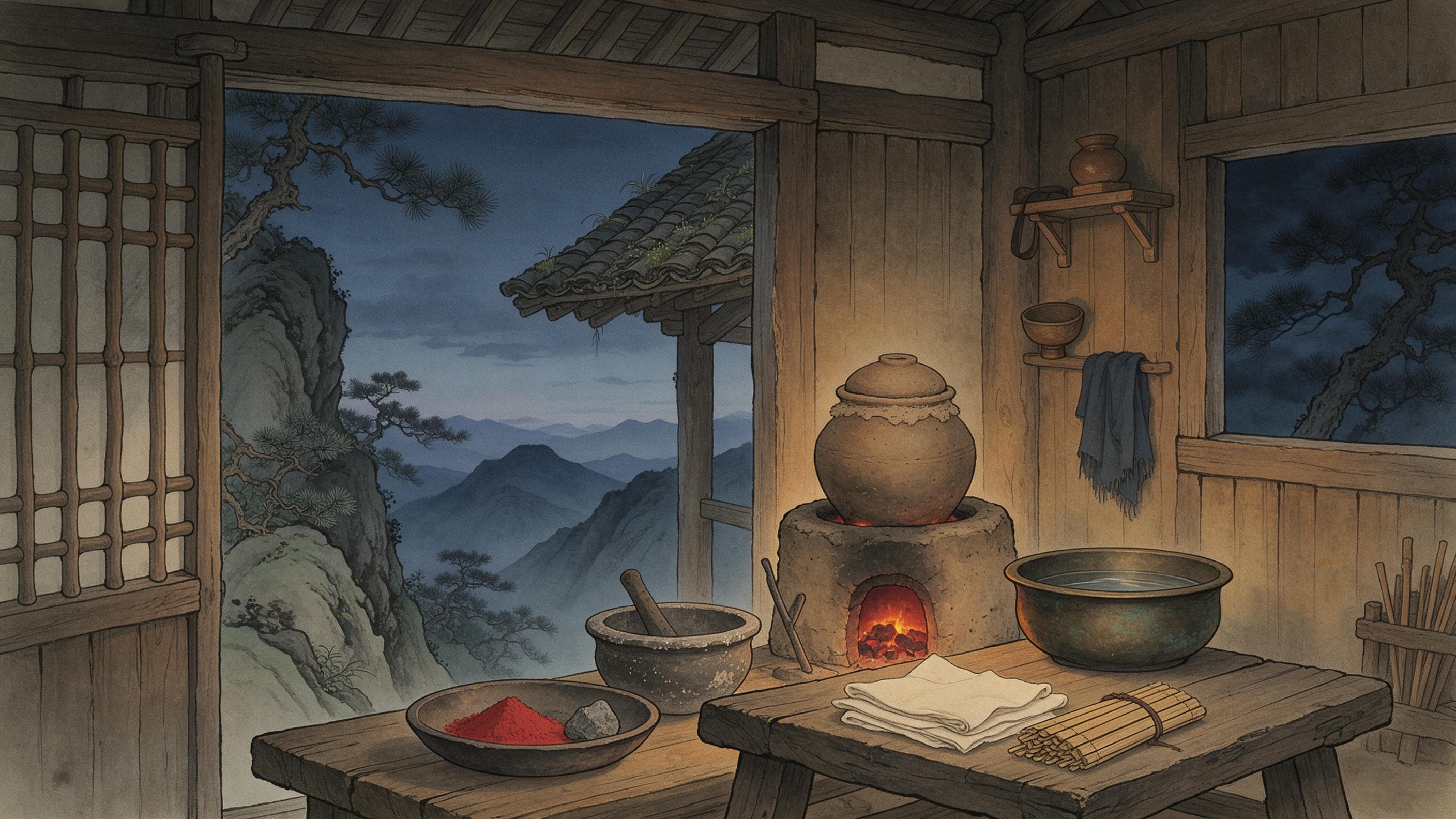
One sentence gives the exemption: 'what is not to be removed: books on medicine, divination and tree-planting' (所不去者,醫藥卜筮種樹之書). One more gives the route for law: 'if any wish to study the laws, let them take the officials as teachers' (若有欲學法令者,以吏為師). The words 'the laws' in that sentence differ between the two accounts; see the next section.
The other half of 'spared' is hidden in the second item's limit: since what burns is what lies 'outside what the court scholars hold', the books the court scholars held were not in the burn. Which books they held, and how many, neither page says, and nothing is supplied here; being outside that order is not the same as surviving intact.
Two Accounts in One Book, and One Han Summary
The same Records tells the affair twice. The Life of Li Si is much shorter: 'I ask that all who have literary writings, the Songs, the Documents and the hundred schools be done away with. When the order arrives, thirty days and not removed: branded and made wall-builders. What is not removed: books on medicine, divination and tree-planting. If any wish to learn, let them take the officials as teachers' (臣請諸有文學詩書百家語者,蠲除去之……若有欲學者,以吏為師). The emperor approved, and then 'took away the words of the Songs, Documents and hundred schools to make the people stupid, so that the world should have no means to condemn the present by antiquity'. Against the annals, this version lacks 'the scribes' histories other than Qin records', lacks the market execution, the extermination of kin and the officials' shared penalty; it has 'done away with' for 'taken and burned', 'thirty days and not removed' for 'thirty days and not burned', and, most tellingly, 'those who wish to learn' where the annals have 'those who wish to study the laws'. Both are printed; they are not fused into one 'text of the order'.
The Book of Han's treatise on arts and letters has only a summary, with no items: 'when it came to Qin, this troubled them, and they burned and destroyed the writings to make the people stupid' (至秦患之,乃燔滅文章,以愚黔首). Of the Changes it says: 'when Qin burned the books, the Changes were a matter of divination, and those who transmitted it did not break off' (及秦燔書,而易為筮卜之事,傳者不絕) — which fits the exemption of divination books. Both sentences are Han words and are marked as such, not as Qin text; and the treatise gives no list of what was destroyed.
What the Pages Do Not Give
No count of books burned, no list of titles destroyed, no list of what the court scholars held, no record of enforcement (who burned, for how many days, with what exceptions); no date beyond the year, which is left as the thirty-fourth year and not converted. The burying of scholars is a separate affair: one line is enough here to say it is not in these materials, and the two are not told as one story.
What can be established is the memorial's items: burn the scribes' histories other than Qin's records; burn private copies of the Songs, Documents and hundred schools; four penalties (market execution, extermination of kin, shared guilt, branding and wall-building); three kinds of book spared (medicine, divination, tree-planting); law to be learned from officials; approved. The two accounts in the same Records differ, and the Book of Han has only a summary. How much was burned and what survived, these pages do not answer — and this article passes no verdict of cultural catastrophe on them.
Related reading:Weizi's Question: To Stay or to Leave, on the Eve of Shang's Fall · Square Fields and Millet: Everyday Problems in a Han Reckoning Book · Surname and Lineage: How a Spring and Autumn Man Was Named
Sources & further reading
- 《史记》卷六·秦始皇本纪(西汉司马迁撰;维基文库本,页面白文无注,未与中华书局点校本复核) — The thirty-fourth year: a banquet at Xianyang, seventy court scholars, Zhou Qingchen's praise and Chunyu Yue's objection that without following antiquity no rule lasts; the emperor refers the matter down, and Li Si's memorial follows item by item — histories other than Qin's records to be burned; outside what the court scholars hold, anyone privately keeping the Songs, the Documents or the hundred schools to have them taken to the commandant and burned; those who discuss the Songs and Documents together to be executed in the market; those who use antiquity to condemn the present to be exterminated with their kin; officials who know and do not report to share the penalty; thirty days after the order, failure to burn to mean branding and hard labour. What is not to be removed: books on medicine, divination and tree-planting; those wishing to study the laws to take officials as teachers. The reply: approved.
- 《史记》卷八十七·李斯列传(西汉司马迁撰;维基文库本,页面白文无注,未与中华书局点校本复核) — The same affair in the biography, shorter and differently worded: Li Si asks that 'all who have literary writings, the Songs, the Documents and the hundred schools be done away with'; the deadline is 'when the order arrives, thirty days and not removed', the penalty the same branding and hard labour; the books not removed are again medicine, divination and tree-planting; and 'those who wish to learn' take officials as teachers — without the words 'the laws' found in the annals. The burnings themselves are summarised as the emperor 'taking away the words of the Songs, Documents and hundred schools to make the people stupid, so that the world should have no means to condemn the present by antiquity'.
- 《汉书》卷三十·艺文志(东汉班固撰;维基文库本,页面白文无注,未与中华书局点校本复核) — The Han summary in the bibliographic treatise: 'when it came to Qin, this troubled them, and they burned and destroyed the writings to make the people stupid'; and, in the note on the Changes, 'when Qin burned the books, the Changes were a matter of divination, and those who transmitted it did not break off.' The treatise lists books and their transmission, not the Qin order's items; neither this page nor the Shiji gives a list of what was destroyed.