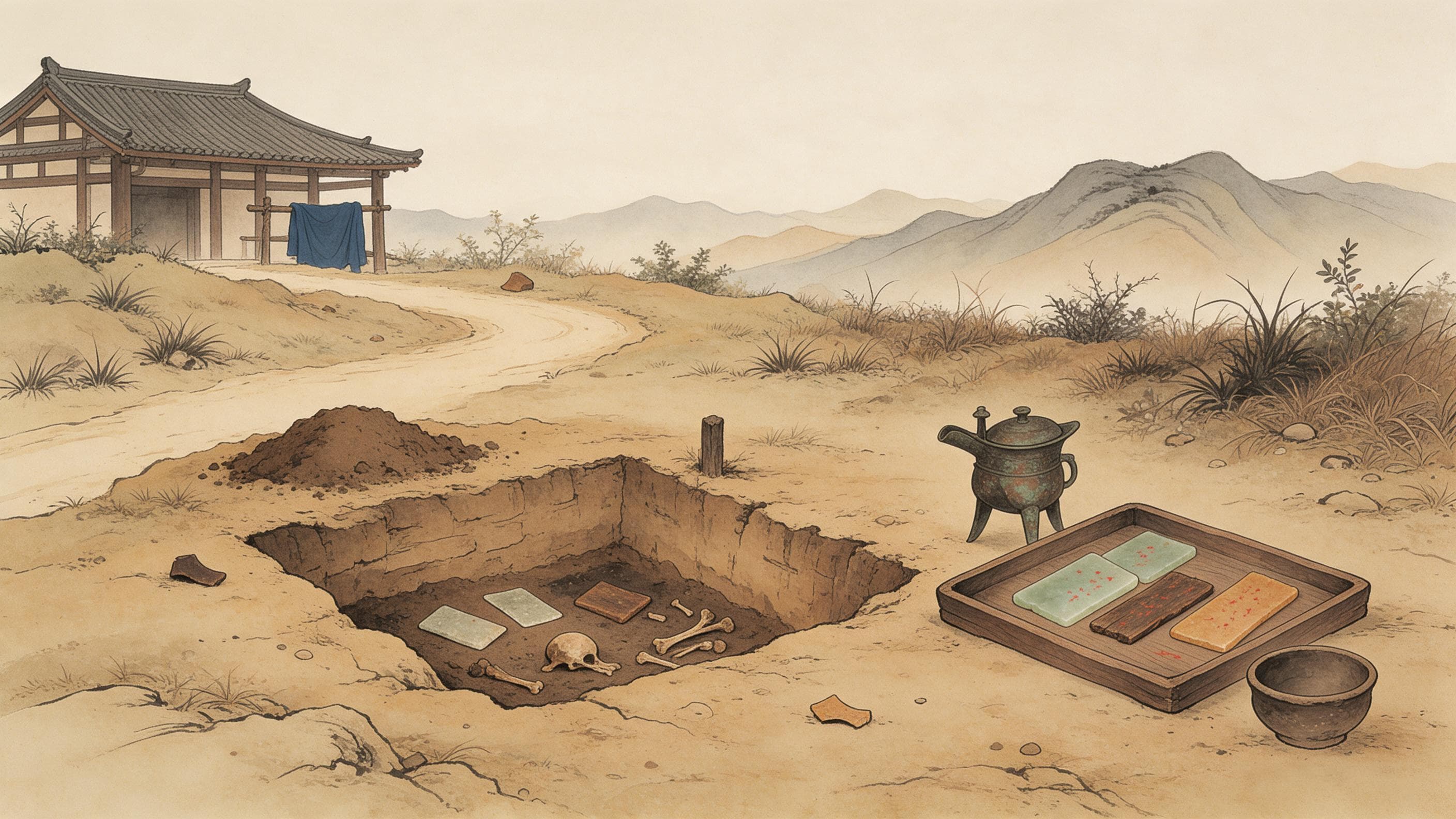
In the Ming code's chapter on homicide there is a statute headed 'The incompetent physician wounding or killing a person'. It begins: 'Where an incompetent physician treats a person with drugs or needles, mistakes the proper method and thereby causes death, another physician shall be ordered to examine the drugs and the needle points.' The magistrate did not judge the medicine himself; he called in a second doctor to check what had been given and where the needles went. The statute is about procedure and responsibility, not about skill.
One statute: how a bad doctor was judged
The rest of the article divides the cases. If the examination finds 'no intent to do harm', the case is treated as accidental homicide, and the physician 'is not permitted to practise'. If he 'deliberately departs from the proper method, pretending to treat in order to take money', the sum is reckoned as theft. If death follows, or if he uses medicine to kill, the penalty is beheading. The order is administrative before it is penal.
Three steps: examine, separate intent from accident, and only then punish. The sharpest cut is not a punishment but the four words 'not permitted to practise' — a loss of licence. The statute never says how much a doctor should know; it says what happens when one gets it wrong. This piece is about that procedure, not about the standard of Ming medicine. The words 'mistakes the proper method' point at the prescription: a 'proper method' existed to be departed from, and the case turns on whether the doctor departed from it on purpose.
The Imperial Medical College: how many men, how many specialities
The Ming History's chapter on offices: 'The Imperial Medical College: one director, of the fifth rank; two assistant directors, of the sixth. Its staff: four imperial physicians, of the eighth rank, later increased to eighteen, fixed at ten in 1571. The drug store and the charitable pharmacy each have a director and a deputy.' Medicine was divided into thirteen specialities, all named: general medicine, paediatrics, gynaecology, sores, acupuncture, eyes, mouth and teeth, bone-setting, cold-damage, throat, arrow wounds, massage, and incantation.
Beyond the establishment lay training and testing: 'the sons of medical families choose a master and are taught by him. At three years and at five they are tested, tested again, and tested a third time; then they are promoted or demoted.' Locally, 'charitable pharmacies are set up in the prefectures and counties; at frontier garrisons and wherever people gather, physicians, medical officers and medical officials are appointed, all sent after examination by the college.' At the year's end their merits and faults are assessed and ranked. Three testings before promotion and an annual ranking after: skill in this system is repeatedly certified, not once acquired.
How the emperor's medicine reached his mouth
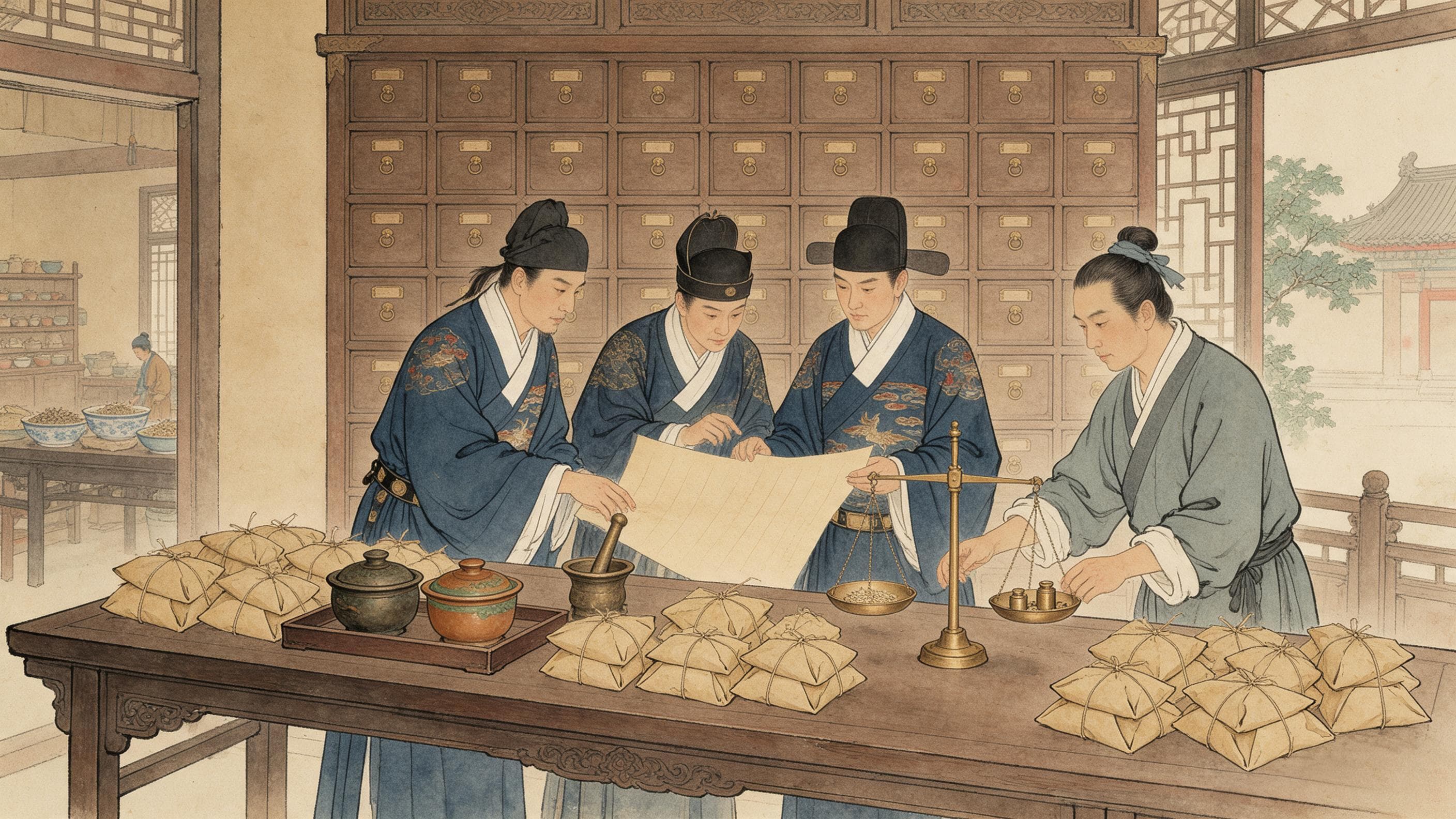
For the emperor the procedure is written out in detail: 'When the imperial pulse is taken, the director, the assistants and the imperial physicians examine it together; with the eunuchs they select the drugs in the inner dispensary, seal and record the prescription under their joint names, and memorialise the properties of the drugs and the method of treatment. In preparing the imperial medicine the college officers and the eunuchs supervise together. Every two doses are combined into one; when it is ready it is divided into two vessels — one tasted by a physician and a eunuch, the other presented. A register is kept, stamped with the inner seal, recording the date and the reason in detail, for later inspection.' Two vessels for one dose, one tasted, one presented: the taster is the emperor's shield.
This is a statute, not a case: the joint examination, the sealing, the tasting, the register — all of it is procedure, and what the procedure cares about is that everything can be traced, not that the medicine is good. When a prince's household asked for a physician the college sent one by imperial order; for great ministers and foreign rulers it did the same, and 'whether the treatment was sound was reported back in a memorial'. The same chapter records no physician's name.
Where the drugs came from
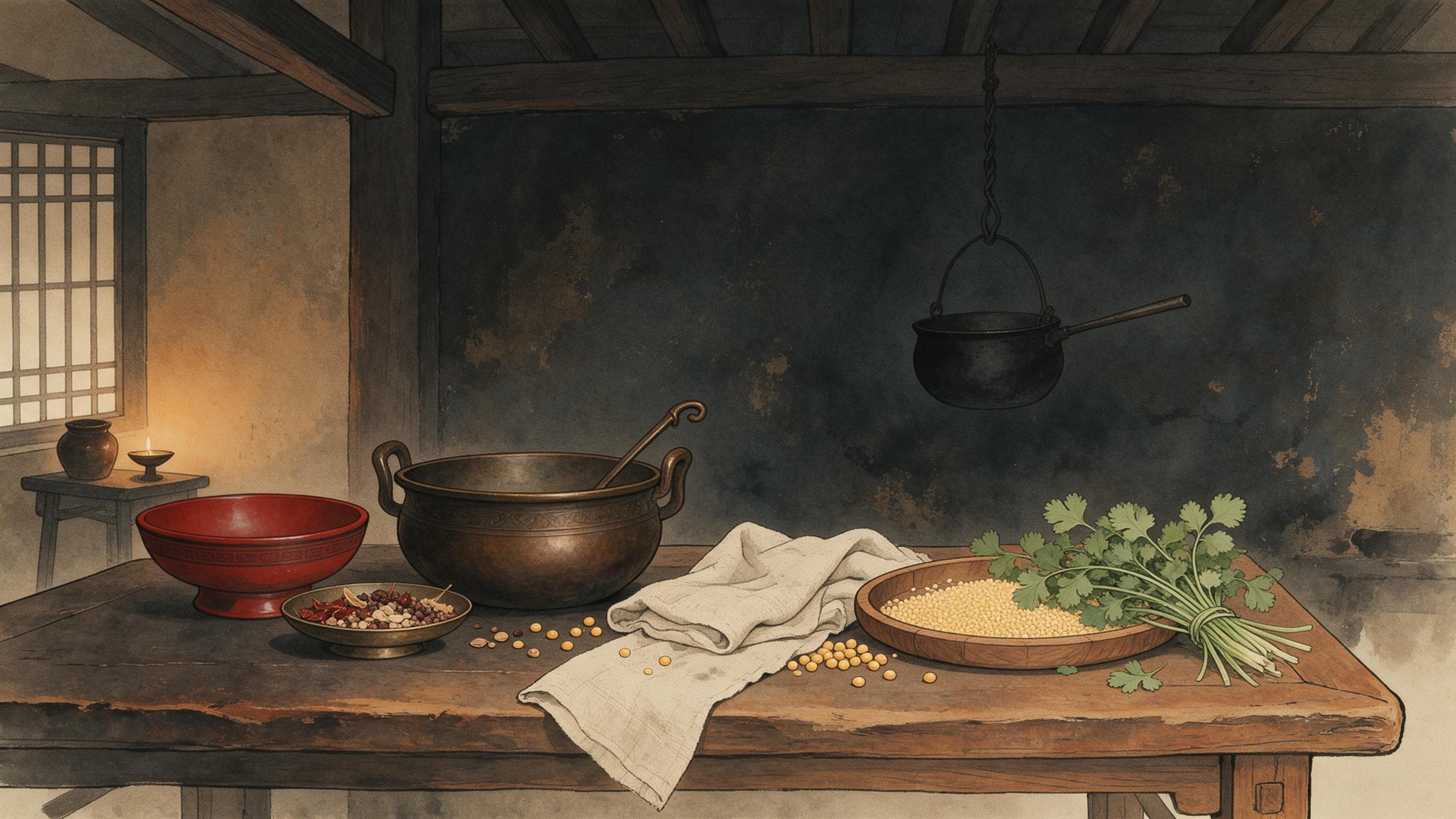
Drugs had their own chain: 'For drugs, judge what the soil suits, choose the good and reject the poor, be careful in preparing them and then use them. Drugs sent up from the provinces are received by the college officers and stored in the drug store, where damp and dryness are watched; an official of the Board of Rites is appointed to inspect it.' The chain is complete at both ends: someone receives and inspects what comes in; someone selects, tastes and records what goes out. Nothing here mentions the price of a drug or the books the drugs came from: the chain is institutional, not commercial.
A few dates from the same chapter: charitable pharmacies were set up in 1370, with a supervisor in each prefecture and medical officers in the counties, 'giving medicine to soldiers and civilians who were poor and ill'; in 1373 an imperial drug office was set up in the palace and imperial physicians were first appointed; in 1381 the college was fixed at the fifth rank; in 1389 its heads were renamed director and assistant; in 1536 the imperial drug room became the Shengji hall and a drug store was added, with physicians taking turns on duty. Each date is a change in the establishment, not in the medicine.
How far the sources go
Nor does the code say what 'the proper method' was: it assumes a text, a prescription, a norm its readers would know. The limits first: no case histories — these two sources have no patient, no diagnosis, no outcome; no judgement of whether prescriptions worked, which belongs to the herbals; the Bencao gangmu is not used here as a medical system, since it is a herbal; and the place of medical households in the register is not in these two texts (the Ming History chapter gives the college's establishment, the Ming Code chapter gives the statute), so it is not filled in; nor is there material to judge how good the imperial physicians actually were.
Set the pieces side by side: one statute on the incompetent physician, asking about drugs, needle points, intent and accident; one college, a fifth-rank director, ten imperial physicians, thirteen specialities; one routine for imperial medicine, three examiners, a joint seal, a taste before the emperor, a stamped register; and a set of local institutions, charitable pharmacies in the provinces, doctors at the frontier garrisons. Ming official medicine was an establishment, a procedure and a liability, not a standard of skill — and the four words 'not permitted to practise' are the sharpest edge in the whole arrangement. Both sources are rules: one about who may treat the emperor, one about who may treat anyone at all. The code's statute and the college's rules were written by different hands for different rooms.
Sources & further reading
- 《明史》卷七十四·职官三·太医院(清初修;维基文库) — Qing compilation. The establishment: one director at the fifth rank, two assistant directors at the sixth, four imperial physicians at the eighth, later eighteen, fixed at ten in 1571; a drug store and a charitable pharmacy, each with a director and a deputy. Thirteen medical specialities, all named. Physicians' sons taught by chosen masters and tested every three and five years; annual assessment of merit. The palace prescription routine: the three officials examine the pulse together, select drugs with the eunuchs, seal and record the prescription, write its properties and treatment into a memorial; every two doses are combined, cooked, divided into two vessels, tasted first by a physician and a eunuch, then presented; a register stamped with the palace seal records the date and reason. Charitable pharmacies in the provinces; doctors at frontier garrisons sent after examination by the college.
- 《大明律》卷十九·刑律·人命·庸医杀伤人(明官修;维基文库集解附例本) — The statute on the incompetent physician: anyone treating with drugs or needles who 'mistakes the proper method' and causes death is to have the drugs and needle points examined by another physician; if there was no intent to harm, the case is treated as accidental homicide and he is forbidden to practise. If he deliberately departs from the method, pretending to treat in order to take money, the sum is reckoned as theft; causing death, or using medicine to kill, is punished with beheading.