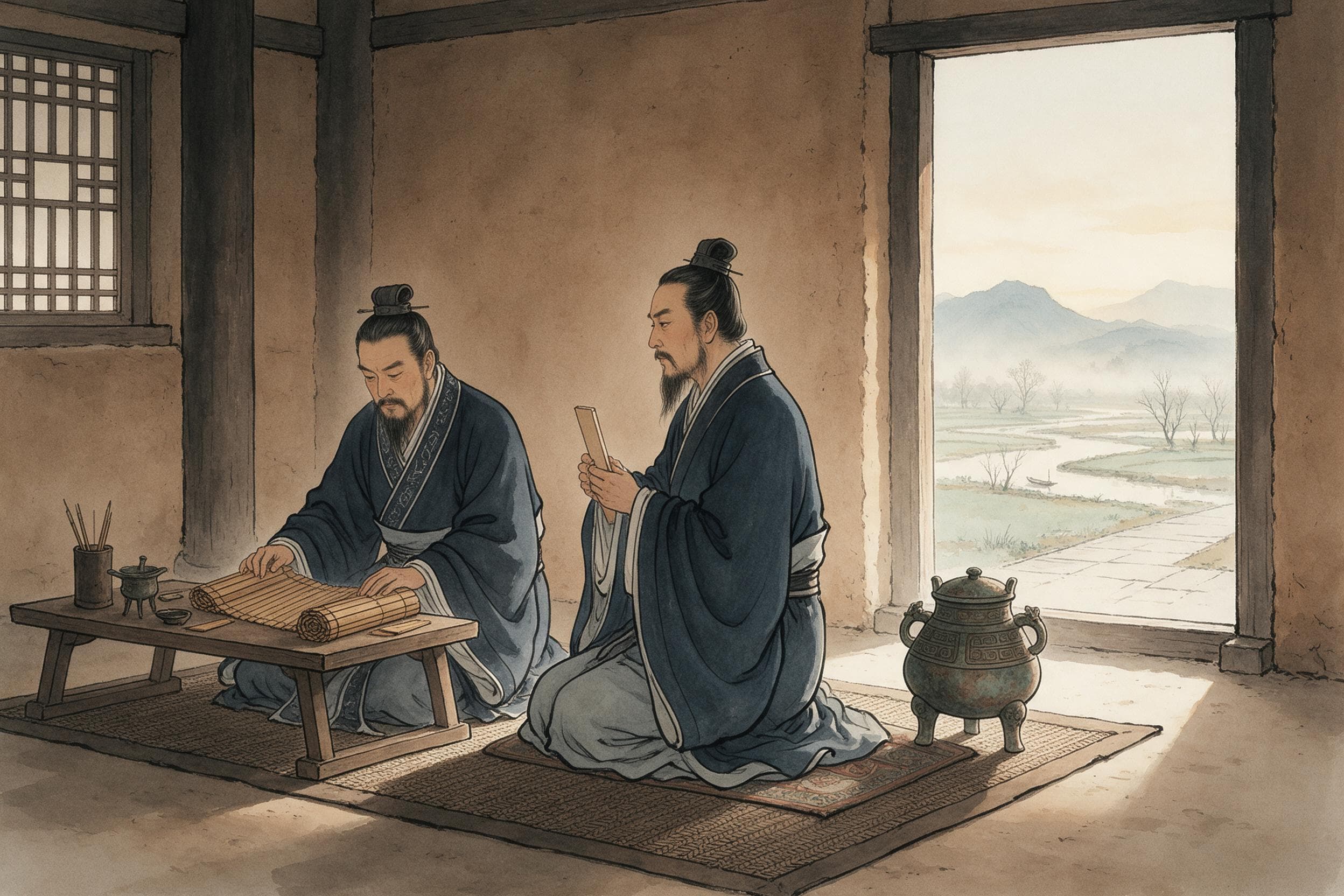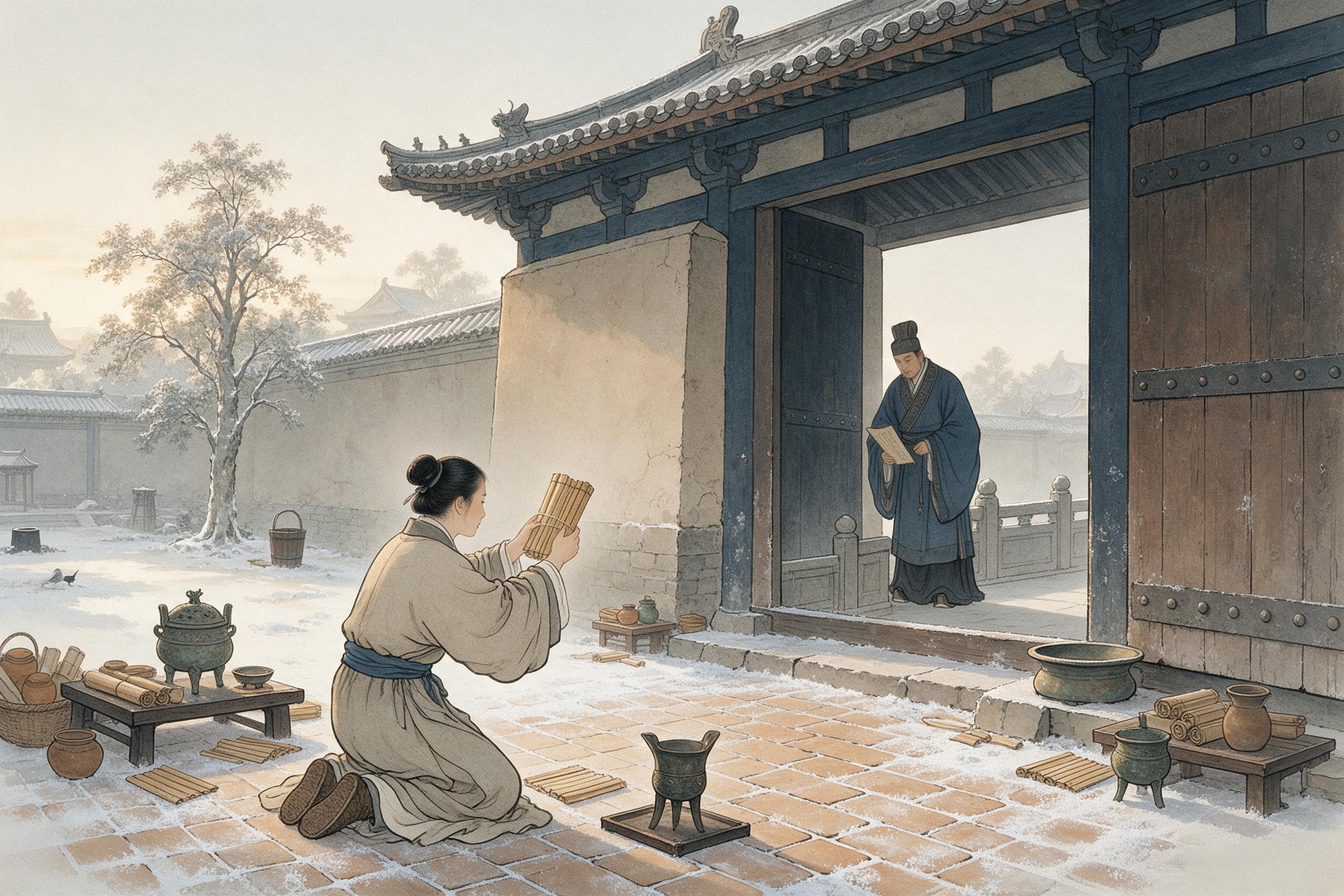
In 61 BC Zhao Chongguo, then over seventy, was at Jincheng with an army facing the Qiang. The memorial he sent on garrison farming does not begin with land; it begins with a bill: 'the officers, men, horses and cattle under my command use each month 199,630 hu of grain, 1,693 hu of salt, and 250,286 shi of fodder' (臣所將吏士馬牛食,月用糧穀十九萬九千六百三十斛,鹽千六百九十三斛,茭藁二十五萬二百八十六石). The Tong Dian's text adds a note to the last item: a shi is 120 jin. The whole argument turns on that bill — not how much land might be farmed, but how much grain had to be carried to men who were not farming.
One Month, 199,630 Hu
The bill is for the whole force: the court's levies are said to have come to 'sixty thousand men in all' (合六萬人矣), and with horses and cattle sixty thousand mouths ate close to 200,000 hu a month. Immediately after the figures Zhao writes: 'if the affair is long unresolved, the corvée will not stop' (難久不解,繇役不息). That is the account he is keeping: the money and grain go not into fighting but into waiting and hauling.
The occasion was a Qiang revolt. Asked who should command, he answered that there was no one better than the old servant (亡踰於老臣者矣); at Jincheng he refused to chase small parties and waited. The court grew impatient; an imperial letter pressed him to attack before the season turned, and stated the trouble plainly: 'east of Zhangye grain is more than a hundred cash a shi, and a bundle of fodder several tens; transport has been raised on every side and the common people are harassed' (今張掖以東粟石百餘,芻槁束數十。轉輸並起,百姓煩擾). A letter urging battle had opened with the cost of supply. Zhao replied that attacking was 'not convenient' (擊之不便) and submitted the farm memorial: dismiss the cavalry, keep ten thousand men to work the land, and let the Qiang wear out.
Two Thousand Qing, Ten Thousand Men
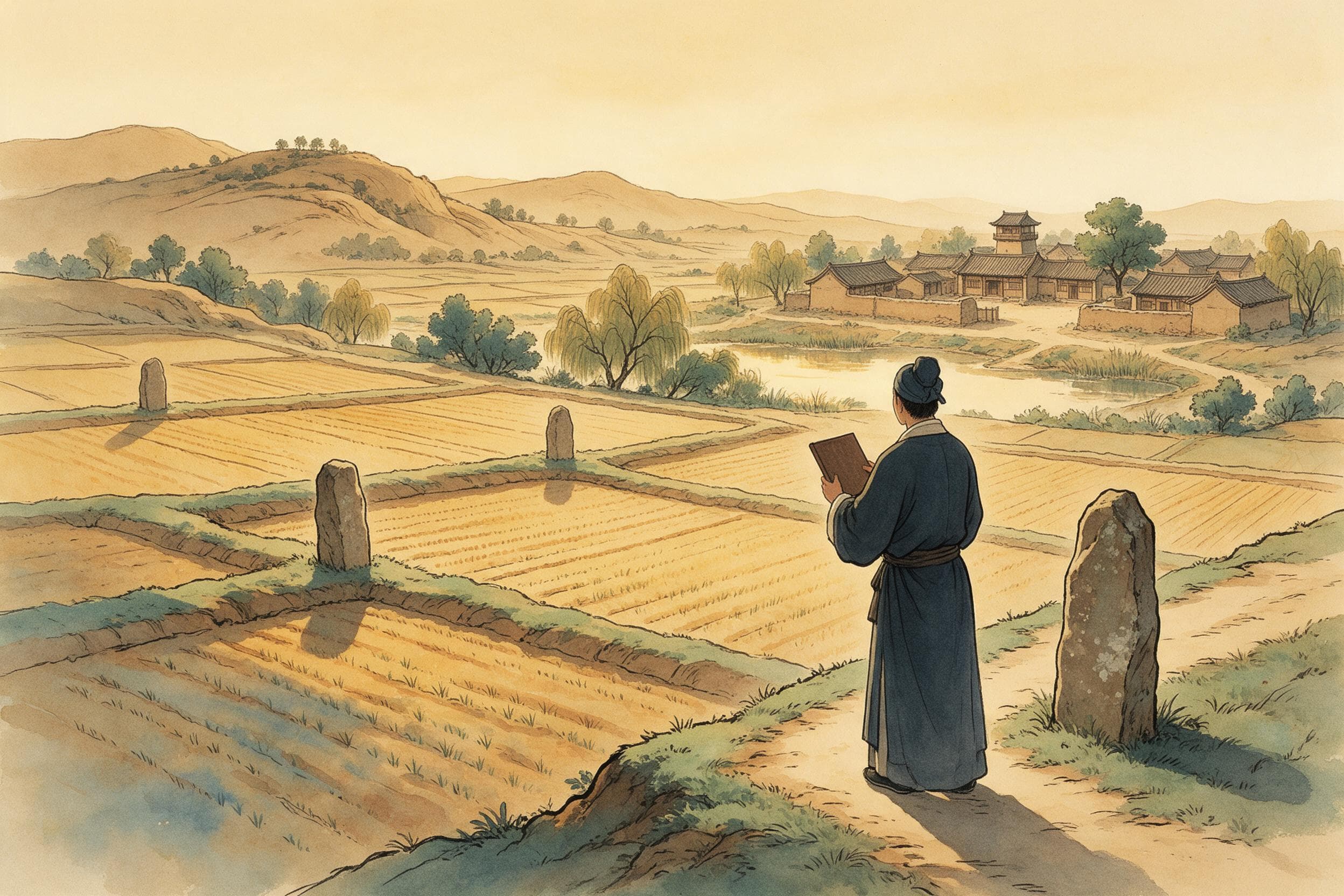
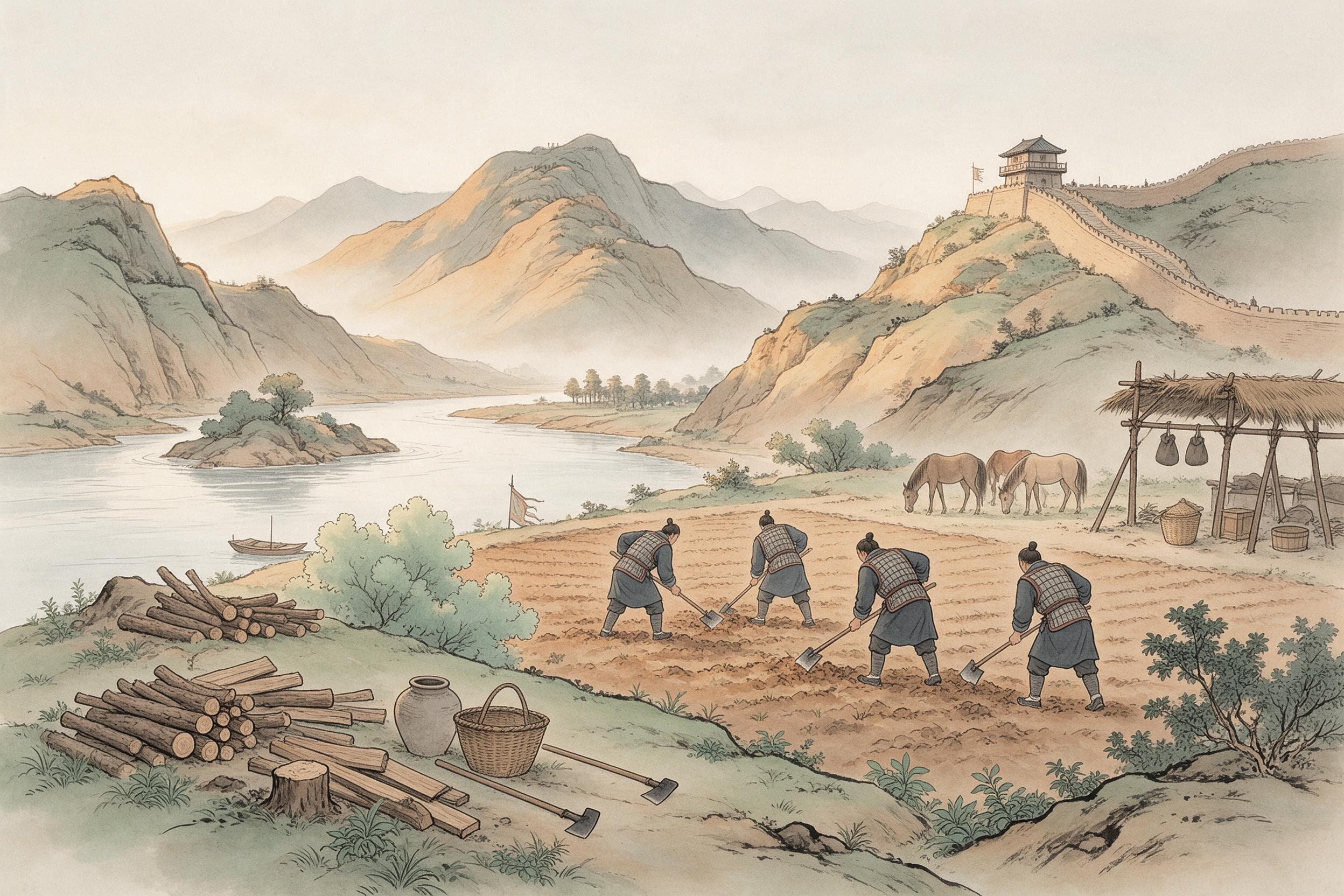
The land: 'reckoning from Linqiang east to Haomen, the Qiang's old fields and public fields the people have not opened come to two thousand qing or more, and the post stations along that line are mostly ruined' (計度臨羌東至浩亹……可二千頃以上,其間郵亭多壞敗者). The word is 'reckoned', an estimate; these were not fields already under the plough. Preparatory work had begun: 'earlier I sent soldiers into the hills and cut timber, large and small, more than sixty thousand pieces, all stacked by the water' (臣前部士入山,伐材木大小六萬餘枚,皆在水次) — timber for the post stations and bridges that came later.
The men came from several sources: 'I ask to dismiss the cavalry and keep the convicts and volunteers, the infantry of Huaiyang and Runan, and the private followers of officers and men — 10,281 in all — using 27,363 hu of grain a month and 308 hu of salt, posted at the key points' (合凡萬二百八十一人,用穀月二萬七千三百六十三斛,鹽三百八斛,分屯要害處). Then the sentence that makes the scheme work: 'the grain already brought by the Grand Minister of Agriculture is enough to support ten thousand men for a year' (今大司農所轉穀至者,足支萬人一歲食). The farmers would eat grain that had already arrived while the new crop grew, and the hauling could stop.
Twenty Mu Each
How much each man got is one sentence: 'when the field work begins, allot each man twenty mu' (田事出,賦人二十畝). The Tong Dian's note glosses it: 'the field work begins means that in spring the men go out to work the fields; fu means to distribute to them' (田事出,謂至春人出營田也。賦謂班與之). Twenty mu is an allotment, not the area each man actually ploughed, and not a yield. Neither page says how much of the two thousand qing was opened, what a mu returned, or what the total harvest was.
Farming was not the whole of it. The same memorial lists the works: 'when the ice breaks, float the timber down; repair the post stations, clear the ditches, and put in order the roads and bridges west of the Huang gorge, seventy of them, so that the road reaches the Xianshui' (冰解漕下,繕鄉亭,浚溝渠,治湟陿以西道橋七十所,令可至鮮水左右). In the fourth month, when grass came up, a thousand good horsemen from the commandery and a thousand from the dependent states would come to graze with spare mounts at two in ten and serve as patrols for the farmers (發郡騎及屬國胡騎伉健各千,倅馬什二,就草,為田者遊兵). Among the twelve benefits he counted this as one: 'in spare time to bring down the timber we cut, repair the post stations, and fill Jincheng' (以閒暇時下所伐材,繕治郵亭,充入金城).
The Account Against Hauling
The hardest line is the fourth of the twelve benefits: 'one month's feed for the army's horses is reckoned to cover a year for the field soldiers; dismiss the cavalry and the great expense is saved' (軍馬一月之食,度支田士一歲,罷騎兵以省大費,四也). He is not reckoning a harvest; he is reckoning a substitution. The first benefit is 'grain obtained from the fields, majesty and virtue together' (因田致穀,威德並行); the summary is that 'garrison farming has the profit of no expense within and the preparation of defence without' (屯田內有亡費之利,外有守禦之備). The motive he states directly: 'as it is, transport is long and troublesome and expensive, draining what we keep for the unforeseen to water one corner; this I think inexpedient' (今久轉運煩費,傾我不虞之用以澹一隅,臣愚以為不便).
Not farming had its own arithmetic. The rival plan, from Xin Wuxian, was to march in the seventh month with thirty days' grain; Zhao counted the load: 'with one horse carrying its own thirty days' food — two hu four dou of rice, eight hu of wheat — besides clothing and weapons, it cannot pursue' (以一馬自佗負三十日食……難以追逐), over a road 'a thousand li roundabout' (回遠千里). He also recalled an earlier account: grain at Jincheng and Huangzhong stood at 'eight cash a hu' (穀斛八錢), and he had urged the agriculture minister's assistant to buy two million hu so that 'the Qiang would not dare move'; the officer asked for one million and got four hundred thousand. Buying nearby had fallen short; what remained was to haul from far off, or to let the soldiers grow it.
Three in Ten, Five in Ten, Eight in Ten
Opinion moved slowly; Ban Gu records three steps: 'at first three in ten agreed with Zhao's plan, midway five in ten, and at the end eight in ten' (初是充國計者什三,中什五,最後什八). The chancellor Wei Xiang said: 'the general has several times drawn up plans, and his words are usually right; I would stake the plan on being usable' (臣任其計可必用也). The emperor replied: 'now I follow the general; the general's plan is good' (今聽將軍,將軍計善), and asked for the numbers to be kept and dismissed. But he 'followed both plans' (兩從其計): the two attacking generals still marched, and only Zhao stayed with the farm.
In the fifth month of the next year Zhao reported the outcome: of the Qiang's 'five myriads of fighting men', 7,600 had been beheaded, 31,200 had surrendered, five or six thousand had drowned in the river or starved, and 'by the final count those who escaped with Jiangu and Huangdi were no more than four thousand' (定計遺脫……不過四千人); he asked to disband the farm (請罷屯兵), and it was granted. The credit needs sorting: the farm did not win alone — all three columns marched — and its business was to stop the hauling, not to kill. Neither page gives a yield per mu or a total harvest, nor says who took the rent of those fields or where the farm soldiers' families were. A further boundary: the Tong Dian arranges its farm entries by dynasty — Han, then Wei, Jin, Sui, Tang; that is an editor's arrangement, not evidence of an unbroken institution, and the Wei entries belong elsewhere.
Related reading:What a King Gave: Two Lists of Reward · The Cash Box: How a Warring States Market Ran · Six Names for One Banknote: How Jin China Kept Renaming Its Paper Money
Sources & further reading
- 《汉书》卷六十九·赵充国辛庆忌传(东汉班固;维基文库本,未与点校本复核) — The farm memorial in full, which is the spine of the article. The monthly bill: 'the officers, men, horses and cattle under my command use each month 199,630 hu of grain, 1,693 hu of salt, and 250,286 shi of fodder' (臣所將吏士馬牛食,月用糧穀十九萬九千六百三十斛,鹽千六百九十三斛,茭藁二十五萬二百八十六石), followed by 'if the affair is long unresolved, the corvée will not stop' (難久不解,繇役不息); the same chapter says the levies came to 'sixty thousand men in all' (合六萬人矣). The imperial letter pressing an attack, which states the prices and the burden: 'east of Zhangye grain is more than a hundred cash a shi and a bundle of fodder several tens; transport has been raised on every side and the common people are harassed' (今張掖以東粟石百餘,芻槁束數十。轉輸並起,百姓煩擾). The land: 'reckoning from Linqiang east to Haomen … two thousand qing or more; and the post stations are mostly ruined' (計度臨羌東至浩亹……可二千頃以上,其間郵亭多壞敗者). Timber: 'more than sixty thousand pieces, all stacked by the water' (伐材木大小六萬餘枚,皆在水次). The force kept: '10,281 in all, using 27,363 hu of grain a month and 308 hu of salt' (合凡萬二百八十一人,用穀月二萬七千三百六十三斛,鹽三百八斛), with 'the grain already brought by the Grand Minister of Agriculture enough to support ten thousand men for a year' (足支萬人一歲食). The works: 'when the ice breaks, float the timber down; repair the post stations, clear the ditches, and put in order the roads and bridges west of the Huang gorge, seventy of them' (冰解漕下,繕鄉亭,浚溝渠,治湟陿以西道橋七十所), and horsemen 'with spare mounts at two in ten, to graze and serve as patrols for the farmers' (倅馬什二,就草,為田者遊兵). The twelve benefits: the first (因田致穀,威德並行), the fourth (軍馬一月之食,度支田士一歲,罷騎兵以省大費), and the timber-and-post-station item (以閒暇時下所伐材,繕治郵亭,充入金城); then 'garrison farming has the profit of no expense within and the preparation of defence without' (屯田內有亡費之利,外有守禦之備) and 'transport is long and troublesome and expensive, draining what we keep for the unforeseen to water one corner' (今久轉運煩費,傾我不虞之用以澹一隅). Xin Wuxian's alternative and its load: 'one horse carrying its own thirty days' food — two hu four dou of rice, eight hu of wheat' (以一馬自佗負三十日食,為米二斛四斗,麥八斛), over a road 'a thousand li roundabout' (回遠千里); Zhao's retrospect on local prices, 'grain at Jincheng and Huangzhong eight cash a hu' (金城、湟中穀斛八錢), against which he had urged two million hu and seen four hundred thousand bought. The shift in opinion: 'at first three in ten agreed, midway five, at the end eight' (初是充國計者什三,中什五,最後什八), Wei Xiang's endorsement, the emperor's 'now I follow the general', and then 'he followed both plans' (兩從其計). The next year's report: five myriads of Qiang, 7,600 beheaded, 31,200 surrendered, five or six thousand drowned or starved, 'no more than four thousand' escaped (定計遺脫……不過四千人), and the request to disband the farm (請罷屯兵).
- 《通典》卷二·食货二·屯田(唐杜佑;维基文库本,未与点校本复核) — The Tang compilation's garrison-farm section, which carries the same memorial abridged with notes. It supplies the note on units — 'a shi is 120 jin' — and, crucially, the gloss on the allotment sentence: 'the field work begins means that in spring the men go out to work the fields; fu means to distribute to them' (田事出,謂至春人出營田也。賦謂班與之), which is why twenty mu must be read as an allotment and not as area actually ploughed or as a yield. Its Han section also has an earlier entry, Emperor Zhao's first yuan year (85 BC), when 'shooting soldiers were sent to Shuofang and former officials were appointed to lead garrison farming in Zhangye commandery' (發習戰射士詣朔方,調故吏將屯田張掖郡), a reminder that Zhao's plan was not the first of its kind; but the page then runs on by dynasty through Wei, Jin, Sui and Tang, and that arrangement is the compiler's, not evidence that the institution ran unbroken from Han to Wei. The Wei entries on this page (Xu Xia's fields at Xuchang, Deng Ai on the Huai) are excluded here and belong to the site's Wei article.