成化二年(1466)六月,疏通东西公生门至大明门的沟渠,「各二百一十五丈」;东安门至南墙角的沟渠,二百二十五丈。这几乎就是全部细节:记录只给长度——没有宽,没有深,没有断面,也没有淘出什么。四行字,从《明宪宗实录》里被清人转引下来。
两条沟的丈数
门比沟早三十年。东西长安门通向五府各部的总门,京师市井把它讹叫「孔圣门」,其实本名「公生门」;正统元年(1436)六月,「作公生门于长安左右门外之南」。先有门,三十年后才有从门下过的沟。
原文有个「各」字:「东西公生门至大明门沟渠各二百一十五丈。」「各」可能指东西两段各二百一十五丈,也可能是合计;本文照录「各」,不代算。记录也没有路线:两头只有门名,没有图,本文不画走向。
一条河怎么走
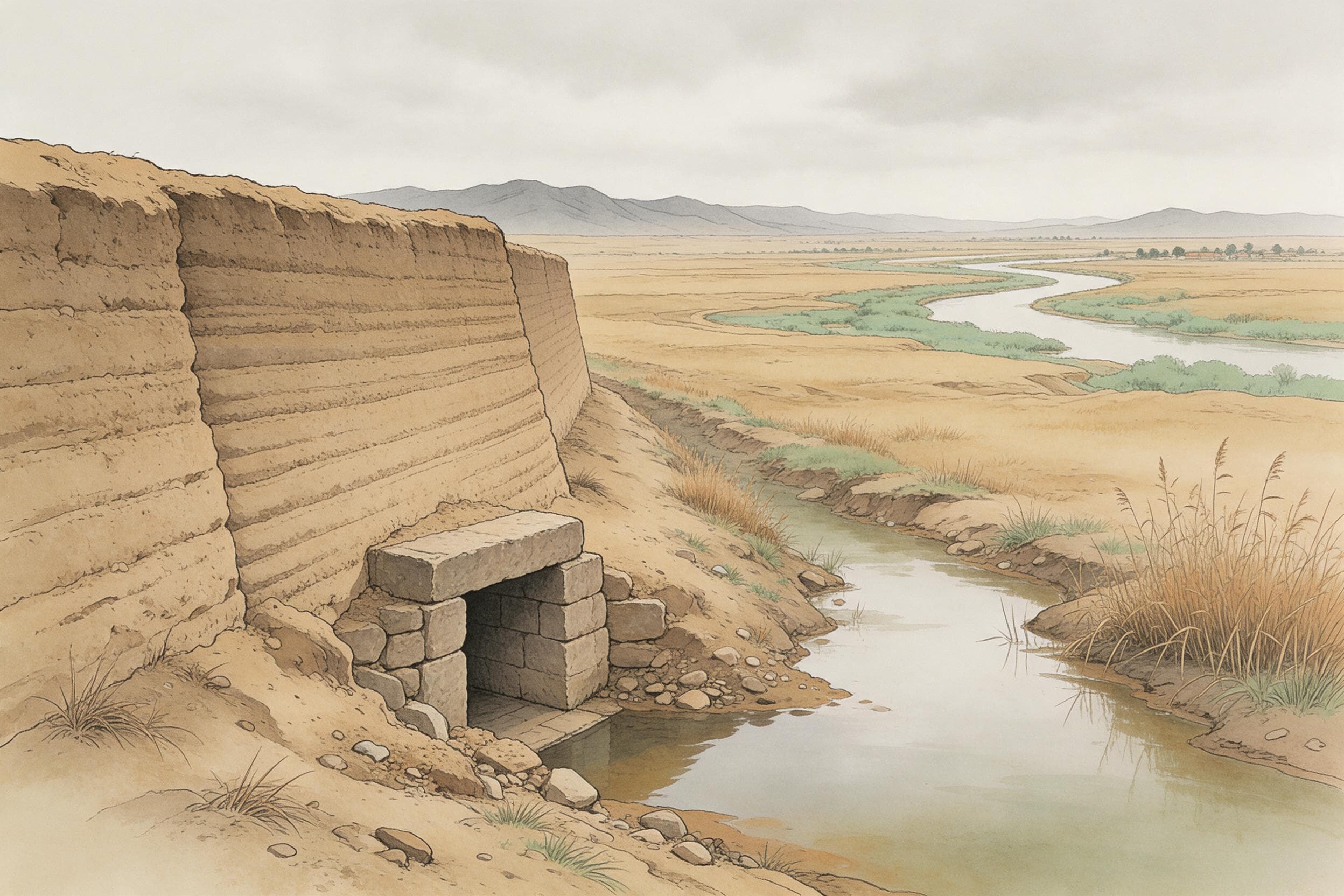
灌满这些沟的水,从城外很远的地方来。城河的源流,清初人记明代北京时写得清楚:出昌平州白浮村神仙泉,通榆河,会一亩、马眼诸泉,汇为七里泺,东流环绕都城,叫玉河;由大通桥而下,至通州高丽庄入白河,与卢沟河合,长一百六十余里。这条河是元都水监郭守敬所凿,赐名通惠河,明代沿用。玉河是绕都城那一段的名字,不是整条漕河的名字。
另有一支,单独记:西山玉泉从水关进来,经越桥(俗名银锭桥),流入西苑,绕宫禁,自玉河桥出,入城河,合流至大通桥入漕。玉河桥凡三:一跨长安东街,一跨文德坊街,一近城垣。
桥、闸和濠
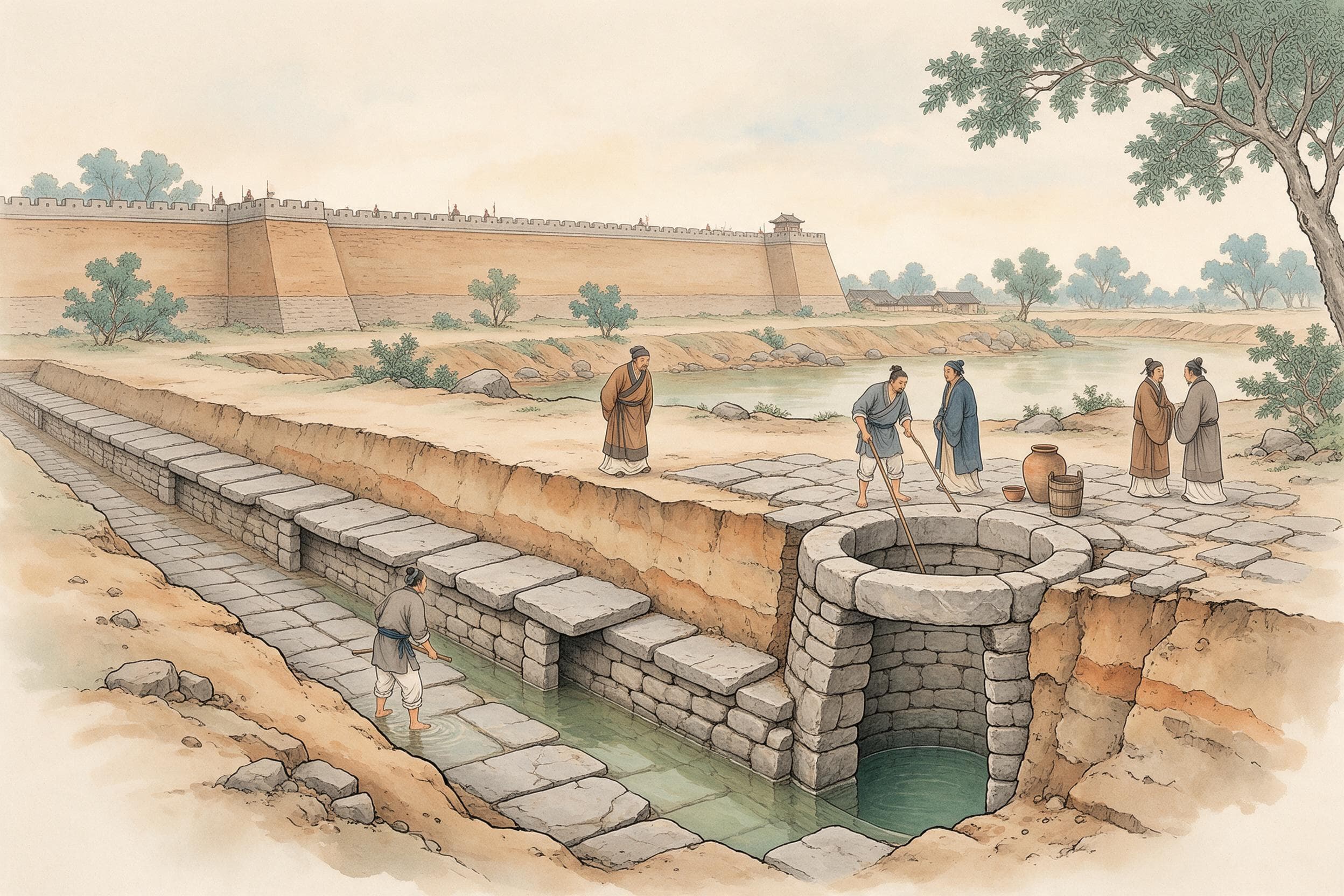
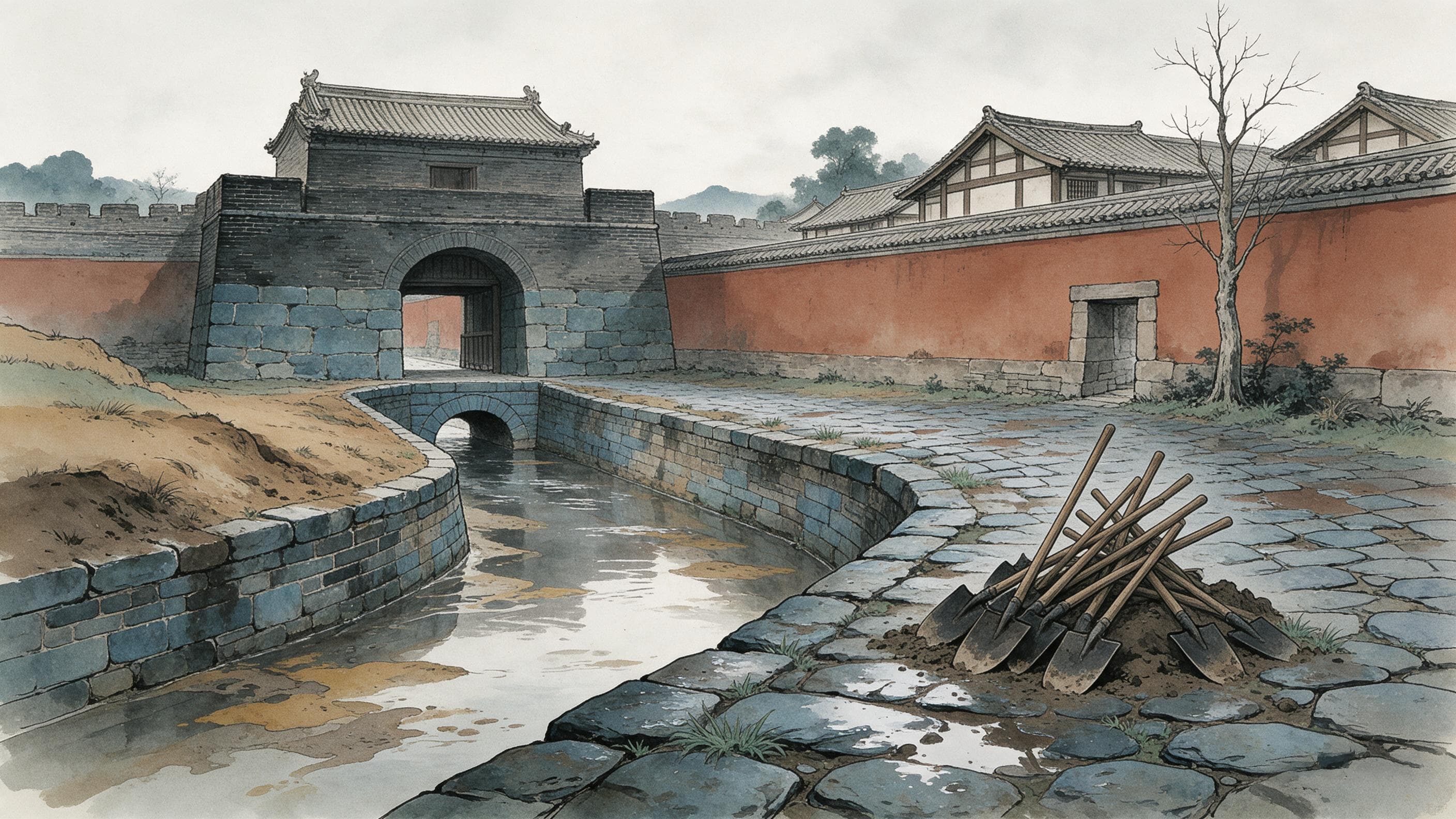
正统四年(1439),把城濠挖深,「四涯悉甃以砖石」;九门旧有的木桥全撤掉,换成石桥,「两桥之间各有水闸」;濠水自城西北隅环城而东,「历九桥九闸」,从城东南隅流至大通桥而去。九桥九闸只是这一圈城濠上的数,不是全城排水设施的总数。
官修《明史》给北京只留了三条,而且都是修补:正统四年「设正阳门外减水河,并疏城内沟渠」;六年「修江米巷玉河桥及堤,并浚京城西南河」;嘉靖二年「修德胜门东、朝阳门北城垣河道」。三条都没有丈尺、夫役和花费。卷八十八的题目是「直省水利」,不是都城水道志,别把它读成一部系统记载。
一次雨和一场争论
正统五年(1440)六月,一场连雨把问题浇了出来。侍讲刘球奏:天雨连绵,宣武街西河决漫流,与街东河会合,二水泛溢,渰没居民;请修堤以消患,并在城外宣桥西等处「量作减水河」,泄城中诸水。这道奏议收在清初人的书里,日期是六月。
皇甫仲和的说法不同:宣武门西旧有凉水河,其东城河南岸亦有旧沟,都可以疏通,「以泄水势,不利作新」。皇帝「复是其言」——结论是疏旧沟,不新开。至于旧沟后来有没有疏、疏到哪一步,材料没有下文。
最后一次大动
最后一次大工程,挖的是漕粮,不是排水。崇祯己卯(1639)二月,内监曹化淳议在京城外开河以通漕粮;自崇祯十二年三月十九日起,到辛巳(1641)六月,所开河自土城广渠门起至大通桥运粮河北岸,挑河长三千八百六十二丈,东直门外关帝庙挑月河二百七十丈,斗虎营至关帝庙大石桥挑河三千一百五十一丈;共用班军二百零三万二千余名,五城两县募夫二万零九百余名;尚有万三千五百丈未完。兵部侍郎吴甡「以为劳费无益,且伤地脉,抗疏止之」。
另有一笔账,记的是一次濬濠。魏大中〈濬濠疏〉:「夫以一百五十万八百一十九名计,匠以一千二百八十九名计,班军积日以三万三千一十二名计,费水衡金钱六万一千六百二十八两九钱一分四厘八毫七丝五忽,司农银一千七百三十三两一钱三分,米三千三百一石二斗」,自东便门始,画地分任。疏未系年,据「沈辽溃陷」推在天启初,这是推的,不是说死的。崇祯开河与这次濬濠是两件事、两个年代,本文分开写。这些材料里从头到尾只有河、濠、沟、闸、桥,没有一条街道下面的管网,也没有一次「一套系统」的治理——只有点上的修补、灾后的争论和算到一半的账。
参考来源与延伸阅读
- 《明史》卷八十八·河渠六·直省水利 (Ming shi, juan 88, 'Waterways 6: Provincial Waterworks') — Official history, but a chapter on provincial waterworks, not a treatise on the capital's drains; Beijing appears in three entries only: 1439 a spillway outside Zhengyang Gate and dredging of the city ditches; 1441 the Jade River bridge and embankment at Jiangmi Lane plus dredging of the south-west city river; 1523 repair of the channels at Desheng Gate east and Chaoyang Gate north. No lengths, labour counts or costs.
- 《日下旧闻考》卷三十九·皇城一(清乾隆官修,四库全书本)(Rixia jiuwen kao, juan 39, Siku edition) — Siku edition, not collated against a critical edition. Quoting the Ming Xianzong Veritable Records: in the sixth month of 1466 the ditches from the east and west Gongsheng gates to the Great Ming gate were cleared, 215 zhang each, and the ditch from the East An gate to the corner of the south wall, 225 zhang. Also quoting the Shuyuan Zaji and the Yingzong Veritable Records on the Gongsheng gate (market name 'Kong Sheng', real name Gongsheng), first built south of the Chang'an side gates in 1436.
- 孙承泽《天府广记》卷四(清初人记明代北京)(Sun Chengze, Tianfu guangji, juan 4, early Qing on Ming Beijing) — Early-Qing account of Ming Beijing: the Jade River rises at the Shenxian spring in Baifu village, Changping, gathers the Yimu and Mayan springs into the Qili pool, circles the capital and runs more than 160 li to the Bai River at Gaoli village; a second branch brings the Western Hills spring through the water gate, past the Yue bridge into the Western Garden and around the palace precincts to the three Jade River bridges; in 1439 the moat was deepened and faced with brick, wooden bridges replaced in stone with a sluice between each pair, nine bridges and nine sluices around the circuit; in 1440 Liu Qiu reported flooding and Huangfu Zhonghe advised clearing old channels rather than cutting a new spillway.
- 孙承泽《春明梦余录》卷三(四库全书本,未与点校本复核)(Sun Chengze, Chunming mengyu lu, juan 3, Siku edition) — Siku edition: the 1639-41 canal outside the city (3,862 zhang from Guangqu Gate to the transport river at the Datong bridge, 270 zhang of moon channel outside Dongzhi Gate, 3,151 zhang from Douhu camp to the great stone bridge; 2,032,000 soldier-labourers and 20,900 hired men; 13,500 zhang unfinished; Wu Shen's memorial against it), and Wei Dazhong's dredging memorial (1,500,819 labourers, 1,289 craftsmen, 33,012 soldier-labourers by days, 61,628.9148 taels from the water office, 1,733.13 taels from the grain office, 3,301.2 shi of rice); the memorial is undated and is placed in the early Tianqi years only by its reference to the fall of Shenyang and Liaoyang.