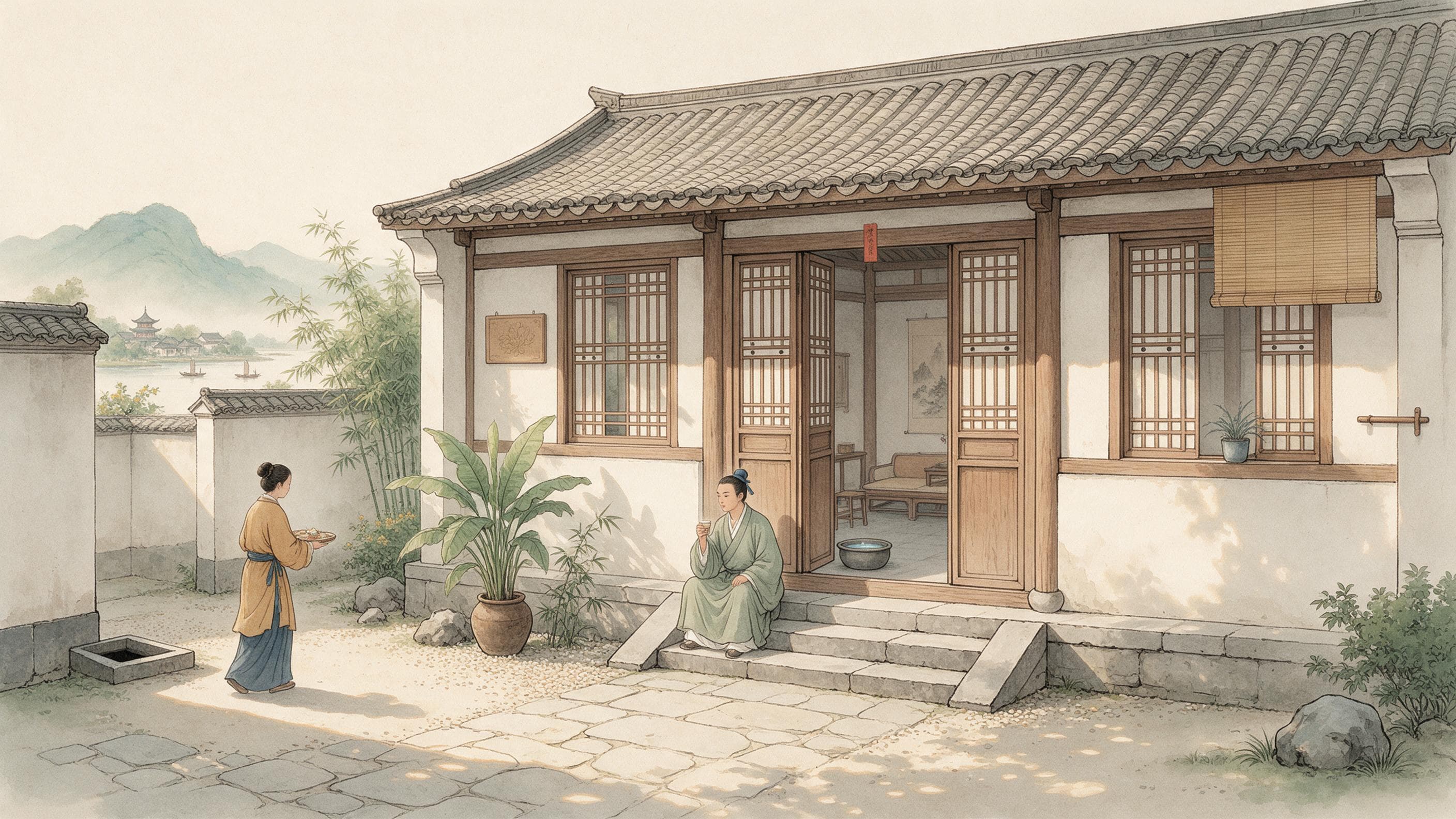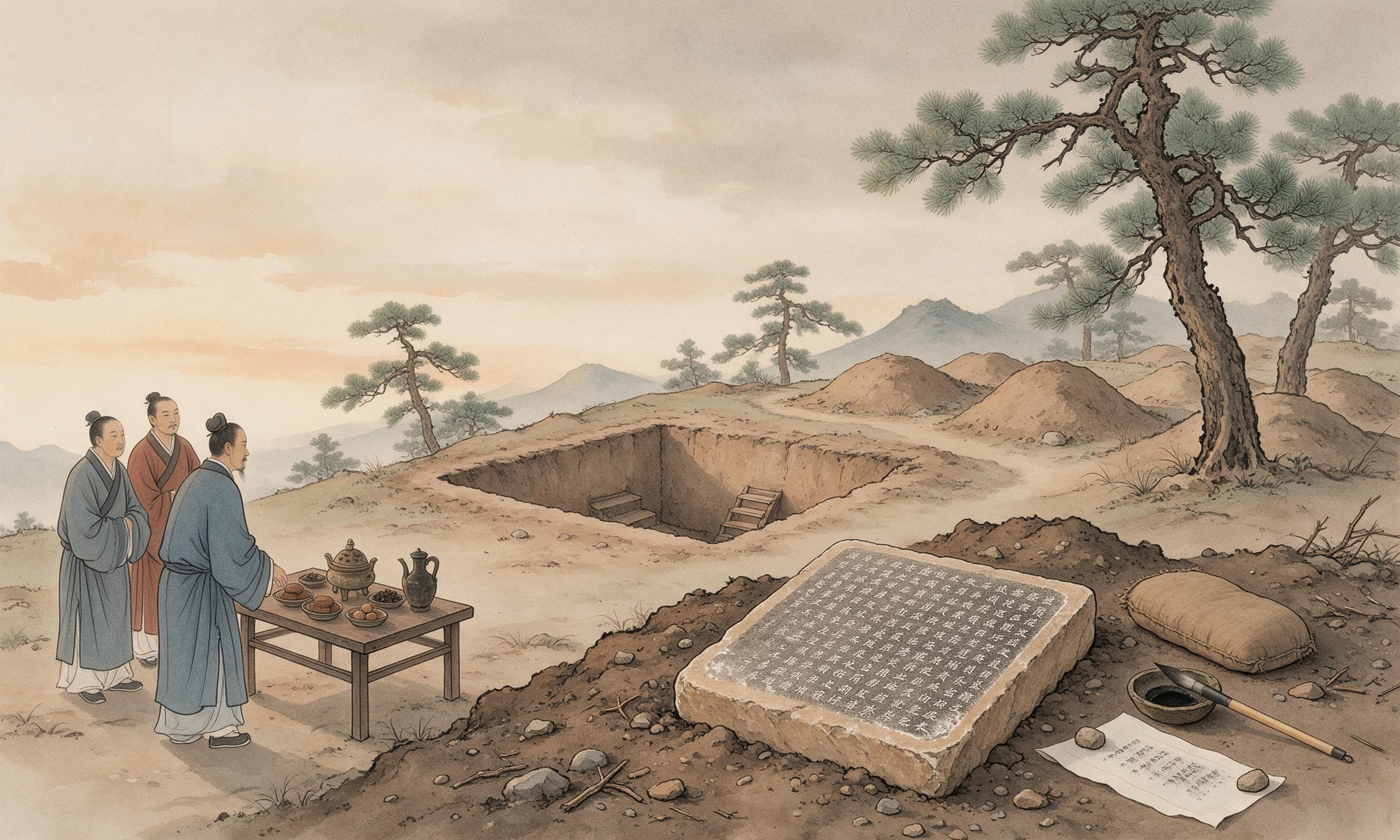
The first line says whose she was: 'The wife of Li Boyu of Linzi was a woman of the Zhang of Fanyang, named Dexing.' Then come the accomplishments her brother credits her with: filial and gentle, 'able to recite several thousand words a day, practised in the rites and clear in the Odes, accomplished in music and marvellous at embroidery' — virtue, speech, bearing and work, he says, all beyond other people. Then the marriage: her husband, a fine writer, served as a collator and died in office in Qingzhou. She was widowed without sons and 'returned to her lineage'. In the second year of Chang'an (702), aged forty-eight, she died in Kangyu Ward, and her coffin waited outside the Yongtong Gate. In 708 her brother Zhang Yue buried her on the sunny side of Mount Wan'an. One stone holds a whole life.
A life in three hundred characters
The piece runs to about three hundred characters, and its shape is the shape of the genre: name and parentage; qualities; whom she married; where the husband died; whether she was widowed; the year and age of death; where the coffin waited; the year, month and place of burial; then a short inscription in verse. What is missing is just as regular. There is no year of birth — it can only be worked backwards from the age at death, which puts it around 655. No age at marriage. No cause of death, only 'she passed away'. And not one sentence in her own voice. A life is compressed into the space a stone allows, and the allowance is narrow.
The stone was written by her younger brother Zhang Yue, who later became chancellor. Its most telling sentence is about money: 'In the third year of Jinglong, the family in mourning and in poverty, your youngest brother Yue sold his writing to raise the means, and in the tenth month of winter laid his elder sister to rest at the sunny side of Wan'an.' She died in 702 and was buried in 708. Six years of waiting, and the reason the epitaph gives is that the family could not pay.
Whose praise is it?
The accomplishments are her brother's, not hers. 'Able to recite several thousand words a day' was written for a funeral by a man who became one of the great writers of his age; it tells us what an official family wanted said about its daughters — that they read, knew the Odes, understood music, worked well with their hands. The Tang statutes on marriage say nothing of the kind. The edicts collected in the Tang Huiyao regulate the age of marriage and the size of the betrothal gift; not one of them mentions a girl learning to read. Praise and regulation are two different systems.
'Widowed without sons, she returned to her lineage' records a place in a household, not a feeling: with no son to hold her position in her husband's family, she went back to her own. The second stone shows the other outcome. A woman of the Zhao married at fifteen, 'taking up the broom', and lived more than twenty years with her Yang husband. He died in 811 in a shop in Chang'an county, leaving nine children, all still small. She then 'fell ill in the hips and legs, and could not get about'. She died in 819 at Zichuan, far from the capital, and was buried in her mother's grave-plot. The stone records the sequence. It does not record what she thought, or whether she had any choice.
The two ends of the money
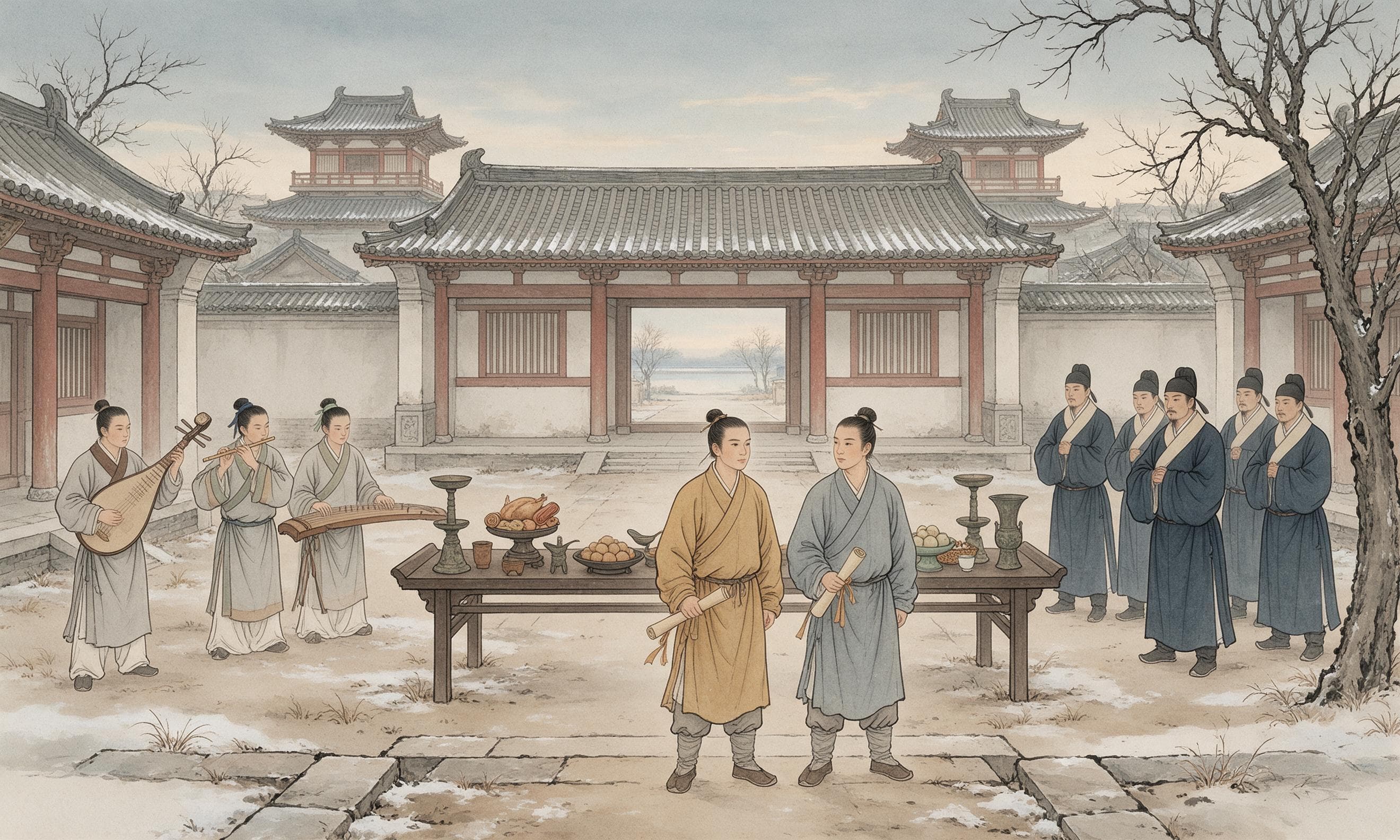
At the betrothal end the state set ceilings. An edict of 659 ruled that a family of the third rank or above might receive no more than three hundred bolts of silk, the fourth and fifth ranks two hundred, the sixth and seventh one hundred, the eighth and below fifty, all of it to go into the bride's trousseau, and the groom's family was forbidden to take a separate payment. An edict of 627 had already ordered that men of twenty and women of fifteen and over be married, with poor families helped by relatives and neighbours; widowers of sixty and widows of fifty, and widows with children, were to be left alone. Local officials who got their people married on time were marked up in their assessments, and those who failed were marked down. In 734 the minimums dropped again, to fifteen for men and thirteen for women. These are permissions and ceilings, not the sums any household actually paid.
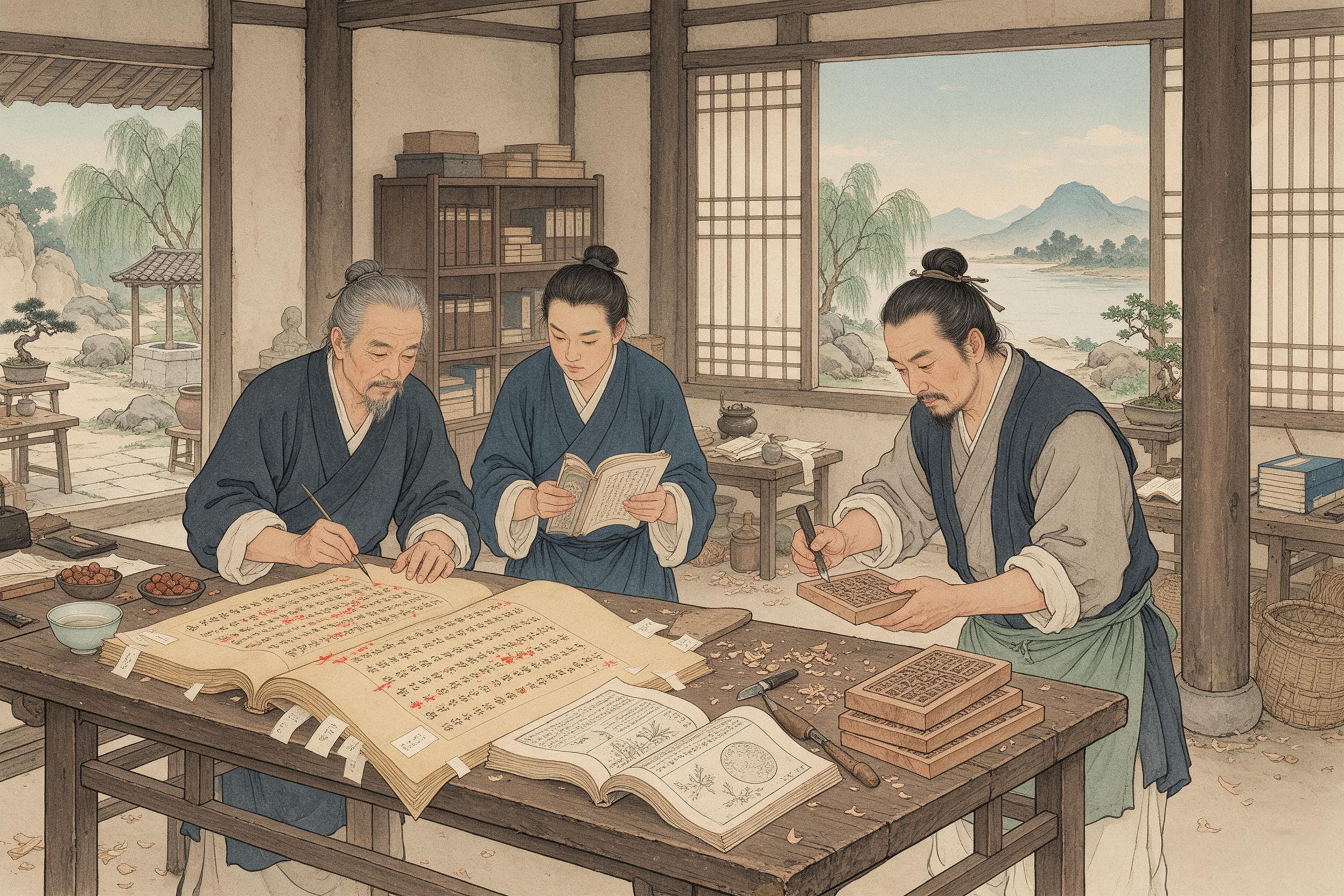
At the burial end the money shows plainly. Zhang Yue sold his writing to bury his sister. The Zhao inscription ends with its author admitting the transaction: 'Your foolish husband wrote the inscription, bought the stone, had it carved.' The man who wrote the text was often the man who paid for it. That is the first thing to remember about anything an epitaph says.
The children column
Han Yu's epitaph for Wei Cong, wife of the poet Yuan Zhen, compresses this column to its hardest form. She died at twenty-seven in 809 and was buried in Xianyang 'with her husband's parents'. The inscription has one line for her children: 'She bore five; one daughter survives.' Five children, five characters. The Zhao stone lists nine, all young, and then names the four surviving sons — Wensheng, Wenqian, Wenhao, Wenyu. Names where there is room for names; a single clause where there is not.
What the stone leaves out
So the two questions have answers. What an epitaph can tell us: a name, sometimes only a surname; a father's and grandfather's offices; whom she married; whether she was widowed; the year and her age at death; where and when she was buried; how many children; who wrote the stone, and often who paid for it. What it cannot: her own words — not one of these three contains a sentence she spoke; her day; her age at marriage, which only the Zhao stone gives, at fifteen; her cause of death; the actual bride-price, the food on the table, the work of her hands beyond the formulas of praise. The frame is set in advance: the family commissioned the text, the family paid for the stone, and the text was written for the living to read.
Which is why one phrase needs care. Zhang Yue writes 'Cangwu not followed, the ancient rule' — an allusion to the sage king Shun, buried at Cangwu, whose wives did not join him there. It explains a burial: she was not laid with her husband, and the old rule allows it. It is ritual language, not a last wish. The stone ends in verse: 'I send my elder sister to the grave at Wan'an. Where is her spirit now? Rain, or cloud. Linzi lies a thousand li away; I look, and in a moment, my lord.' Those lines are literature, not evidence. They also say exactly what an epitaph is for: it is written for the people who are still here.
Sources & further reading
- 张说《李氏张夫人墓志铭》(《全唐文》卷二三二;维基文库) — Zhang Yue's epitaph for his elder sister Zhang Dexing, wife of Li Boyu of Linzi: the praise of her learning and accomplishments, her widowhood without sons and return to her natal family, death at forty-eight in 702, the coffin kept outside the city gate, and the burial in 708 paid for by the brother 'selling his writing'; the allusion 'Cangwu not followed' and the closing verse. The author is her brother, which is the point.
- 韩愈《监察御史元君妻京兆韦氏夫人墓志铭》(《全唐文》卷五六五;维基文库) — Han Yu's epitaph for Wei Cong, wife of Yuan Zhen: her descent, her father choosing the son-in-law, the line that she 'followed the rules in all she did and said', death at twenty-seven in 809, burial at Xianyang with her husband's parents, and the inscription's 'she bore five children; one daughter survives'.
- 顾方肃《唐故赵氏夫人墓志铭》(维基文库) — Gu Fangsu's epitaph for a woman of the Zhao: her father a chief minister of the Court of Reception; married at fifteen; more than twenty years of marriage; her husband dying in 811 leaving nine young children; her illness in the hips and legs; death in 819 away from the capital; burial in her mother's plot; four surviving sons named; and the closing admission 'your foolish husband wrote the inscription, bought the stone, had it carved'. A damaged text; only the clearly legible sentences are used here.
- 王溥《唐会要》卷八十三「嫁娶」(北宋编,录唐诏敕;维基文库,页面标 25% 未校对) — Tang edicts on marriage: 627, men of twenty and women of fifteen and over to be married, the poor helped by kin and neighbours, widowers of sixty and widows of fifty left free; 659, ceilings on betrothal gifts of 300, 200, 100 and 50 bolts of silk by rank, all to go into the bride's trousseau; 734, marriage permitted from fifteen for men and thirteen for women. These are limits and permissions, not prices.