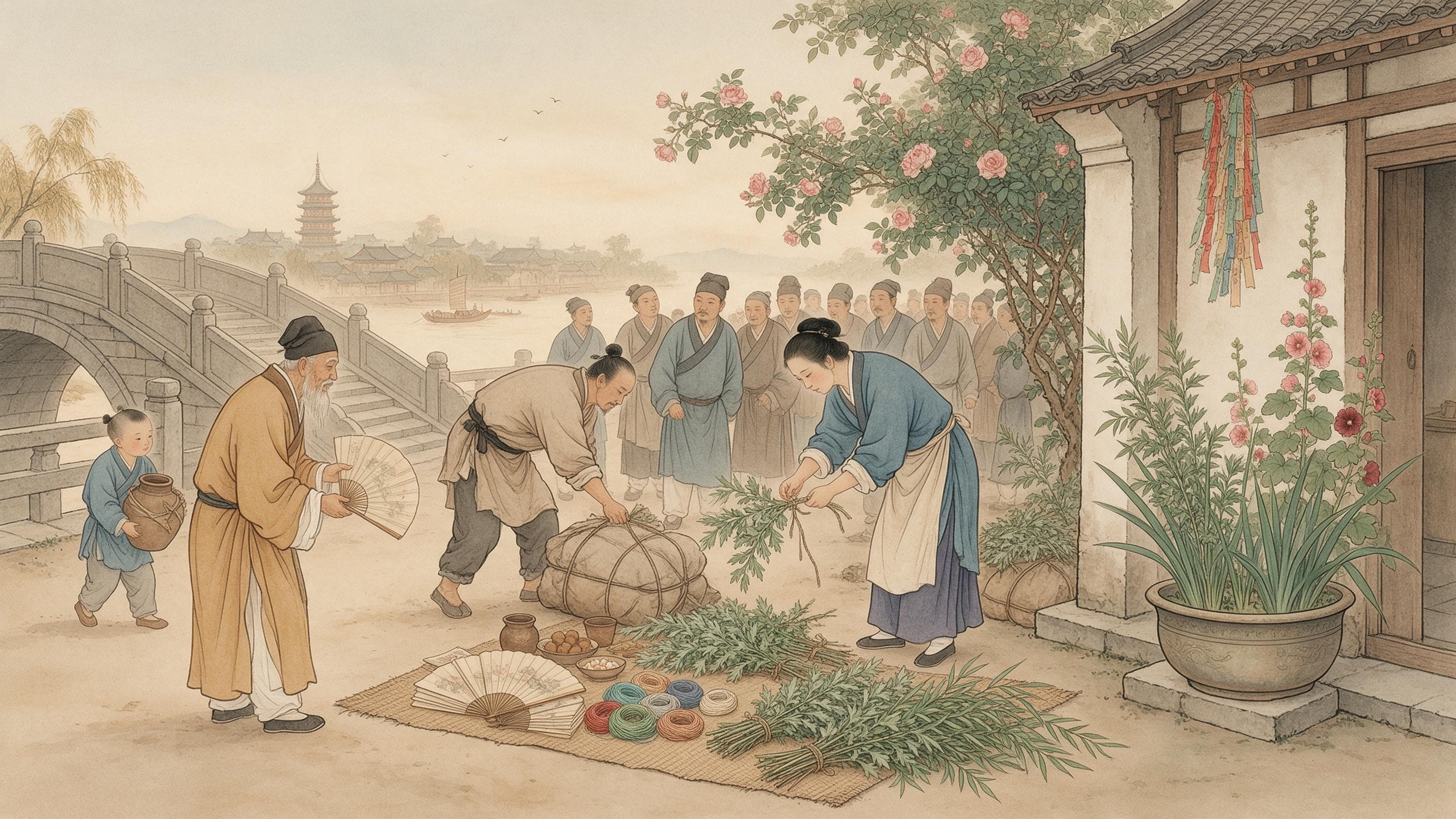
On the first morning of the fifth month the stalls were up at the bridge head before the buyers arrived. Fresh-cut mugwort lay in bundles on the matting, leaves still wet; beside it stood stacks of painted fans, bolts of silk tied into flower shapes, and coils of five-coloured thread. The day was not chosen at random. The book gives the season exactly: from the first of the fifth month to the day before the Double Fifth.
The first of the month, the first stall
The first thing the Dongjing Meng Hua Lu records about the festival is the span of the trade: from the first of the fifth month to the day before the festival, the sale of peach, willow, hollyhock, thin-leaf and Buddhist-and-Daoist mugwort. The goods have one thing in common — cut, they dry. Green stuff will not keep, so the business had a clear opening day and a clear closing day, and after the festival the stock was worthless. That last step is inference (may have been): the text gives the dates and not the reason.
The same entry then lists the festival goods, six of them, in one breath.
端午節物:百索艾花、銀樣鼓兒花、花巧畫扇、香糖果子、粽子、白團。 — The goods of Duanwu: hundred-cord flowers of mugwort, silver-shaped drum flowers, artfully painted fans, perfumed sweets, zongzi, and white dumplings.
The six do different work. The baisuo (百索) were cords of five-coloured thread, wound on the arm; the aihua (艾花) was a flower of twisted mugwort, worn in the hair; the "silver-shaped drum flower" was, by its name, a drum-shaped ornament imitating silver — whether of paper or silk the text does not say (uncertain); the painted fan was carried; and the last three were food. One list covers what you wore, what you hung up, what you waved and what you ate.
After the list comes a line of processing instructions: perilla, sweet flag and quince, all minced fine, mixed with aromatic drugs and packed in plum-red boxes. This is the festival plant turned into something you can give away. The plum-red box is the tell: it is no longer a bundle of herbs but a present.
Skill dumplings built into towers
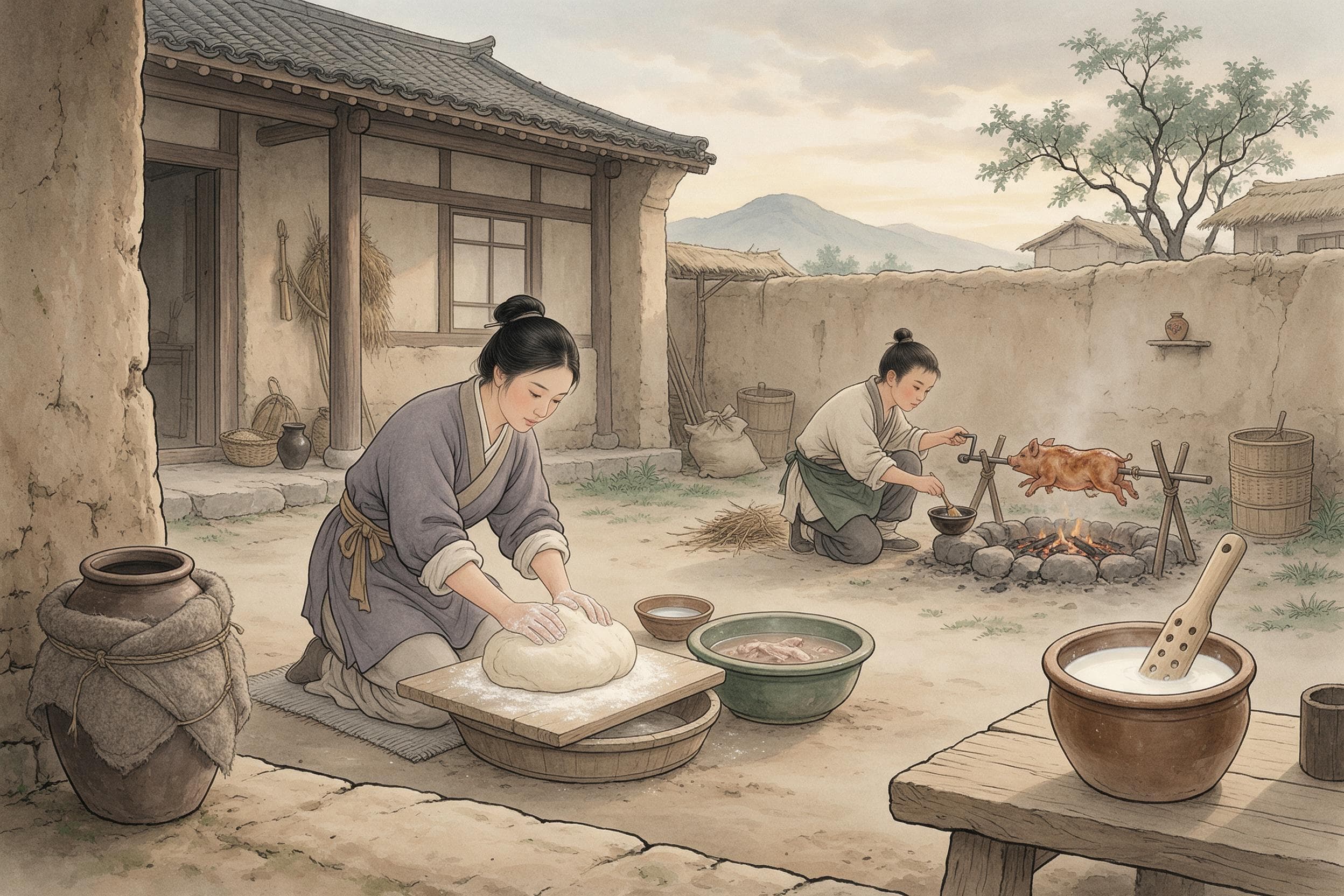
In the Kaifeng list, zongzi is two characters. In Hangzhou it had become something else. Zhou Mi's Wulin Jiushi takes the palace first: gifts to the empress and the inner apartments of kingfisher leaves, five-coloured hollyhock and pomegranate, gold-thread fans, pearl cords, hairpins and charms, sutra tubes and scent bags; to great ministers, fine hemp, fragrant gauze, rush silk, mugwort blooms, coloured dumplings and qiao zong (巧粽), "skill dumplings". The skill dumplings come last in the list of gifts, after all the textiles and jewellery.
巧粽之品不一,至結為樓台舫輅。 — The skill dumplings came in kinds without number, until they were built into towers, boats and carriages.
Pin bu yi (品不一) means the varieties had no fixed count; jie wei loutai fanglu (結為樓台舫輅) marks the top of the craft — rice worked into towers, boats, carriages. A fang is a boat, a lu a carriage. Once a food has taken the shape of a building it has stopped being only food. What held it together, how it was fixed, whether it still stood after steaming, the text does not say (uncertain).
The same entry adds a sentence that matters: the festival goods of the outer households largely followed suit (wai di jiewu, dalu xiaoyou). The fashion began inside the palace. First the gift, then the imitation, then the sale. That is not an inference; the text says it.
The day before: one basin at every door
On the day before the festival the goods changed. For four days the stalls had sold odds and ends; on this day they sold whole bundles of greenery, to be hung on doors.
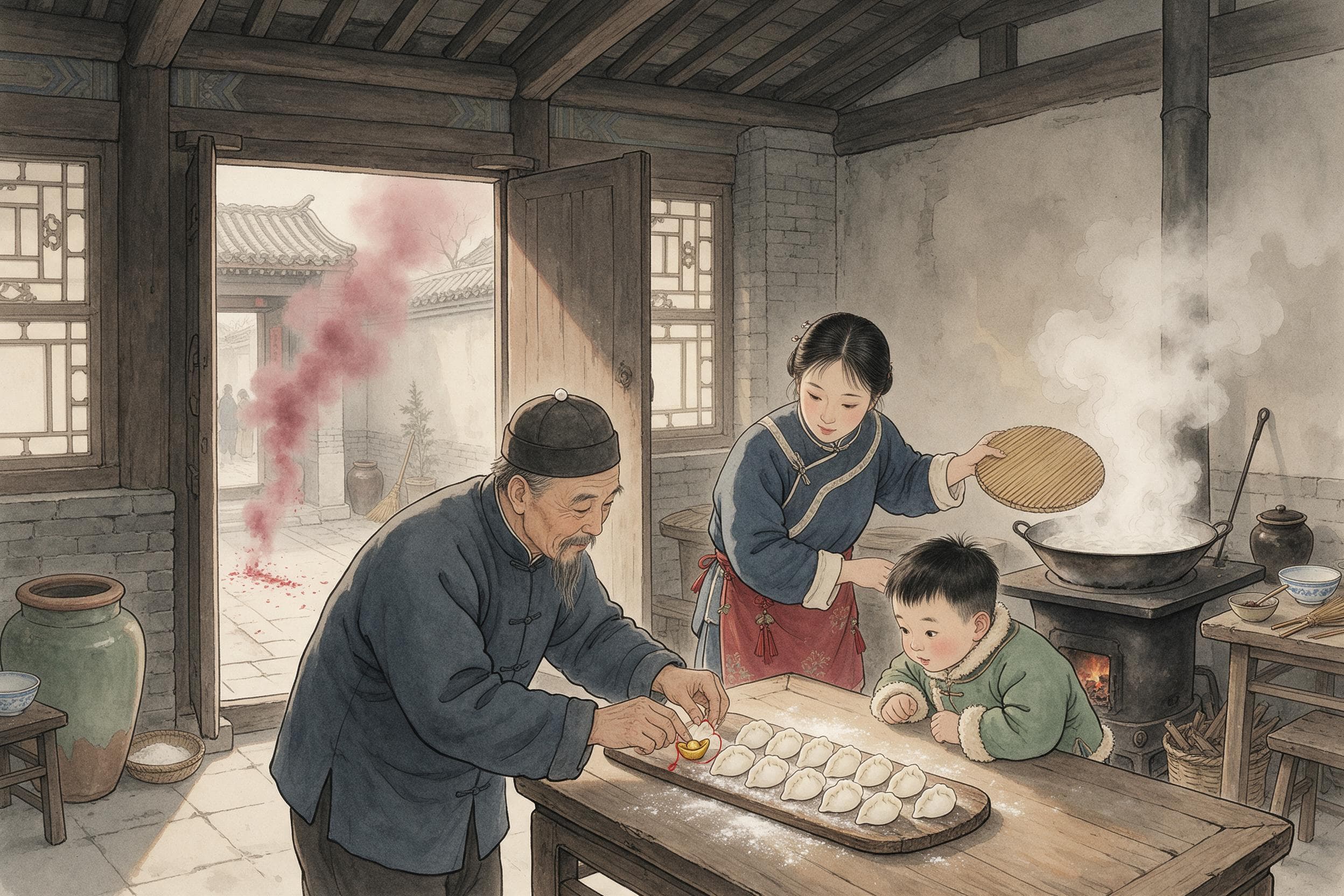
自五月一日及端午前一日,賣桃、柳、葵花、薄葉、佛道艾,次日家家鋪陳於門首,與粽子、五色水團、蔡酒供養,又釘艾人於門上,士庶遞相宴賞。 — From the first of the fifth month to the day before the festival they sell peach, willow, hollyhock, thin-leaf and Buddhist-and-Daoist mugwort; the next day every household lays them out at the door with zongzi, five-coloured water dumplings and cai wine as offerings, nails a mugwort figure to the gate, and scholars and commoners feast one another in turn.
"The next day" is the festival itself. Every household set out the peach, willow, hollyhock and mugwort it had bought, with zongzi, five-coloured water dumplings and cai wine as offerings, nailed a figure of mugwort to the gate, and then went round feasting. The order of the actions is worth noticing: buy, display, then invite the neighbours in. The market comes first and the rite after it. The two characters cai jiu (蔡酒) are kept as the page has them; the reading is suspected to be a variant and has not been corrected.
The Wulin Jiushi on Hangzhou is more concrete than Kaifeng, down to the container.
而市人門首,各設大盆,雜植艾蒲葵花,上掛五色紙錢,排飣果粽。雖貧者亦然。 — And at the doors of the townspeople each household set out a great basin, planted with mugwort, sweet flag and hollyhock mixed together, hung with five-coloured paper money and set about with fruit and zongzi. Even the poor did the same.
Not a bunch of herbs on a nail, but a basin at the door: mugwort, sweet flag and hollyhock planted together, five-coloured paper money hung above, fruit and dumplings laid out in front. The last six characters carry the weight of the whole entry — sui pin zhe yi ran (雖貧者亦然), even the poor did the same. That clause drops all the display back onto the street. A basin at the door was not a rich man's refinement but something every house on the lane had, which is why there was a trade to be done in it. The same entry adds that slips of green silk cut with "red mouth, white tongue" were hung on the lintel with the mugwort figure — slander and quarrelling written out as words, to be kept off the house.
The fifth: Duanyi, and the horse's birthday
At the palace the day began earlier than in the street. The Wulin Jiushi opens its Duanwu entry with the household rule.
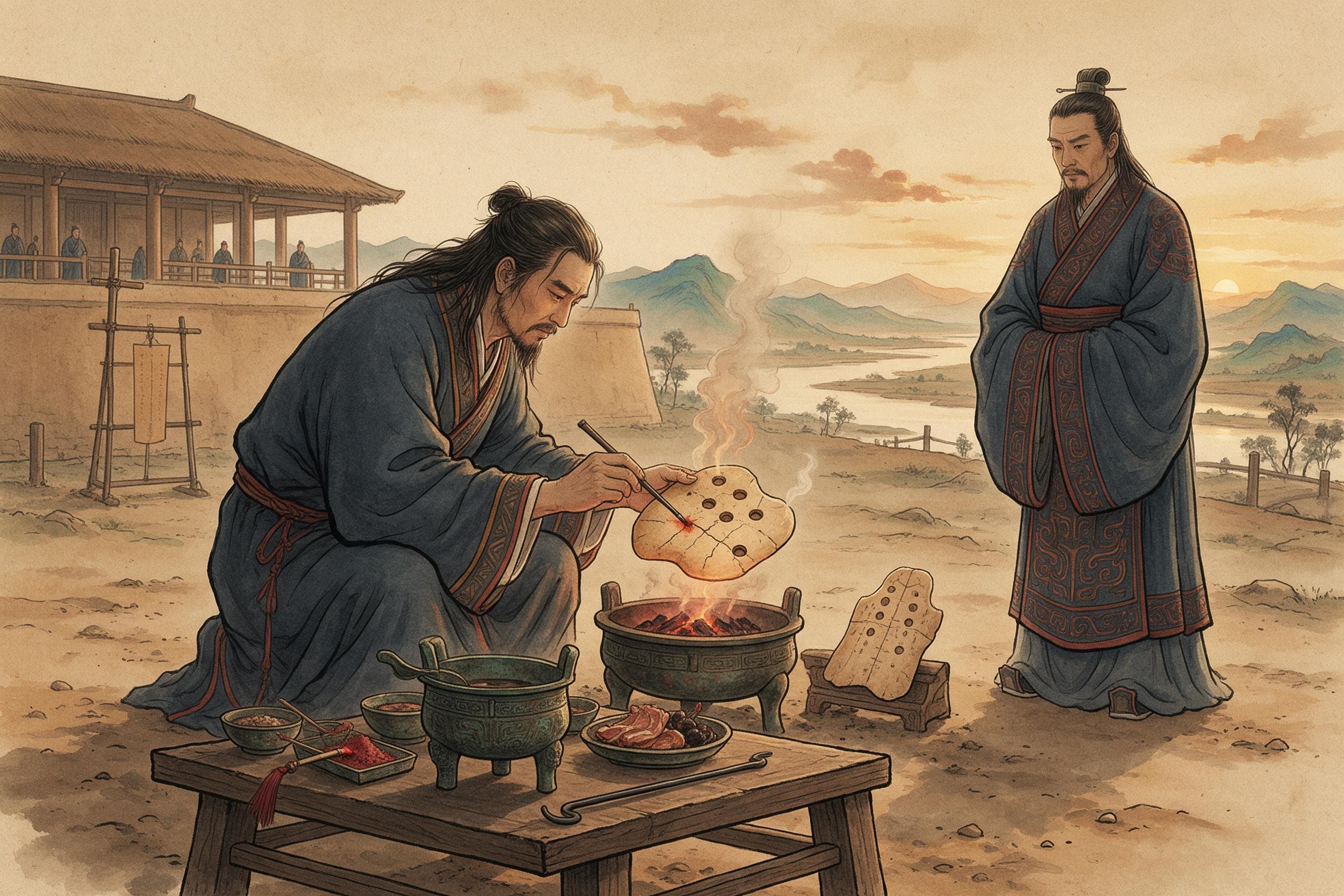
先期用士院供貼子,如春日禁中排當,例用朔日,謂之「端一」。 — In advance the Academy supplied the seasonal verses, as in the spring layout within the palace, always on the first of the month, which was called Duanyi.
Duanyi (端一) was the palace's name for the first of the fifth month — the shuo day, the new moon. The Academy (the text says shiyuan, generally taken to be the Hanlin Academy; may have been) presented its verses beforehand, following the spring precedent. So at court the festival was five days long, beginning on the first; in the street it began with the first day's stalls. One starting point, two ways of keeping it.
One detail belongs less to the calendar than to the market: the day was held to be the horse's own birthday (ma benming). The horses of the imperial stables and the great houses had their manes and tails dressed with five-coloured silk, and saddles and bridles crowded the roads. Silk thread, brocade, harness — another line of business, and one with no figures attached.
The four days off the ledger
What can be checked is all here: the opening and closing dates, the six goods, the shape of the skill dumplings, the basin at the door, the palace's Duanyi, the horse's birthday. What cannot be checked is just as clear: what a zongzi cost, who made the skill dumplings and how long it took and who bought them, how many bundles of mugwort one lane sold in four days, whether the mugwort was cut in a household garden or brought in from the countryside. None of it. The entries record names and dates, not accounts.
One thing more is worth stating. These two passages describe the festival in Kaifeng and in Hangzhou, and neither says a word about Qu Yuan. Tying Duanwu to his drowning is a later story, not the story these sources tell. What they care about is something else: on the first of the fifth month, what the street began to sell.
Sources & further reading
- 孟元老《东京梦华录》卷八「端午」(Meng Yuanlao, Dongjing Meng Hua Lu, juan 8, "Duanwu") — The six festival goods, the selling season from the first of the fifth month to the day before the festival, and the door display on the day itself.
- 周密《武林旧事》卷三「端午」(Zhou Mi, Wulin Jiushi, juan 3, "Duanwu") — Palace gifts including the shaped "skill dumplings", the term Duanyi for the first of the month, and the great basin set at every door, the poor included.