One page says that half a million men were sent south. Another page, on the same conquest, gives no number of soldiers at all: it says that after Qin took the land it set up three commanderies, moved deported people into them, and that these people lived among the Yue for thirteen years. Those two sentences are the whole basis of this article. They come from two books, and they are not two halves of one account; keeping them apart is the point.
The Huainanzi's Page: A Story with Numbers
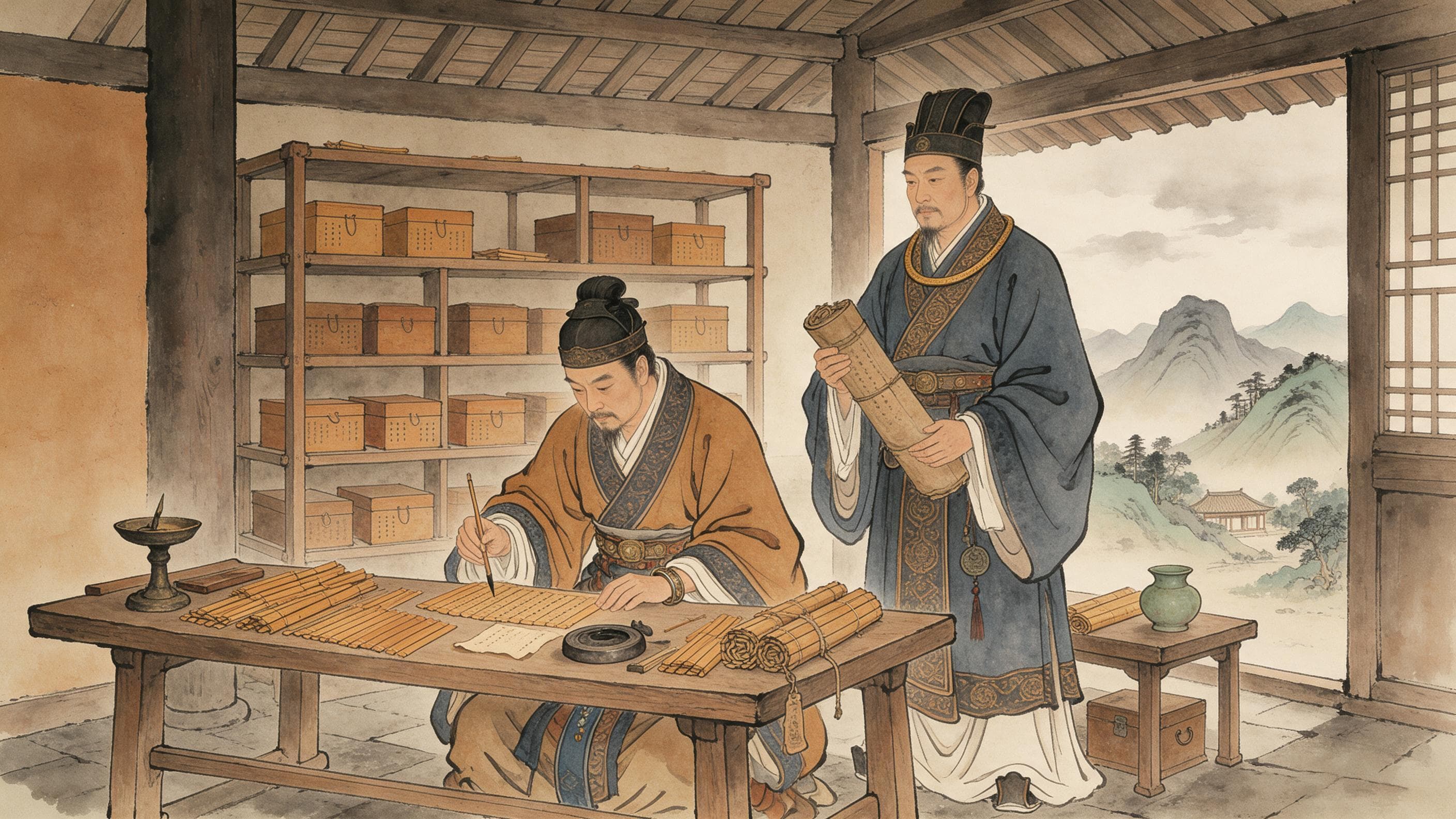
The passage in the Huainanzi, chapter 人間訓, is part of an argument about how states bring about their own ruin. It begins with a book: 秦皇挾錄圖,見其傳曰:「亡秦者,胡也。」 — the First Emperor of Qin carried a chart, read in its commentary that the Hu would destroy Qin — and 因發卒五十萬, raised 500,000 troops and sent them north under 蒙公 and 楊翁子 to build the long wall. Then it turns south: 又利越之犀角、象齒、翡翠、珠璣, Qin wanted the Yue's rhinoceros horn, ivory, kingfisher feathers and pearls, and 乃使尉屠睢發卒五十萬, sent the commandant Tu Sui with another 500,000. The same figure is used twice on one page, for two different armies. The figure is not attributed to any document, and the passage gives no date for either expedition. The chapter is an argument, not a chronicle.
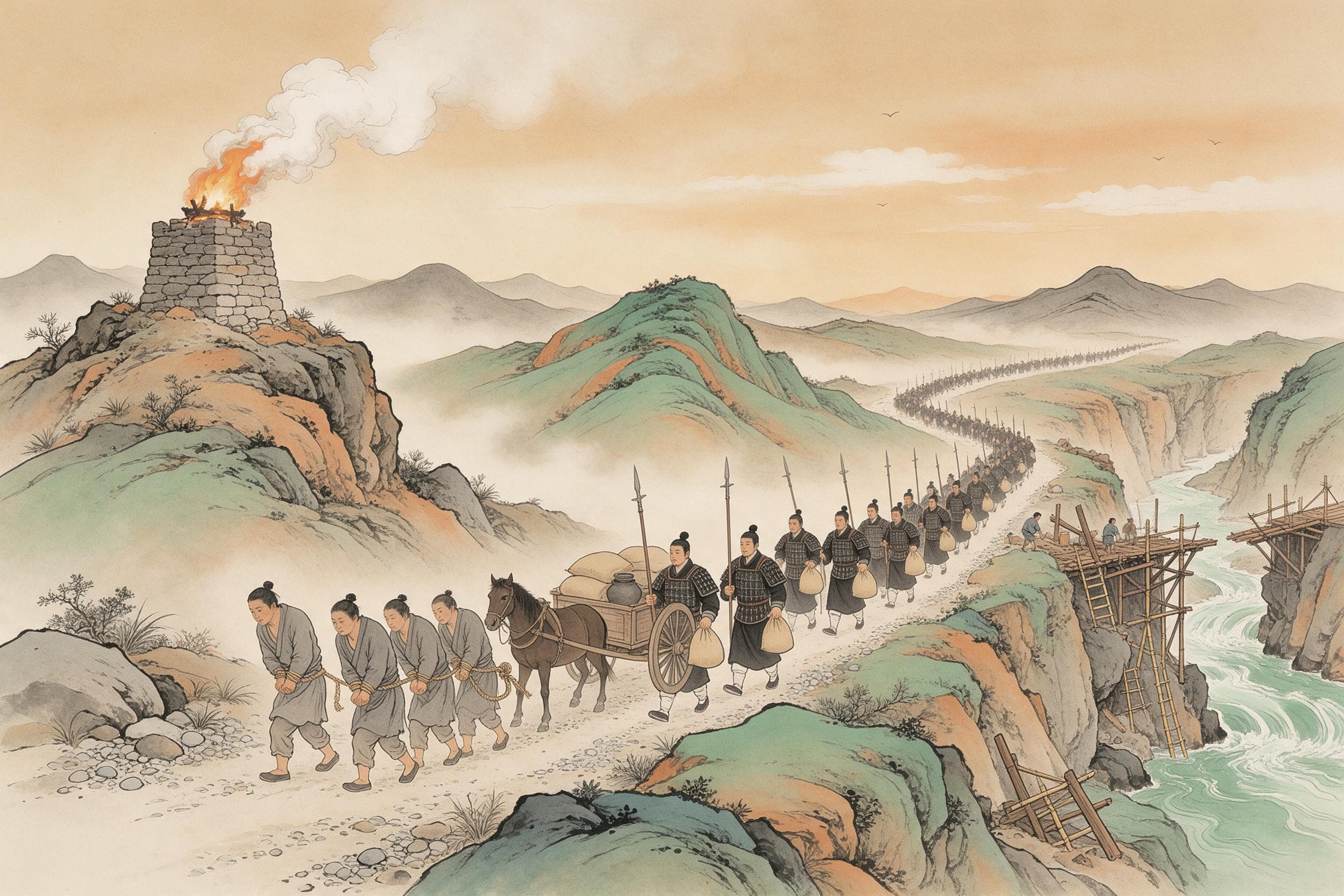
The southern army is deployed in five: 為五軍,一軍塞鐔城之嶺,一軍守九疑之塞,一軍處番禺之都,一軍守南野之界,一軍結餘干之水 — one blocking the pass at 鐔城, one guarding 九疑, one at 番禺, one on the 南野 frontier, one at the 餘干 waters. These are names, and neither page locates them; this article does not either. Then 三年不解甲弛弩, three years without putting off armour or unstringing crossbows; 使監祿無以轉餉, with 監祿 unable to move the supplies; 又以卒鑿渠而通糧道, soldiers cutting a canal to bring the grain through. What the canal was called or how long it ran, the page does not say. Three years without unstringing measures the strain rather than a calendar.
Then the fighting: 以與越人戰,殺西嘔君譯吁宋 — they met the Yue and killed 譯吁宋, lord of 西嘔. The Yue 皆入叢薄中,與禽獸處,莫肯為秦虜, went into the thickets and lived with the animals rather than be taken; 相置桀駿以為將, they set up leaders of their own; and 夜攻秦人,大破之,殺尉屠睢,伏尸流血數十萬 — attacked the Qin by night, broke them, killed Tu Sui, and the dead lay in tens of thousands. No date, no strength, no number of Yue does the passage give. The order of the sentences carries the point: the Yue are beaten, they withdraw, they choose leaders, and then they win.
The chapter then follows the war home. 乃發適戍以備之, convicts were sent to hold the south; 男子不得脩農畝,婦人不得剡麻考縷, men could not work the fields and women could not spin; 羸弱服格於道,大夫箕會於衢,病者不得養,死者不得葬 — the weak hauled, the great officers met in the streets, the sick went untended and the dead unburied. Then 陳勝起於大澤 and 遂失天下, Chen Sheng rose at Daze and Qin lost the empire. The chapter's verdict is a moral: 禍在備胡而利越也, the disaster lay in guarding against the Hu while taking profit from the Yue; the Qin's defence was 烏鵲之智也, the wisdom of a magpie that moves its nest for the wind and forgets the children below. That is the chapter's point, not a report. What the chapter cares about is the home front; the southern war is one more way of stripping the country.
The Shiji's Page: One Sentence
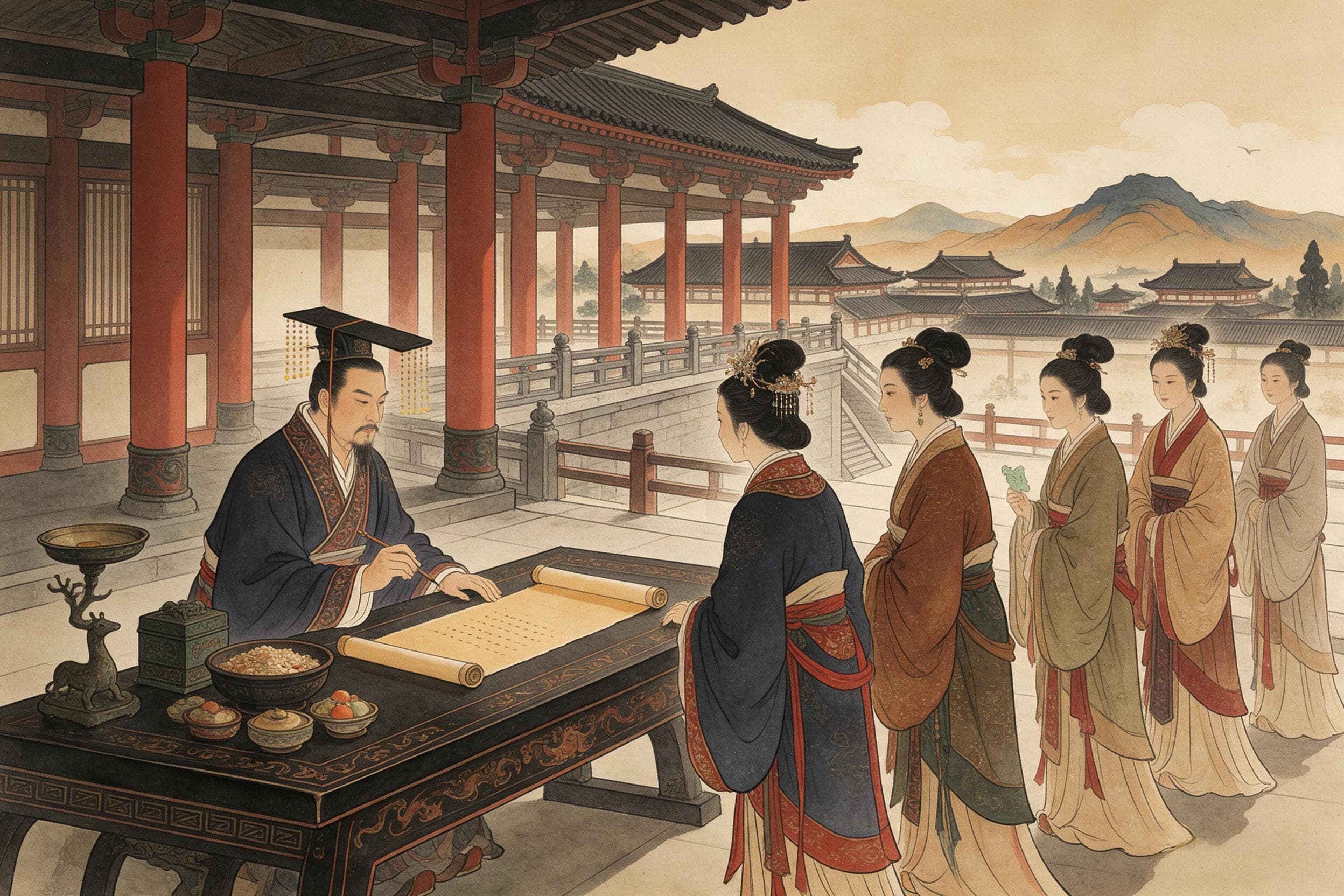
The Shiji gives one sentence: 南越王尉佗者,真定人也,姓趙氏。秦時已并天下,略定楊越,置桂林、南海、象郡,以謫徙民,與越雜處十三歲。 Zhao Tuo, king of Nanyue, was a man of Zhending, surname Zhao: when Qin had united the world, it took the Yangyue, set up the commanderies of Guilin, Nanhai and Xiang, moved deported people there, and for thirteen years these people lived mixed among the Yue. No army, no numbers, no Tu Sui, no battle: three place-names and one duration. Neither page introduces the other's material.
Where the sentence stands explains it. It is the first sentence of Zhao Tuo's biography, and its job is to explain how a man of Zhending came to be 南海龍川令, magistrate of Longchuan in Nanhai, under Qin: 佗,秦時用為南海龍川令. The migration is the background of a career, and the career ends in a kingdom: 秦已破滅,佗即擊并桂林、象郡,自立為南越武王, and in the eleventh year of Han, 遣陸賈因立佗為南越王.
The one fragment that touches the settlers again is 任囂's advice: 番禺負山險,阻南海,東西數千里,頗有中國人相輔,此亦一州之主也,可以立國 — Panyu backs on mountains and the sea, the land runs east and west for several thousand li, and there are Chinese enough there to help; a state could be made of it. The biography ends 自尉佗初王後,五世九十三歲而國亡焉, five generations and ninety-three years. That is the history of Nanyue, not of the Qin migration; this article takes from the page only the three commanderies, the deported settlers and the thirteen years.
Two Pages, Not Two Halves
Side by side, they do not join. The Huainanzi has 500,000 men, five armies, three years, a canal, two killed leaders, a night attack, tens of thousands of dead, convict garrisons and a ruined home front; it never names Guilin, Nanhai or Xiang, and never says thirteen years. The Shiji has the three commanderies, 謫徙民 and thirteen years; it never names Tu Sui, gives no number and describes no battle. A reader who adds the two gets a story that neither book tells. The one thing they share is the conquest itself — 略定楊越 in one, the war with the Yue in the other — and even that they say in different kinds of sentence. Thirteen years is not the length of a campaign: it is the span in which settlers and Yue lived side by side, and the Shiji attaches it to no beginning.
The Numbers and the Kind of Statement They Are
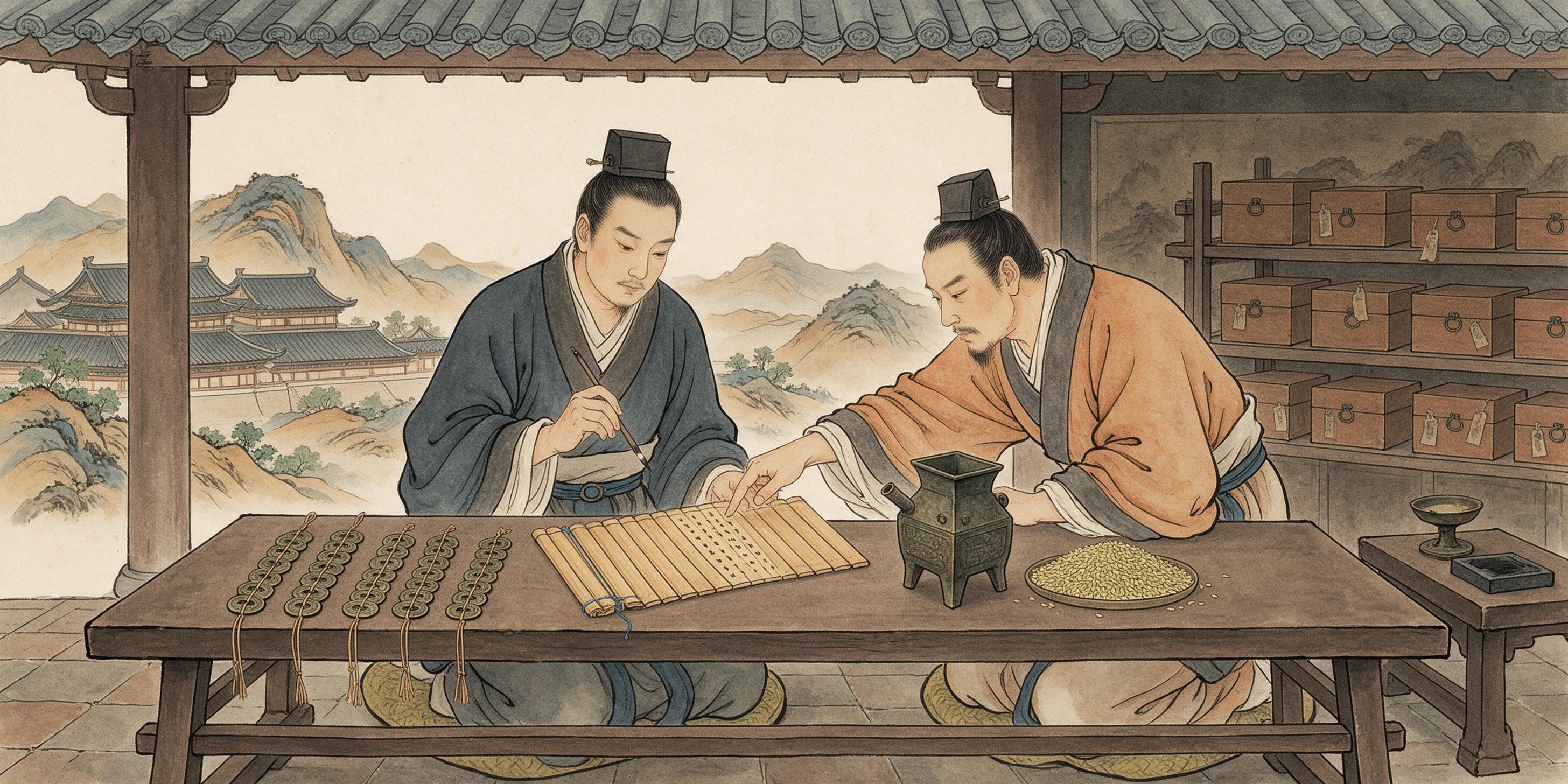
Of the figures, only 十三歲 looks like a record: a plain duration in a plain sentence. The rest belong to another kind of writing. 五十萬 appears twice on one page, for the northern wall and for the southern army, which is how a round number behaves rather than how a return does; 伏尸流血數十萬 is a moralist's way of describing a catastrophe; 三年 and 五軍 are the furniture of the story. Neither page gives the number of settlers or households, the population of the three commanderies, the real strength of the army or the number of the dead. This article supplies none of them and converts none of the numbers into modern quantities. A round number used twice is evidence about the writer, not about the army.
What This Article Leaves Out
It does not write the completion of Qin's conquest of the south, or the merging of Han and Yue, or a judgement on settlement as policy; the pages give a story and a sentence, not a process. It does not put the two accounts on one timeline, because neither page dates its material — 秦時 and 二世 are as close as the Shiji comes. It keeps the names as printed — 桂林、南海、象郡, 尉屠睢, 監祿, 鐔城、九疑、番禺、南野、餘干 — and does not place them on a modern map. The corvée rules, the frontier soldier's ration list and the thirty-six commanderies are separate subjects and separate articles. That is the whole of the two pages.
Related reading:Three Hundred and Fifty Hu a Month: Two Han Salary Tables That Don't Match · Three Hundred and Fifty-Nine Chapters: How Many Laws Did Han China Have? · The Music Bureau: A Staff List of 829, and 441 Dismissals
Sources & further reading
- 《淮南子·人間訓》(維基文庫本,頁面白文;此段在「秦皇挾錄圖」以下) — The chapter's story of the southern campaign: 秦皇挾錄圖…因發卒五十萬,使蒙公、楊翁子將,築脩城; then 又利越之犀角、象齒、翡翠、珠璣,乃使尉屠睢發卒五十萬,為五軍, with the five positions, 三年不解甲弛弩, 監祿 and the canal, the killing of 西嘔君譯吁宋, the Yue going into the thickets, the night attack that killed 尉屠睢, 伏尸流血數十萬, the convict garrison, the ruined home front and 禍在備胡而利越也. The figure 五十萬 is used twice in the same passage, for the northern wall and for the southern army.
- 《史記》卷一百一十三·南越列傳第五十三(西漢司馬遷撰;維基文庫本,頁面白文) — The opening of Zhao Tuo's biography: 南越王尉佗者,真定人也,姓趙氏。秦時已并天下,略定楊越,置桂林、南海、象郡,以謫徙民,與越雜處十三歲。佗,秦時用為南海龍川令. No troop numbers, no battle, no 尉屠睢. The page later has 任囂's 番禺負山險…頗有中國人相輔 and closes 五世九十三歲而國亡焉.